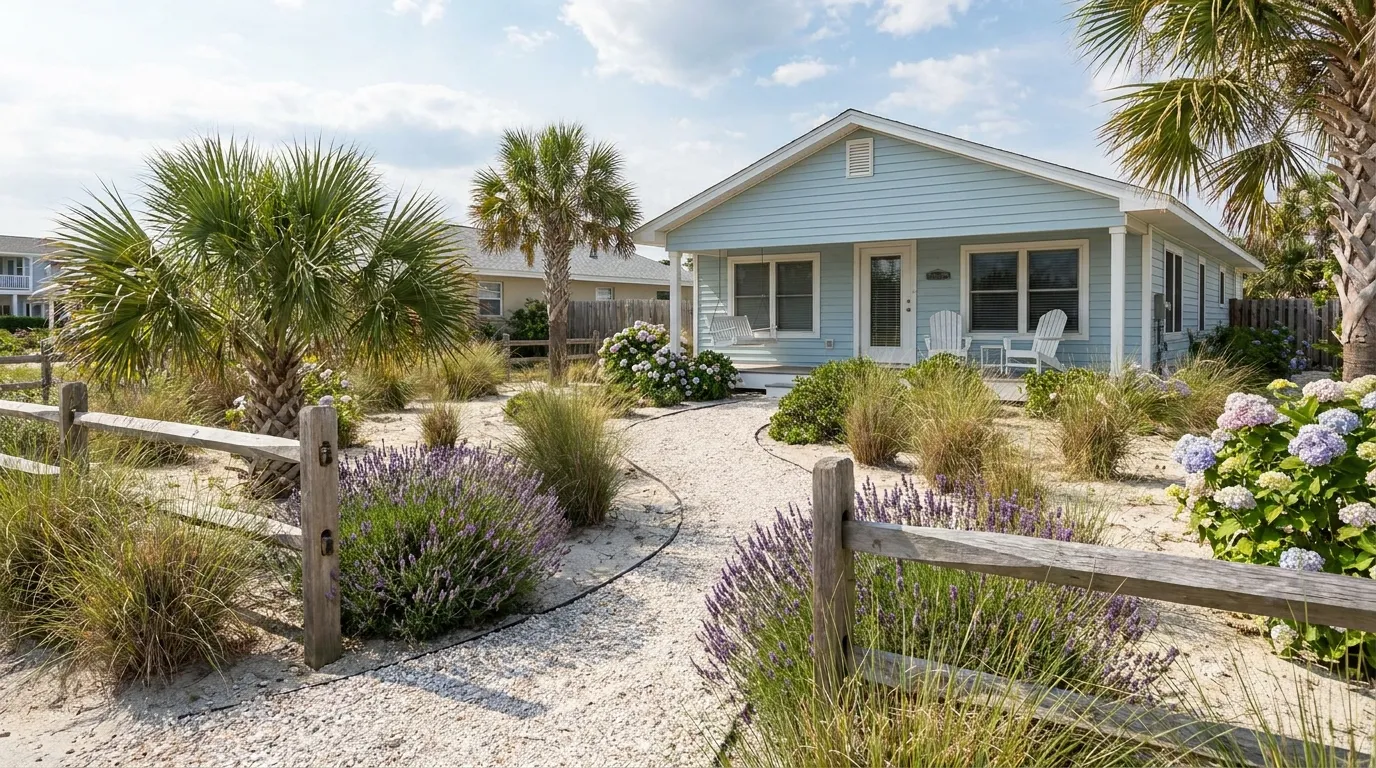
 Muhammad Muaz
 Coastal landscaping is all about creating a relaxed, breezy atmosphere that reflects the beauty of the shoreline. Whether you live near the ocean or simply love the coastal aesthetic, the right front yard design can instantly make your home feel brighter, more inviting, and effortlessly stylish. Natural textures, soft colours, salt-tolerant plants, and thoughtful outdoor accents work together to create a landscape that feels both elegant and approachable.
In this guide, you’ll find 20 inspiring coastal front yard landscaping ideas that range from classic beach cottage charm to modern seaside sophistication. Each idea includes a detailed image prompt to help you visualisation the look and bring it to life in your own outdoor space.
1. Seashell-Lined Garden Path:
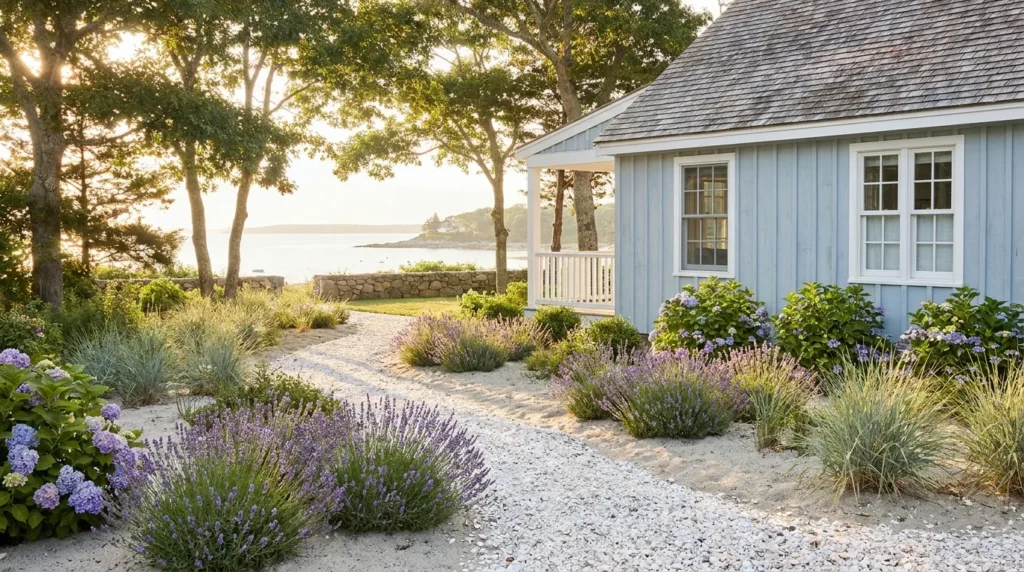
A seashell-lined garden path instantly introduces a coastal vibe before visitors even reach the front door. Crushed shells, scallop shells, or mixed seashells can be used to create a natural-looking walkway that reflects sunlight and adds texture to the landscape. Pairing the path with drought-tolerant coastal plants such as lavender, sea thrift, and ornamental grasses creates a relaxed beachside atmosphere while keeping maintenance relatively low.
This type of path works especially well in cottage-style homes, Cape Cod designs, and modern coastal residences. The shells provide a subtle crunch underfoot and help reinforce the connection to the seaside. To complete the look, consider adding weathered wooden edging, driftwood accents, or low-growing flowering plants along the borders. The result is a welcoming entrance that feels both casual and refined.
2. Beach Grass Borders:
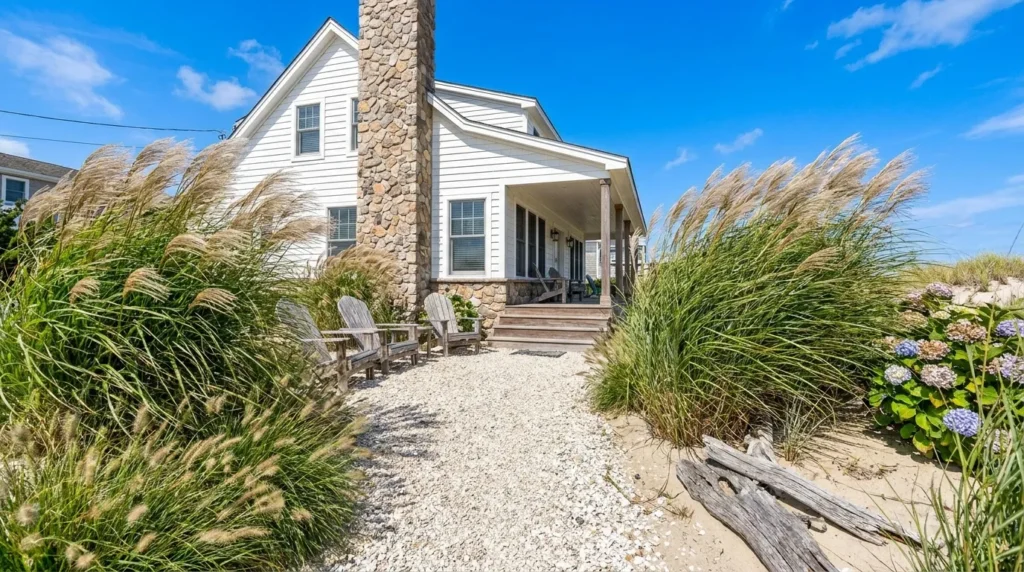
Beach grasses are one of the most iconic elements of coastal landscaping. Their tall, flowing blades create movement in the yard and mimic the appearance of dunes along the shoreline. Planting them as borders along pathways, driveways, or property lines adds texture and visual interest while also helping stabilise sandy soil in coastal regions.
These grasses thrive in full sun and tolerate salt spray, making them ideal for homes near the ocean. Varieties such as American beach grass, blue rescue, and mulishly grass provide different heights and colours to suit your design preferences. Combining them with natural stone, gravel, or shell mulch enhances the authentic seaside feel and creates a landscape that looks beautiful throughout the year.
3. White Picket Fence with Coastal Plantings:
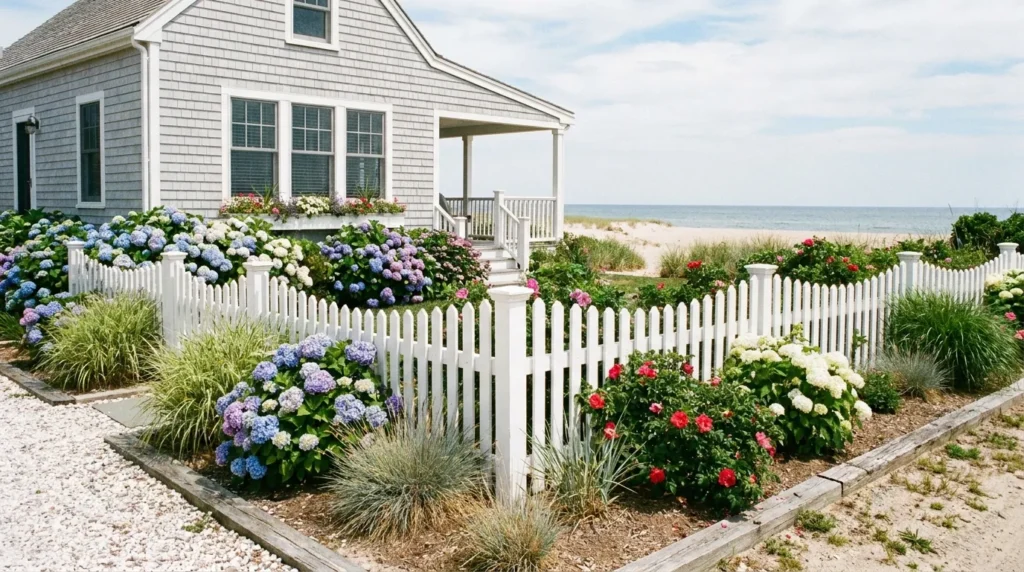
A white picket fence is a timeless feature that pairs perfectly with coastal landscaping. It creates a sense of charm and structure while allowing colourful plantings to take centre stage. Surrounding the fence with hydrangeas, beach roses, and soft ornamental grasses creates a layered look that feels lush without becoming overly formal.
The crisp white fence contrasts beautifully with the soft blues, greens, and sandy tones commonly found in coastal landscapes. For added visual appeal, consider incorporating climbing roses or flowering vines at select points along the fence. This combination creates a welcoming front yard that feels classic, cheerful, and distinctly inspired by seaside living.
4. Driftwood Garden Accents:
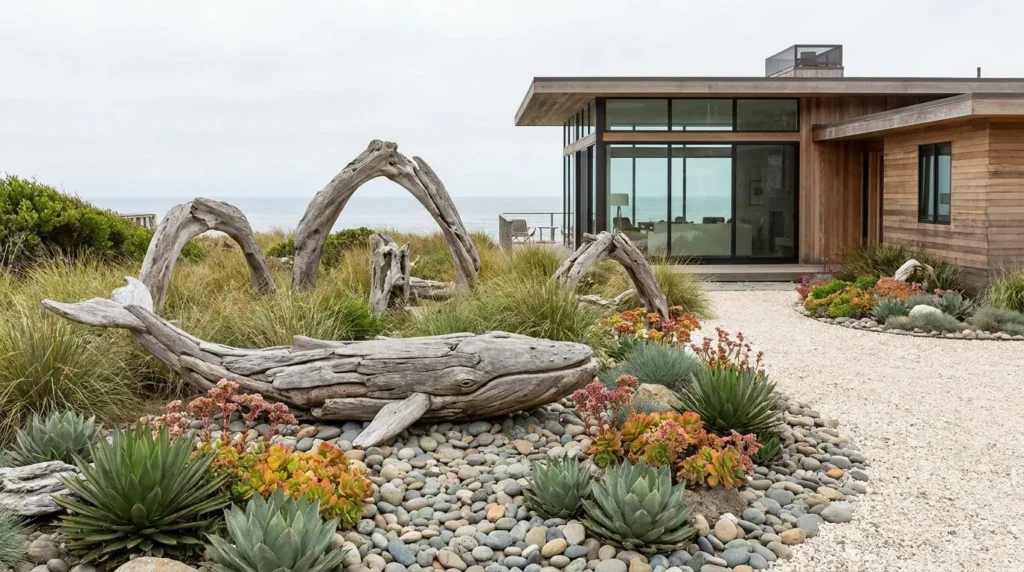
Driftwood brings an authentic beach element into the landscape and serves as a striking natural accent. Large pieces can be used as focal points in planting beds, while smaller pieces can be arranged among stones and ground-covers to create an artistic display. The weathered texture and soft Gray tones of driftwood blend seamlessly with coastal plants and sandy-coloured materials.
Using driftwood in the front yard adds character and helps reinforce the connection to the sea. Pair it with succulents, dune grasses, and smooth river stones for a naturalistic look that requires minimal maintenance. The organic shapes of the wood create visual contrast against structured pathways and architectural elements, making the landscape feel more dynamic and inviting.
5. Hydrangea-Filled Entrance:
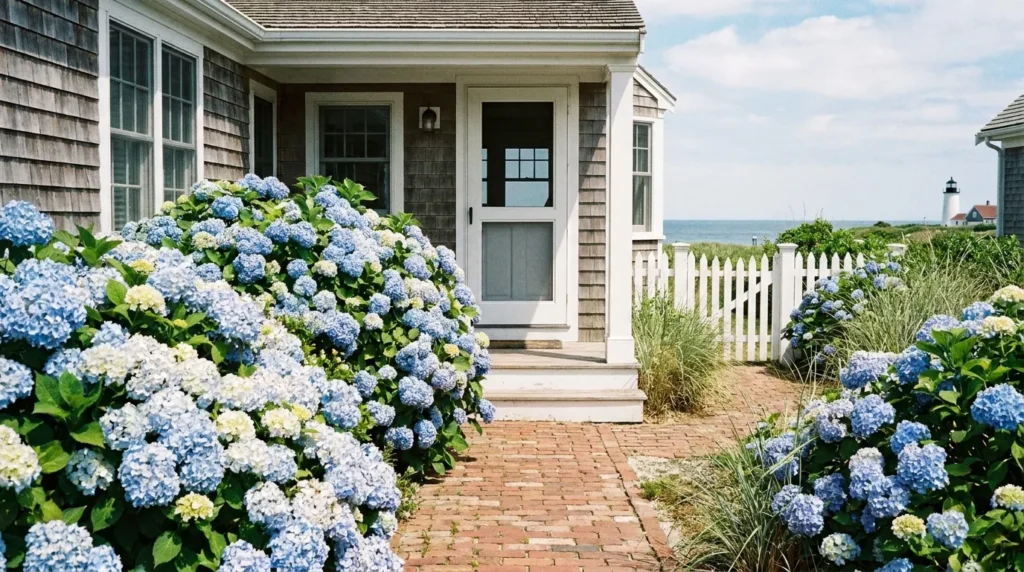
Hydrangeas are a favourite choice for coastal landscapes because of their lush blooms and classic seaside appeal. Planting them around the front entrance creates a soft, welcoming frame that enhances curb appeal and adds seasonal colour. Blue and white varieties are particularly popular because they echo the colours of the ocean and sky.
These shrubs thrive in many coastal climates and can be combined with ferns, host as, or ornamental grasses for a layered planting design. Keeping the blooms well-pruned and the soil consistently moist will encourage abundant flowering. A hydrangea-filled entrance feels elegant yet approachable, making it a perfect focal point for any coastal-inspired front yard.
6. Natural Stone Walkway:
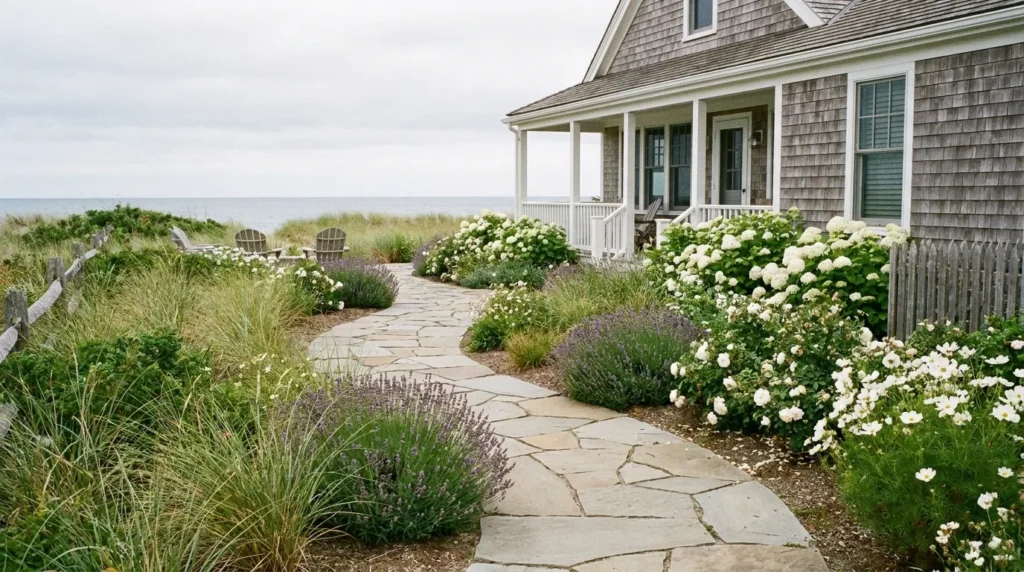
Natural stone walkways bring durability and timeless beauty to a coastal front yard. Irregular stone shapes create a relaxed, organic feel that complements the casual nature of beach-inspired landscapes. Materials such as blue-stone, flagstone, or weathered limestone work especially well because their muted tones blend naturally with coastal plantings.
Surrounding the walkway with beach grasses, lavender, and white flowering plants softens the edges and creates a cohesive design. The combination of stone and greenery provides texture and visual contrast while maintaining a calm, natural appearance. A well-designed stone path not only guides visitors to the front door but also enhances the overall character of the landscape.
7. Coastal Succulent Garden:
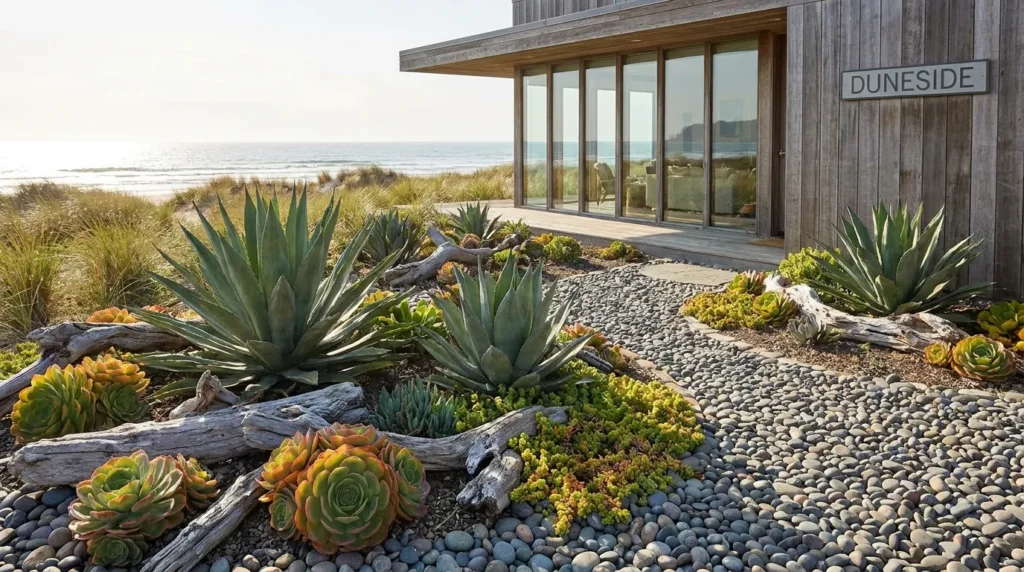
Succulents are an excellent option for coastal landscapes, particularly in areas with sandy soil and limited rainfall. Their sculptural shapes and varied colours create visual interest while requiring very little water. Agave, Escherichia, serum, and other hardy succulents can be arranged in clusters to form a striking front yard display.
To enhance the coastal feel, incorporate driftwood, smooth pebbles, and shell mulch throughout the planting bed. The combination of drought-tolerant plants and natural beach-inspired materials creates a landscape that is both stylish and practical. A coastal succulent garden offers a modern twist on traditional seaside landscaping while remaining easy to maintain.
8. Palm Tree Focal Point:
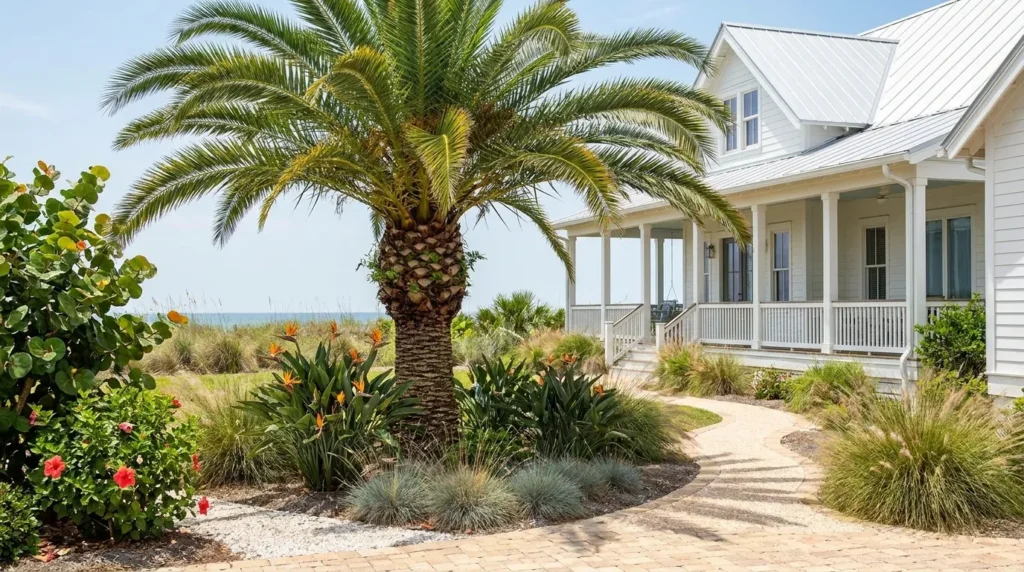
A palm tree can serve as a dramatic focal point that immediately signals a coastal or tropical atmosphere. Whether you choose a windmill palm, basal palm, or another climate-appropriate variety, the tall trunk and arching fronds create a strong vertical element in the landscape. Positioning the palm near the centre of the yard or beside the walkway draws the eye and adds a sense of grandeur.
Surround the palm with lower-growing tropical shrubs, ornamental grasses, and flowering plants to create a layered composition. Using sandy-coloured gravel or paving materials around the base reinforces the beach-inspired theme. This design works especially well for homes in warm coastal regions and creates a front yard that feels lush, inviting, and resort-like.
9. Nautical-Themed Flower Beds:
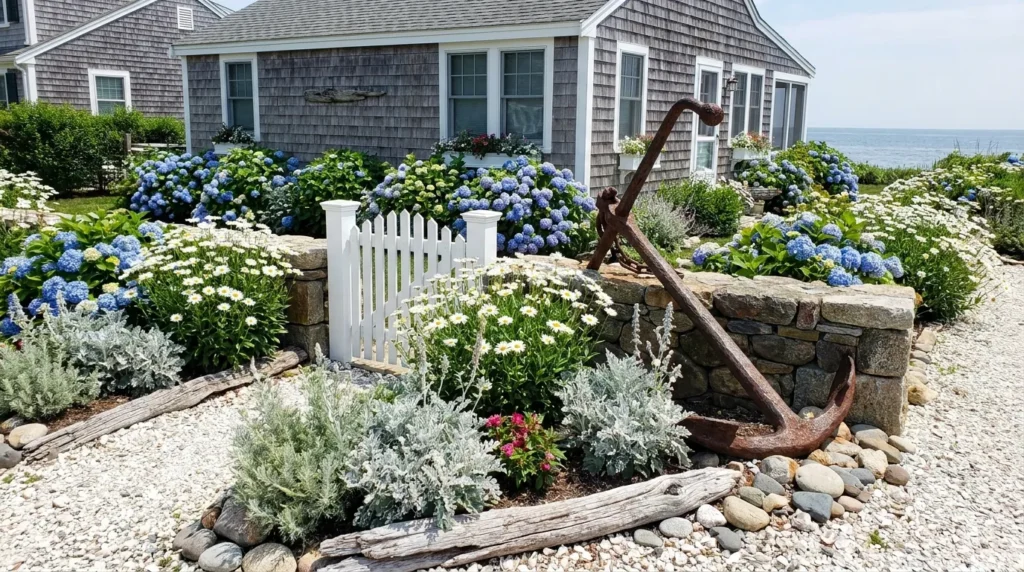
Nautical-themed flower beds combine classic coastal colours with subtle decorative elements inspired by the sea. Blue hydrangeas, white daisies, and silver-leaved plants such as dusty miller create a palette that reflects the ocean, clouds, and beach sand. Adding a decorative anchor, rope accent, or weathered lantern provides a touch of nautical character without overwhelming the landscape.
These flower beds can be placed along the front foundation, around the mailbox, or beside the entry path. The key is to keep the design cohesive and avoid excessive ornamentation. By focusing on a limited colour palette and a few well-chosen accessories, you can create a front yard that feels charming, coordinated, and unmistakably coastal.
10. Sandy Gravel Landscaping:
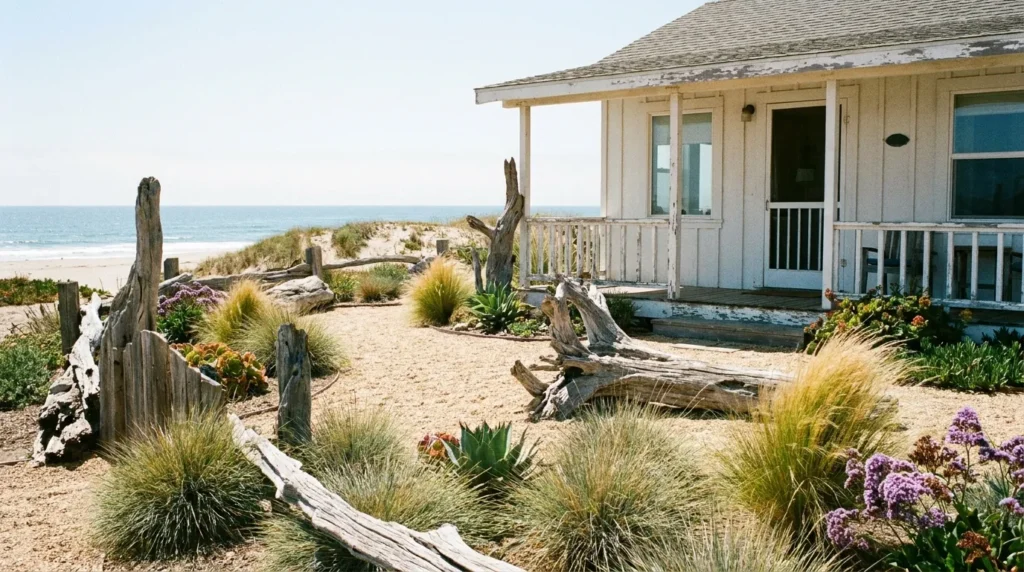
Sandy-coloured gravel is a practical and attractive alternative to traditional mulch in coastal landscapes. It reflects the natural tones of the beach, drains well, and helps reduce maintenance by discouraging weed growth. Using gravel throughout planting beds creates a clean, cohesive appearance that pairs beautifully with drought-tolerant grasses and coastal shrubs.
To add visual interest, incorporate driftwood pieces, smooth stones, and clusters of flowering plants. The combination of gravel and natural accents creates a landscape that feels relaxed and authentic while requiring relatively little upkeep. This approach is especially useful in dry coastal climates where water conservation is a priority.
11. Raised Dune-Inspired Beds:
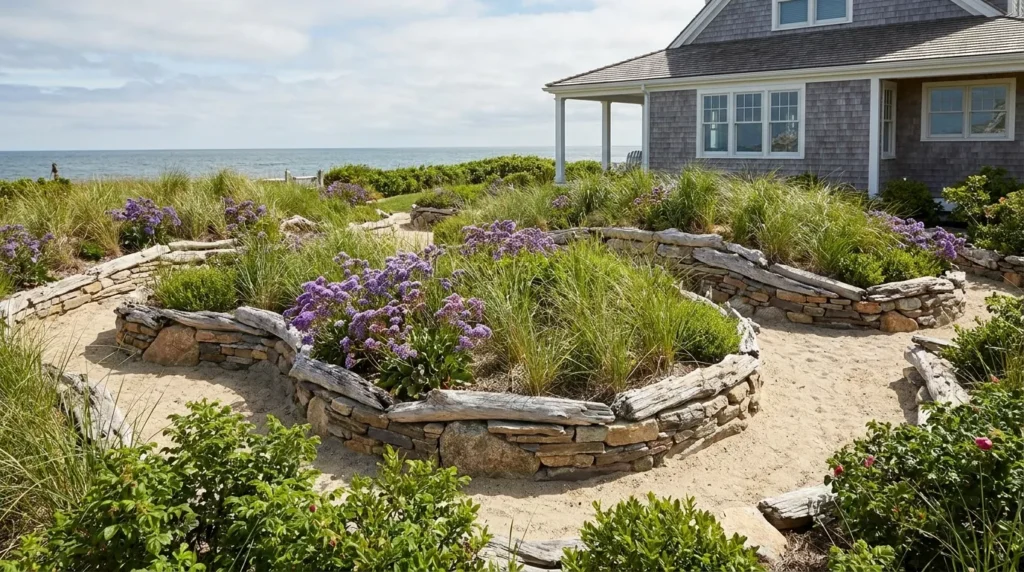
Raised dune-inspired beds bring the look of a natural shoreline directly into the front yard. By shaping the beds with gentle curves and varying heights, you can mimic the appearance of rolling sand dunes. Planting them with beach grasses, sea lavender, and other low coastal shrubs creates a soft, windswept effect that feels both natural and elegant.
These raised beds also improve drainage and make it easier to control soil conditions for salt-tolerant plants. Using sand-coloured mulch, gravel, or crushed shells around the plantings enhances the dune-like appearance. The result is a front yard that captures the essence of the coast while adding depth and dimension to the landscape.
12. Blue and White Color Palette:
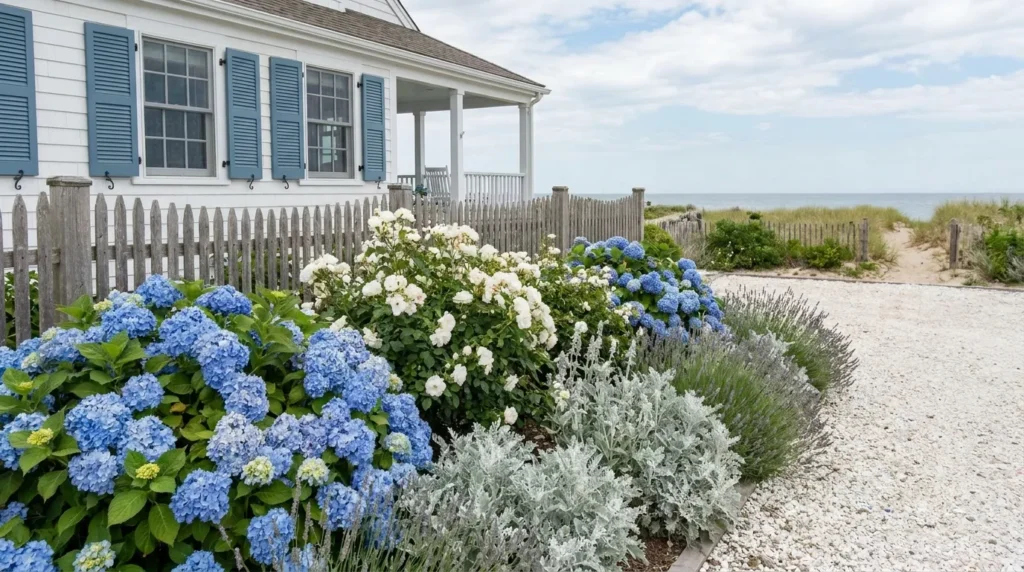
A blue and white colour palette is one of the most recognisable elements of coastal design. Blue hydrangeas, white roses, and silver foliage plants create a fresh, airy look that complements beach-inspired architecture. The cool tones evoke the colours of the ocean and sky, making the entire front yard feel calm and inviting.
To maintain a cohesive appearance, repeat the blue and white theme in containers, outdoor furniture, and decorative accents. Pairing these colours with natural materials such as wood, stone, and gravel prevents the design from feeling overly formal. This palette works well for both traditional coastal homes and modern seaside residences.
13. Coastal Cottage Garden:
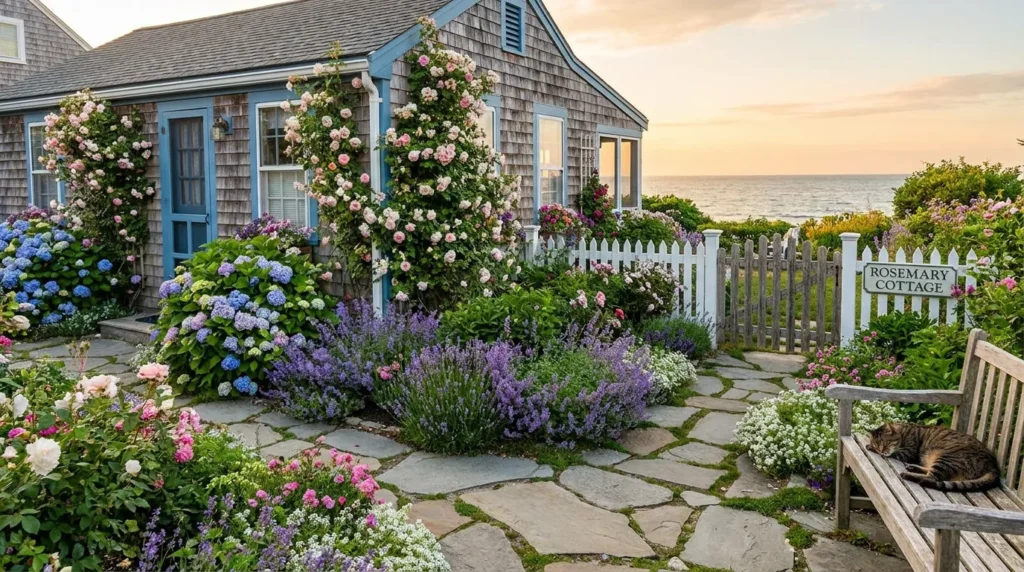
A coastal cottage garden combines the relaxed charm of seaside living with the abundance of a traditional cottage landscape. Roses, lavender, hydrangeas, and other flowering plants can be planted in informal drifts to create a lush, welcoming appearance. Winding stone paths and a white picket fence add structure while preserving the garden’s casual character.
This style works especially well for smaller front yards because it creates the feeling of a private retreat. Mixing different textures, heights, and bloom times ensures visual interest throughout the seasons. The overall effect is romantic, colourful, and perfectly suited to homes that embrace a classic coastal aesthetic.
14. Rope and Driftwood Accents:
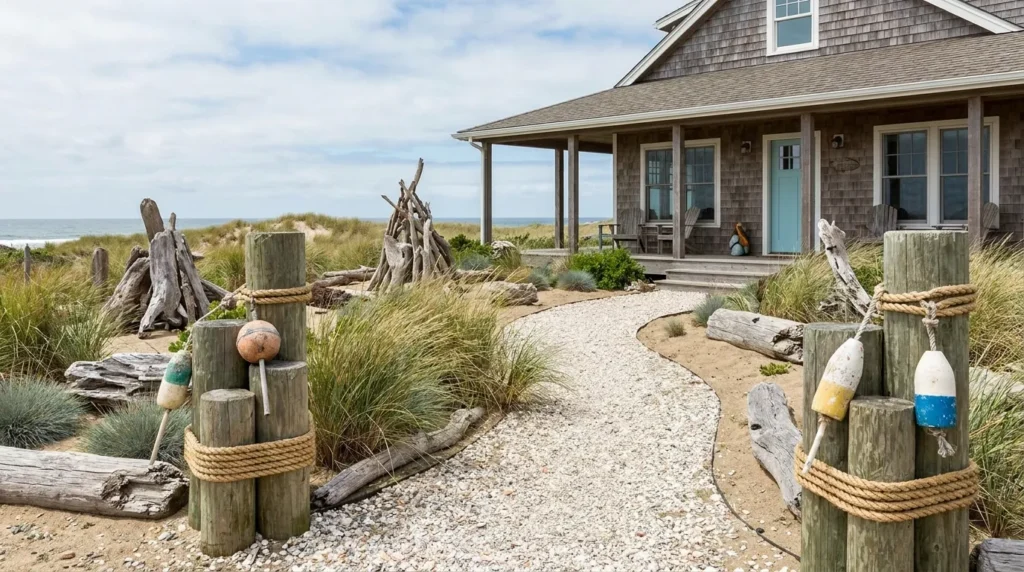
Rope and driftwood accents add subtle nautical character to a coastal landscape. Rope-wrapped posts can be used to line a pathway, define a planting bed, or frame the entrance to the yard. Driftwood pieces placed among ornamental grasses and gravel reinforce the seaside theme while adding natural texture.
The key is to use these accents sparingly so they enhance the landscape rather than dominate it. Combining them with simple plantings and neutral materials creates a balanced design that feels authentic and sophisticated. This approach is ideal for homeowners who want a coastal look with a touch of nautical charm.
15. Seaside Container Garden:
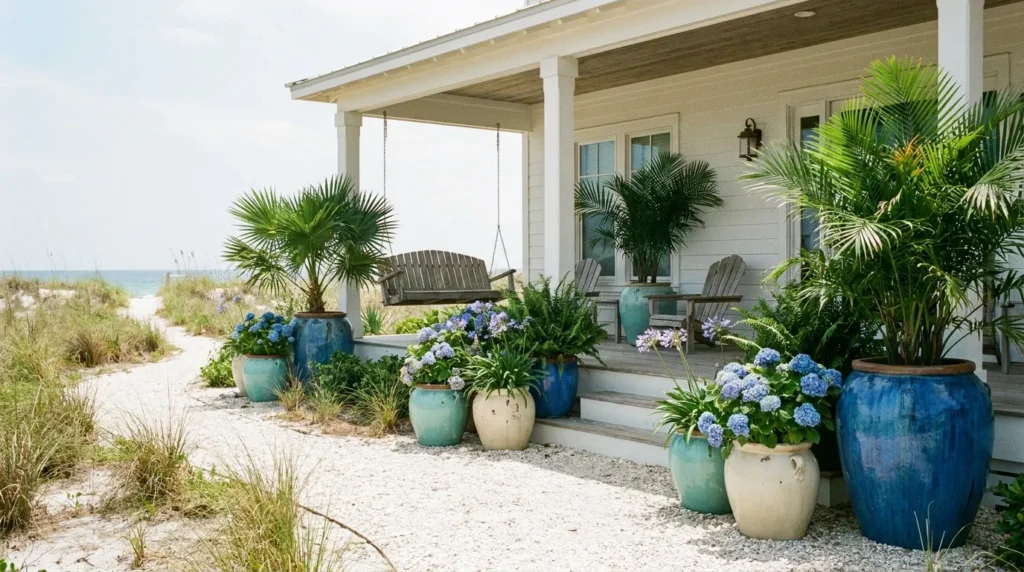
Container gardens are a flexible way to add coastal style to a front yard. Large ceramic pots in shades of blue, white, or sandy beige can be filled with palms, ferns, blue flowering plants, and trailing greenery. Arranging containers near the front door, along the walkway, or on the porch creates instant colour and texture.
One advantage of container gardening is the ability to change plant combinations seasonally. You can mix tropical foliage for summer, ornamental grasses for autumn, and evergreen accents for winter. This keeps the front yard looking fresh throughout the year while maintaining a cohesive coastal theme.
16. Coastal Rock Garden:
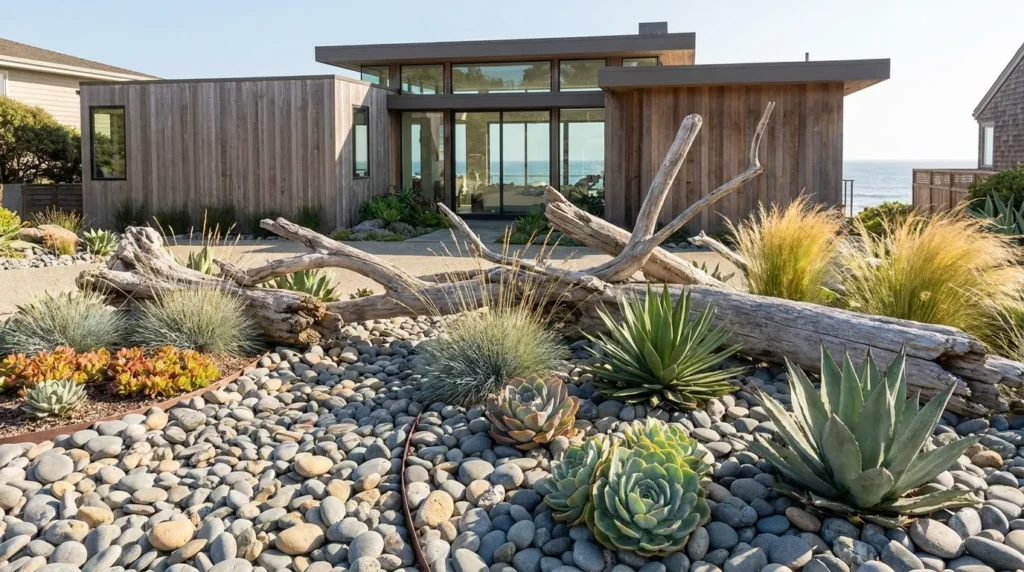
A coastal rock garden offers a low-maintenance alternative to traditional flower beds. Smooth beach stones, pebbles, and larger accent rocks create a natural foundation that pairs beautifully with succulents, ornamental grasses, and drought-tolerant coastal plants. The varied textures and muted colours give the landscape a calm, contemporary feel.
Incorporating driftwood or weathered timber adds warmth and reinforces the beach-inspired aesthetic. Rock gardens are particularly useful in areas with poor soil, high winds, or limited water availability. They provide year-round structure and visual interest while requiring minimal upkeep.
17. Lantern-Lit Entryway:
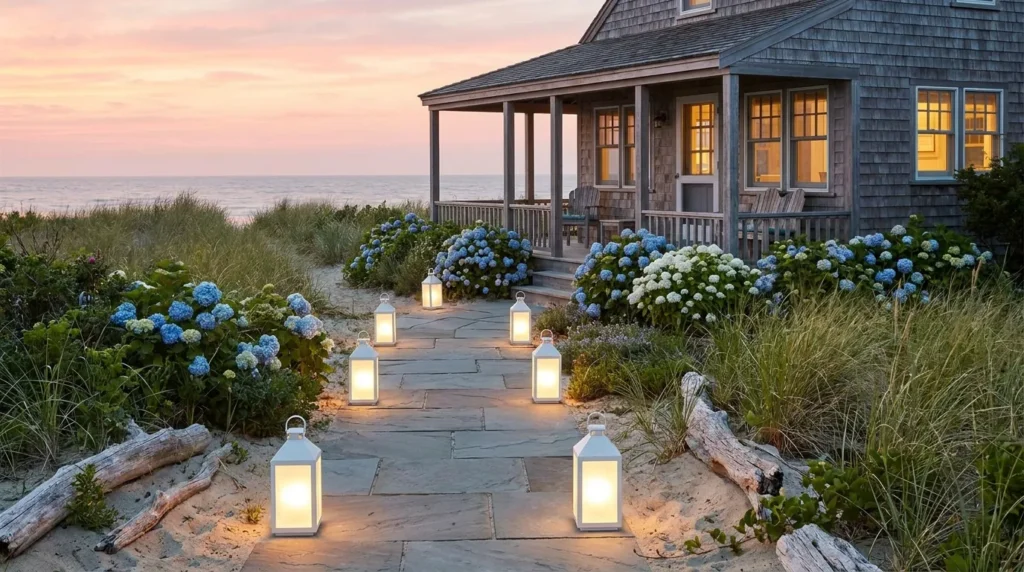
Lighting plays an important role in creating a welcoming coastal atmosphere. Lantern-style lights placed along a stone walkway provide both safety and charm, especially during the evening hours. White or weathered-metal fixtures complement the relaxed aesthetic of a coastal home and create a warm glow that highlights nearby plants and architectural features.
Pairing the lighting with hydrangeas, beach grasses, and other soft-textured plantings enhances the romantic seaside feel. The illuminated path guides visitors toward the entrance while adding depth and ambience to the front yard. This simple addition can dramatically improve the overall appearance of the landscape after sunset.
18. Coastal Water Feature:
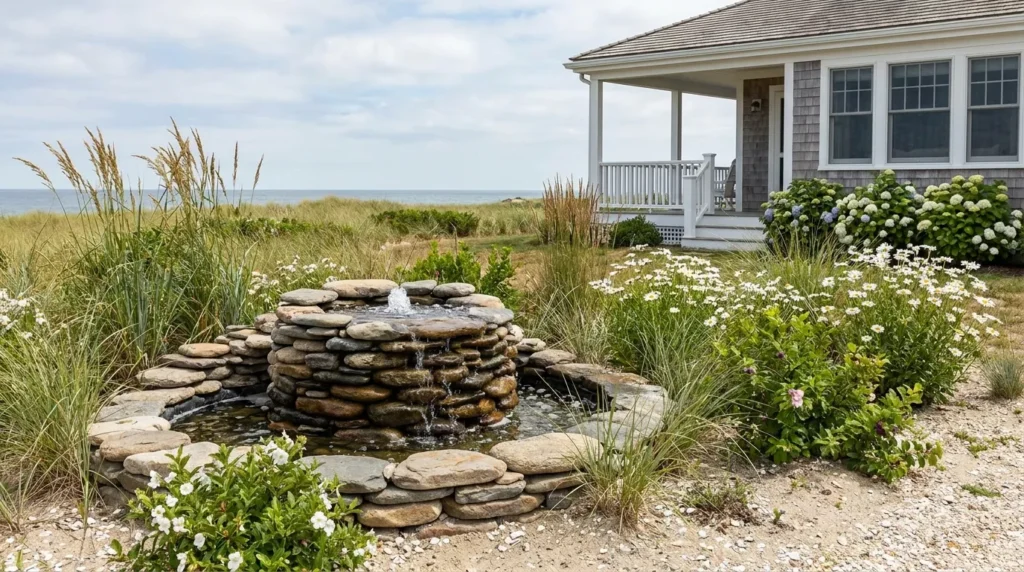
A small water feature brings the soothing sound of moving water into the front yard and strengthens the connection to the coast. A bubbling fountain surrounded by smooth stones and beach grasses creates a natural focal point that feels peaceful and refreshing. White flowering plants around the feature add brightness and soften the edges.
Even a compact water feature can have a significant impact on the atmosphere of the landscape. The gentle sound helps mask street noise and creates a relaxing environment for both homeowners and visitors. Choosing materials such as stone, ceramic, or weathered concrete ensures the feature blends seamlessly with the coastal design.
19. Tropical Coastal Mix:
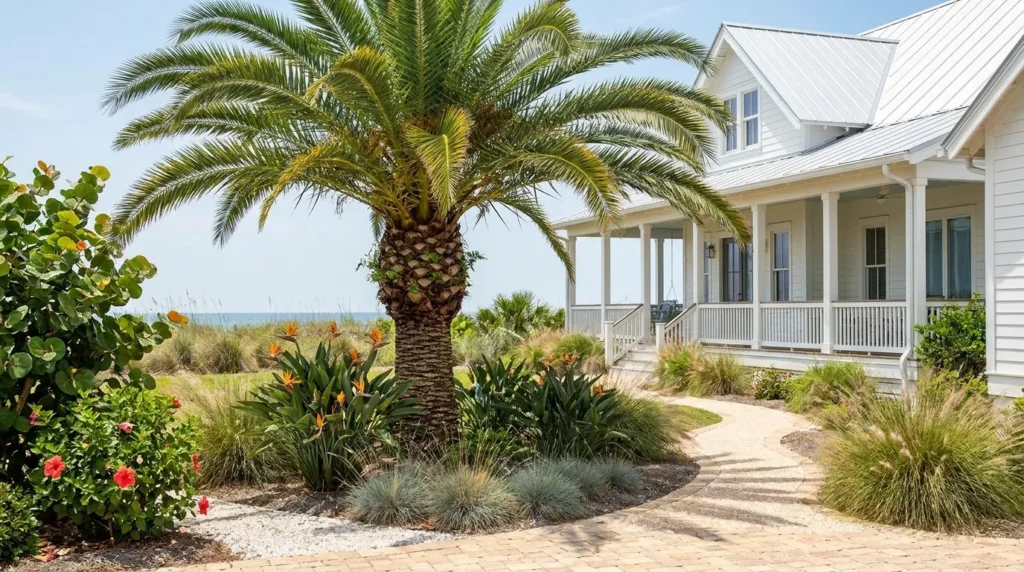
For homeowners in warmer climates, combining tropical plants with traditional coastal elements creates a lush, resort-like front yard. Palm trees, hibiscus, bird of paradise, and ornamental grasses provide bold foliage and vibrant blooms that thrive in sunny conditions. The mix of textures and colours gives the landscape an energetic yet relaxed feel.
To keep the design cohesive, balance the tropical plants with natural materials such as stone, gravel, and weathered wood. Blue shutters, white trim, and sandy-coloured pathways reinforce the coastal theme while allowing the plants to stand out. This approach creates a front yard that feels both luxurious and welcoming.
20. Minimalist Coastal Design:
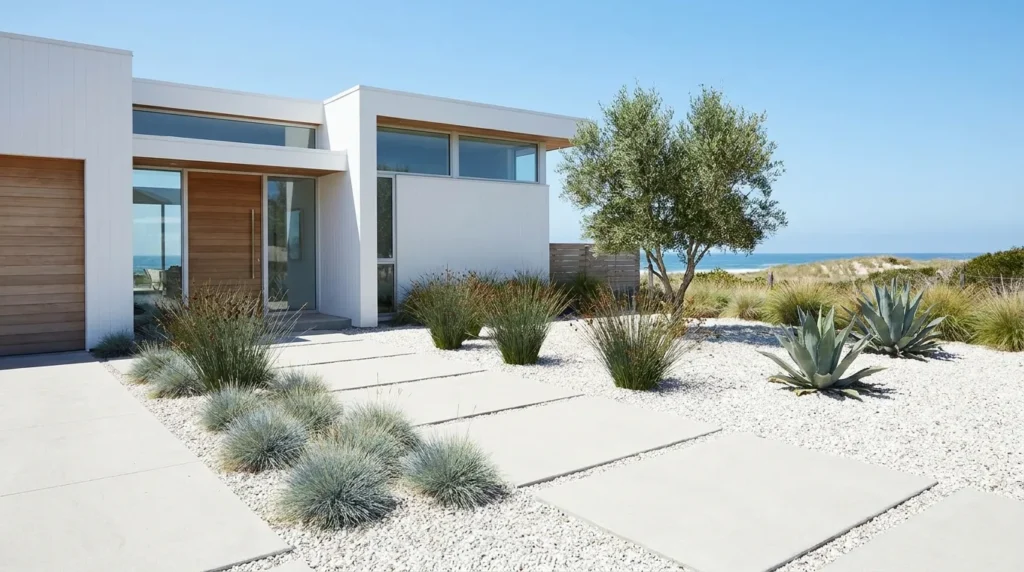
A minimalist coastal design focuses on simplicity, clean lines, and carefully selected materials. White gravel, concrete pacers, and sculptural grasses create a streamlined appearance that feels modern and sophisticated. Limiting the plant palette to a few well-chosen species keeps the landscape uncluttered and easy to maintain.
This style works particularly well for contemporary homes with modern architecture. The neutral colour scheme allows the textures of the plants and materials to take centre stage, while the open layout creates a sense of space and calm. A minimalist coastal front yard offers a refined interpretation of seaside living that feels fresh and timeless.
FAQ’s:
What plants work best in coastal front yards?
Salt-tolerant and wind-resistant plants are ideal for coastal landscapes. Popular choices include beach grasses, hydrangeas, lavender, sea thrift, beach roses, palms, succulents, and ornamental grasses. The best selection will depend on your climate and proximity to the ocean.
How can I make my front yard look coastal without living near the beach?
Use natural materials such as driftwood, gravel, shells, and stone, along with a soft color palette of blues, whites, greens, and sandy tones. Incorporating beach-inspired plants and relaxed landscaping shapes can create a coastal feel even in inland locations.
Are coastal landscapes difficult to maintain?
Many coastal landscapes are designed to be low-maintenance. Drought-tolerant plants, gravel, shell mulch, and native species often require less water and upkeep than traditional lawns and flower beds.
What is the best mulch for a coastal front yard?
Shell mulch, gravel, and crushed stone are excellent choices because they drain well and complement the coastal aesthetic. In some cases, natural wood mulch can also be used, especially in cottage-style landscapes.
Can I combine tropical and coastal plants?
Yes. In warm climates, tropical plants such as palms, hibiscus, and bird of paradise can be combined with traditional coastal grasses and shrubs to create a lush, resort-inspired landscape.
Conclusion
Coastal front yard landscaping is about capturing the relaxed beauty of the shoreline and translating it into a welcoming outdoor space. From seashell-lined paths and dune-inspired plantings to modern minimalist designs and tropical accents, there are countless ways to create a front yard that feels fresh, inviting, and connected to nature. Whether you’re updating a small entry garden or redesigning an entire landscape, these 20 ideas offer inspiration for creating a coastal retreat that enhances curb appeal and reflects your personal style. By combining natural materials, salt-tolerant plants, and thoughtful design details, you can enjoy the timeless charm of coastal living every time you come home.