 Muhammad Muaz
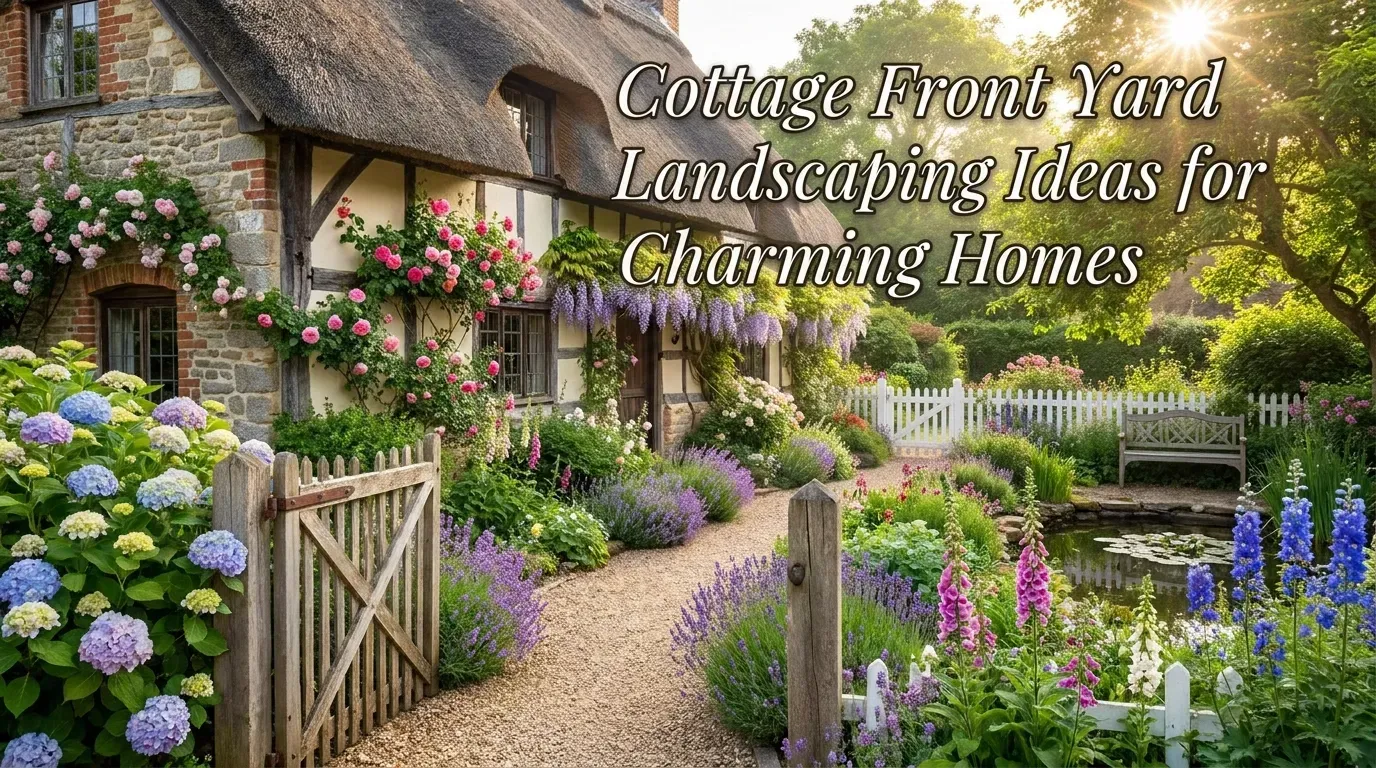
 Transform your front yard into a picturesque cottage paradise with these 23 inspiring landscaping ideas designed to elevate your home’s curb appeal. Whether you dream of a whimsical English garden, a romantic pathway lined with blooming flowers, or a charming rustic entrance, cottage landscaping offers the perfect blend of functionality and aesthetic beauty. From lush perennial borders to vintage garden elements, these ideas will help you create an inviting outdoor space that tells a story of elegance and timeless charm. Each design celebrates the classic cottage style—characterised by overflowing gardens, natural materials, and a sense of organised cottage garden design that feels both carefully curated and effortlessly beautiful. Let’s explore these magnificent front yard transformations that will have your home looking like it belongs in a storybook.
1. Stone Pathway With Wildflowers:
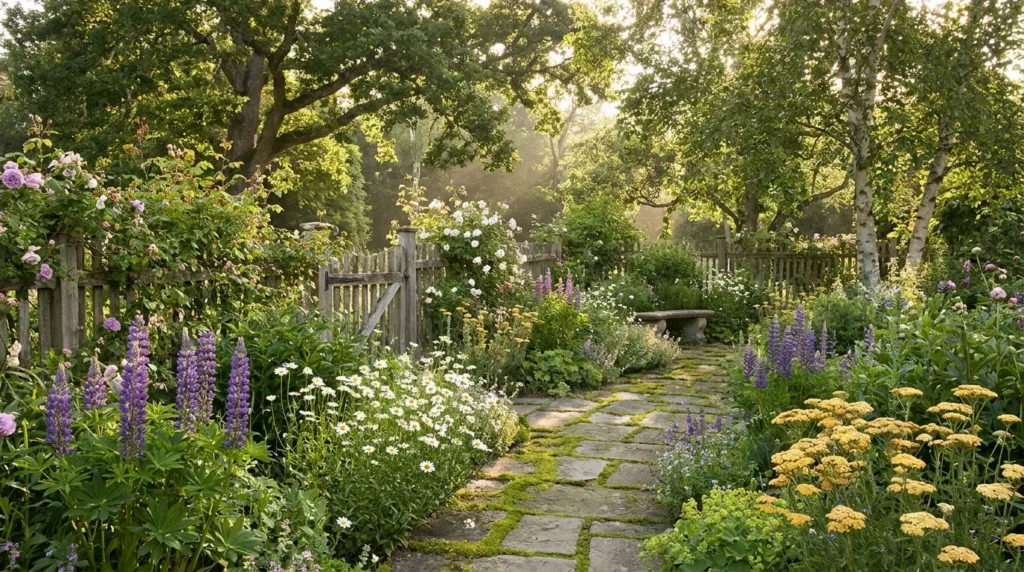
Create a romantic entry to your cottage home with a meandering stone pathway that guides visitors through your front yard. Using irregular natural stones—such as flagstone, slate, or limestone—you can craft a pathway that appears to have been there for generations. The beauty of natural stone lies in its ability to blend seamlessly with surrounding plantings while providing a sturdy, weather-resistant surface. Space the stones generously, allowing room for creeping plants like thyme or serums to fill the gaps, creating a soft, integrated look. This type of pathway becomes a central design element that not only serves a practical purpose but also establishes the romantic, welcoming aesthetic that defines cottage landscaping at its finest.
Plant a vibrant wildflower border along both sides of your stone pathway to create an explosion of colour and texture throughout the growing season. Choose a mix of native wildflowers such as purple cone-flowers, black-eyed Susana, wild Bertram, and delphiniums that will attract pollinators and create a naturalistic, abundance-filled garden. The beauty of wildflower plantings is that they require minimal maintenance once established—they thrive in average soil conditions and don’t demand constant watering or deadheading like formal garden beds. Scatter seeds or plant seedlings in generous clusters rather than organised rows for that authentic cottage garden appearance. As these flowers mature and self-seed, your garden will become increasingly fuller and more abundant year after year, creating that coveted lived-in, generously planted look that cottage gardens are famous for.
2. Picket Fence With Climbing Roses:
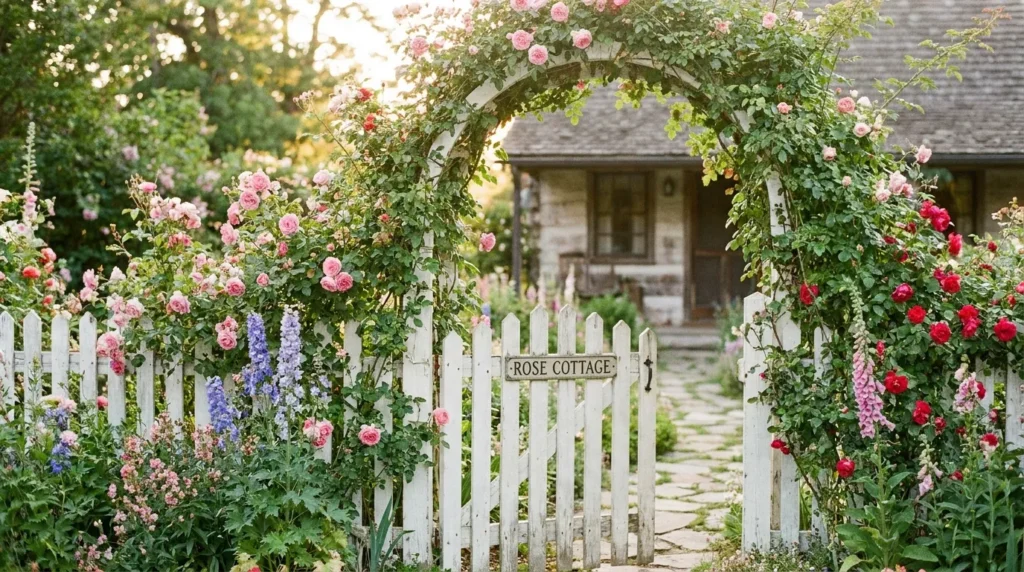
A traditional white picket fence immediately evokes cottage garden charm and creates a charming boundary between your front yard and the street. The picket fence style—characterised by evenly spaced vertical boards with decorative tops—has been a hallmark of cottage home design for centuries. Choose a quality wood that can withstand weather conditions, or opt for modern vinyl alternatives that provide the classic look with minimal maintenance requirements. Paint your fence in crisp white, soft cream, or pale Gray to enhance that quintessential cottage aesthetic. The fence serves multiple purposes: it provides security and privacy while creating a framework for climbing plants and establishing clear visual boundaries that enhance your home’s overall curb appeal.
Enhance your picket fence by training climbing roses to cascade across the fence panels, creating one of the most iconic cottage garden images imaginable. Select climbing rose varieties such as ‘Cecile Brynner,’ ‘Lady of Shallot,’ or heirloom varieties that produce abundant blooms throughout the season. Install sturdy support structures like horizontal wires or wooden trellises attached to the fence to guide the rose canes as they grow. The combination of the clean architectural lines of the white picket fence with the romantic, abundant blooms of climbing roses creates a perfect balance between structure and exuberance. Water regularly during the growing season and provide annual pruning to maintain plant health and shape, rewarding you with years of breathtaking floral displays that will make your home the envy of the neighbourhood.
3. Lush Cottage Garden Beds:
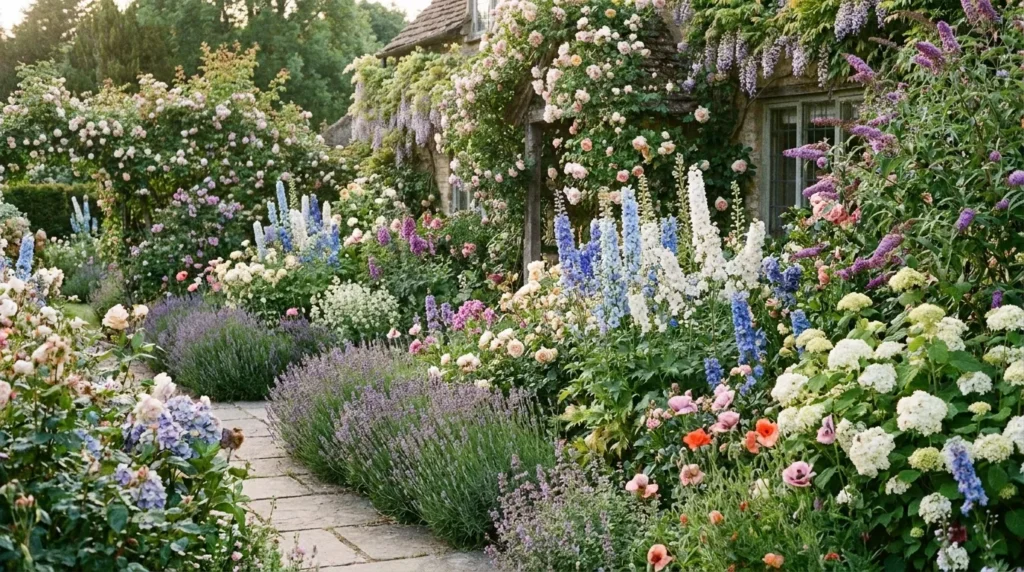
Design generously proportioned garden beds that showcase the hallmark of cottage gardening—abundant, densely packed plantings that create a sense of organised abundance. Rather than sparse, minimalist layouts, cottage gardens thrive on fullness and variety, with multiple plant species layered together to create texture, colour, and seasonal interest. Outline your beds with curved, flowing lines rather than geometric shapes, allowing the design to feel organic and naturally evolved. Fill these beds with a carefully selected mix of perennials, shrubs, and flowering plants chosen for their complementary heights, colours, and bloom times. The goal is to create a cohesive landscape where plants grow together in harmonious abundance, each variety supporting and enhancing the beauty of its neighbours while maintaining a lush, overflowing appearance.
Build your cottage garden beds with strategic layering, positioning taller plants toward the back or centre and graduating down to shorter varieties at the edges. Choose a colour palette that speaks to your style—whether you prefer romantic pastels of pink, lavender, and cream, vibrant combinations of reds and yellows, or cool blues with purple accents. Include a mix of plant types: English roses for classic beauty, tall delphiniums for architectural interest, feathery bestial for delicate texture, lavender for fragrance, and hardy geraniums for ground coverage. Incorporate foliage plants like hosts, huaraches, and ornamental grasses to add depth and visual interest even when flowers aren’t blooming. Add generous amounts of mulch and compost to enrich the soil, ensuring your plants have the nutrients they need to thrive and produce the abundant blooms that define cottage garden style.
4. Gravel Courtyard With Seating:
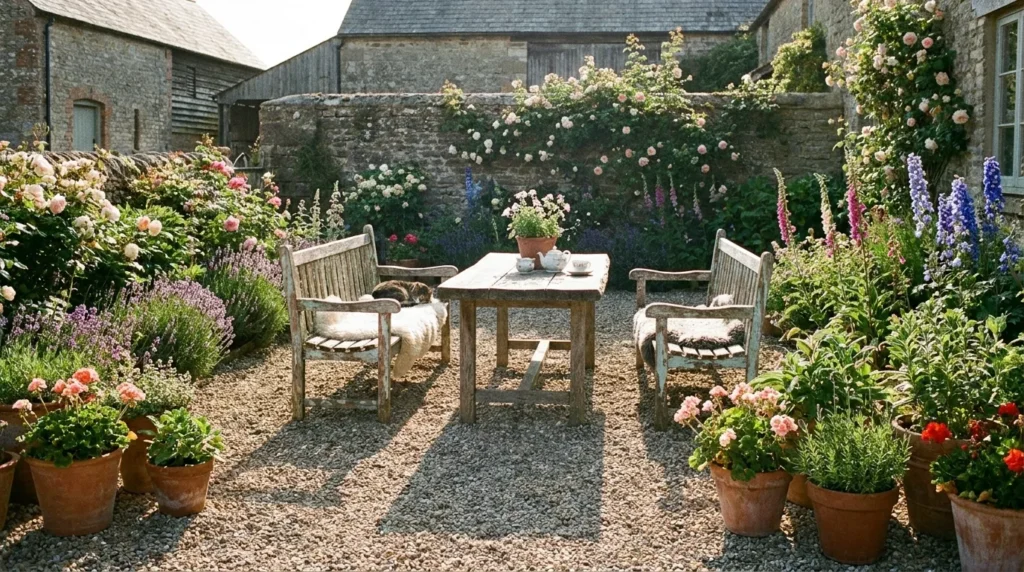
Transform your front yard into a functional yet charming gravel courtyard that serves as both an entry point and a welcoming gathering space. Gravel provides an attractive, budget-friendly surface that complements cottage aesthetics beautifully while offering practical benefits—excellent drainage during rainy seasons and a pleasant crunching sound underfoot that adds auditory charm to your garden. Choose high-quality gravel in warm earth tones like cream, tan, or soft Gray that harmonies with your home’s exterior palette. Define the courtyard edges with metal or wooden edging to maintain clean lines and prevent gravel from spilling into adjacent garden beds. This functional outdoor room becomes an extension of your home’s living space, providing a transition zone between street and doorway while establishing an inviting first impression.
Incorporate weathered wooden benches or rustic seating options within your gravel courtyard to create an intimate spot where visitors can pause and admire your garden. Position seating strategically to take advantage of views toward your most attractive plantings or to capture warm afternoon sunlight. Surround the seating area with fragrant plants like lavender, roses, or gardenias so visitors can enjoy natural perfumes while resting. Add potted specimens of topiary, trailing ivy, or seasonal flowers to frame the seating area and provide visual interest at varying heights. Maintenance becomes simple—regular raking keeps the gravel looking neat and fresh, while weeding remains minimal due to the weed barrier beneath. This cardsharper solution offers authentic cottage charm while solving practical drainage and usage challenges in your front yard.
5. White Fence With Manicured Hedges:
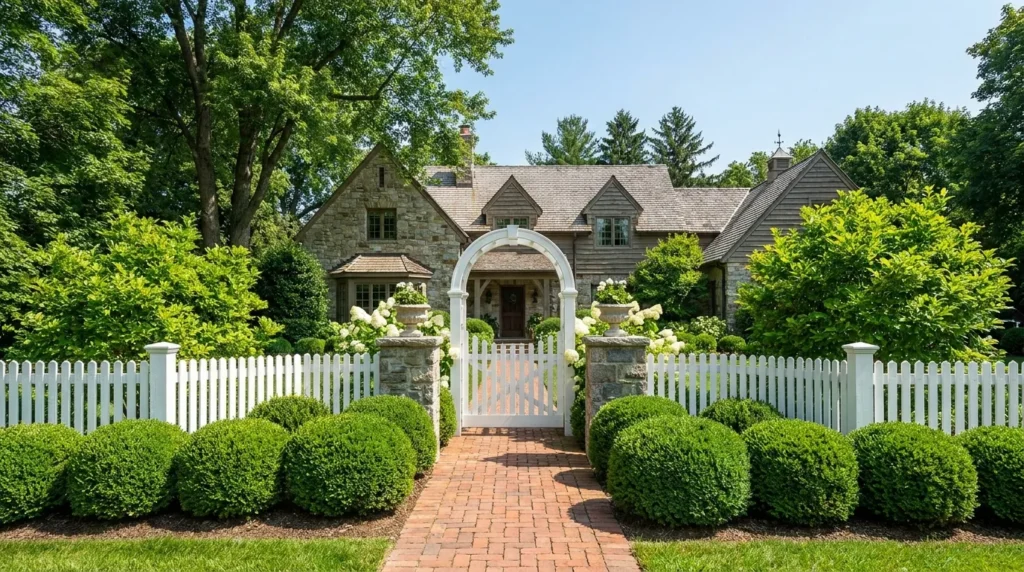
Combine a classic white fence with precisely manicured hedges to create a more formal interpretation of cottage garden design that emphasises structure and sophistication. This approach works particularly well for homes that blend cottage aesthetics with contemporary sensibilities, creating an elegant transitional style. Select evergreen hedging plants like boxwood, privet, or holly that maintain their form year-round and respond well to pruning. Plant hedges in a single row along the inside of your fence line, creating a substantial green border that softens the fence’s hard lines while providing privacy and wind protection. The combination of white pickets and green hedge creates a classic visual pairing that has graced country estates for generations, signalling wealth, taste, and attention to detail.
Maintain these hedges with regular shaping to preserve clean lines and encourage dense foliage growth—typically requiring two pruning sessions annually in spring and summer. The precise geometry of manicured hedges provides a strong visual anchor for your front yard design, establishing order and sophistication that contrasts beautifully with informal plantings of roses, perennials, or flowering shrubs. Train hedges into geometric shapes if desired—rounded domes, cones, or flat-topped screens all add architectural interest while maintaining the cottage garden aesthetic. The structure created by hedge and fence combination provides an excellent backdrop for specimen plantings like topiary, standard roses, or unusual cottage plants positioned as focal points. This refined approach to cottage landscaping appeals to gardeners seeking elegance and formality while honouring traditional cottage design principles.
6. Flowering Shrub Borders:
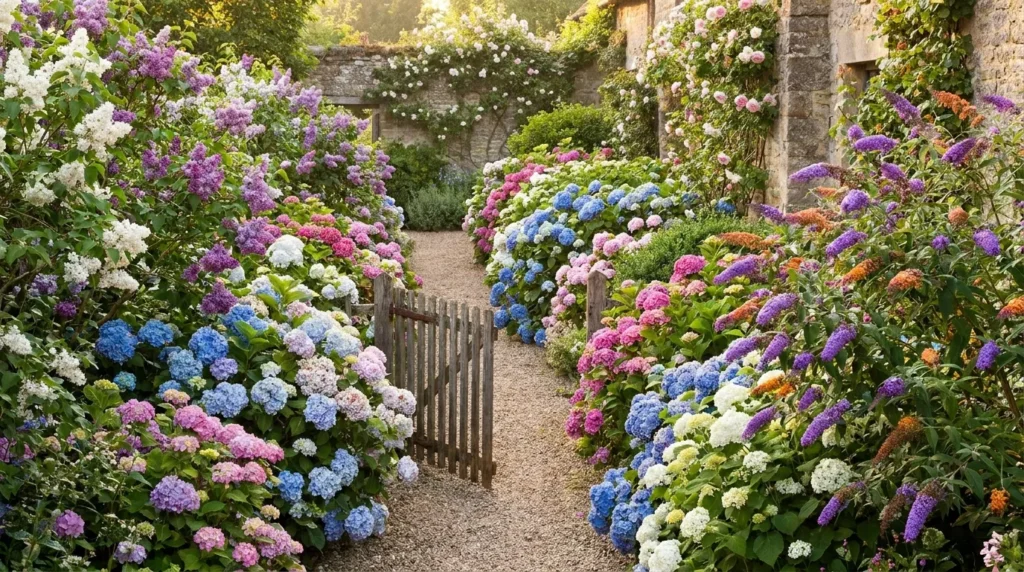
Establish beautiful flowering shrub borders along your front yard walkway or property lines to create year-round interest and abundant seasonal colour. Flowering shrubs provide substantial plant matter, creating the lush, full appearance that characterises cottage gardens. Select a diverse variety of shrub types that bloom at different times throughout the year—early spring lilacs, mid-season rhododendrons and azaleas, summer hydrangeas, and fall-blooming witch hazel create a continuous succession of floral interest. Consider both deciduous shrubs that provide dramatic spring or summer blooms and evergreen varieties that maintain structure and privacy year-round. Plant shrubs in generous clusters of three to five rather than single specimens to maximise visual impact and create a more naturalistic, established appearance that cottage gardening celebrates.
Layer your shrub borders using the double-border technique—placing taller shrubs toward the back and graduating to shorter varieties in front to create depth and ensure all plants receive adequate sunlight. Include fragrant varieties like lilacs, viburnum, gardenias, and butterfly bush that reward visitors with delightful perfumes as they approach your home. Choose a colour palette that complements your house’s exterior—soft pastels like cream, pale pink, and lavender create romantic elegance, while bold jewel tones add drama and richness. Incorporate foliage shrubs with interesting leaf colours and textures, such as golden privet, burgundy barberry, or silver-leafed beleaguers, to add visual interest even when flowers aren’t blooming. Annual pruning after flowering maintains plant shape while encouraging robust new growth and abundant blooms year after year.
6. Winding Garden Pathways:
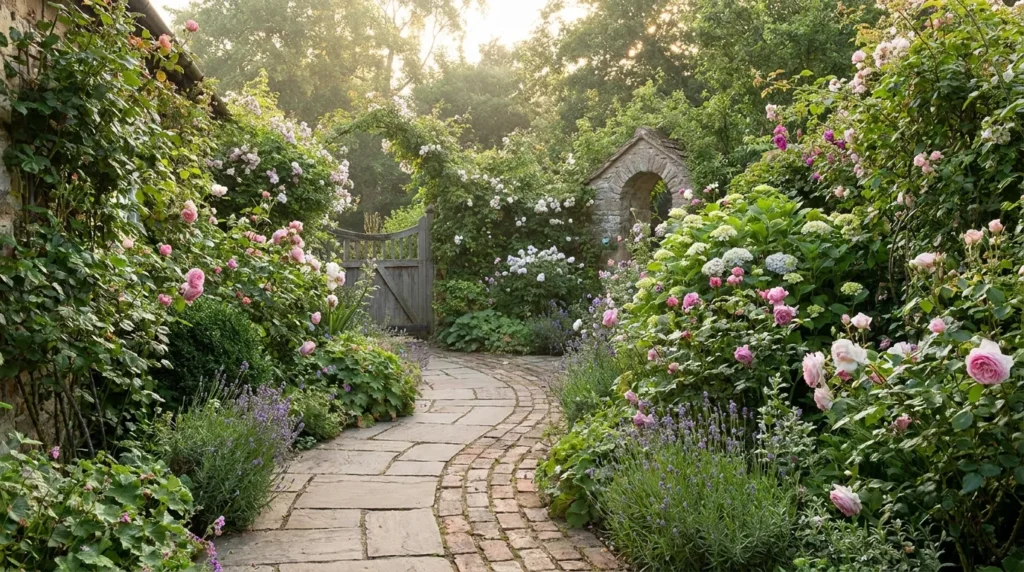
Design pathways that meander through your front yard rather than taking a direct route to your front door, creating a sense of journey and discovery that enhances cottage garden charm. Winding pathways suggest a slower pace, inviting visitors to pause and appreciate the garden details rather than rushing directly to the entrance. Use materials that complement your home’s architecture and surrounding landscape—traditional brick creates warm, classic appeal; natural stone offers rustic authenticity; or decomposed granite provides a softer, more casual appearance. Ensure pathways are wide enough for comfortable walking—at least two to three feet for single-file passage—and maintain a gentle slope for proper drainage. The curves and turns of a winding pathway create interesting sight lines that reveal new garden vignettes and plantings as visitors walk, maximising the perceived size and visual interest of your property.
Plant the pathways’ edges generously with overflowing plantings that partially encroach onto the walkway, creating an intimate, enveloping garden experience. This technique—where plants spill toward the pathway creating soft edges—is a hallmark of English cottage garden design and requires occasional trimming to maintain safe passage. Choose plants with interesting textures and forms to create varied visual experiences—feathery ferns, spiky day-lilies, rounded cat-mint, and trailing serums all offer different aesthetic qualities. Include fragrant plants near the pathway so visitors experience pleasant scents as they brush against foliage while walking. Illuminate winding pathways with subtle landscape lighting to extend enjoyment into evening hours and create magical ambience. The transformation of a simple functional walkway into a garden feature creates multiple layers of beauty and interest that visitors will remember long after their visit.
8. Rustic Cottage Gates:
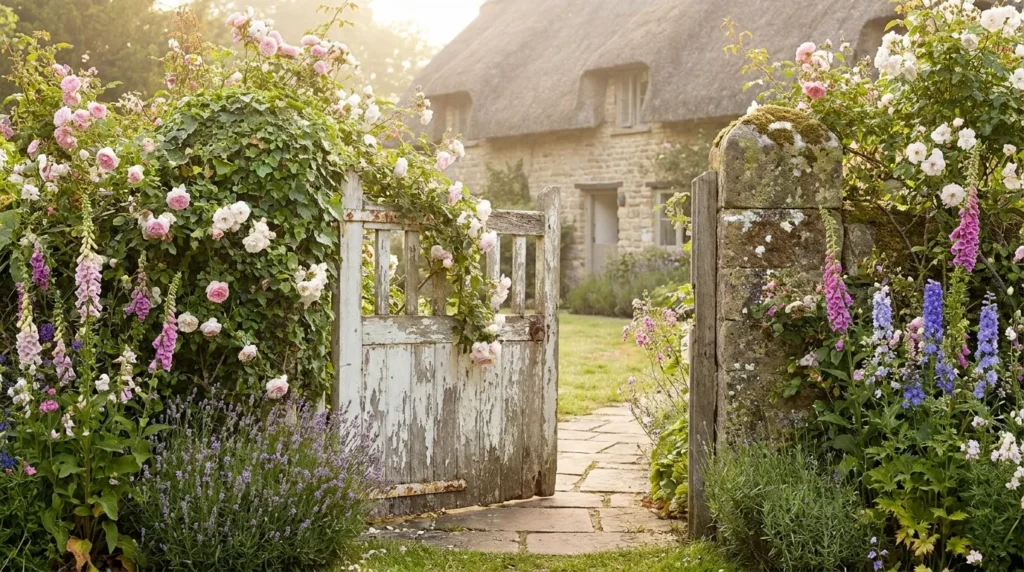
Install a charming rustic gate as the formal entrance to your cottage front yard, creating a distinctive threshold that separates the public street from your private garden sanctuary. A cottage gate serves both practical and psychological purposes—it establishes clear boundaries while inviting entry into your carefully cultivated space. Select gates crafted from weathered wood or wrought iron that showcase authentic cottage character; antique gates salvaged from old estates offer unique charm, while new gates designed in traditional styles provide reliability with classic aesthetics. Position gate posts on either side, anchoring the entrance and creating natural locations for climbing plants or topiary specimens. The gate itself becomes a design focal point—choose styles that reference your home’s architectural period, whether Victorian, Georgian, or simple farmhouse design.
Embellish your cottage gate with climbing plants, flowering vines, and abundant plantings that frame the entrance and celebrate the transition from street to garden. Train climbing roses, clematis, or honeysuckle vines up and around gate posts, creating an enchanting floral archway that greets visitors. Plant specimen plants on either side—perhaps pyramid-shaped proprietaries, romantic standard roses, or architectural grasses that create symmetry and formal elegance. Hang a vintage house number, weathered sign, or decorative planter on the gate to add personality and charm. Consider the gate’s colour—aged wood tones blend naturally with surrounding plantings, while white or cream gates create striking focal points against green foliage. Maintenance involves occasional fence stain or paint refresh and plant trimming to prevent overgrowth from impeding gate operation.
9. Window Box Gardens:
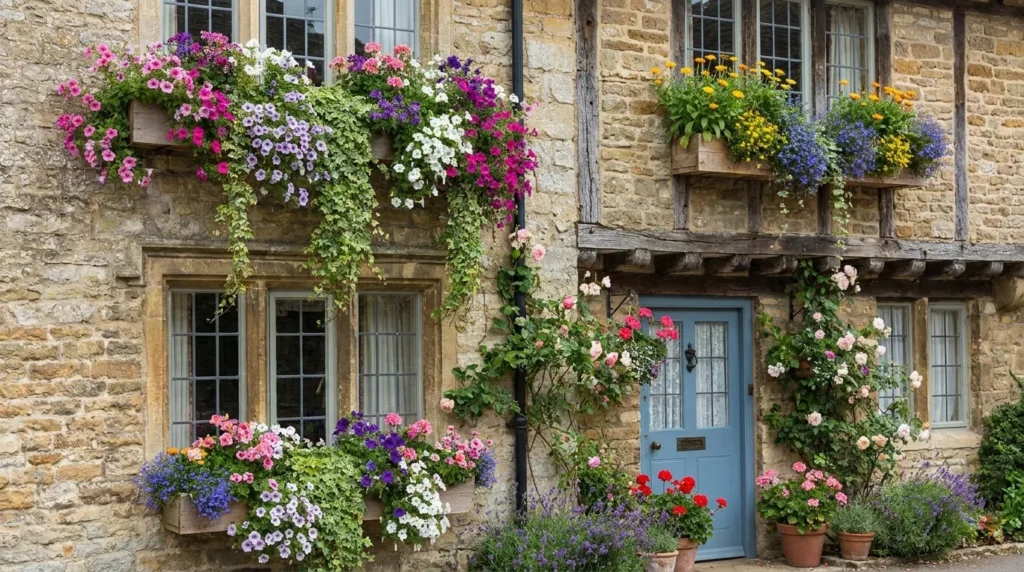
Create vertical garden interest by installing window boxes beneath your front-facing windows and filling them with cascading flowers and foliage that soften your home’s exterior. Window boxes provide the perfect opportunity to add colour and texture at eye level, creating an immediate visual impact for both residents and visitors. Choose window box styles that complement your home’s architecture—simple wood boxes for rustic cottages, painted metal boxes for traditional homes, or decorative ceramic containers for more refined aesthetics. Ensure boxes are securely mounted and constructed from rot-resistant materials like composite wood or treated cedar to withstand weather exposure. Size matters—larger window boxes accommodate more generous plantings and dry out more slowly than small containers, requiring less frequent watering during hot summers.
Plant window boxes with a combination of upright, mounding, and trailing plants to create full, overflowing displays that cascade beyond the box edges. Choose plants suited to your light exposure—shade-tolerant plants like ivy, impatiens, and begonias for north-facing boxes; sun-loving annuals like petunias, marigolds, and geraniums for southern exposures. Create colour harmony by selecting plants that echo your overall landscape colour scheme, or use window boxes to introduce accent colours that complement your home’s trim and shutters. Trailing ivy and creeping fig add architectural interest and soften box edges, while upright specimens like fuchsia or standard roses create focal points. Regular watering becomes essential in summer months when containers dry quickly, and deadheading spent flowers encourages continued blooming throughout the season.
10. Herb Gardens Front Yard:
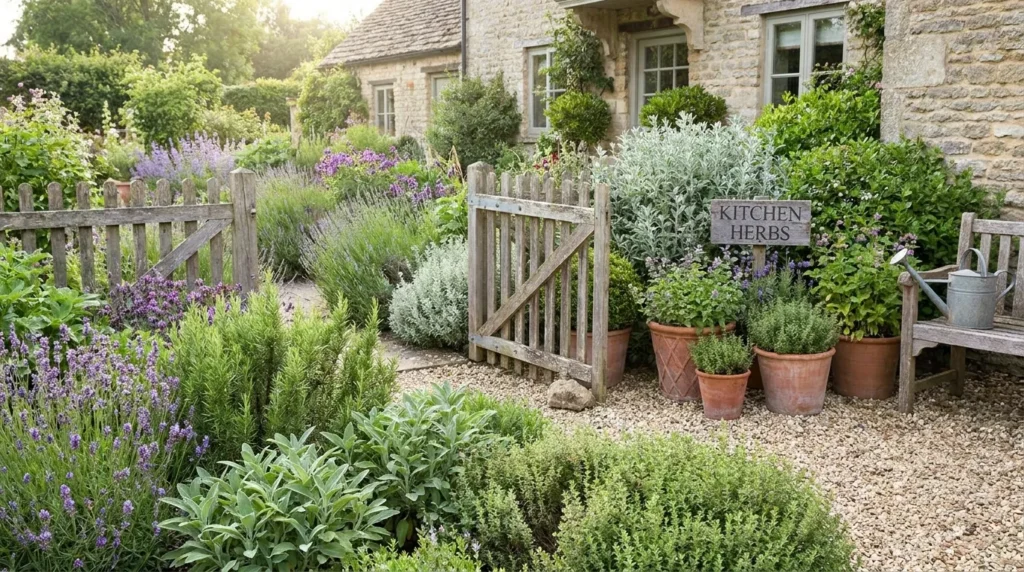
Combine beauty and functionality by incorporating an herb garden into your front yard landscaping, creating plantings that are both ornamental and practical. Herbs offer exceptional value for cottage gardeners—many varieties produce beautiful flowers while providing fresh ingredients for cooking, tea, and home remedies. Create dedicated herb beds in prominent front yard locations where they receive adequate sunlight and can be easily accessed for harvesting. Choose a diverse selection of herbs with varying heights and colours—tall rosemary creates structure, purple-leafed sage adds drama, feathery fennel provides airiness, and cascading thyme offers ground coverage. Many culinary herbs are Mediterranean in origin and prefer well-draining soil with minimal fertilisation, making them low-maintenance additions to your landscape that thrive with benign neglect.
Design your herb garden to showcase plants at their peak ornamental value while maintaining easy access for regular harvesting. Plant herbs in clusters or groups rather than single specimens to create visual impact and simplify maintenance. Incorporate fragrant varieties like lavender, mint, oregano, and basil that reward visitors with delightful scents as they brush past foliage. Edge herb beds with stone or brick to create definition and ease maintenance boundaries. Include flowering herbs like chives, forage, and calendar that attract beneficial pollinators while providing colourful blooms and edible flowers. Light annual pruning keeps herbs compact and encourages bushier growth and more abundant foliage for harvesting. Your functional front yard herb garden becomes a conversation starter, demonstrating how cottage landscaping seamlessly blends practical sustainability with beautiful ornamental design.
11. Stone Archway Entrance:
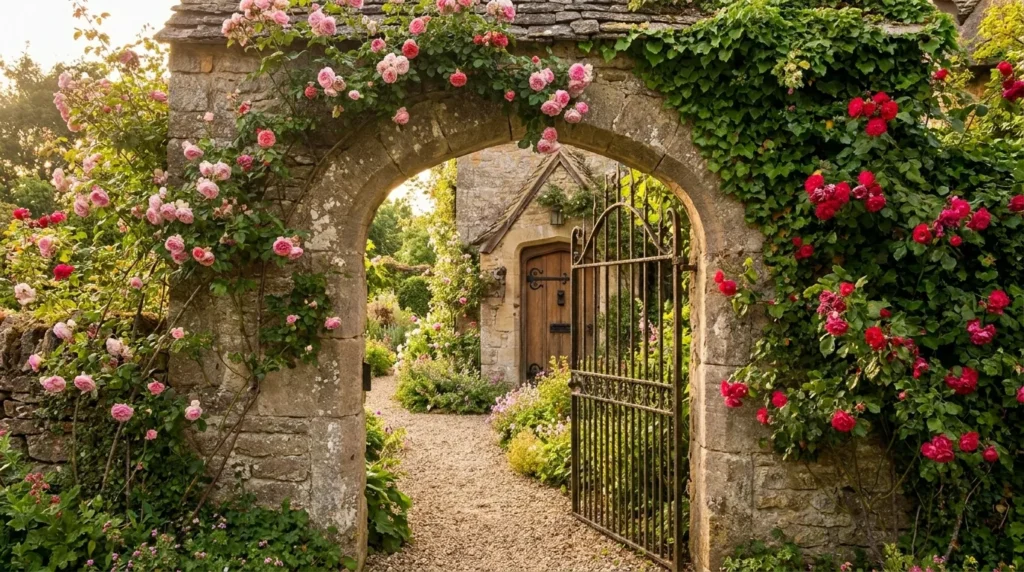
Install a substantial stone or brick archway as a dramatic focal point and functional entrance that signals the transition from street to garden. An archway creates architectural presence and visual drama, establishing a grand entrance that enhances your home’s curb appeal dramatically. Whether you construct the archway from mortared stone, stacked brick, or per-fabricated arch kits, ensure it’s properly engineered and installed for safety and longevity. Position the archway to frame views of your front door or direct visitors through a particularly beautiful section of your garden. The arch’s substantial nature makes it a landscape anchor that organises all surrounding plantings, providing a visual hierarchy and focal point that unifies disparate garden areas.
Train climbing vines and flowering plants over and around your archway to soften its architectural lines and create an enchanting garden passage. Climbing roses produce romantic blooms in endless colour options—classic reds, soft pinks, creamy whites, or golden yellows all create different atmospheric effects. Clematis varieties offer elegant flowers and delicate foliage that doesn’t overwhelm the archway structure. Honeysuckle, climbing hydrangea, and ivy provide textural variation and lush foliage coverage. Ensure your selected plants have adequate support structures on the archway, and provide regular watering during establishment years. Once fully established, the archway becomes a breathtaking focal point that frames garden views, creates fragrant passages, and provides shade during hot summer months. The romantic imagery of passing through a flower-covered archway epitomises the most appealing aspects of cottage garden design.
12. Mixed Perennial Borders:
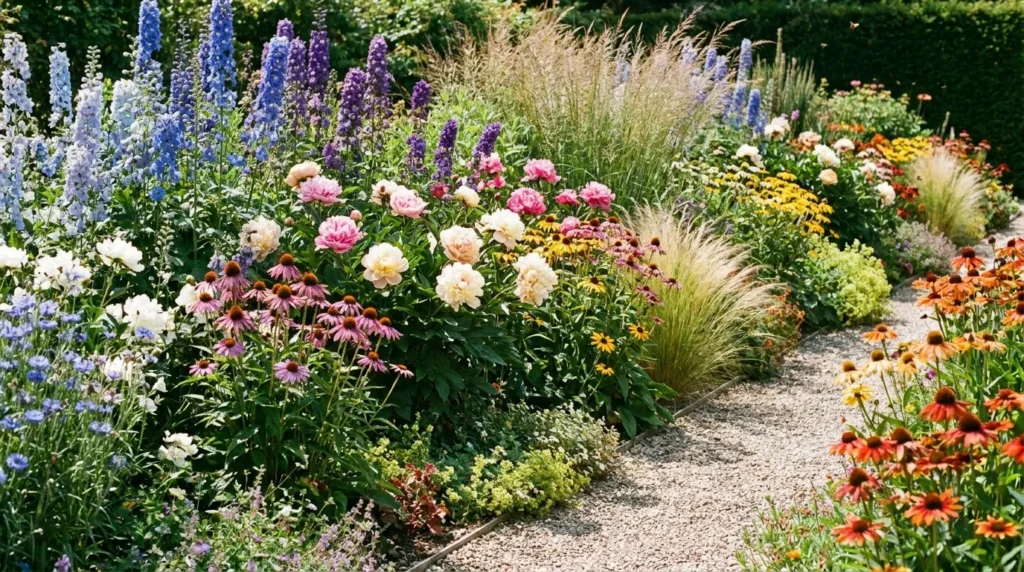
Design comprehensive perennial borders using the double-border technique popular in traditional English cottage gardens, creating maximum colour impact and seasonal progression throughout the year. This classic approach positions two parallel borders on either side of a pathway, allowing visitors to experience flowers and foliage at intimate distances while walking through your garden. Select a diverse palette of perennials chosen for their complementary heights, bloom times, and colours—tall delphiniums and saliva in back, mid-height peonies and osteoporosis in the middle, and low-growing cat-mint and creeping phlox in front create satisfying visual layering. Plan for colour succession—spring bulbs and early perennials give way to summer bloomers, followed by late-season asters and serum that extend garden interest into autumn. The result is a garden that looks full and abundant throughout the entire growing season.
Build your mixed perennial borders with careful attention to plant requirements, colour coordination, and textural variety that keeps gardens visually interesting. Include foliage plants like host as, huaraches, Artemis, and ornamental grasses that provide structure and visual interest even when flowers aren’t present. Choose a cohesive colour scheme—romantic pastels of pink, lavender, and cream; vibrant hot colours of red, orange, and yellow; or cool-toned combinations of blue and purple create different emotional atmospheres. Incorporate plants with varying textures—feathery Bastille, spiky yucca, round gallium, and delicate baby’s breath create visual diversity and prevent monotony. Space plants appropriately, allowing room for growth while creating a full appearance in the first season. Divide perennials every three to four years to maintain vigour and rejuvenate ageing plants while providing propagating material for expanding your borders.
13. Ivy-Covered Walls:
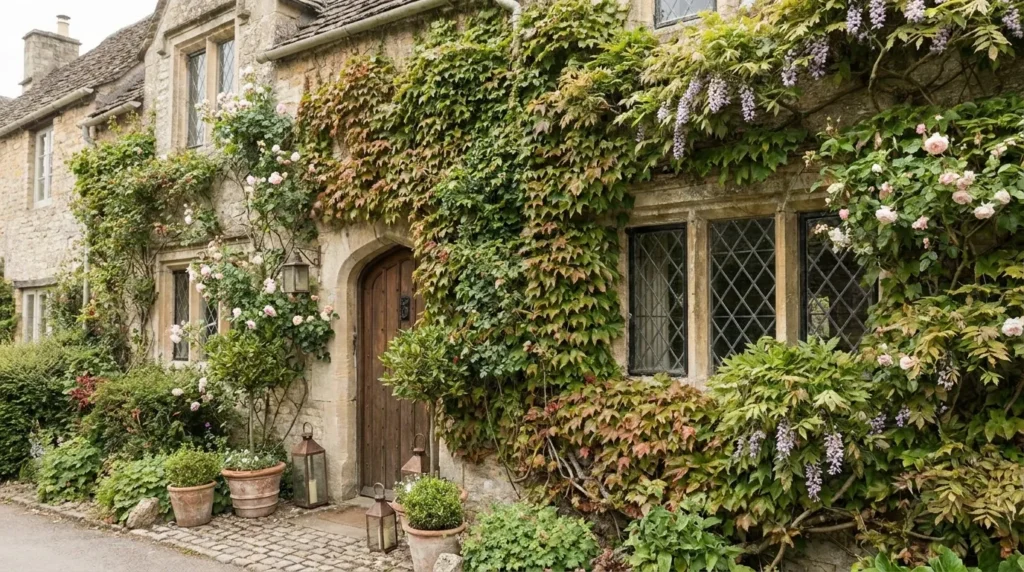
Allow climbing ivy to partially cover your cottage home’s exterior walls, creating a romantic, aged appearance that evokes centuries of history and charm. Ivy softens hard architectural lines, adds lush green texture to masonry or stone facades, and creates an instantly established, mature aesthetic that can take decades to achieve through other landscaping methods. English ivy, Boston ivy, and climbing hydrangea all offer excellent coverage while possessing distinct visual characters. Ivy provides environmental benefits—cooling building exteriors during hot summers and insulating during winter months while creating micro-habitats for beneficial wildlife. Careful attention during installation ensures ivy adheres properly without damaging mortar or caulking, requiring periodic maintenance to prevent overgrowth toward roof lines or windows.
Manage ivy-covered walls thoughtfully to maintain your home’s charm while preventing potential damage and allowing access to necessary elements. Trim ivy away from windows, doors, and roof lines regularly to prevent moisture problems and maintain clear sight lines. Select a portion of wall for ivy coverage rather than complete coverage—strategic ivy placement on one wall section or framing a central architectural feature creates dramatic effect without overwhelming your home’s design. Monitor ivy growth to ensure it doesn’t extend into gutters or eaves where decomposing leaves can cause drainage problems. The romantic aesthetic of ivy-covered stone walls is particularly effective on older cottage-style homes with substantial architecture, enhancing rather than competing with architectural details. With proper management, ivy becomes a living green tapestry that adds timeless elegance and natural beauty to your home’s exterior presentation.
14. Lavender Pathways:
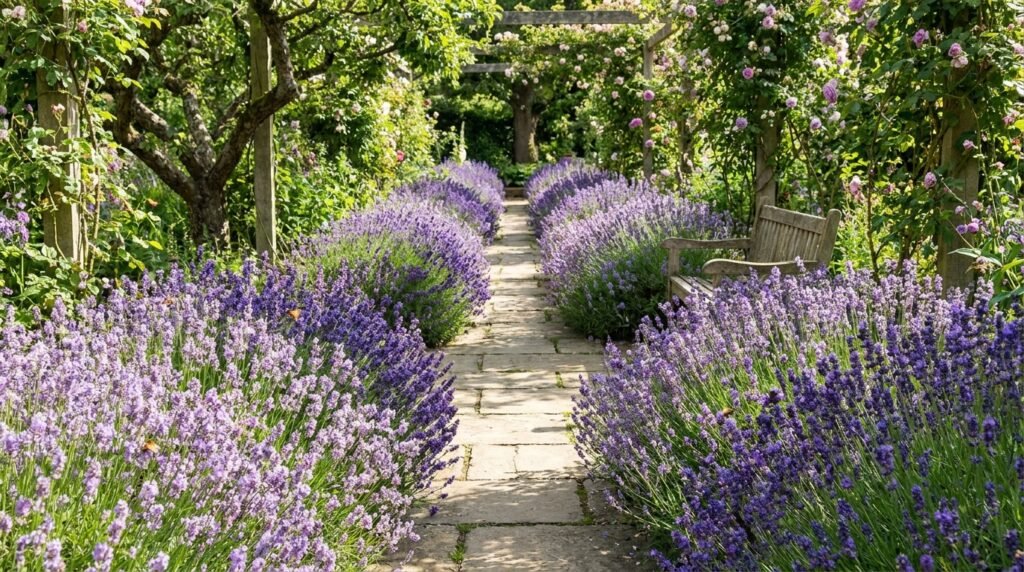
Create a sensory garden experience by lining your front yard pathways with fragrant lavender plantings that engage both vision and smell. Lavender’s soft purple, pink, or white blooms and delicate foliage create romantic garden borders while producing the intense fragrance that lavender is famous for. English lavender varieties are hardier and more heat-tolerant than French types, making them ideal for most climates. Lavender thrives in well-drained soil with minimal water once established, making it a sustainable landscaping choice requiring little maintenance. As visitors walk along lavender-lined pathways, brushing against foliage releases volatile oils that create powerful olfactory memories, making your garden memorable and emotionally engaging. The purple colour palette creates a cohesive garden aesthetic that pairs beautifully with white trim, pale stonework, and complementary perennials.
Design lavender pathways by planting mature varieties in generous clusters on either side of your walkway, creating height and fullness that defines the pathway edges. Space plantings closely enough to create a unified border effect while allowing adequate air circulation to prevent disease and ensure plant vigour. Combine lavender with complementary plants like silver-leafed Artemis, white roses, or pale pink pensions to create layered colour effects. Deadhead spent flowers regularly during the blooming season to encourage continuous flowering and maintain attractive plant form. In late fall, prune lavender plants lightly to maintain bushy shape, removing no more than one-third of total growth. Harvest lavender flowers at peak bloom for drying and culinary use, creating a practical element to your ornamental plantings. The result is a fragrant, colourful pathway that engages multiple senses and creates the deeply satisfying sensory experience that defines the best cottage gardens.
15. Cottage Water Features:
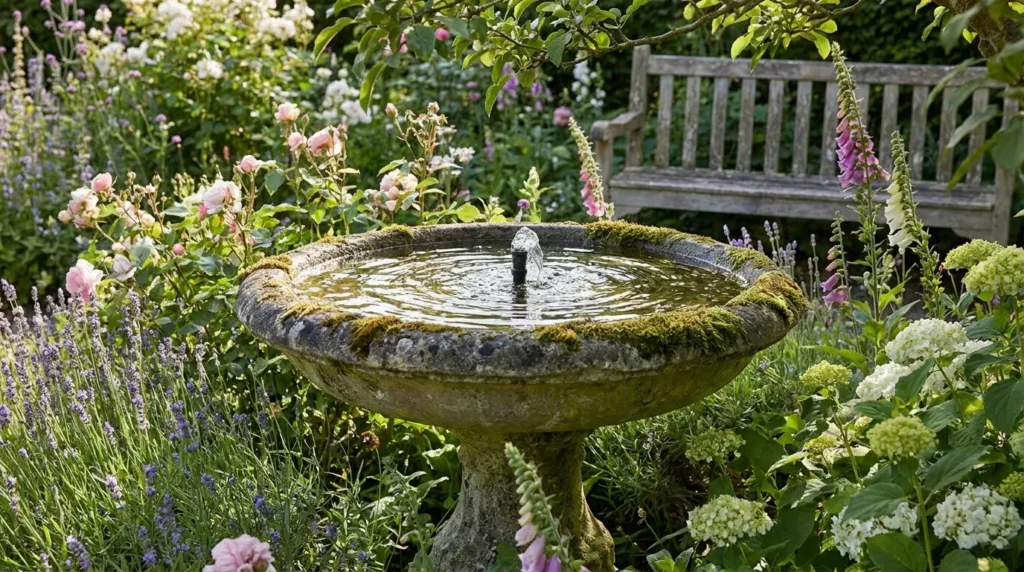
Incorporate water features like birdbaths, fountains, or small pond elements into your front yard to create focal points, attract wildlife, and add sensory interest to your cottage landscape. Water features serve multiple purposes—they provide drinking and bathing water for birds and beneficial insects while creating visual and auditory focal points that enhance garden ambience. A simple pedestal birdbath works beautifully in traditional cottage gardens, positioned as a focal point within perennial borders. Tiered fountains add movement and the soothing sound of flowing water. Small recirculating ponds with water plants like water lilies create reflective surfaces that amplify perceived space while supporting aquatic wildlife. Choose water feature styles that complement your home’s architecture and landscape aesthetic—weathered stone for rustic appeal or ornamental cast iron for Victorian charm.
Position water features strategically as focal points that draw the eye and organise surrounding plantings. A birdbath centred in a perennial bed becomes a visual anchor point that unifies plantings. A small fountain near your entrance creates a welcoming transition point where visitors encounter flowing water and hear soothing sounds before reaching your door. Surround water features with complementary plantings—moisture-loving host as and ferns near ponds, elegant perennials around birdbaths, or fragrant plants surrounding fountains. Maintain water features according to their type—regular birdbath refilling ensures wildlife access, fountain cleaning prevents mineral buildup, and pond maintenance supports aquatic health. The presence of water in your landscape introduces movement, sound, and reflection that creates engaging focal points and attracts birds and butterflies that further enhance your garden’s natural beauty and ecological function.
16. Weathered Bench Seating:
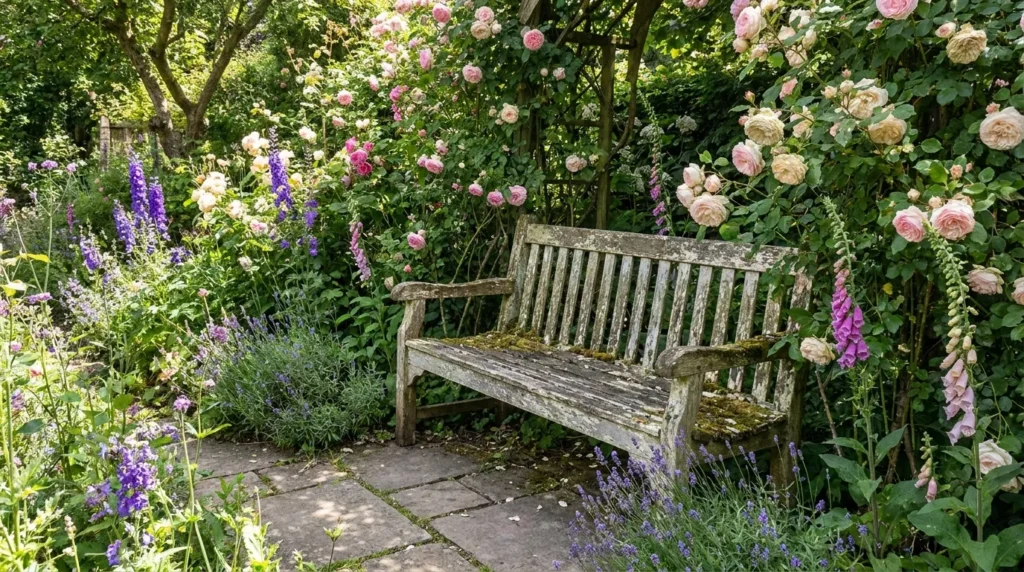
Position weathered wooden benches strategically throughout your cottage front yard to create intimate vignettes for sitting, contemplating, and appreciating your garden’s beauty. A bench becomes more than functional furniture—it’s an invitation to slow down, pause, and experience the sensory richness of your landscape. Antique or aged benches possess authentic character that new furniture cannot replicate, their weathered finishes telling stories of years outdoors. Position benches to capture afternoon sun, offer shade from mature trees, or frame views toward your most attractive plantings. A bench nestled within flowering borders becomes a romantic retreat where visitors can sit surrounded by blooming flowers, experiencing fragrance and visual beauty at intimate proximity. Weathered benches photograph beautifully, creating artistic garden scenes that attract admiration and inspiration from visitors.
Create specific seating vignettes by placing benches within thoughtfully designed garden settings that enhance the sitting experience. Position a bench beneath a flowering tree to capture spring blooms overhead. Place seating within fragrant herb gardens where visitors enjoy aromatic plants while resting. Nestle benches within perennial borders where flowers surround and frame the seating area. Paint benches in colours that coordinate with your overall landscape—weathered Gray for natural simplicity, cream or white for fresh cottage charm, or dark green for integration with foliage. Add a small side table near benches for placing cups of tea, books, or garden journals that encourage extended outdoor relaxation. Cushions and throws add comfort and colour while protecting weathered wood surfaces. Your cottage front yard transforms into a series of destinations rather than merely a passage to the door, with strategically placed seating inviting visitors to pause and savour the garden’s accumulated beauty.
17. Vintage Landscape Elements:
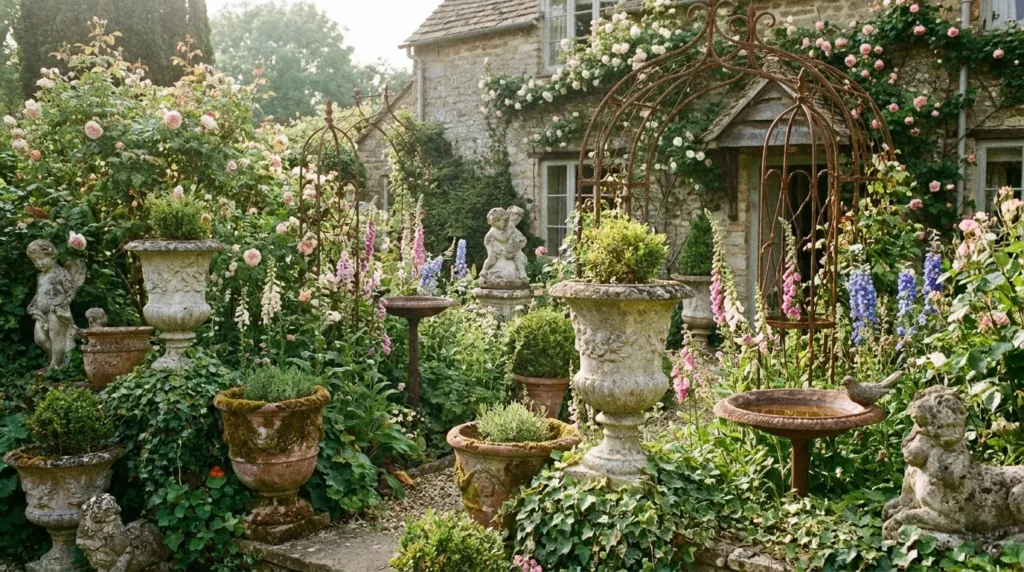
Collect and display authentic or reproduction vintage garden elements throughout your front yard to create character, depth, and nostalgic charm that reflects a love of heritage and history. Vintage decorative pieces—weathered stone urns, cast iron ornaments, aged metal gates, salvaged architectural elements, and antique statuary—add soul and personality to landscapes. These elements work best when positioned thoughtfully as focal points within plantings rather than scattered randomly. An antique urn becomes a planter anchoring a garden corner, a vintage watering can creates whimsy when tucked among flowers, and salvaged architectural fragments add gravitas to garden beds. The patina and wear visible on vintage pieces tells stories of history and adds authenticity that feels earned rather than designed. Authentic vintage elements possess weight and substance missing from reproduction alternatives, though quality reproductions can serve similar purposes when authentic pieces are unavailable or affordably.
Display vintage elements as a curated collection that reflects your personal interests and aesthetic preferences. Group several pieces of similar materials or styles to create arrangement impact—cluster stone urns and planters, arrange metal ornaments among perennials, or position architectural fragments as structural garden features. Position vintage elements to draw the eye and serve as focal points that organise surrounding plantings. Vintage watering cans, old farm tools, weathered bird cages, and other practical historical objects add functional-decorative interest when displayed thoughtfully. Layer different elements at varying heights and depths to create visual complexity and encourage viewers to explore your garden to discover all treasures. Maintenance involves regular cleaning to remove dust and debris, but the ageing patina characteristic of vintage pieces should be preserved rather than polished or restored. Your cottage garden becomes a living museum that celebrates heritage, craftsmanship, and the enduring beauty of well-made objects from times past.
18. Cottage Porch Garden:
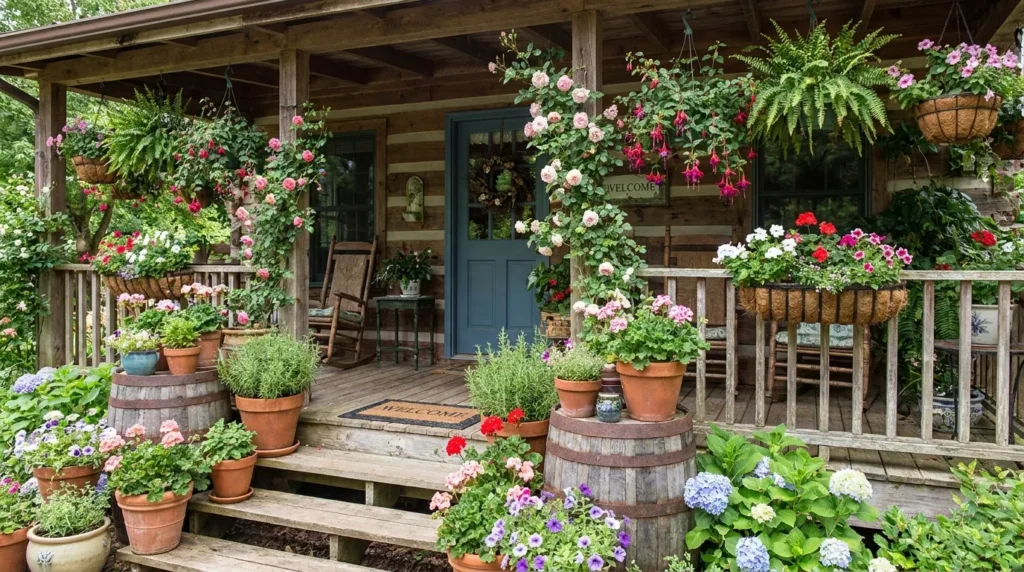
Transform your cottage porch into an abundant garden room by surrounding it with carefully selected container plantings that create a welcoming, floral-filled entrance experience. The porch becomes the most visible element of your front yard landscaping—container gardens positioned on steps, shelves, and hanging structures create immediate visual impact and set the tone for the entire landscape. Container gardens allow maximum flexibility—they can be changed seasonally, re-positioned for optimal light, and showcase specimen plants that might be challenging to grow in-ground. Choose containers in materials and colours that complement your porch’s architecture—weathered clay, distressed metal, painted wood, or ceramic vessels create different aesthetic effects. Porch gardens work particularly well for gardeners with limited in-ground space or challenging soil conditions, as container success depends more on soil quality and water management than landscape location.
Create a layered, abundant porch garden by positioning containers at multiple heights using stands, shelves, and hanging structures. Hang flower-filled baskets from porch ceilings or brackets to utilise vertical space and create an enveloping floral effect. Position substantial containers on porch steps and floor areas, graduating sizes to create visual progression toward the entrance. Select plants that thrive in container conditions—trailing petunias and ivy for cascading effects, upright geraniums and standard roses for structure, foliage plants like coleus and rancher for year-round interest. Combine plants with complementary colours, textures, and bloom times within individual containers to create satisfying compositions. Water container gardens frequently during hot months—daily watering may be necessary as soil in containers dries quickly. Deadhead spent flowers regularly to encourage continuous blooming, and feed container plants monthly with diluted fertiliser to replace nutrients depleted by frequent watering. Your cottage porch transforms into the most memorable part of your landscaping—a floral-filled, fragrant welcome that greets every visitor with abundant charm.
19. Stone Wall Borders:
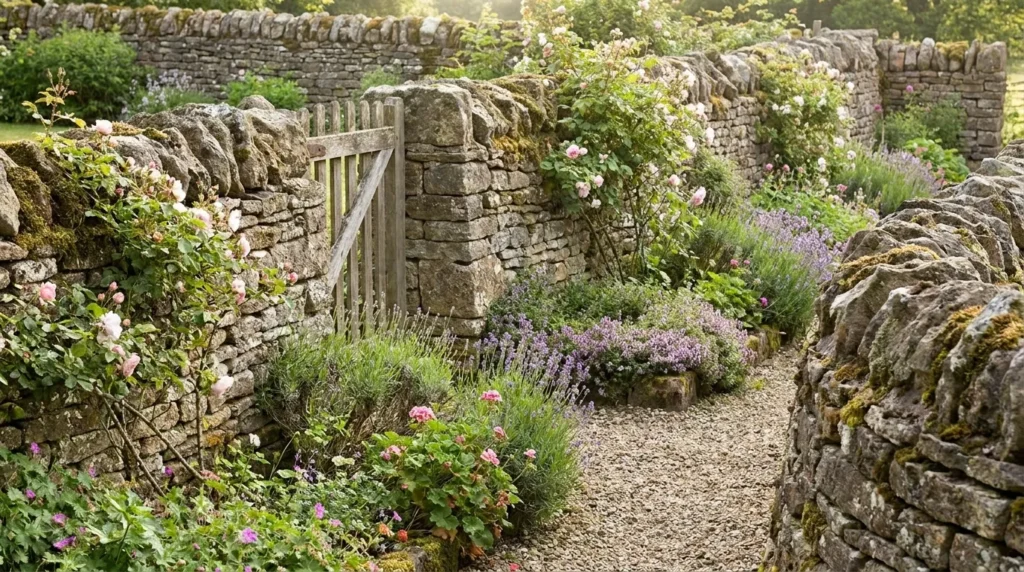
Build enduring stone walls as functional borders and landscape focal points that establish garden definition while creating beautiful cardsharper elements. Stone walls serve multiple purposes—they retain soil on sloped properties, define garden areas, provide privacy and wind protection, and add substantial architectural presence. Dry-stacked stone walls constructed without mortar offer authentic cottage charm and benefit wildlife by providing shelter and moisture within the spaces between stones. Stone selection matters significantly—local stone native to your region creates visual harmony with the surrounding landscape, while imported stone adds exotic interest. A well-built stone wall becomes more beautiful with age as lichens colonise surfaces, creating colourful patterns of orange, Gray, and green that develop character over time.
Position stone walls to define garden areas, separate spaces, and create visual boundaries that structure your landscape design. Plant specimen perennials and cascading plants along wall edges, allowing attractive foliage and flowers to spill over stone surfaces. Include moisture-loving plants that thrive in rocky conditions—sedums, sempervivums, and trailing creeping plants survive in minimal soil within wall crevices. Accent walls with flowering vines that climb and cascade over stone surfaces, softening hard architectural lines. Leave some sections of wall visible as focal point stonework, while other areas disappear beneath abundant plantings. Maintain walls periodically, resetting any displaced stones and ensuring structural integrity, particularly in areas experiencing freeze-thaw cycles. As stone ages, weathering enhances rather than detracts from beauty, creating authentic vintage character. Stone wall borders transform utilitarian landscape needs into beautiful cardsharper features that anchor your cottage garden while supporting thriving plant communities.
20. Romantic Climbing Vines:
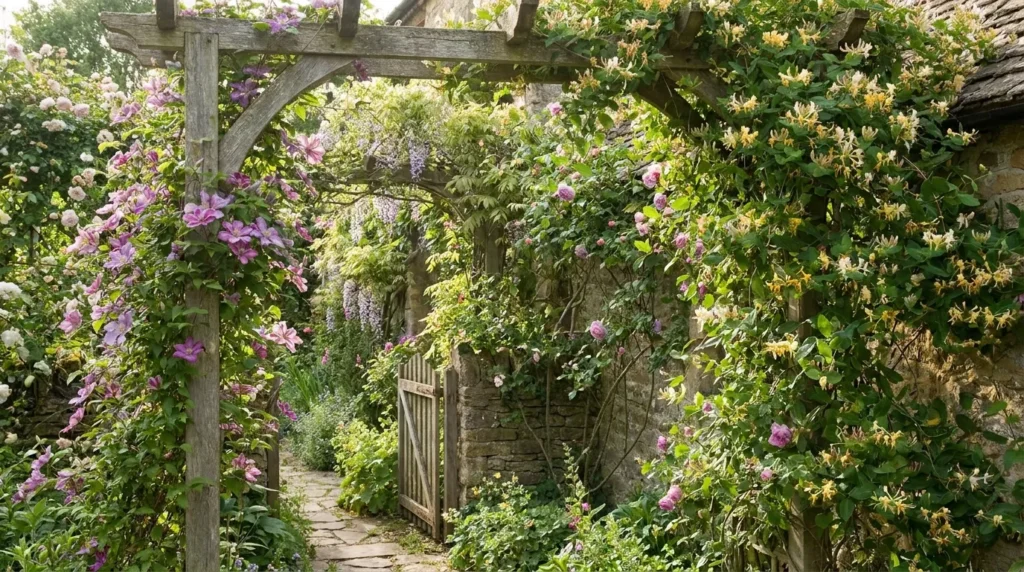
Select and train romantic climbing vines to cover fences, arbours, walls, and other vertical structures, creating lush vertical gardens that maximise beauty in limited space. Climbing vines offer exceptional value—they cover unsightly structures quickly, produce abundant flowers or foliage, and require minimal maintenance once established. Clematis varieties offer elegant flowers in white, pink, purple, and blue, with some cultivars producing double blooms of exceptional beauty. Climbing roses provide classic charm with abundant blooms in traditional colours. Honeysuckle delivers fragrant flowers and attracts hummingbirds. Jasmine offers delicate, heavily fragrant blooms. English ivy and climbing hydrangea provide lush foliage coverage. Choose vine varieties suited to your climate zone and the specific light conditions of installation locations. Most climbing vines appreciate well-amended soil with organic matter and consistent watering during establishment years.
Provide robust support structures that allow vines to climb safely—sturdy trellises, wires, or arbours engineered to support substantial weight and withstand wind stress. Position vines strategically to soften hard architectural lines, screen unsightly views, frame doorways or windows, or create fragrant passages. Train vines to grow in desired directions using gentle guidance—twist stems around supports or use soft ties to attach plants without damaging tender growth. Prune vines annually after flowering to maintain desired shape, prevent overgrowth, and encourage bushier new growth with more abundant blooms. Some vines require training during early growth stages to establish strong structure before becoming unruly. Fragrant varieties like jasmine and honeysuckle positioned near windows, seating areas, or entry points multiply sensory value—scent reaches visitors from distance. As vines mature and thicken, they transform utilitarian structures into living garden rooms draped in flowers and foliage, creating the most romantic cottage garden elements imaginable.
21. Birdbath Focal Points:
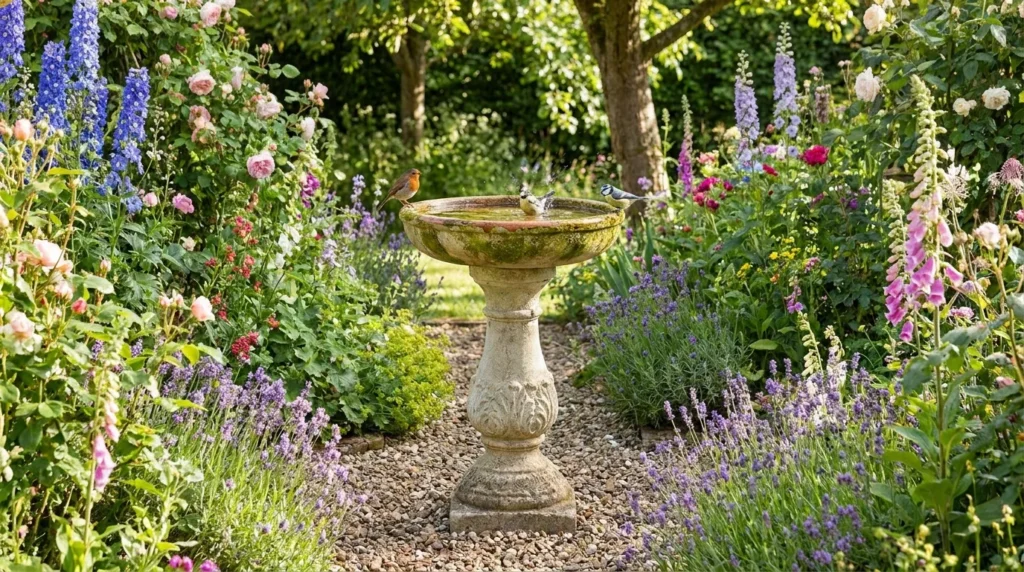
Position an ornamental birdbath as a primary focal point within your front yard garden beds, using this classic cottage garden element to anchor perennial borders and organise surrounding plantings. A birdbath functions simultaneously as sculpture, wildlife support structure, and spiritual focal point—its presence suggests a reverence for nature and a welcoming attitude toward garden visitors of all species. Elevated birdbaths positioned centrally within garden beds draw the eye from a distance, organising visual perception and creating satisfying focal points within expansive plantings. Birdbath materials range from weathered stone providing rustic authenticity to ornamental cast iron offering Victorian elegance to ceramic offering decorative detail. Height and scale matter significantly—a birdbath should be proportionate to surrounding plantings and visible focal areas, neither disappearing among vegetation nor dominating modest gardens.
Surround your birdbath with carefully selected plantings that frame the focal point while creating visual interest at multiple heights. Position taller plants like delphiniums or roses toward the back and back of the bed, mid-height perennials like osteoporosis in middle layers, and low edging plants like cat-mint or Alyssa toward the front and sides. Choose plants that bloom at different times to ensure continuous colour changes in the focal point area throughout the season. The birdbath becomes more beautiful and functional when positioned where you can view it from windows or favourite garden vantage points, allowing observation of visiting birds and the changing garden display surrounding the central focal point. Maintain birdbaths by refilling water regularly—birds need fresh water more urgently than beautiful plumage suggests. The simple act of providing water becomes an act of stewardship, creating meaningful garden spaces where humans and wildlife interact peacefully while celebrating nature’s beauty.
22. Rustic Fence Styles:
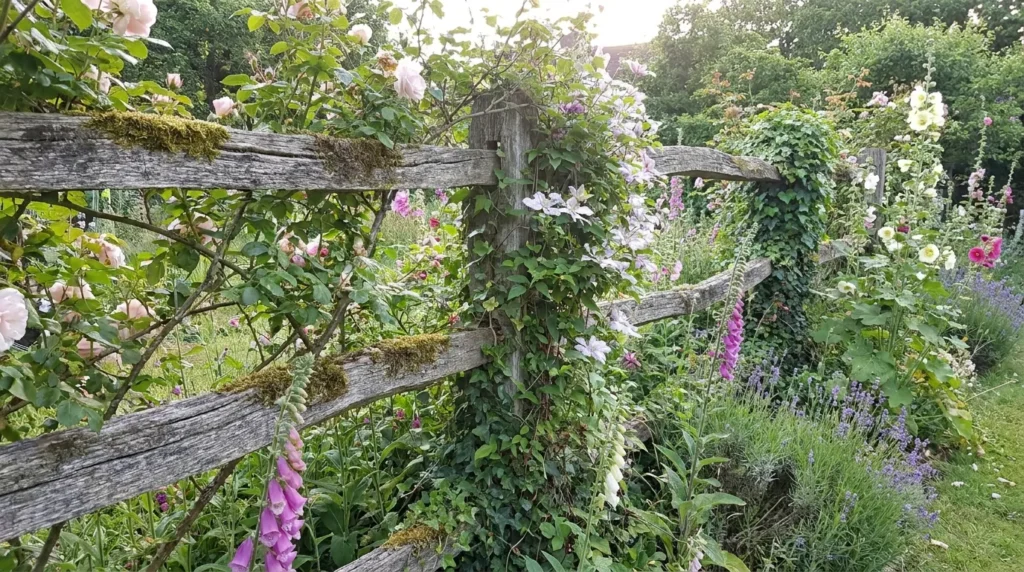
Choose rustic fence styles that complement cottage architecture while creating welcoming property boundaries that feel accessible rather than defensive. Cottage fences typically prioritise charm and character over security—split-rail fences, weathered picket styles, and rustic paling fences all evoke countryside charm and traditional aesthetics. Weathered wood surfaces develop character and patina over time, becoming increasingly beautiful as they age and weather. Deliberately distressed finishes on newer fences can approximate authentic ageing quickly when traditional construction isn’t practical. The fence material itself becomes a design element—weathered Gray tones, soft cream paint, or warm wood stains all create different aesthetic effects. Rather than continuous enclosure, cottage fences often feature open sections that allow visual connection to surrounding landscapes while still marking property boundaries. This open aesthetic reflects a confidence in the beauty of your plantings and an invitation for passersby to admire your garden.
Design rustic fences to frame rather than hide your cottage landscape, positioning them where they support plantings and enhance overall beauty rather than simply enclose property. Encourage climbing plants to soften fence lines and integrate fencing into the overall garden design. Space fence pickets generously to create a less-imposing appearance while still defining boundaries. Consider fence height carefully—shorter fences maintain views and feel more welcoming, while taller fences provide privacy and wind protection in appropriate locations. Maintenance of rustic fences involves occasional staining or painting to preserve wood and prevent deterioration, though many gardeners embrace weathered Gray tones that develop naturally over time without additional finishing. Rustic fencing becomes part of the garden narrative—it ages gracefully, accumulates lichens and character, and develops patina that newer, perfect materials never achieve. Your cottage fence transforms from a simple boundary into a beloved landscape element that ages beautifully and enhances the entire property’s aesthetic.
23. Wildflower Meadow Front Yard:
Transform your entire front yard into a wildflower meadow that celebrates ecological beauty, reduced maintenance, and the romantic aesthetic of naturally abundant planting. Wildflower meadows represent the ultimate expression of cottage garden philosophy—abundant, self-sustaining plantings that create maximum beauty with minimal intervention. Rather than curated perennial borders, wildflower meadows feature diverse assemblies of native herbaceous plants and wildflowers that support entire ecosystems of insects, birds, and other beneficial wildlife. Establish wildflower meadows by improving soil drainage if necessary, eliminating competing lawn grass, and either sowing wildflower seeds in fall or transplanting container-grown plants. Once established, wildflower meadows require minimal maintenance—an annual mowing or cutting in late fall keeps meadow composition favourable while returning nutrients to soil through decomposing plant matter.
Create stunning wildflower meadows by selecting native species adapted to your climate, rainfall patterns, and soil conditions for long-term success and ecological benefit. Choose plant varieties that bloom in succession throughout the growing season—spring ephemeral give way to early summer bloomers, followed by mid-summer peak bloom, and concluding with late-season asters and goldenrod that sustain pollinators into autumn. Include tall grasses like calligraphists and panic um that provide structure and movement while supporting insects and seed-eating birds. The resulting meadow creates naturalistic beauty that photographs extraordinarily well, changes appearance with each season, requires minimal water or fertiliser, supports abundant wildlife, and eliminates the weekly mowing routine of conventional lawns. Wildflower meadows represent a philosophical shift toward working with nature rather than against it—embracing ecological abundance over manicured perfection. Your cottage front yard becomes a living landscape that celebrates biodiversity, seasonal change, and the enduring beauty of unman aged natural systems.
FAQ’s:
How can I create a cottage garden if I have limited space?
Small cottage gardens work beautifully through vertical gardening—train vines upward, use container gardens, position window boxes, and install trellises. Layer plantings at multiple heights and embrace the small space by creating intimate vignettes with benches and focal points. Container gardens allow you to showcase abundant cottage plantings even on tiny properties or in urban settings.
Which plants work best for cottage landscaping beginners?
Start with hardy, low-maintenance perennials like coneflowers, black-eyed Susans, daylilies, catmint, lavender, and hardy geraniums. Include classic roses, fragrant herbs like rosemary and lavender, and easy-to-grow shrubs like hydrangeas and lilacs. These plants are forgiving of beginner mistakes while offering abundant blooms and obvious cottage charm.
How much time does cottage gardening maintenance require?
Cottage gardens range from low-maintenance wildflower meadows requiring only annual cutting to more intensive mixed borders needing regular deadheading, staking, and division. Start with easy plants and gradually add more demanding specimens as your skills develop. Most cottage gardens require monthly attention during growing season—perhaps four to six hours weekly—but the emotional reward and beauty justify the investment.
Can cottage landscaping work in hot, dry climates?
Yes! Substitute Mediterranean plants like lavender, rosemary, santolina, and ornamental grasses for moisture-loving species. Stone pathways and gravel courtyards work beautifully in dry climates. Focus on gray-leafed plants that tolerate heat and employ drought-tolerant design principles while maintaining cottage garden’s abundant, romantic aesthetic.
What’s the best way to start a new cottage garden?
Begin with soil preparation—amend with compost and organic matter to improve drainage and nutrient content. Sketch a simple design showing pathways, planting beds, and focal points. Install cardsharp elements like fencing and pathways first, then add plantings in stages. Don’t feel pressured to plant everything at once; building gardens gradually allows learning and refinement as you go.
Conclusion:
Creating a stunning cottage landscaping front yard is within reach for any homeowner willing to embrace abundance, romance, and timeless charm. The twenty-three ideas presented in this comprehensive guide offer diverse approaches to cottage gardening—from lush perennial borders and flowering shrub plantings to rustic fencing and water features that create peaceful focal points. Whether you’re drawn to the ordered abundance of carefully designed perennial borders, the wildflower meadow’s ecological beauty, or the romantic appeal of climbing roses covering garden structures, cottage landscaping offers something for every gardener’s style and commitment level.
The beauty of cottage gardening lies in its flexibility and personal expression—there’s no single correct way to create a cottage landscape. Your front yard should reflect your preferences, showcase plants you love, and support the wildlife that fascinates you. Start with one or two ideas that resonate most strongly, implement them thoughtfully, and allow your garden to evolve and mature over seasons and years. Remember that the most beautiful cottage gardens appear to have developed naturally over time—they embrace imperfection, celebrate abundance, and prioritize romantic charm over rigid design precision.