 Muhammad Muaz
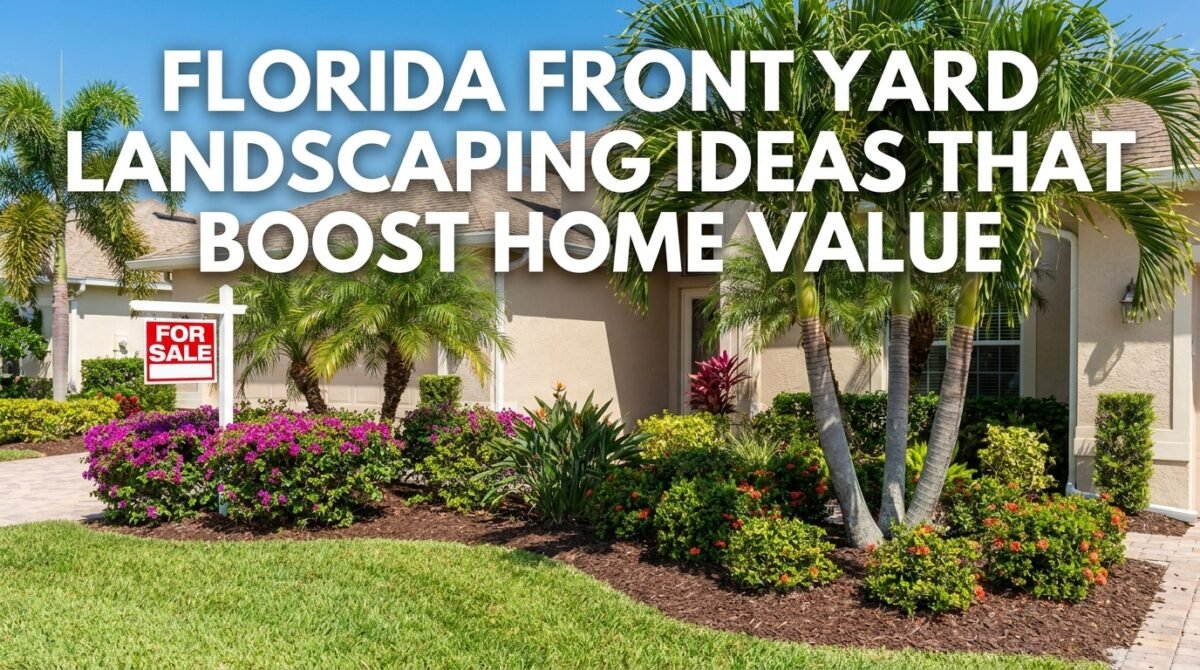
 Florida’s front yards are a showcase of your home and set the tone for what visitors and passersby see as they approach your property. With Florida’s unique subtropical and tropical climate, you have incredible opportunities to create a landscaping design that not only looks stunning but also thrives in the heat and humidity. Whether you’re looking to boost your home’s curb appeal, increase property value, or simply create a more inviting outdoor space for your family to enjoy, the right landscaping choices can transform your entire front yard. From lush tropical gardens to sleek modern designs, this guide will walk you through 23 proven front yard landscaping ideas specifically chosen for Florida homes. Each idea has been tested in Florida’s climate and is backed by expert recommendations to ensure your landscaping investment not only survives but flourishes year-round.
1. Native Tropical Plants:
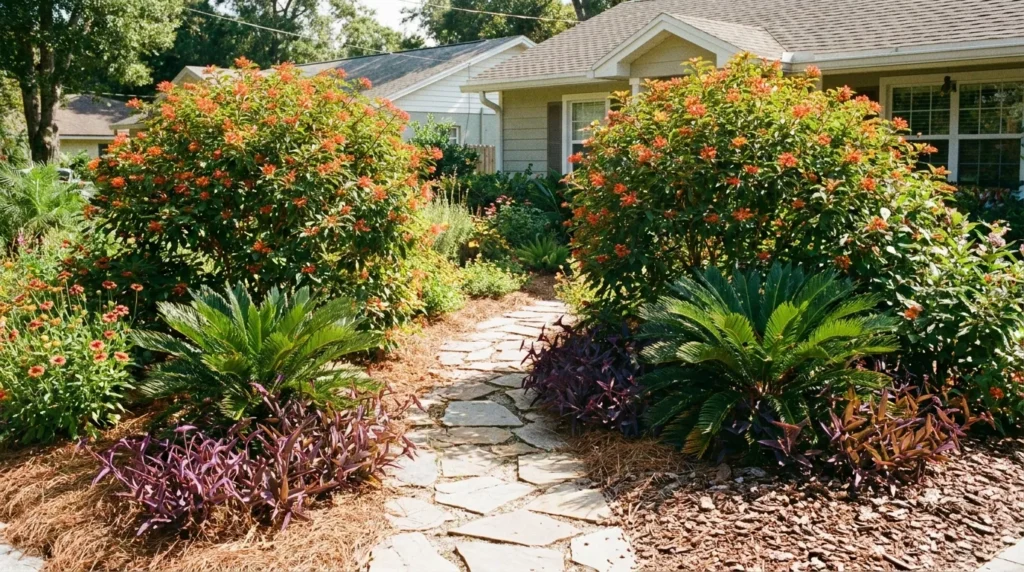
Native tropical plants are the absolute foundation of any successful Florida landscaping project. These plants have evolved over thousands of years to thrive in Florida’s specific climate conditions, meaning they require significantly less water, fertiliser, and maintenance than non-native plants. Popular native options include fire bush, which produces stunning orange and red blooms, continent palms that add authentic tropical flavour, purple heart plants with their dramatic foliage, and native flowering shrubs like ink-berry and myrtles. When you choose native plants, you’re not only creating a beautiful landscape but also supporting local wildlife, including butterflies, birds, and other pollinators that depend on these plants for survival. These plants are naturally adapted to Florida’s humidity, occasional freezes, and intense summer rains, so you won’t have to constantly adjust your care routine as seasons change.
Installing native tropical plants also significantly reduces your water bills and environmental impact. Many of these plants, once established, need only occasional watering during dry spells, and they’re naturally resistant to Florida’s common pests and diseases. The initial investment in quality native plants often pays for itself within a few years through reduced water costs and minimal pest control expenses. Landscapers and experts recommend creating layered plantings with native plants of different heights and bloom times, ensuring your front yard has visual interest and colour throughout the entire year. You can create a truly authentic Florida look by combining these native plants with appropriate landscaping elements like Aquinas rock mulch or native limestone pacers.
2. Stunning Tropical Palm Trees:
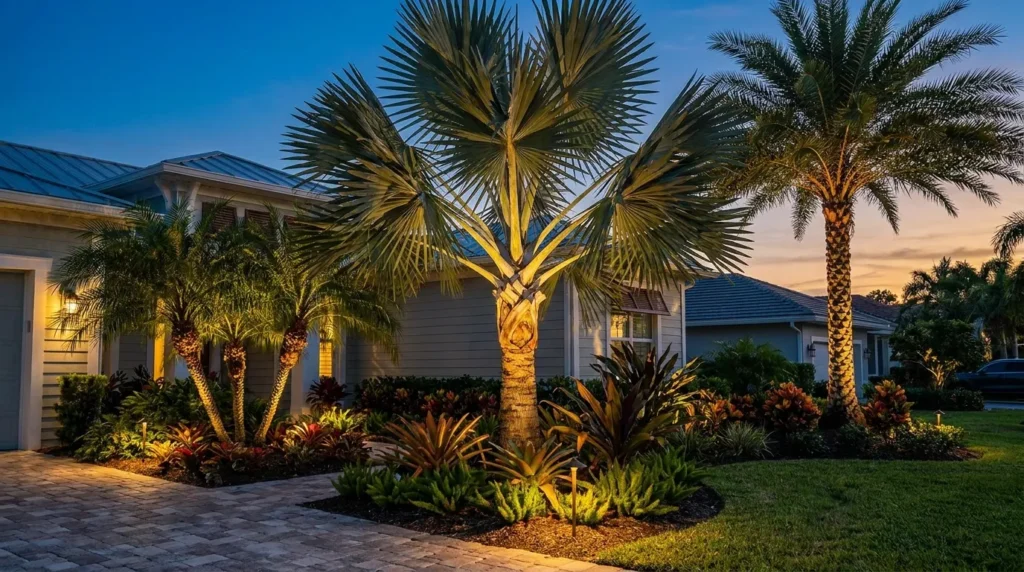
Palm trees are the quintessential symbol of Florida and tropical living, and incorporating them into your front yard landscaping instantly creates that paradise feeling you’re looking for. The key to successful palm landscaping is selecting varieties that thrive in your specific region of Florida and planning their placement carefully. Sabal palms are native to Florida and extremely cold-hardy, making them perfect for North Florida areas, while queen palms, pygmy date palms, and bottle palms work beautifully in Central and South Florida regions. Rather than planting a single large palm in the middle of your yard, professional landscapers recommend creating visual interest by grouping palms of varying heights and varieties, which creates depth and dimension while making your yard feel larger and more resort-like.
When planning your palm installation, remember that most Florida palms prefer well-draining soil and sunny locations, though some varieties tolerate partial shade beautifully. Proper spacing is crucial because crowded palms compete for nutrients and water while also increasing disease risk. Consider the mature size of your chosen varieties and space them accordingly to prevent future overcrowding. Many homeowners make the mistake of under-planting their palms, leaving bare soil that looks unfinished, but adding shade-tolerant ground-covers, decorative rocks, or low-growing tropical plants beneath palms creates a polished, complete look. Palms also require specific pruning techniques—removing only dead fronds and avoiding the temptation to cut the crown or top of the palm, which severely damages or kills the tree.
3. Modern Minimalist Design:
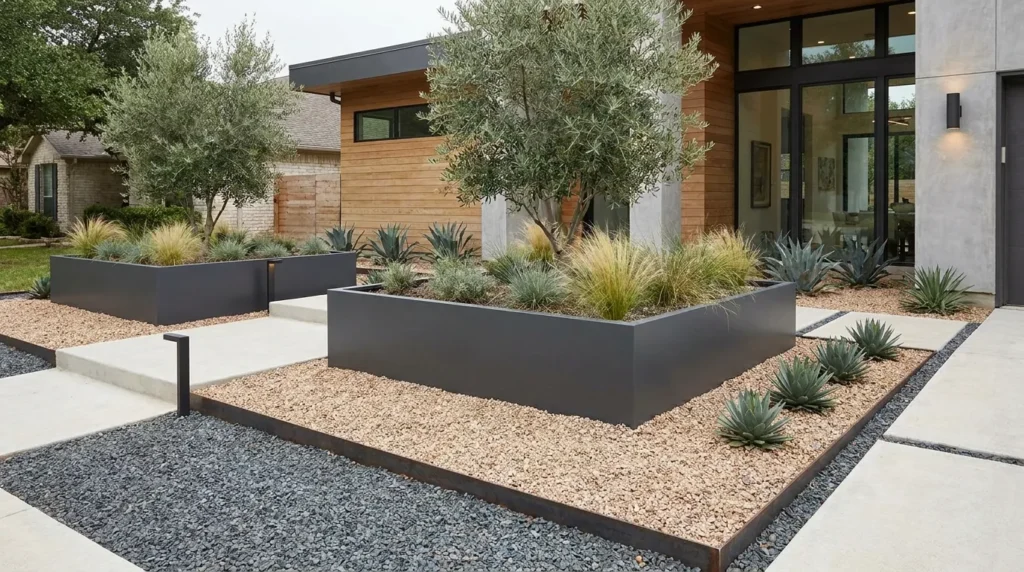
For homeowners who prefer contemporary aesthetics over traditional styles, a modern minimalist landscape design offers clean lines, geometric shapes, and a sophisticated colour palette that perfectly complements contemporary architecture. This style emphasises simplicity and function, using carefully selected plants and landscaping materials to create a striking visual impact without clutter. Modern designs typically feature raised planting beds with neat edges, often constructed from steel, composite materials, or stained wood, filled with selective plantings that provide colour and texture without overwhelming the space. The minimalist approach works particularly well in Florida because it reduces the number of plants requiring maintenance while still creating visual interest and curb appeal. Color palettes are often neutral or monochromatic, featuring whites, grays, blacks, and soft greens, which creates a calming, sophisticated atmosphere that’s in high demand among today’s homebuyers.
Creating a successful modern minimalist front yard in Florida means focusing on quality over quantity in both plantings and landscaping. Select 3-5 key plants that work beautifully together and repeat them throughout the landscape for cohesion. Consider architectural plants like ornamental grasses, structural shrubs with interesting form, or accent plants that provide seasonal colour. Landscaping elements become much more important in minimalist design, so invest in high-quality materials like polished concrete, large-format pacers, decorative gravel, or composite decking that complement your home’s modern style. Incorporate outdoor lighting strategically to highlight key elements and create drama, especially at night. This design style also pairs beautifully with water features like sleek modern fountains or clean-lined reflecting pools that add movement and visual interest while maintaining the minimalist aesthetic.
4. Colorful Flower Beds:
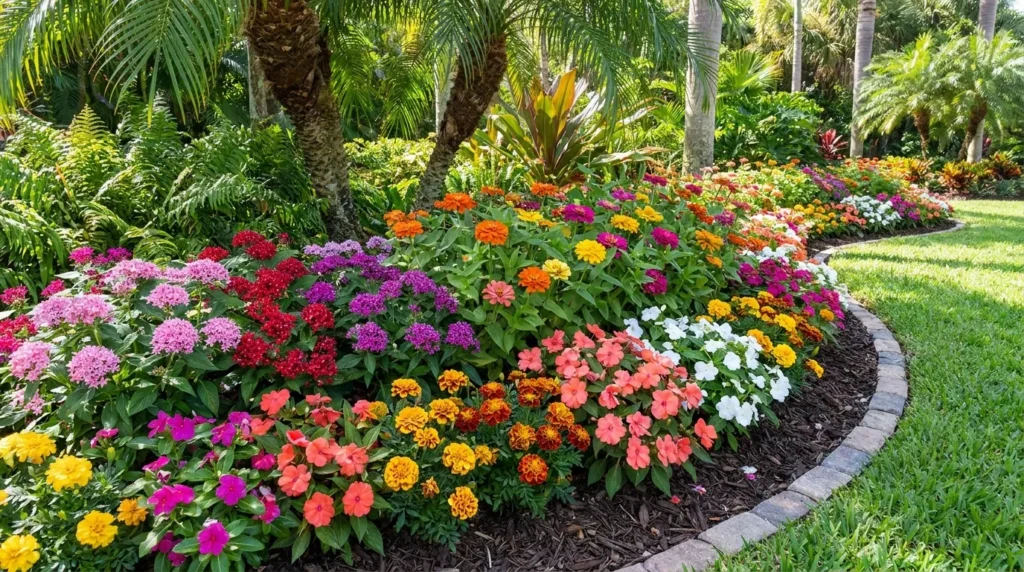
Colourful flower beds are one of the most eye-catching and rewarding elements of front yard landscaping, adding personality and vibrancy that instantly improves curb appeal. Florida’s warm climate allows you to grow and enjoy flowers year-round, with different varieties thriving in different seasons. Cool-season flowers like snapdragons, petunias, and pansies flourish from November through March, while warm-season bloomers including pent-as, zinnias, palladium, and impatiens light up your yard from May through October. The key to creating stunning flower beds is understanding colour theory and selecting plants that complement each other while also matching your home’s colour palette and your personal style preferences. Professional landscapers recommend using odd numbers of plants (three, five, or seven) in groupings, as this creates more visually appealing arrangements than even numbers.
Successful flower bed design also requires proper soil preparation, regular watering, and consistent maintenance. Before planting, amend Florida’s sandy soils with compost or peat moss to improve water retention and add nutrients that will keep your flowers healthy and vibrant. Mulching around plants conserves moisture, regulates soil temperature, and reduces weed growth, all of which are especially important in Florida’s intense heat. Deadheading—removing spent flowers—encourages more blooms throughout the season and keeps plants looking neat and tidy. Consider adding landscape lighting that highlights your flower beds at night, creating beautiful visual interest and improving home security. Many homeowners establish seasonal planting schedules, swapping out cool-season flowers for warm-season varieties or vice versa, ensuring their front yards maintain peak beauty and colour year-round.
5. Water Features:
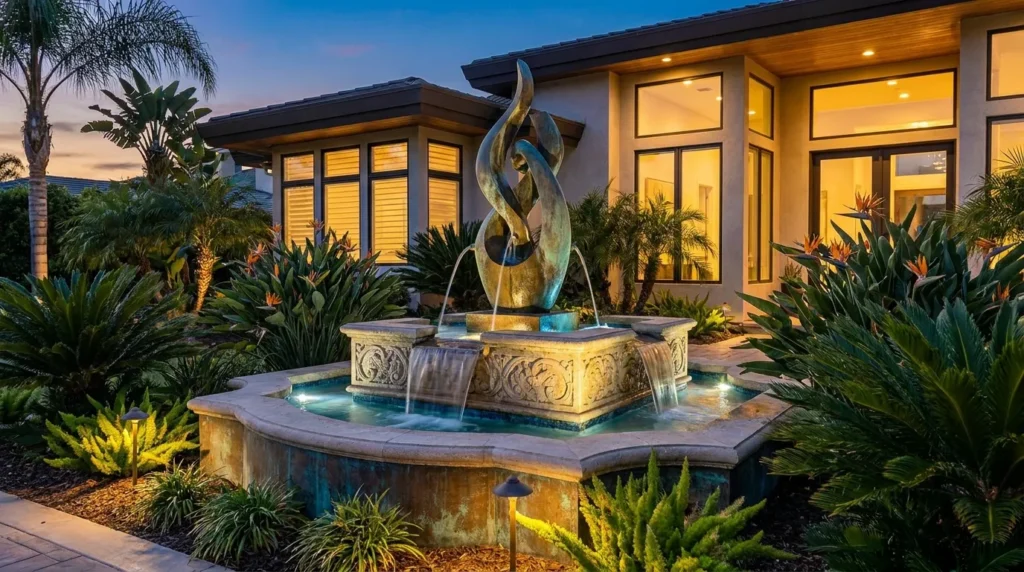
Water features like fountains and small ponds add an element of tranquillity, movement, and visual interest to any front yard while also providing soothing sounds that create a relaxing atmosphere. A well-designed water feature becomes a focal point that draws the eye and creates a memorable impression for anyone approaching your home. Fountains are particularly popular in Florida landscaping because they’re relatively easy to install, come in countless styles to match any home aesthetic, and require minimal maintenance when properly set up. From classic tiered fountains to modern sculptural pieces, sleek urn designs to naturalistic waterfall features, there’s a water feature style for every preference and budget. The sound of water also provides ambient noise that can help mask street sounds or neighbour activities, creating a more peaceful and private outdoor environment.
Installing a water feature requires careful consideration of placement, proper electrical installation for pumps and lighting, and regular maintenance to keep water clean and the system functioning properly. Position your fountain or water feature where it will be visible from both the street and your home’s entrance, and consider sight lines from windows so you can enjoy it from inside. Smaller fountains are perfect for compact front yards or townhouses, while larger statements can anchor more spacious yards. Small ponds attract wildlife and add natural beauty, though they require more maintenance and need careful design to prevent mosquito breeding. Many modern water features are now available with built-in filtration systems and low-voltage LED lighting that makes installation easier and creates stunning nighttime effects. Incorporating water features with surrounding plantings creates cohesive designs where the feature enhances rather than dominates the landscape.
6. Drought-Resistant Xeriscape Design:
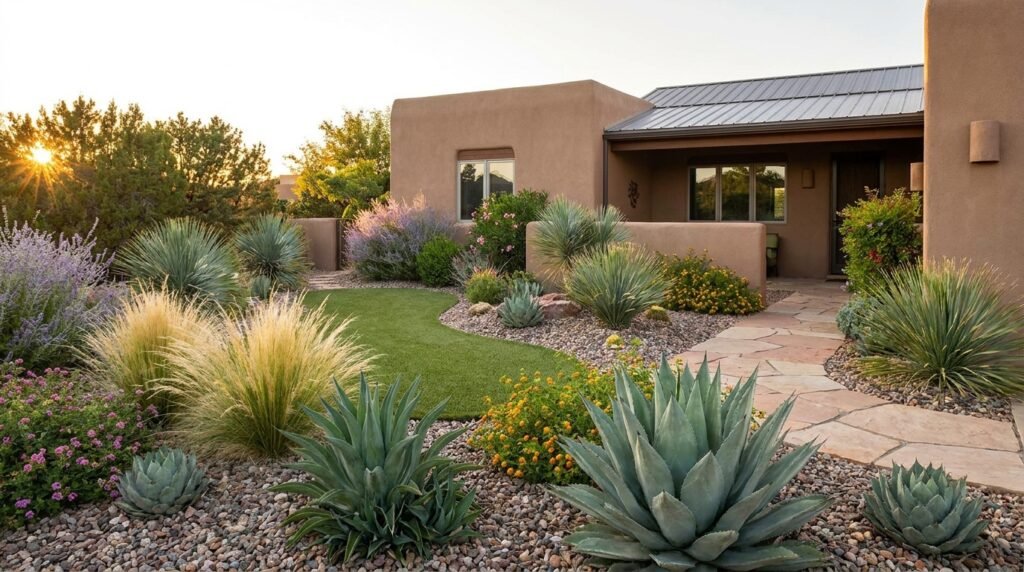
Xeriscaping is a landscaping approach that emphasis water conservation while maintaining aesthetic appeal, making it perfect for environmentally conscious homeowners and those concerned about water costs in Florida’s dry seasons. This design philosophy uses drought-resistant plants, efficient irrigation methods, and strategic use of mulch and landscaping to create beautiful landscapes that require minimal supplemental watering once established. Despite the misconception that xeriscape designs look boring or desert-like, modern xeriscape landscaping can be incredibly attractive, featuring a diverse palette of textures, colours, and plant forms that create visual interest. Many homeowners are discovering that incorporating xeriscape principles into their front yards significantly reduces their water bills while actually creating more sophisticated, interesting landscapes than traditional plant-heavy designs.
Creating a successful xeriscape in Florida involves selecting appropriate drought-tolerant plants that still thrive in Florida’s unique climate, as true desert plants may not survive our humidity and rainfall patterns. Excellent choices include ornamental grasses like mulishly grass and fountain grass that provide movement and texture, succulents such as aloe and Escherichia for interesting forms, Texas privet and other drought-tolerant shrubs for structure, and hardy ground-covers that minimise turf areas. Proper soil preparation with sand and drainage amendments is crucial for xeriscape success, as most drought-tolerant plants require well-draining conditions. Install efficient irrigation systems with drip lines and smart controllers that adjust watering based on rainfall, humidity, and seasonal needs. Use decorative mulch, gravel, or landscaping to fill spaces between plants, reduce evaporation, and add visual interest. Xeriscape designs often look particularly striking when layered with landscape lighting, raised beds, or architectural elements that create dimension and sophistication.
7. Raised Garden Beds:
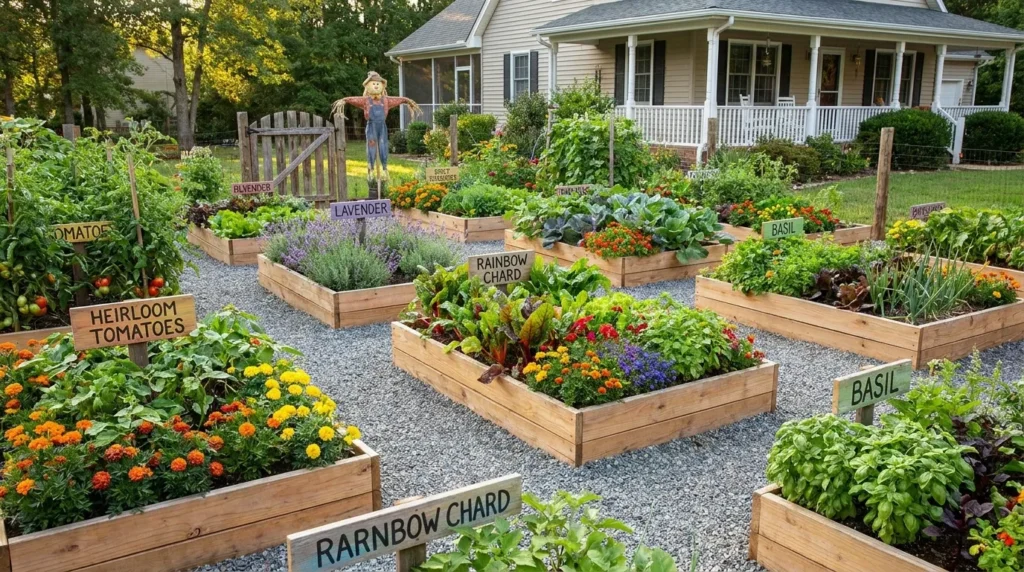
Raised garden beds combine functionality with beauty, allowing you to grow fresh vegetables, herbs, and edible plants right in your front yard while adding attractive visual elements to your landscape. This design trend has exploded in popularity as homeowners discover the satisfaction and practical benefits of growing their own food while also beautifying their properties. Raised beds solve many of Florida’s common soil challenges, including poor drainage, sandy soils, and pest issues, by allowing you to control the soil composition completely. You can fill beds with high-quality soil specifically formulated for vegetables and herbs, ensuring optimal growing conditions regardless of your property’s native soil conditions. Raised beds also make gardening more accessible, reducing bending and physical strain while making it easier to control weeds, pests, and diseases.
Designing an attractive vegetable garden as part of your front yard landscaping requires thoughtful placement and aesthetically pleasing construction. Choose materials that complement your home’s architectural style—wood raised beds for cottage or traditional homes, metal frames for modern properties, or stone for more formal designs. Position beds where they receive adequate sunlight (at least six hours daily for most vegetables) and are easily accessible for watering and harvesting. Create defined pathways between beds using mulch, gravel, or pacers that tie the garden into your overall landscape design. Many successful edible landscapes incorporate ornamental elements like trellises for climbing vegetables, attractive plant labels or signs, and complementary plantings of flowering herbs like basil and oregano that are both beautiful and functional. In Florida’s warm climate, you can grow vegetables almost year-round by choosing appropriate varieties for each season and protecting plants from occasional freezes with frost cloth.
8. Lush Tropical Vines and Climbing Plants:
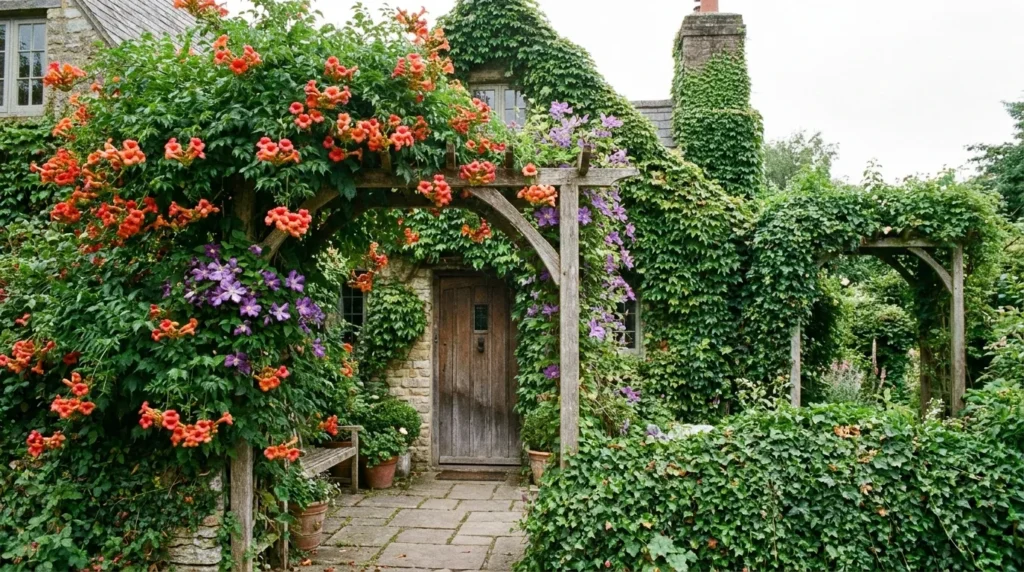
Climbing plants and vines add vertical dimension to your front yard landscaping, creating layers of beauty that draw eyes upward and make spaces feel more enclosed and intimate. Tropical vines thrive in Florida’s warm climate and can quickly cover arbours, pergolas, fences, and walls with lush foliage and stunning blooms. Carolina jasmine produces fragrant yellow flowers and semi-evergreen foliage, making it perfect for covering unsightly elements or creating a living screen. Trumpet vine offers bright orange and red tubular flowers that hummingbirds love, while passion vine combines beautiful purple flowers with interesting foliage and attracts butterflies and pollinators. Black-eyed Susan vine produces cheerful yellow blooms with dark centres, and creeping fig creates a sophisticated green wall when trained against masonry.
Incorporating climbing plants successfully requires proper support structures and regular maintenance to keep vines trained and looking attractive. Install sturdy arbors, pergolas, or trellises before planting, ensuring they’re anchored securely and can support the mature weight of vigorous vines. Choose attachment hardware appropriate for your home’s exterior—clips for delicate vines, training ties for flexible stems, and hooks or eyes for heavier varieties. Provide initial support and direction as vines establish, tying or training stems to grow where you want them. Regular pruning maintains size, controls aggressive growth, and encourages blooming. Some vines are aggressive growers and may need annual pruning to prevent them from overwhelming other plantings or damaging home exteriors. Position vines strategically to frame entryways, soften hard architectural lines, provide shade to seating areas, or create privacy screens that block unwanted views while appearing natural and beautiful.
9. Stone and Hardscape Elements:
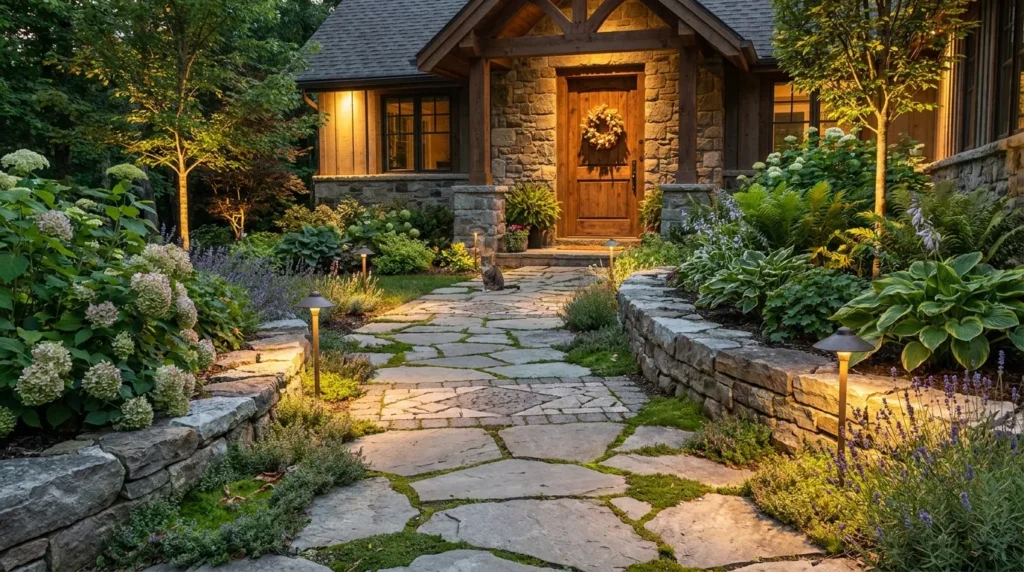
Hardscape elements including pathways, patios, walkways, and decorative stonework form the bones of any landscaping design and are absolutely essential to creating functional, attractive front yards. A well-designed pathway guides visitors naturally from the street to your front door while breaking up large lawn areas and defining planting zones. Material choices range from economical concrete and poured surfaces to elegant natural stone, decorative pacers, Aquinas, limestone, and composite materials that offer different aesthetics and durability levels. The most successful landscaping designs use materials that complement your home’s architectural style and exterior finishes, creating visual cohesion. A pathway made from materials that echo colours or textures in your home’s siding or trim creates a unified, professional appearance that significantly enhances curb appeal.
Designing functional landscaping requires careful attention to drainage, slope, and material stability in Florida’s climate where intense rain and occasional flooding are concerns. Ensure pathways slope gently away from your home’s foundation and have adequate drainage so water doesn’t pool or create slippery conditions. Use permeable materials when possible to reduce storm water runoff and support sustainable landscaping principles. Consider adding landscape edging with borders to define planting beds, create clean lines, and reduce weeds encroaching on landscaping. Raised planter beds built with attractive materials like stacked stone, wood, or composite create dimension and can be filled with beautiful plantings that soften the hardscape. Seating areas or small patios in the front yard create gathering spaces that make the area feel more inviting and lived-in. Incorporate landscape lighting along pathways for safety and to highlight decorative elements at night, creating curb appeal that extends beyond daylight hours.
10. Ornamental Grasses:
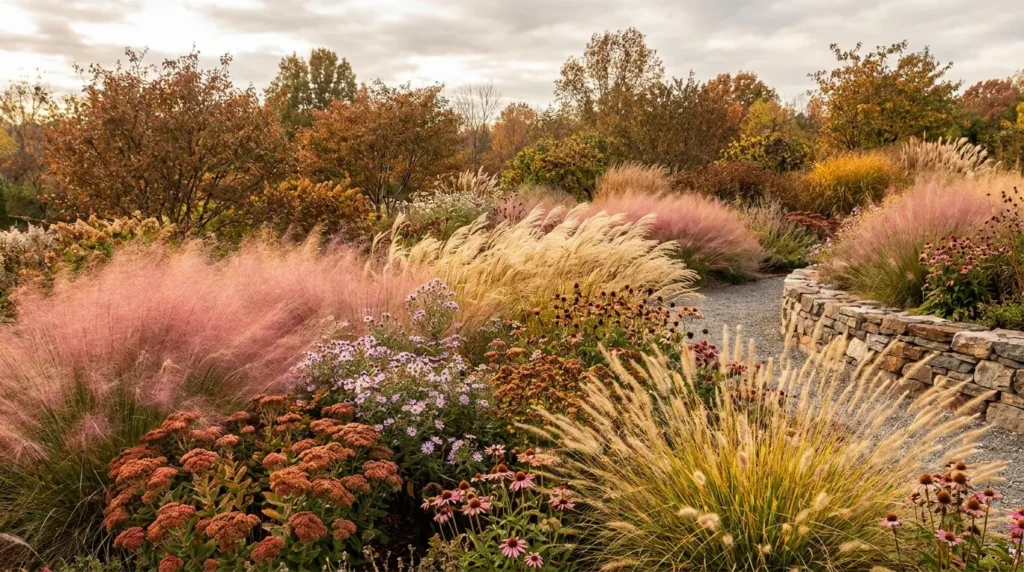
Ornamental grasses are landscaping superstars that add movement, texture, seasonal colour, and visual interest to front yard designs while being remarkably low-maintenance once established. These plants catch breezes and create dynamic, flowing effects that make yards feel alive and sophisticated. Mulishly grass produces stunning pink and purple flower plumes in fall, creating a dramatic statement in any landscape, while fountain grass offers arching blades and feathery plumes in cream or white. Sea oats, a native Florida grass, provide coastal appeal with naturally silvery seed heads, and Gulf mulishly offers delicate pink blooms against fine-textured foliage. Ornamental grasses work beautifully in modern designs where they provide clean lines and architectural interest, or in traditional landscapes where they soften hard edges and add seasonal colour changes.
Using ornamental grasses effectively in Florida landscaping requires understanding their growth habits and seasonal changes. Most ornamental grasses prefer full sun and well-draining soil, making them perfect for xeriscape designs and areas where traditional plants struggle. Plant grasses in groupings or drifts rather than scattered throughout, which creates more visual impact and looks more intentional. The height and spread of ornamental grasses should be considered in relation to other plantings—taller varieties make excellent backdrops for shorter plants or focal points, while shorter varieties work as ground-covers or edging. Cut back dormant grasses in late winter before new growth emerges, removing the previous year’s dried foliage. Throughout the growing season, deadheading spent flower heads encourages bushier growth, or leave seed heads for winter interest and wildlife food. Ornamental grasses pair beautifully with flowering plants, providing contrast in form and colour while their fine texture makes bold or bright flowers stand out even more dramatically.
11. Low-Maintenance Groundcover:
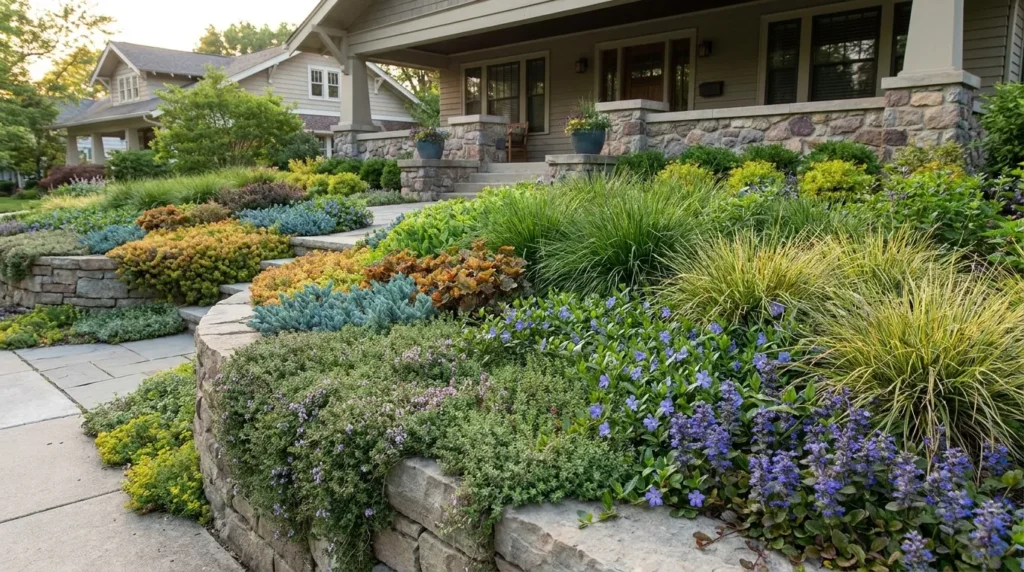
Ground-cover plants are essential elements of low-maintenance landscaping, covering bare soil, preventing weeds, and creating cohesive designs while requiring minimal care once established. Rather than struggling with traditional lawn grass in Florida’s heat and humidity, many homeowners are replacing turf with attractive ground-cover alternatives that look beautiful and dramatically reduce maintenance time. Asiatic jasmine provides evergreen foliage and eventually becomes self-sufficient without regular watering, while calliope creates tall spikes of purple flowers against green foliage. Frost-weed offers delicate purple blooms and fine texture, and beach sunflower provides golden yellow blooms and silvery foliage that tolerates coastal conditions beautifully. For shaded areas under trees or on the north side of homes, McMahon, coral honeysuckle, and Japanese federate offer attractive foliage and tolerance for reduced light conditions.
Creating successful ground-cover plantings starts with site preparation, which includes removing existing lawn, improving soil with compost, and establishing a weed barrier if desired. Space plants according to their mature spread, and water regularly until established, which typically takes several months. Dense plantings may initially look sparse, but resist the urge to over-plant, as this creates overcrowding and increased disease problems as plants mature. Apply mulch between plants to suppress weeds and retain moisture during establishment. Once established, most ground-covers become nearly self-sufficient in Florida’s climate, needing occasional trimming or renewal pruning to maintain appearance but not requiring regular watering except during extended droughts. Mixing different ground-cover varieties with varying textures and colours creates more interesting designs than mono-culture plantings. Use ground-covers to define different zones in your landscape, anchor hardscape elements, and create visual flow that guides the eye naturally through your yard.
12. Statement Trees:
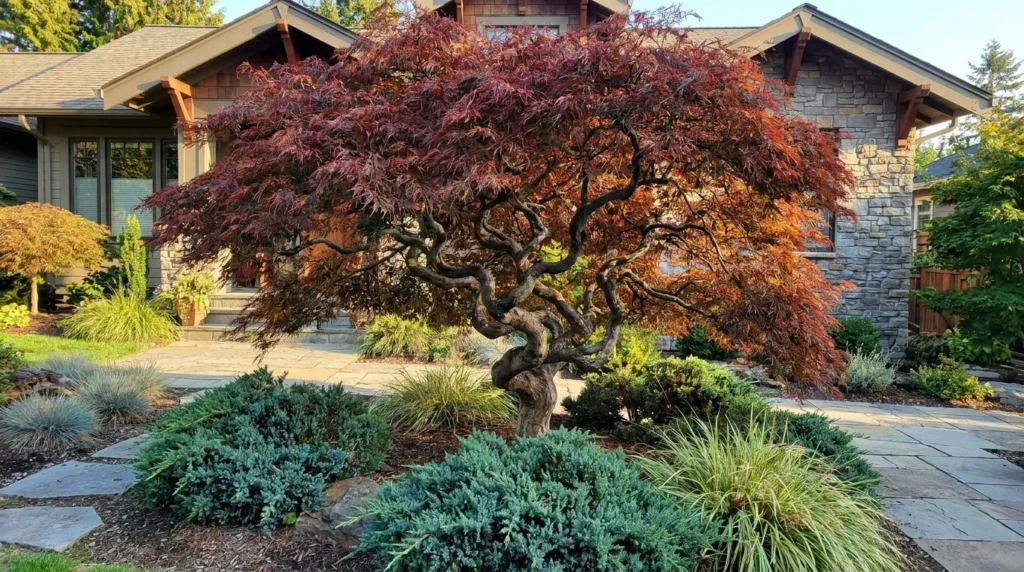
A carefully selected statement tree serves as a natural focal point that anchors your front yard landscaping and provides structure, shade, and visual interest for years to come. Rather than filling your yard with multiple trees of similar size, selecting one or two spectacular trees and designing plantings around them creates a more sophisticated, intentional appearance. Dogwood trees offer elegant branching structure and white or pink spring flowers, while crepe myrtles provide outstanding summer blooms in pink, red, white, or purple, plus beautiful fall foliage and peeling bark that adds winter interest. Red-bud trees produce stunning pink flowers before leaves emerge in spring, and Japanese maples offer delicate foliage and brilliant fall colour. Live oaks provide massive shade and a sense of permanence that increases property value, while smaller ornamental trees like crab-apples or service-berries work well in limited spaces.
Selecting the right statement tree for your property requires considering mature size, sun and water requirements, and how it complements your home’s architecture and surroundings. Choose trees that provide year-round interest through flowers, foliage colour, interesting bark, or winter structure rather than trees that are beautiful for only a few weeks annually. Position statement trees where they’ll be visible from the street and your home’s main viewing areas, and ensure adequate space for mature growth without eventually touching power lines or damaging home foundations and underground utilities. Young trees require staking, mulching, and regular watering during establishment, but mature landscape trees typically become drought-tolerant and self-sufficient. Design under-plantings around your statement tree using shade-tolerant ground-covers, shrubs, and flowering plants that complement the tree without competing with it. Proper pruning maintains attractive shape and removes problematic branches, but avoid over-pruning which weakens trees and creates unbalanced forms.
13. Colorful Shrubs:
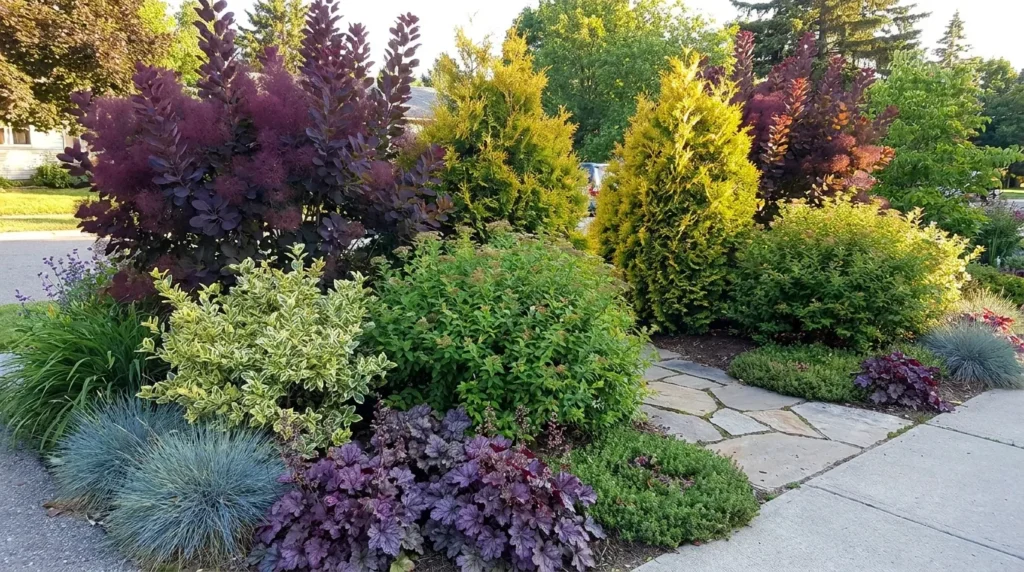
Shrubs form the backbone of landscaping design, providing structure, screening, privacy, and visual interest while requiring less maintenance than perennial flowers or vegetable gardens. Choosing shrubs with colourful foliage or interesting forms ensures your landscape looks beautiful year-round, not just during flowering seasons. Phoenicia ‘Red Tip’ produces brilliant red new growth that matures to green, creating ongoing colour interest throughout the year. Dwarf oxymora offers hot orange or red blooms and remains compact and manageable, while Philippine jujube provides feathery foliage and golden flowers. Purple-leaf plum trees offer deep purple foliage all season, and variegated plants with green and white or green and gold foliage brighten shaded areas and create visual interest. Spires produces delicate flowers in spring and often provides fall colour, while nine-bark offers purple foliage and interesting peeling bark.
Creating attractive shrub plantings requires understanding mature sizes and spacing plants appropriately so they don’t become overgrown or crowded. Layer shrubs by height, positioning tallest varieties at the back or against home foundations, medium-sized shrubs in the middle ground, and shorter shrubs toward the front, creating depth and dimension. Select shrubs that offer varied textures and colours to create visual interest—combining fine-textured plants with coarse-textured varieties, and mixing solid green foliage with variegated, purple, or golden varieties. Colourful foliage shrubs like Phoenicia or purple plum work best as accents rather than dominating the entire landscape. Prune shrubs regularly to maintain attractive shape, control size, and encourage dense growth. Most shrubs benefit from late winter pruning before new growth emerges, but flowering shrubs should be pruned immediately after blooming to avoid removing next season’s flower buds. Proper mulching and occasional fertilisation keep shrubs healthy and vibrant, while consistent watering during dry periods prevents stress.
14. Creative Lawn Alternatives:
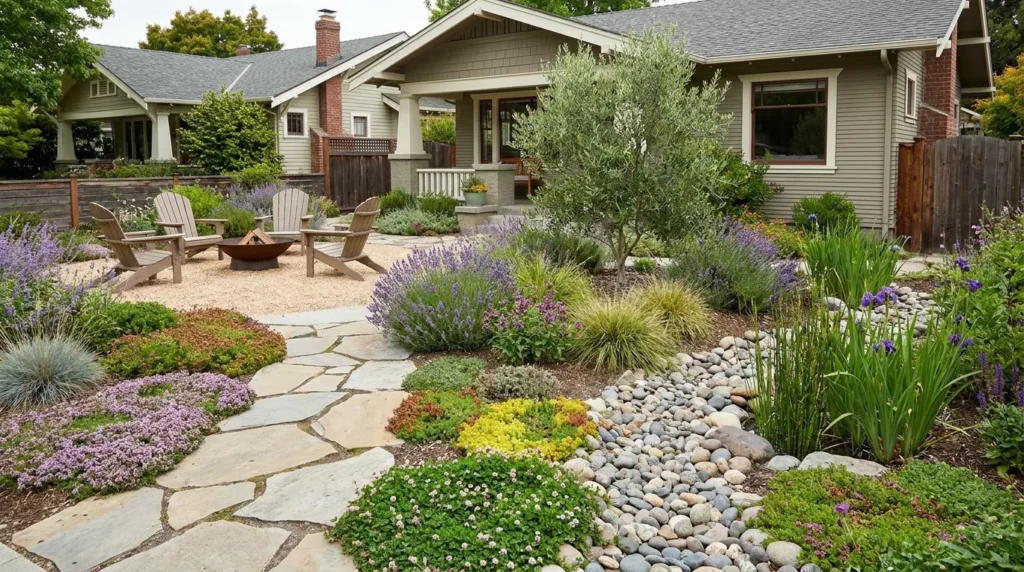
Traditional lawn grass requires constant maintenance, regular watering, and chemical treatments to stay attractive in Florida’s challenging climate, making creative lawn alternatives increasingly popular among environmentally conscious and efficiency-focused homeowners. Replacing some or all of your lawn with attractive alternatives reduces water usage, eliminates the need for gas-powered equipment, decreases chemical use, and can lower maintenance costs significantly. Clover lawns provide nitrogen fixation that improves soil health while being drought-tolerant and attractive, needing less frequent mowing than grass. Sea-grape covers provide coastal appeal and salt tolerance, while innovative alternatives like native wildflower meadows attract pollinators and provide stunning seasonal blooms. Some homeowners are even installing decorative landscaping such as permeable pacers, gravel, or stepping stone pathways that create visual interest while completely eliminating turf maintenance.
Transitioning from traditional lawn to alternatives requires planning and careful execution to ensure professional-looking results. Rather than ripping out your entire lawn at once, consider doing a phased approach, replacing lawn in high-traffic or difficult-to-maintain areas first. For small lawn areas that serve as visual breathing space in landscapes dominated by plantings, clover or low-growing ground-covers work beautifully, maintaining that open feel without requiring weekly mowing. In larger front yards, a combination of lawn and planted areas often looks more balanced than complete turf elimination. If you want to maintain some lawn, consider Florida-friendly turf varieties like crabgrass or centipede grass that require less water and fertiliser than traditional St. Augustine or Bermuda grasses. The most successful lawn alternatives integrate smoothly with existing plantings, creating cohesive landscapes where different zones flow naturally together. Add landscape edging to define boundaries between lawn areas and plantings, creating clean lines and reducing maintenance.
15. Tropical Foliage Plants:
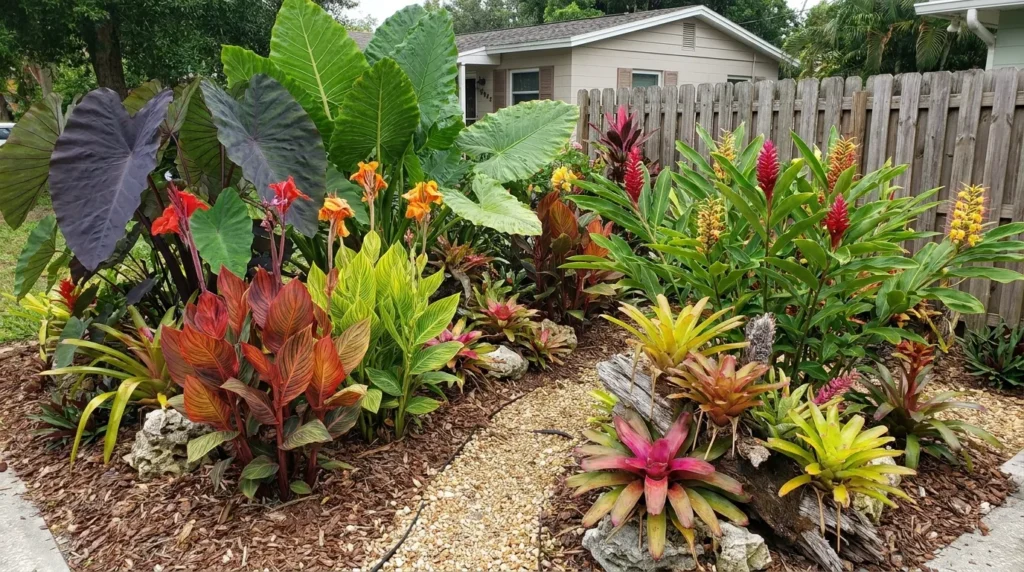
Tropical foliage plants offer dramatic textures, bold colours, and architectural forms that create striking visual impacts without relying on flowers. These plants thrive in Florida’s warm climate and bring resort-like sophistication to front yards, making them increasingly popular among homeowners seeking distinctive landscaping. Gingers produce exotic flowers and interesting foliage in various heights and colours, while canvas offer bold leaves and tall flower spikes in vibrant reds, oranges, and yellows. Elephant ears display enormous heart-shaped leaves in green, bronze, or variegated patterns, and broadsides provide architectural forms and brilliant blooms in reds, pinks, oranges, and yellows. Collocation varieties offer tropical feeling with large heartfelt leaves, while palladium brighten shaded areas with white, pink, or red-veined foliage without needing full sun.
Using tropical foliage plants effectively means understanding their specific growing requirements and positioning them appropriately within your landscape. Many tropical plants prefer partial shade and consistently moist soil, making them perfect for under story plantings beneath taller palms or shade trees. Create dramatic visual impact by grouping tropical foliage plants with complementary forms and colours—pairing bold gingers with delicate palladium, or combining architectural elephant ears with delicate ferny broadsides. The large leaves of many tropical plants create shadows and movement that become even more dramatic when back-lit by landscape lighting. In colder areas of North Florida, some tropical plants may be treated as annuals or require winter protection, but many varieties are surprisingly cold-hardy. Tropical foliage plants work beautifully in container plantings positioned near entryways, allowing you to move them if winter freezes threaten. Their bold architectural forms make them excellent focal points or statement plants that anchor planting designs and create tropical ambience.
16. Fragrant Plants:
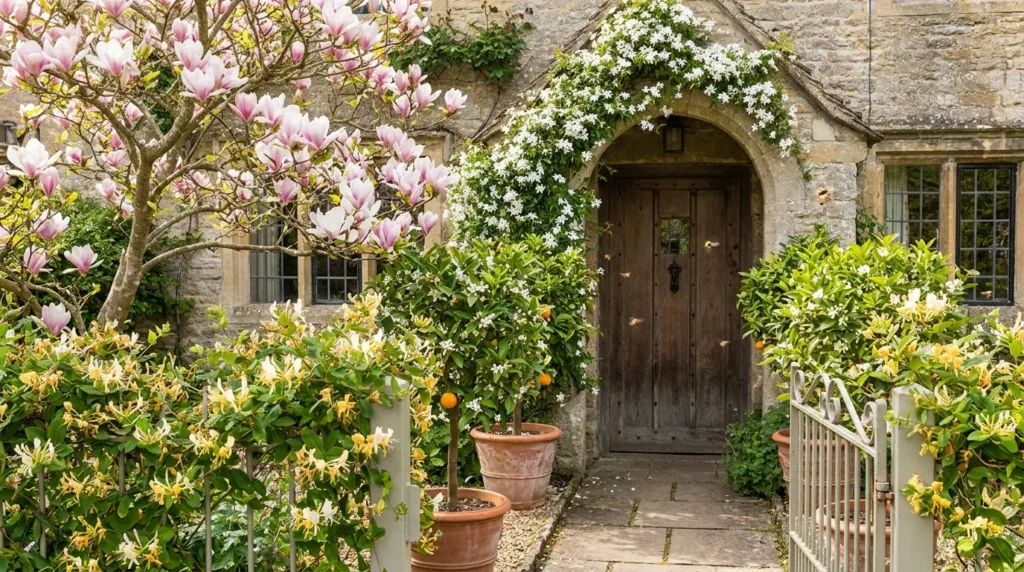
Fragrant plants add an often-overlooked sensory dimension to front yard landscaping, creating memorable experiences that delight visitors as they approach your home. A beautifully scented front yard creates emotional connections and lasting impressions that go far beyond visual appeal. Carolina jasmine produces intensely fragrant yellow flowers that bloom in early spring, while creeping fig offers subtle sweetness. Magnolia trees bloom with strongly scented white or pink flowers in early spring, and sweet olive produces small white flowers with incredibly fragrant scent that fills the entire yard. Gardenias offer heavy, rich fragrance and beautiful white flowers, while Spanish needle and sweet acacia provide delicate scents. Aromatic herbs like rosemary, lavender, and basil release their wonderful scents when brushed or when the sun warms their foliage.
Creating a fragrant landscape requires positioning scented plants strategically to maximise enjoyment. Place fragrant flowers near seating areas, along pathways, or near your front entrance where their scents will be most appreciated. Different plants bloom at different times of year, so selecting multiple fragrant varieties ensures your yard smells wonderful year-round—spring bloomers like magnolia and jasmine, summer bloomers like gardenia and sweet olive, and fall bloomers like some orchids and fragrant grasses. Some fragrant plants produce stronger scents in warm afternoon sun, while others are more fragrant in evening or on humid days, so learning the scenting patterns of your chosen plants helps you experience their fragrance at its best. Fragrant foliage plants like aromatic herbs provide scent when brushed or handled, making them perfect for herb gardens or perimeter plantings where you’ll brush against them. Positioning fragrant plants near windows allows you to enjoy their scents even from inside your home. Some people are sensitive to strong plant fragrances, so consider your neighbours when planting heavily scented plants, ensuring fragrance enhances rather than overwhelms your landscape.
17. Landscape Lighting:
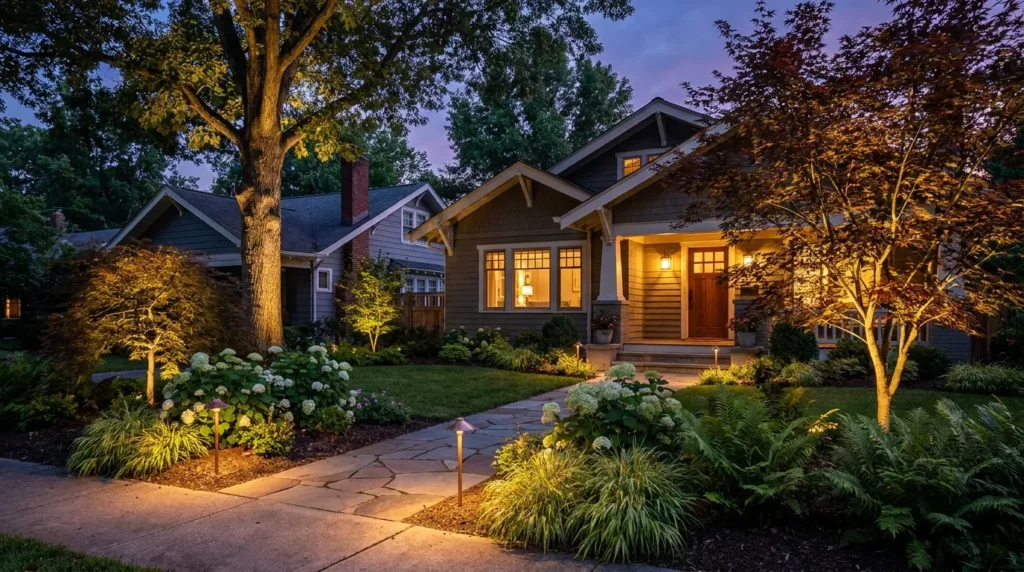
Landscape lighting transforms your front yard after dark, extending the enjoyment of your landscaping investment while improving security, safety, and property visibility. Well-designed lighting creates drama and sophistication that rivals daytime beauty, directing attention to key elements and creating layers of light and shadow that make yards appear larger and more interesting. Uplifting trees from below creates beautiful silhouettes and highlights interesting branching or foliage, while down-lighting from high branches creates pools of light that mimic moonlight. Path lighting improves safety while creating attractive nighttime pathways that guide visitors to your door. Accent lighting highlights specimen plants, architectural features, or water features, while ambient lighting creates overall illumination for entertaining or simply enjoying your landscape.
Effective landscape lighting design requires careful planning and quality equipment to create professional results. Install low-voltage LED systems that use little electricity and generate minimal heat, making them safer and more cost-effective than traditional high-voltage systems. LED lights also provide superior colour options and brightness levels compared to older technologies. Position lights carefully to avoid creating glare or harsh shadows, and use warm colour temperatures (2700K-3000K) that feel welcoming rather than harsh or institutional. Consider sight lines from the street and your home’s main windows to ensure lighting highlights your landscape’s best features. Uplifting should be subtle rather than blinding, creating interesting shadows and depth. Install timers or smart controls that automatically adjust lighting based on sunset times, and consider motion sensors for security lighting. Test different lighting levels and positions before finalising installations, as what looks good during initial installation may need adjustment after plantings mature. Layer different types of lighting—ambient, accent, and task lighting—to create interest and versatility that works for entertaining, safety, and everyday enjoyment.
18. Pollinator-Friendly Gardens:
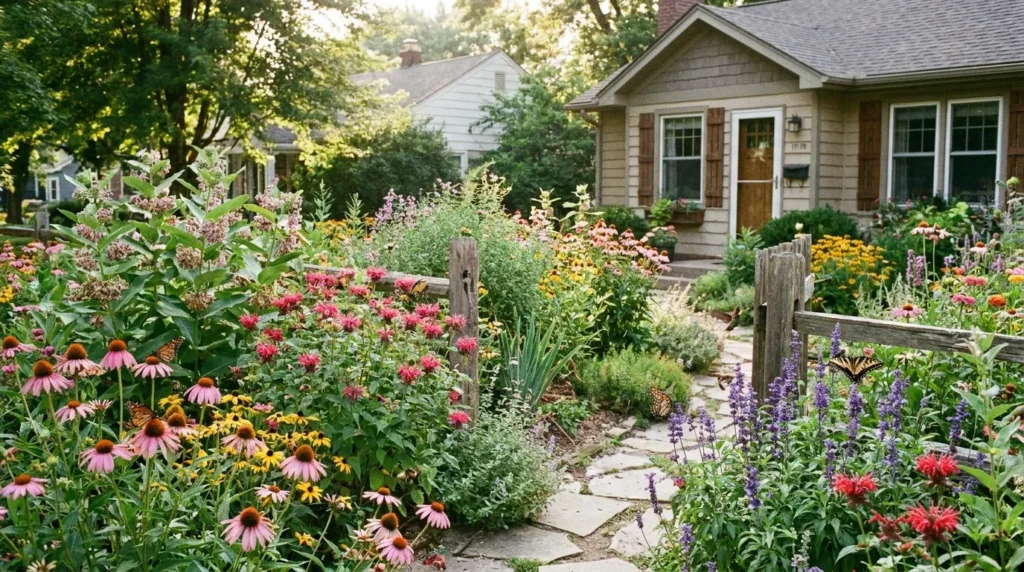
Creating a pollinator-friendly front yard landscaping design supports essential insects and wildlife while creating beautiful, dynamic gardens that change with pollinator activity. Native plants are especially valuable for pollinators because they’ve co-evolved with local insect species and provide the specific pollen, nectar, and plant structures that support their life cycles. Butterfly weed attracts monarchs and other butterflies with bright orange flowers, milkweed varieties are essential for monarch butterfly reproduction, and blazing star provides tall purple spikes that butterflies and bees find irresistible. Osteoporosis produces cheerful yellow blooms beloved by pollinators, while zinnias offer colourful flowers that attract numerous insect species. Asters, goldenrod, and other native wildflowers provide valuable food sources, especially in late summer and fall when many other plants stop blooming.
Designing successful pollinator gardens requires providing nectar and pollen sources throughout the year and creating habitat features that support pollinator life-cycles. Plant flowers in clusters or drifts, grouping the same species together, which makes them easier for insects to find and use efficiently. Select plants that bloom in different seasons to provide food from spring through fall and even into winter. Avoid hybrid ornamental bred primarily for appearance rather than pollinator value—these often have little nectar or pollen. Provide water sources through shallow dishes or water features, and avoid using pesticides that harm pollinator populations. Create shelter by leaving some areas of your landscape wild, letting plants set seed, and providing dead wood or brush piles where beneficial insects shelter. Allow native plants to set seed in fall rather than cutting them back immediately, providing both food and habitat. Planting pollinator-friendly designs not only supports important species but creates dynamic, ever-changing gardens that entertain with constant activity and visual interest. The presence of butterflies, bees, and other pollinators makes gardens feel more vibrant and alive.
19. Mediterranean-Inspired Design:
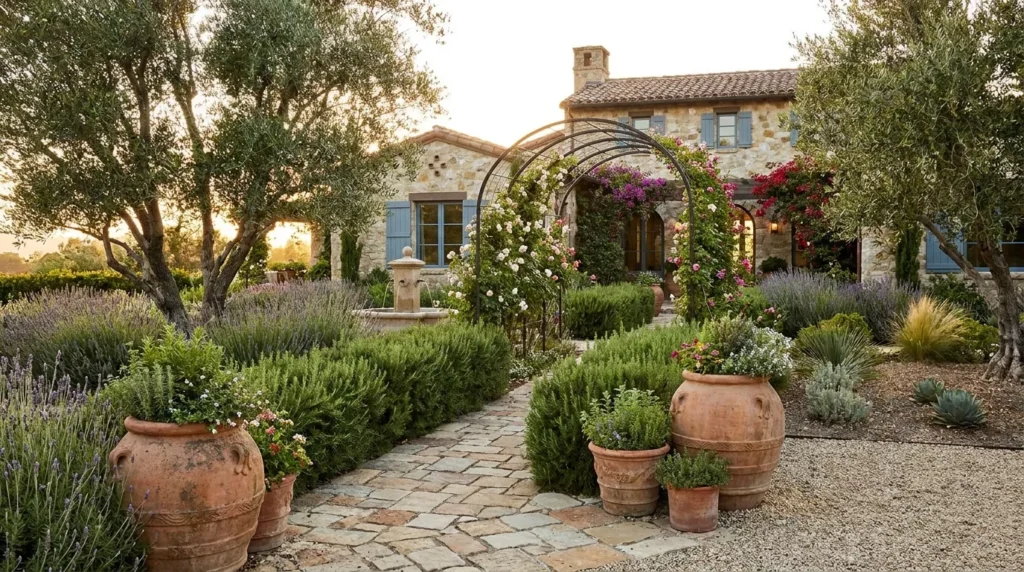
Mediterranean-style landscaping brings Old World elegance and timeless beauty to front yards, creating sophisticated designs that are both visually stunning and surprisingly low-maintenance. This design philosophy emphasises drought-tolerant plants, warm earth-tone colour palettes, rustic landscaping, and classic architectural elements that suggest Italian or Spanish estates. Olive trees provide silvery-green foliage and gnarled trunks that look beautifully aged and sophisticated, while lavender offers fragrant purple flowers and fine-textured foliage. Rosemary combines aromatic foliage with delicate flowers in blues, pinks, or whites, and ornamental grasses like feather reed grass add movement and texture. Terra-gotta containers filled with herbs or flowering plants, stone or rustic pacers, and architectural elements like arched arbours or rustic gates complete the Mediterranean aesthetic.
Creating an authentic Mediterranean landscape in Florida requires selecting appropriate plants adapted to our climate while maintaining the aesthetic principles of this timeless style. Many Mediterranean region plants are naturally drought-tolerant and actually prefer the well-draining sandy conditions of Florida’s native soils. Group plantings by water needs, placing drought-tolerant Mediterranean plants together and avoiding combining them with tropical species that need consistent moisture. Use warm earth tones—terracotta, ochre, cream, and warm Gray—in both landscaping and plant selections to create cohesive colour schemes. Incorporate containers throughout the landscape, using traditional terracotta vessels filled with seasonal plants, herbs, or flowering specimens. Install rustic arches or pergolas as focal points and shade structures, and use rustic stone or aged pacers rather than modern materials to enhance the Mediterranean feeling. This design style actually becomes more attractive with age as plants mature and landscaping weathers, developing patina that enhances rather than detracts from the overall design.
20. Japanese-Inspired Zen Gardens:
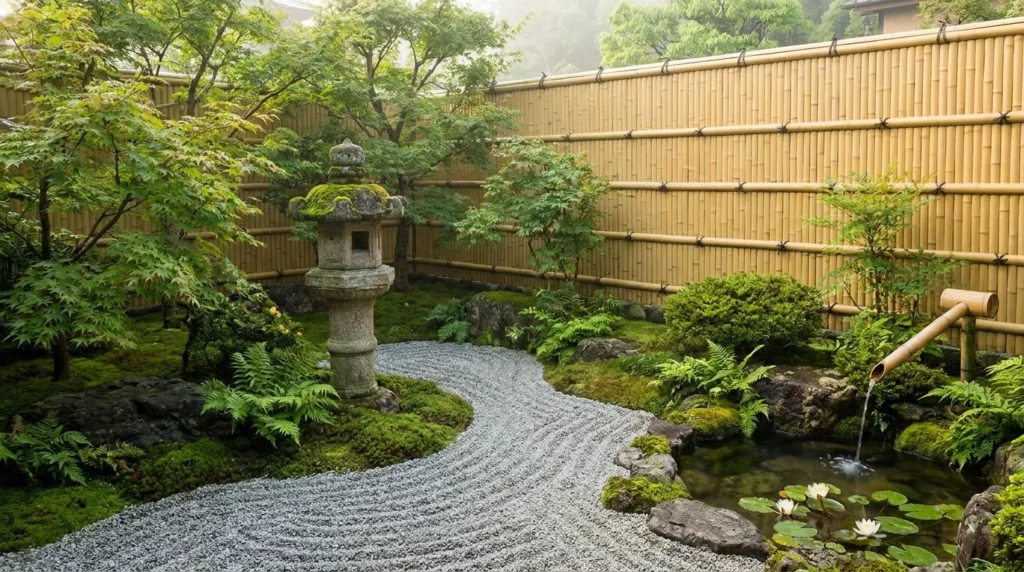
Japanese-inspired Zen gardens bring peaceful, meditative aesthetics to front yards, creating serene spaces that calm the mind and soothe the spirit through careful attention to balance, simplicity, and natural elements. This design philosophy emphasises restraint and the beauty of empty space, negative space having equal importance to planted areas. Japanese garden design incorporates carefully selected plants with interesting forms, textures, and seasonal colours, along with landscaping elements like gravel, stepping stones, bamboo screens, and water features. Bamboo varieties add height and structure while providing privacy screens, Japanese maples offer elegant branching and brilliant fall colour, and carefully pruned shrubs create architectural forms. Moss, stepping stones, and raked gravel create meditative focal points, while water features with circulating water provide soothing sounds.
Designing a successful Japanese-inspired front yard in Florida requires understanding core principles like balance, asymmetry, and the use of space rather than attempting to replicate plant-specific designs. Florida’s humidity and rainfall patterns differ significantly from Japan, so selecting plants that thrive here while maintaining Japanese aesthetic principles is key. Create visual balance through asymmetrical arrangements rather than formal symmetry, positioning elements at varying distances from viewing points. Use layers of depth, placing some elements in the foreground, middle ground, and background to create perspective and visual interest. Incorporate natural stone elements like lanterns or stepping stones that echo Japanese design traditions while being appropriate for Florida conditions. Gravel or mulch areas create clean spaces for contemplation and minimise maintenance compared to traditional planting. Water features don’t need to be large—a simple stone-lined basin with circulating water creates meditative beauty. Careful pruning maintains distinctive plant forms rather than allowing plants to grow wild. This design style becomes more refined and beautiful with mature growth and weathering.
21. Cottage Garden Style:
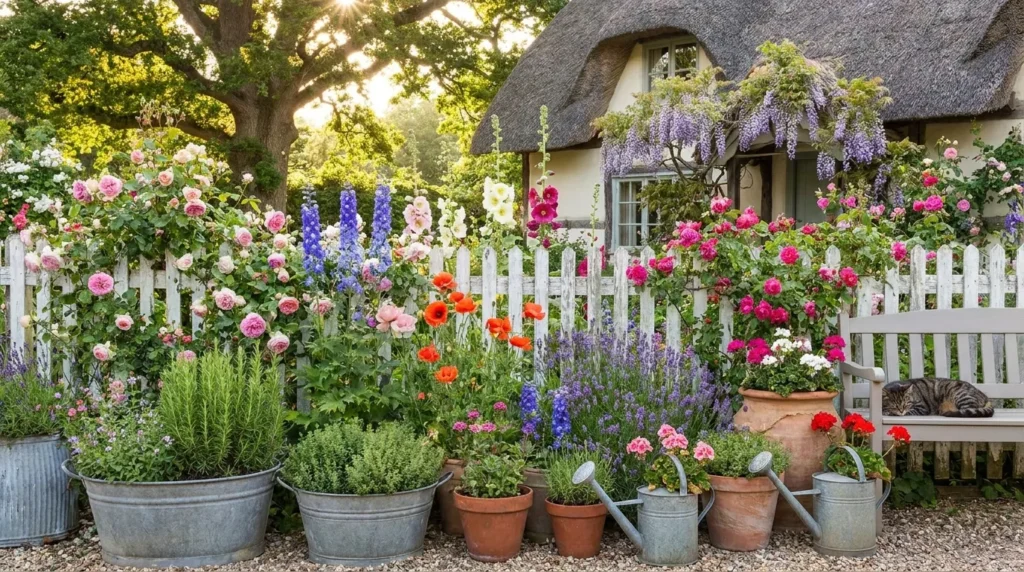
Cottage garden style brings nostalgic charm and romantic beauty to front yards, embracing abundant plantings, colourful flowers, and a seemingly casual but actually carefully planned design that celebrates nature’s exuberance. This design style values heirloom and heirloom-like plants, fragrance, and constant seasonal blooms over formal precision. Roses in varieties suited to Florida’s climate provide romantic beauty and often wonderful fragrance, while zinnias, dahlias, hollyhocks, and cone-flowers create colourful abundance. Herbs like basil, sage, and thyme combine culinary functionality with lovely flowers and fragrance. Self-seeding annuals like cosmos and Alyssa create natural-looking drifts of colour that seem to plant themselves. Vintage-style containers, picket fencing, arched gates, and rustic accents enhance the cottage feeling, while seemingly casual plantings actually result from thoughtful plant selection and placement.
Creating a cottage garden in Florida requires selecting appropriate plant varieties while maintaining the abundant, romantic aesthetic that defines this style. The hot, humid Florida climate differs significantly from traditional English cottage gardens, so focus on tropical and subtropical plants that offer similar characteristics—abundant flowers, interesting foliage, and fragrance. Layer plantings with taller plants in back, shorter varieties in front, and trailing plants along pathways or pots, creating dense, abundant-looking designs. Mix flowering plants, herbs, and foliage plants to create textural interest and extend bloom times. Allow some plants to self-seed in cracks and crevices, creating that charming natural feeling cottage gardens are famous for, but manage this to prevent it from becoming overgrown. Cottage gardens benefit from regular deadheading to encourage constant blooming throughout the season. Vintage containers, weathered wood elements, and rustic accessories enhance the cottage aesthetic. This style actually becomes more charming as plants fill in and create the abundant, slightly overgrown look that gives cottage gardens their distinctive character and appeal.
22. Privacy Screening:
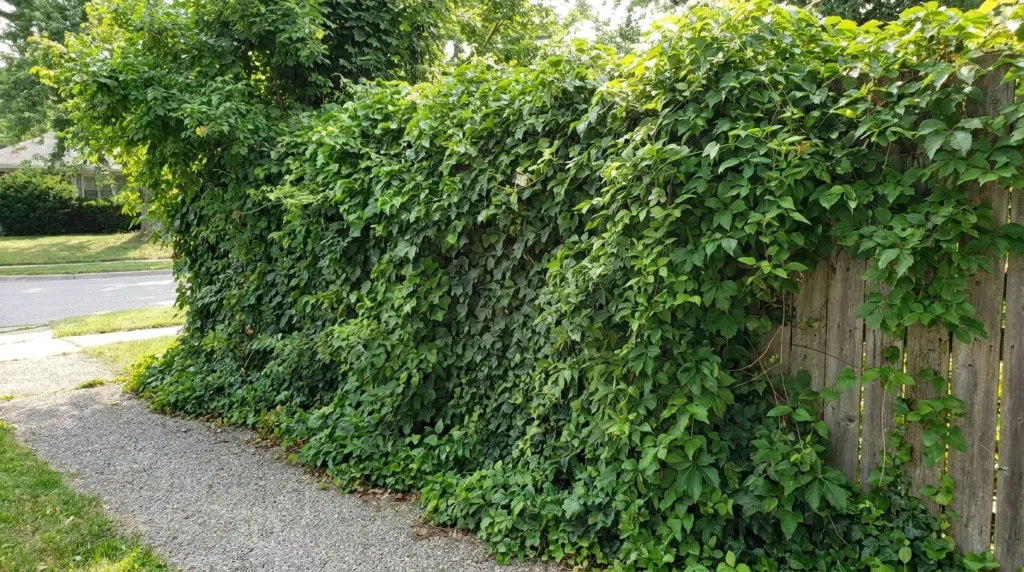
Privacy screening using living hedges, vines, or attractive fencing transforms exposed front yards into intimate, secluded outdoor rooms while adding significant curb appeal. Living screens are often preferable to solid fences because they soften hard architectural lines, provide ecological benefits, and often look more attractive. Bamboo varieties grow quickly and create dense screening while adding tropical beauty, though careful selection of clumping varieties prevents invasive spread. Privet hedges create formal-looking screens with glossy foliage, while wax myrtle offers native Florida charm and salt tolerance. Carolina jasmine and trumpet vine create living walls when trained on fence frameworks, blooming while screening unwanted views. Live oak and other dense evergreen shrubs can be pruned into tall hedging forms that provide year-round privacy.
Creating effective privacy screening requires planning for mature sizes and understanding growth rates to ensure timely coverage. Fast-growing plants like bamboo and vigorous vines provide quick results but may need more frequent maintenance, while slower-growing plants like privet require more patience but eventually create refined, permanent screens. Combination approaches often work best, layering trees, shrubs, and vines at different heights to create dense screening with visual interest. Install support structures before planting vines, ensuring they’re sturdy enough for mature growth. Landscaping elements like fencing can be softened and enhanced by training vines or positioning trees in front, creating living screens that provide both function and beauty. Consider what views you’re screening from and position plantings accordingly—screening street-level views while allowing sunlight to reach your home, or screening neighbouring yards while maintaining views you want to keep. Privacy screens can also define different functional zones within your landscape, creating separate spaces for different activities while maintaining visual continuity.
23. Sustainable Practices:
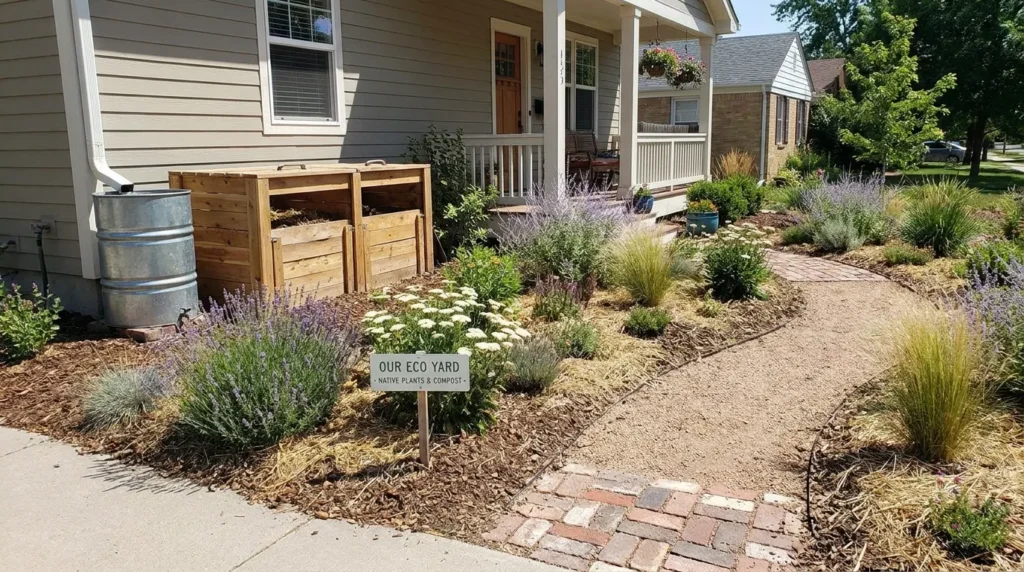
Sustainable landscaping practices create beautiful front yards while protecting Florida’s environment, conserving resources, and often reducing maintenance and costs. Eco-friendly landscaping starts with selecting native plants adapted to local conditions, eliminating the need for excessive water, fertiliser, or pest management chemicals. Composting yard waste and kitchen scraps creates nutrient-rich soil amendments that improve Florida’s sandy soils while diverting waste from landfills. Rainwater collection systems capture roof runoff for irrigation, reducing dependence on municipal water supplies while managing storm water runoff that pollutes waterways. Using no-chemical pest management, mulching instead of bare soil, and planting in ways that support beneficial insects all reduce environmental impact.
Implementing sustainable practices doesn’t require sacrificing beauty or convenience—in fact, sustainable landscapes often look better and require less ongoing work than conventional landscaping. Reduce water usage through smart irrigation systems that adjust based on rainfall and seasonal needs, mulching to conserve soil moisture, and selecting drought-tolerant plants that thrive with minimal supplemental watering. Choose organic fertilizers and amendments that improve soil health without chemical runoff. Eliminate pesticides by selecting pest-resistant plants and using integrated pest management that controls problems with minimal chemical intervention. Use locally sourced hardscaping materials that require less transportation and support local businesses. Leave some areas slightly wild for beneficial insects and pollinators. Educate yourself and neighbors about native plant benefits and sustainable practices through demonstration landscapes. Sustainable landscaping is increasingly important as climate change intensifies droughts and flooding, making eco-friendly practices not just environmentally responsible but pragmatically smart for long-term landscape success.
FAQ’s:
Q: What are the best plants for Florida front yards?
A: Native plants are ideal because they’re adapted to Florida’s climate and require minimal care. Popular choices include firebush, native palms, coontie, ixora, and muhly grass. These plants thrive in Florida’s heat and humidity while supporting local wildlife. Non-native tropical plants can also work well but may require more water and maintenance.
Q: How often should I water my front yard landscape?
A: Established landscapes generally need watering only during dry periods. Young plants need regular watering for the first several months until established. Most Florida landscapes thrive with 1 inch of water weekly during growing season, whether from rainfall or irrigation. Use mulch to conserve moisture and reduce watering needs.
Q: Can I create a front yard landscape on a tight budget?
A: Absolutely! Start with hardscaping like mulch and pathways, then gradually add plants over time. Choose smaller plants that mature rather than buying mature specimens. Grow some plants from seed or cuttings. Focus on one or two focal points first, then expand the landscape as budget allows.
Q: How do I deal with Florida’s sandy soil?
A: Amend sandy soil with compost, peat moss, or aged manure before planting. These amendments improve water retention and add nutrients. Create raised beds for vegetables and tender plants. Use mulch to conserve moisture. Native plants are best because they’re adapted to sandy conditions.
Q: What should I do about Florida’s occasional freezes?
A: Plant cold-tolerant varieties, especially in North and Central Florida. Keep tender tropical plants in containers that can be moved or protected. Keep frost cloth and burlap on hand for emergency protection. Plant tender plants on the south or east side of your home for additional warmth.
Conclusion:
Your front yard is your home’s first impression and a reflection of your personal style. With these 23 proven landscaping ideas designed specifically for Florida’s climate, you have everything you need to transform your outdoor space into something truly spectacular. Whether you prefer lush tropical designs, modern minimalist aesthetics, Mediterranean elegance, or cottage-style charm, Florida’s diverse plant palette and your home’s unique characteristics offer endless possibilities for creating a stunning front yard.
The key to success is starting with a clear vision of what style resonates with you, then incorporating elements gradually as time and budget allow. Remember that a beautiful landscape doesn’t happen overnight—it develops and improves as plants mature and you refine your designs. Don’t be afraid to experiment, learn from your successes and mistakes, and adapt your plans as you understand what works best in your specific location. Most importantly, create a space that brings you joy and makes your home the envy of your entire neighborhood. Your front yard landscaping investment will reward you with increased property value, improved curb appeal, and years of enjoyment for you and your family.