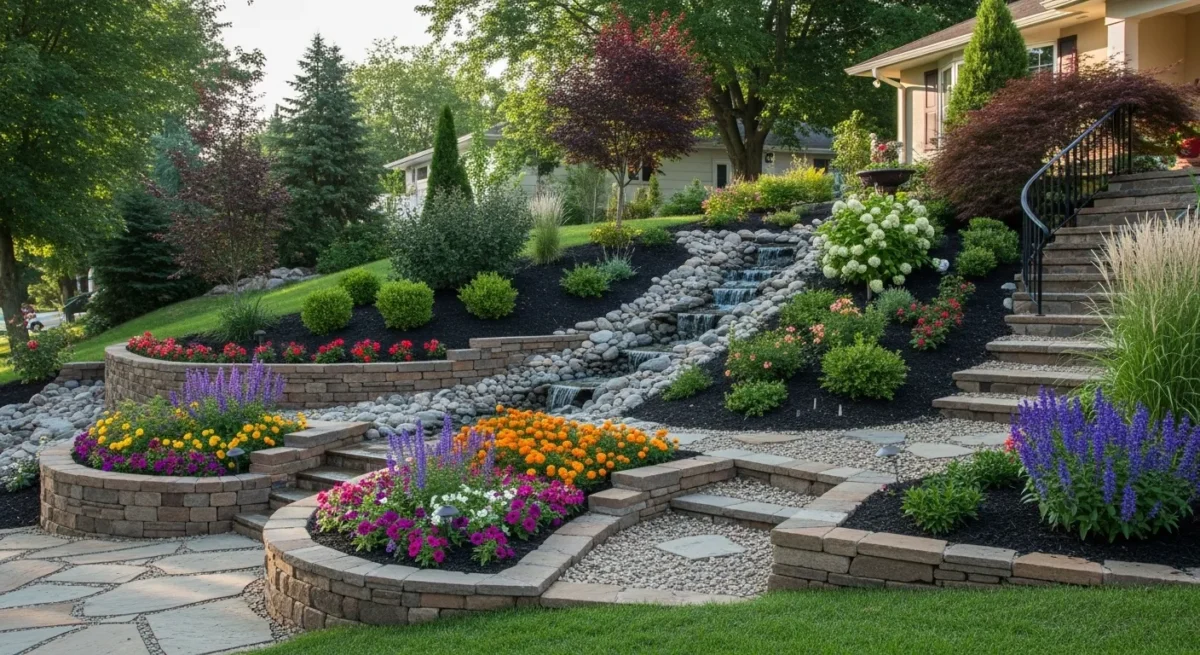
 Muhammad Muaz
 Sloped front yards present unique landscaping challenges that intimidate many homeowners, but they also offer incredible opportunities to create visually stunning, multi-dimensional landscapes that flat yards simply cannot achieve. Rather than viewing your slope as a problem to overcome, consider it an advantage that allows you to create dynamic designs with layers, cascading plantings, dramatic visual depth, and striking focal points. Sloped terrain naturally draws the eye downward, creating natural pathways and focal points while allowing taller plantings in the background to become dramatic backdrops. Slopes also present practical advantages—they provide excellent drainage, eliminate standing water issues, and create natural amphitheatre-style viewing areas where multiple elevation changes become design features. This comprehensive guide presents 23 proven sloped front yard landscaping ideas specifically designed to address common challenges like erosion control, drainage management, and visual impact while transforming difficult terrain into a distinctive landscape asset that increases property value and creates genuine curb appeal.
1. Terraced Garden Beds:
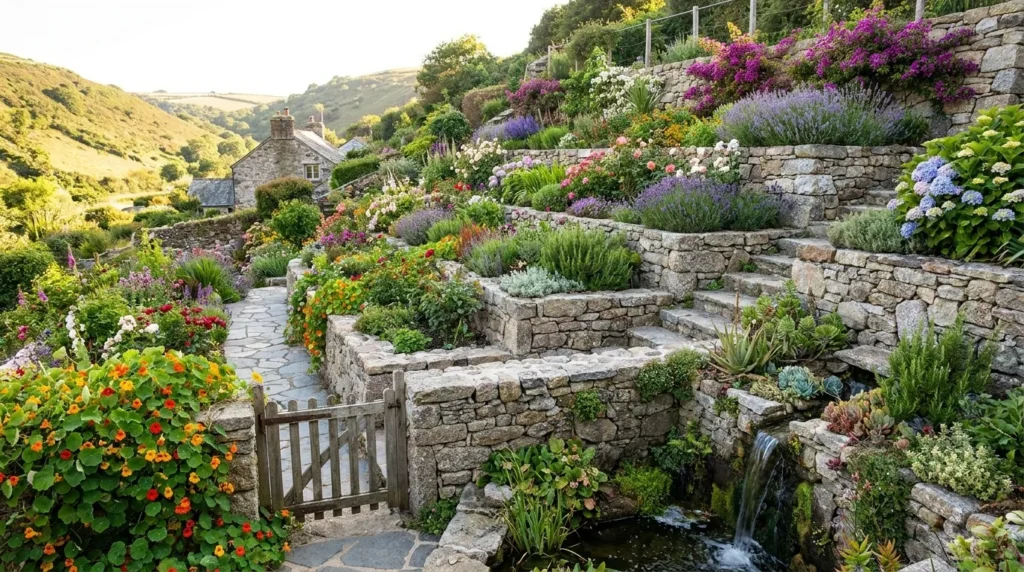
Terraced garden beds transform slopes into functional planting zones by creating level areas at different elevations, each held in place by retaining walls or edging. Terracing allows you to plant at multiple heights, creating visual interest and maximising planting space on slopes where traditional flat gardens aren’t possible. Each terrace becomes a design element that adds architectural structure to your landscape while solving practical problems—water naturally flows from upper terraces to lower ones, preventing erosion while providing controlled drainage. Terraces work beautifully with mixed plantings, creating opportunities to layer ground-covers, perennials, shrubs, and small trees at different levels. The visual effect is dramatic, creating a sense of depth and dimension that makes even modest slopes feel like substantial landscape features.
Building terraces requires planning to determine appropriate height and spacing based on your slope’s grade and soil conditions. Retaining walls can be constructed from stone, timber, composite materials, or concrete blocks depending on your aesthetic preferences and budget. Each terrace level should be properly compacted and have adequate drainage to prevent washout during heavy rains. Planting on terraces follows standard guidelines, though you’ll need to consider the specific micro-climates created by each level—upper terraces may be sunnier and drier, while lower terraces may receive more moisture. Terraced gardens often become focal points that draw admiring comments from neighbours and visitors. Once established, terraced plantings become increasingly beautiful as plants mature and fill in, creating lush displays that transform steep slopes into landscape destinations.
2. Stone Retaining Walls:
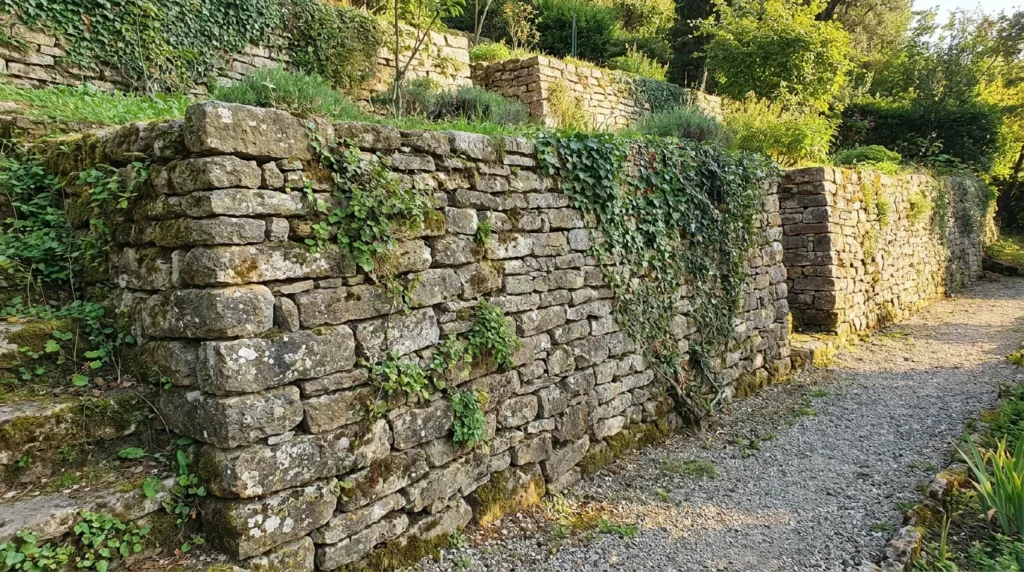
Stone retaining walls are the foundation of many sloped landscape designs, serving the dual purpose of stabilising slopes while creating architectural focal points that add substantial visual interest. Natural stone, stacked stone, or cut stone walls become landscape features in themselves, adding texture, colour, and a sense of permanence that elevates overall property appearance. Stone walls age beautifully, developing patina and weathering that enhances rather than detracts from their appearance. Unlike modern materials that can look institutional or temporary, stone retaining walls appear timeless and sophisticated. Quality stone walls become increasingly beautiful as plantings grow around them, climbing vines soften edges, and natural weathering adds character. Well-constructed stone walls can last decades or even centuries, becoming permanent landscape elements that define properties.
Installing stone retaining walls requires proper engineering and construction to ensure they stabilise slopes rather than failing and creating hazardous conditions. Walls should include adequate drainage behind them to prevent water pressure buildup that causes failure. Proper foundation, compaction, and back-fill are essential for wall longevity. Many homeowners hire professional contractors for retaining wall installation, though DIS options exist for smaller walls using manufactured stacking systems. Once installed, stone walls require minimal maintenance beyond occasional weeding if plants grow in crevices. Plant climbing vines or cascading plants at the top of walls to create dynamic visual effects. Consider installing lighting to highlight wall texture at night, creating dramatic nighttime focal points. Stone walls often increase property values substantially, as they’re permanent improvements that solve functional problems while adding distinctive character.
3. Cascading Ground-cover:
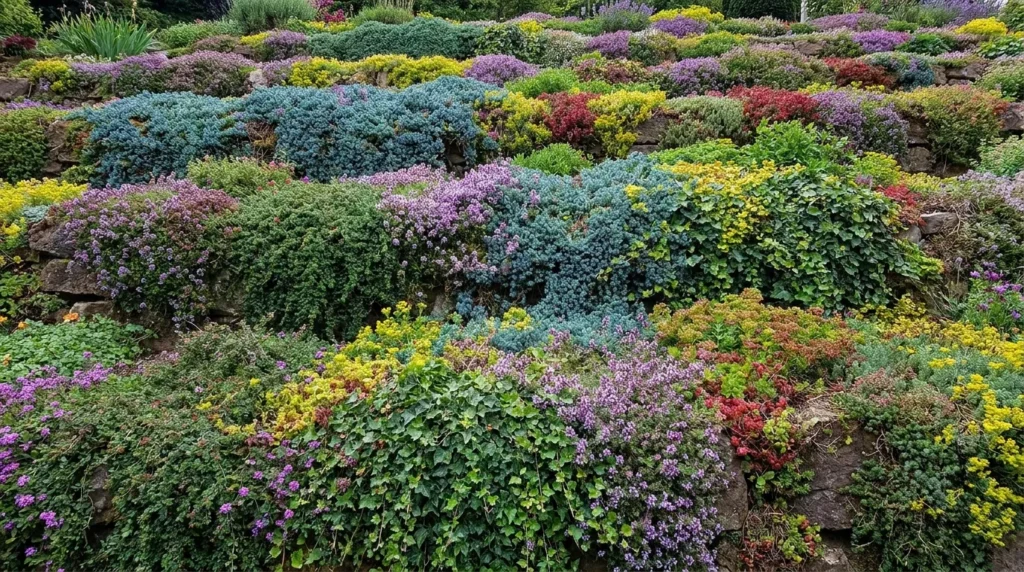
Cascading ground-covers are erosion-control workhorses that stabilise slopes while creating beautiful flowing effects as plants cascade down hillsides. Trailing varieties like creeping fig, beach strawberry, and trailing rosemary spread naturally down slopes, their roots binding soil while dense foliage prevents water erosion. Unlike turf grass that requires constant mowing on slopes and often fails in steep situations, ground-covers establish once and provide year-round coverage with minimal maintenance. Many cascading ground-covers offer seasonal interest—flowering varieties provide blooms while others display colourful foliage that changes with seasons. The visual effect of mature cascading ground-covers is striking, creating flowing tapestries of colour and texture that make slopes appear intentionally designed rather than problematic.
Planting cascading ground-covers on slopes requires initial establishment care—regular watering until roots establish, typically several months. Space plants appropriately for their mature spread, applying mulch between plants to suppress weeds and retain moisture during establishment. Once established, most cascading ground-covers become remarkably self-sufficient, needing water only during extended droughts. Some vigorous varieties may require occasional pruning to prevent them from overwhelming other plantings or spreading beyond desired boundaries. Cascading ground-covers work beautifully with other slope plantings—combine them with shrubs, small trees, or perennials to create layered designs. The root systems of established ground-covers help prevent erosion during heavy rains, making them practical slope solutions. Their beauty is permanent—once established, cascading ground-covers provide decades of erosion control and visual interest.
4. Stone Steps and Pathways:
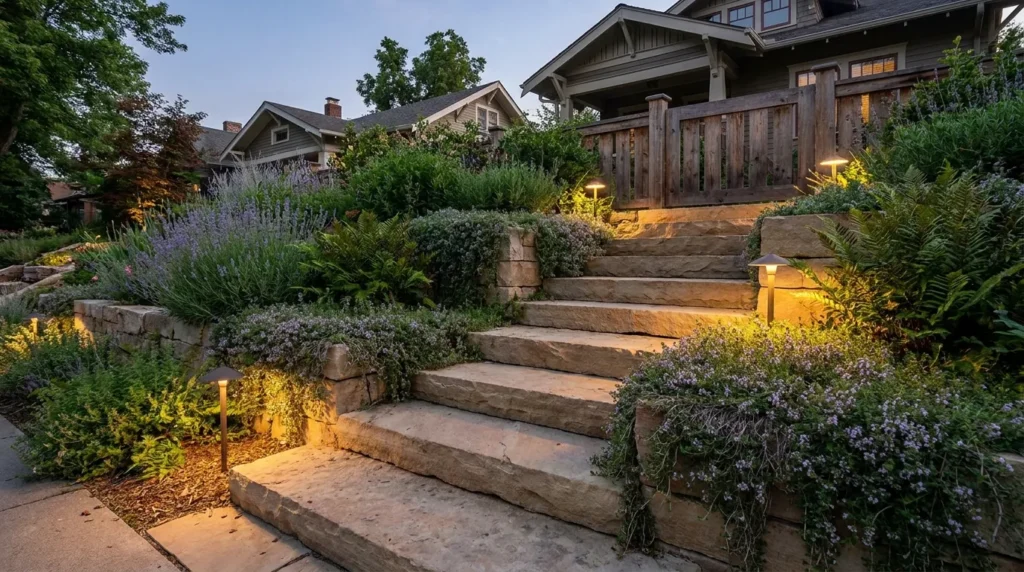
Stone steps and pathways transform slopes from difficult-to-navigate challenges into graceful, welcoming routes that guide visitors naturally from street level to upper areas of your property. Well-designed pathways become focal points that draw the eye and create visual interest while serving practical purposes. Stone steps feel more permanent and substantial than wooden alternatives, ageing beautifully and becoming increasingly attractive over time. Curved pathways create more visual interest than straight routes, and varied step heights and spacing create visual rhythm. Pathways should be wide enough for comfortable passage (typically 3-4 feet) and have adequate traction to prevent slipping during wet conditions. Flanking pathways with plantings creates a garden effect, guiding visitors through planted corridors.
Building durable stone pathways requires proper grading and drainage to ensure water doesn’t pool on steps or pathways. Step depth and height should be consistent and comfortable for climbing—typically 12-inch depth with 6-8 inch rise. Consider handrails or safety features for steep slopes. Natural stone, composite materials, or manufactured pacers all work beautifully, offering different aesthetics and durability levels. Adding landscape lighting along pathways improves nighttime safety while creating dramatic effects. Plant low-growing ground-covers or perennials along pathways to soften edges and create definition. Well-constructed stone pathways become permanent improvements that increase property value substantially. They transform steep slopes into accessible landscape areas, allowing visitors to explore and appreciate your entire property.
5. Tiered Planting Design:
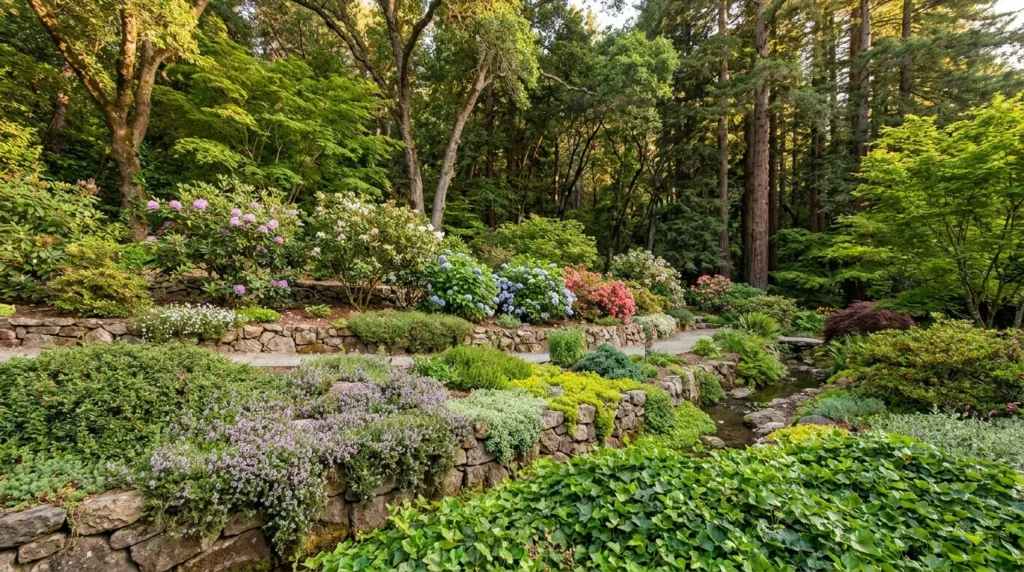
Tiered planting takes advantage of slope elevation changes by positioning plants at different heights to create dramatic layers of interest visible from street level. Taller plants positioned higher on slopes become dramatic backdrops, mid-sized shrubs create depth and structure, and cascading ground-covers soften foreground areas. This approach creates the illusion of greater depth and dimension, making slopes appear larger and more visually complex than they actually are. Tiered designs also ensure that every plant has appropriate light exposure—taller plants don’t shade shorter ones excessively, and all plantings receive adequate sun based on their position. The layered effect is particularly striking when plants have different bloom times, creating seasonal color changes throughout the year. Professional landscape designers often charge substantial fees for tiered designs, but homeowners can achieve similar effects by understanding basic layering principles.
Creating successful tiered plantings requires planning to understand your slope’s specific conditions—sun exposure, drainage, soil type, and wind patterns vary at different elevations. Select plants appropriate for each tier that complement adjacent plantings in colour, texture, and form. Start with larger structural plants, then add mid-sized shrubs and ground-covers that fill spaces and tie the design together. Initial planting may look sparse, but resist the urge to over-plant—provide appropriate spacing for mature sizes. As plants establish and mature, the tiered effect becomes increasingly dramatic. Maintain sight lines so views aren’t blocked—sometimes a single tall shrub positioned strategically creates more impact than dense plantings. Tiered designs work beautifully with landscaping elements like pathways and retaining walls, creating complete landscape experiences.
6. Slope Erosion Control with Native Plants:
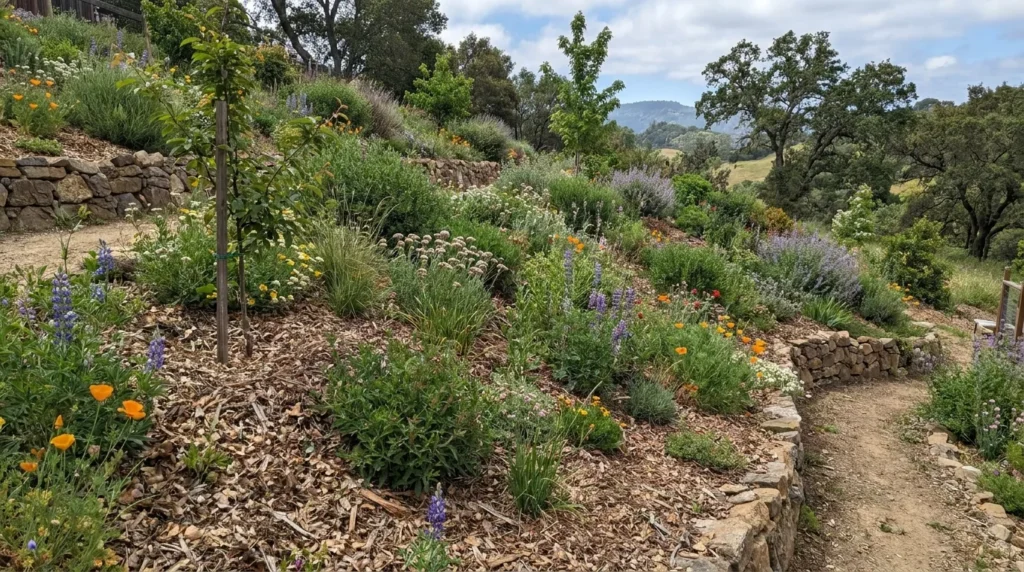
Native plants are natural erosion-control solutions, their deep root systems binding soil while adapted growth forms handle slope conditions beautifully. Native species evolved in your specific region, thriving in local soil and climate conditions while requiring minimal water, fertiliser, or pest management once established. Many native plants have extensive fibrous root systems that stabilise slopes more effectively than turf grass. Native ground-covers, shrubs, and trees create permanent erosion-control solutions that become increasingly effective as root systems expand. Supporting native plants also supports local wildlife—birds, butterflies, and beneficial insects depend on native species for survival. Using natives creates landscapes that feel authentic to your region while solving practical problems. The environmental benefits combine with functional advantages, making native slope plantings ideal choices.
Identifying appropriate native plants requires research or consultation with local native plant nurseries that understand species suited to your region’s specific conditions. Plant natives at appropriate spacing for mature size, provide establishment water, and mulch to suppress competing weeds. Once established, native plantings become increasingly vigorous and beautiful, requiring minimal ongoing care. Many native plants require a growing season or two before appearing fully attractive—patience allows root systems to expand and plants to reach mature size. Combining different native species creates diverse, resilient landscapes that naturally resist pests and diseases. Native slope plantings often increase property values by demonstrating environmental stewardship while providing beautiful, functional landscapes. Supporting ecosystems while creating beautiful yards is a win-win outcome.
7. Sloped Rock Gardens:
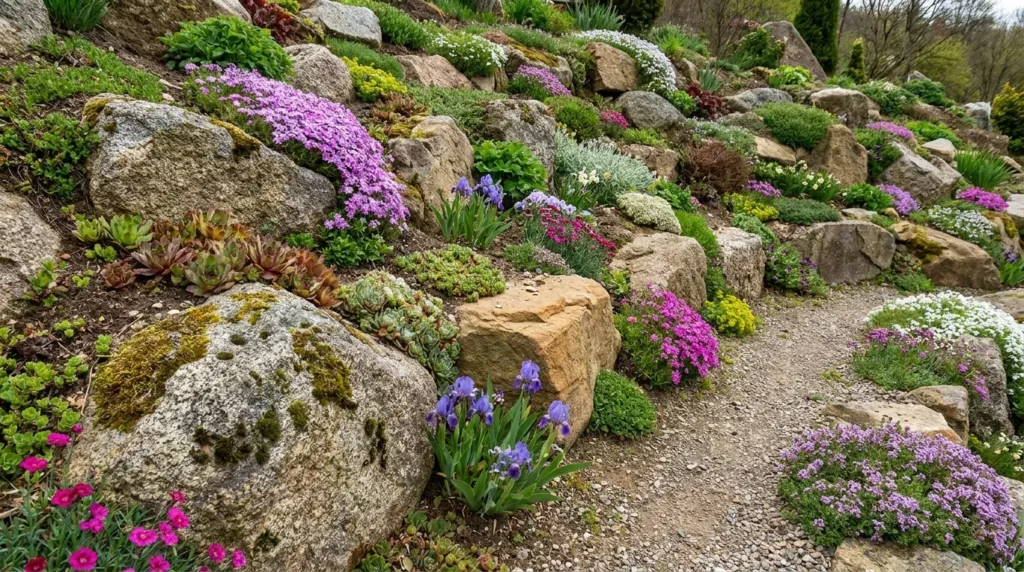
Rock gardens on slopes are visually stunning designs that take advantage of natural slope characteristics to create dramatic cardsharper focal points. Large boulders and smaller rocks arranged naturally create visual interest while ground-covers and alpine plants grow between rocks in pockets of soil. Well-designed rock gardens appear natural rather than constructed, following the principle that rocks are arranged as if glaciers or natural geological forces placed them. This approach requires careful positioning and spacing, but the results are distinctive landscapes that become neighbourhood landmarks. Rock gardens work beautifully on slopes because water naturally flows around and between rocks, providing natural drainage while preventing erosion. The combination of permanent rock structure with living plants creates dynamic designs that interest visitors while solving slope-management challenges.
Creating slope rock gardens begins with sourcing appropriate rocks—local stone suppliers often have slope-appropriate materials. Position larger boulders first, creating the design’s skeleton, then add smaller rocks and gravel to fill spaces. Plant small alpines, serums, or spreading ground-covers between rocks, ensuring adequate soil and moisture for establishment. Rock gardens benefit from good drainage and typically succeed in well-drained slope conditions. Maintenance is minimal once established—occasional weeding and optional pruning are all that’s needed. Rock gardens work with any surrounding landscape style and complement various planting schemes. They age beautifully as moss colonises rocks and plants mature, creating increasingly authentic appearances. Rock gardens on slopes create permanent, low-maintenance focal points that increase property values while eliminating high-maintenance plantings.
8. Waterfall and Stream Features:
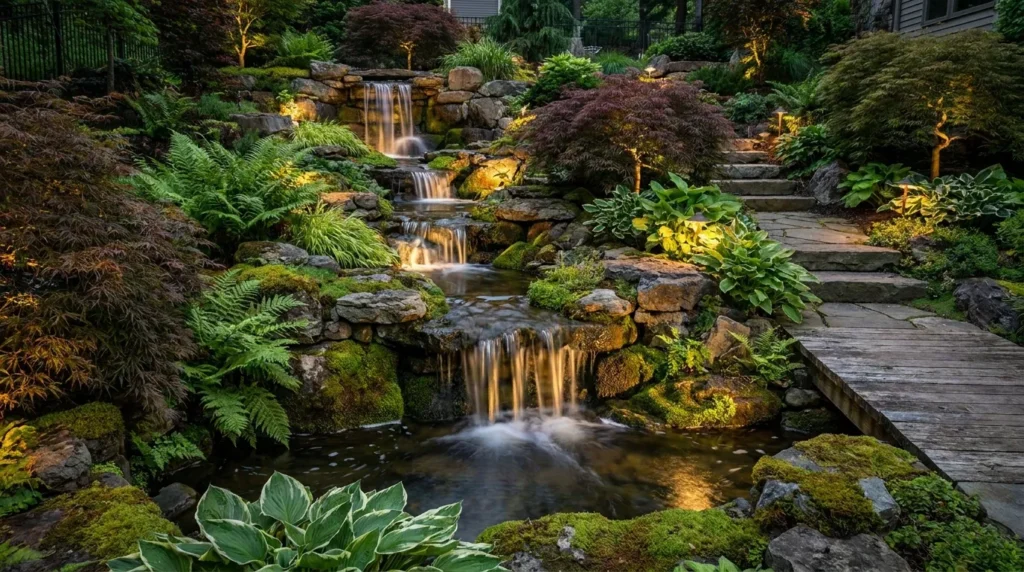
Waterfall and stream features take advantage of slope elevation changes to create water movement that adds soothing sounds, visual interest, and a sense of luxury to front yards. Water naturally flows downhill, making slopes ideal for constructing cascading water features without creating unnatural-looking designs. Waterfall features can be simple or elaborate, from basic rock-stacked constructions to professionally designed fountain systems. The sound of flowing water provides ambient noise that masks street sounds while creating a relaxing atmosphere. Water features become focal points that draw attention and create memorable impressions. Properly designed water features appear natural rather than constructed, using landscape-appropriate materials and plantings that integrate water features into overall designs.
Building waterfall features requires planning water source, pump selection, and proper drainage to ensure water recirculates without depleting. Natural stone and landscape-appropriate materials create authentic appearances. Position waterfalls where they’re visible from main viewing areas—typically from the street or windows. Surround features with moisture-loving plants that thrive in consistently wet conditions created by splashing and spray. Incorporate landscape lighting to highlight features at night, creating dramatic effects. Waterfall features require ongoing maintenance including seasonal cleaning, pump inspection, and occasional rock repositioning. In winter, drain features to prevent freeze damage in colder climates. Despite maintenance requirements, waterfall features often become favourite landscape elements that families and guests enjoy for years. The combination of water’s movement and sound creates multi-sensory experiences that elevate entire properties.
9. Slope Drainage Solutions:
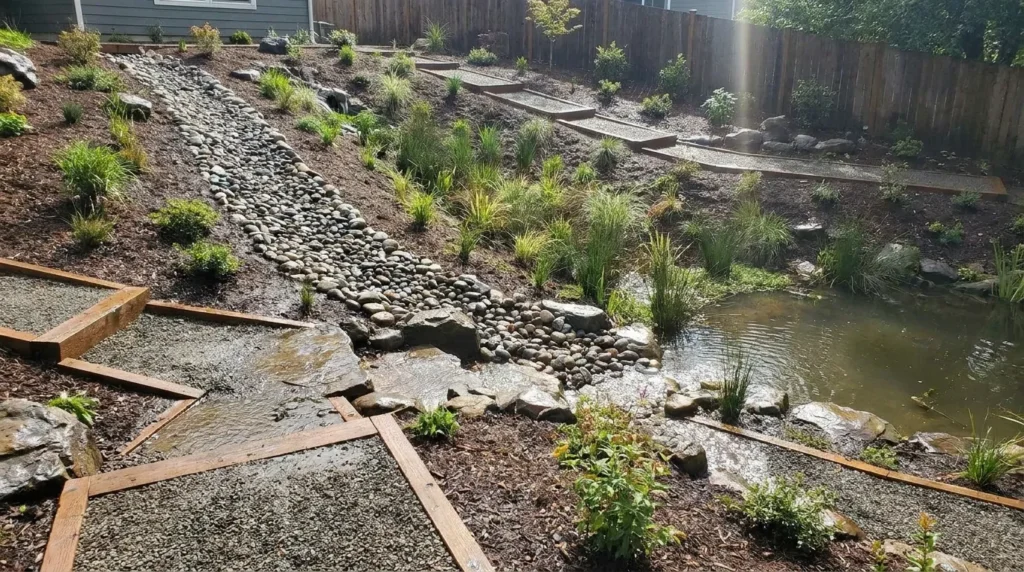
Proper slope drainage is essential for preventing erosion, water-logging, and property damage while protecting your landscape investment. French drains, stales, and permeable surfaces direct water flow in controlled ways that prevent damage while serving landscaping purposes. Well-designed drainage appears natural—stales can be planted with moisture-loving plants that stabilise banks while filtering water. Permeable pathways allow water to percolate rather than running off, reducing erosion and increasing groundwater recharge. Understanding your slope’s natural drainage patterns and redirecting water appropriately prevents expensive problems. Proper drainage prevents foundation damage, basement flooding, and neighbour disputes caused by water running onto adjacent properties. Slopes naturally shed water, but directing that water through landscaping rather than allowing uncontrolled runoff creates better outcomes.
Designing effective drainage requires understanding your slope’s grade, soil type, and subsurface conditions. In some cases, simple grading and wales creation provide adequate drainage. In others, French drains or underground drain systems are necessary. Consult drainage professionals if uncertain about your slope’s needs. Well-designed drainage becomes invisible—water flows naturally without dramatic interventions visible in the landscape. Plant stales and low areas with water-tolerant species that handle occasional wetness. Permeable surfaces like gravel, permeable pacers, or wood mulch paths allow water infiltration while providing attractive landscaping. Retaining walls and terraces should include drainage behind them to prevent water pressure buildup. Proper drainage pays dividends through decades of problem-free enjoyment of your landscape, preventing costly repairs.
10. Ornamental Grasses on Slopes:

Ornamental grasses are perfect slope plantings, their deep root systems stabilising soil while swaying forms create dynamic movement that makes slopes appear alive and interesting. Grasses catch breezes beautifully, creating flowing visual effects that static plants can’t achieve. Tall varieties create layered, forest-like effects on slopes while shorter varieties create flowing ground-cover-like appearances. Many ornamental grasses are incredibly tough, thriving on poor soil and hot, dry slopes where other plants struggle. Grasses provide seasonal interest—summer growth, fall colour changes, winter structure from dried seed heads, and spring renewal. Planting grasses in drifts creates more visual impact than scattered placement, with groups of odd-numbered plants (three, five, seven) looking more intentional than even numbers.
Planting ornamental grasses on slopes follows standard techniques—plant in full sun with adequate drainage, water until established, then allow them to flourish with minimal intervention. Most ornamental grasses are very affordable and establish relatively quickly. Space plants appropriately for mature size, creating drifts that fill in as plants expand. Cut grasses back annually in late winter before new growth emerges—this is the primary maintenance requirement. The benefits are substantial—beautiful landscape that requires minimal water, fertilising, or pest management. Grasses work beautifully with shrubs, perennials, and rock features, fitting into virtually any design. Their movement is particularly striking on slopes where wind exposure is typically greater than in flat areas. Over years, established grass slopes become increasingly beautiful and valuable landscape features.
11. Tiered Container Plantings:
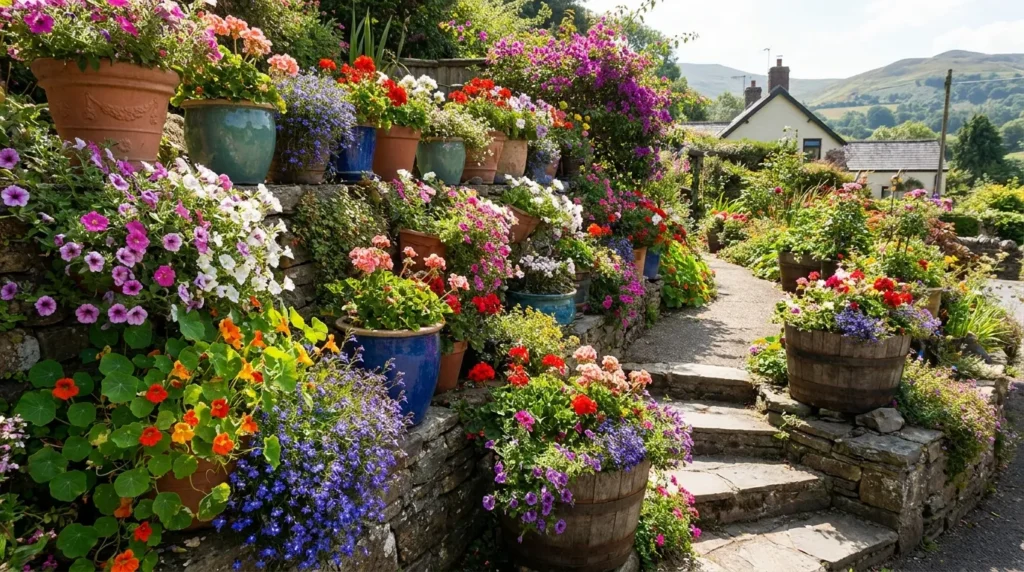
Tiered container plantings provide flexible slope solutions, allowing you to create sophisticated landscape designs without in-ground planting while maintaining complete rearrangement flexibility. Containers at various heights create layered visual effects, and plants spilling over container edges create cascading forms that complement slope characteristics. Containers solve slope challenges—you control soil composition, can position plants precisely, and can move containers as seasons change or designs evolve. Grouped containers create more impact than scattered placement, and varying heights and sizes create visual interest. Containers work beautifully with landscaping elements like pathways and retaining walls, and they’re particularly useful for renters or those wanting temporary landscape changes.
Creating tiered container plantings begins with selecting appropriate containers—sizes range from small accent pieces to large specimen containers. Position containers to create visual flow up or down slopes, varying heights for interest. Fill with quality potting soil and select plants appropriate for your climate and light conditions. Group odd numbers of containers at different heights for maximum visual impact. Container plants require regular watering during growing seasons and occasional deadheading to encourage blooms. Seasonal rotation keeps displays fresh—cool-season flowers in fall/winter, warm-season bloomers in spring/summer. Container arrangements work beautifully with ground plantings, creating integrated designs. Once containers are positioned, surrounding areas can be planted with ground-covers or left as mulch beds. Tiered containers provide temporary or permanent slope solutions with unlimited design flexibility.
12. Sloped Seating Areas:
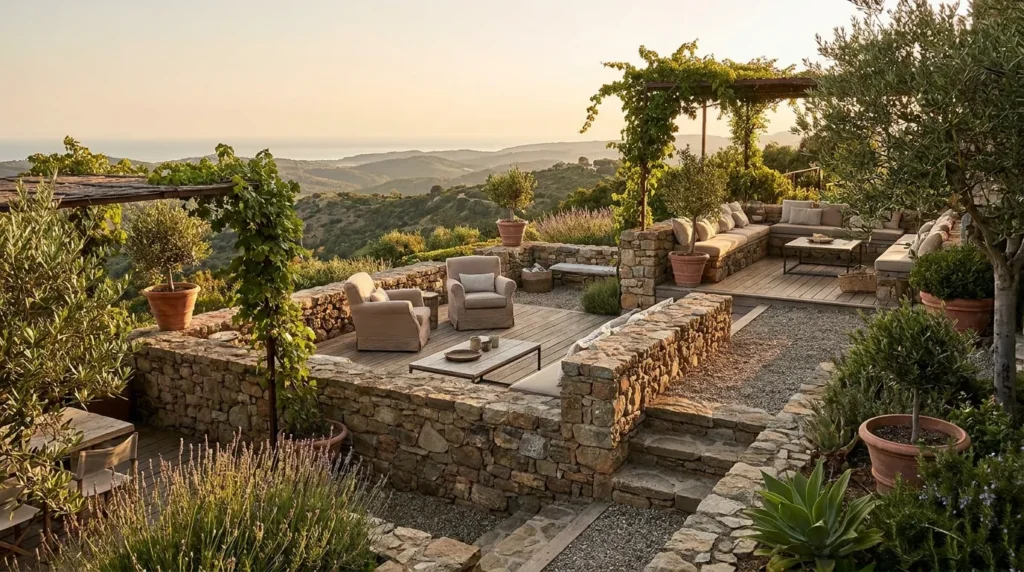
Sloped terrain naturally lends itself to creating seating areas at different elevations, each with unique views and characteristics. Amphitheatre-style seating takes advantage of slope elevation changes, creating natural gathering spaces where everyone can see and be seen. Built-in benches or terraced seating becomes permanent landscape features, adding function while creating visual interest. Seating areas positioned at different slope locations create variety—a lower seating area might overlook plantings while an upper area surveys the entire property. Well-designed seating areas become favourite family and guest spaces, extending property enjoyment beyond typical front yard roles. Seating areas provide perfect vantage points for appreciating landscape designs, and they often become social gathering spots.
Creating sloped seating areas requires grading to create level surfaces safe for seating. Built-in benches can be constructed from wood, composite materials, or stone depending on aesthetics and desired permanence. Position seating to take advantage of views, shade, or sun depending on preferences. Surround seating areas with plantings that create privacy and define spaces. Lighting makes seating areas functional for evening enjoyment while creating dramatic atmospheric effects. Hard surface surroundings prevent erosion from foot traffic around frequently-used seating areas. Incorporate shade if possible—shade structures or trees overhead make seating comfortable in summer heat. Seating areas should be easily accessible via pathways, discouraging visitors from creating informal trails that damage plantings. Well-designed seating areas become destination spots that increase property enjoyment substantially.
13. Slope Privacy Screening:
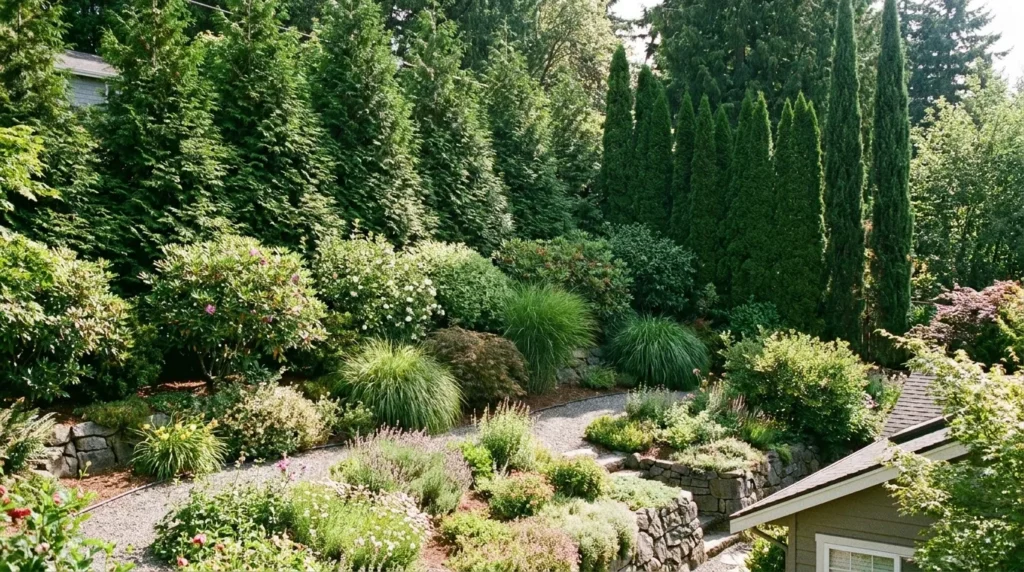
Slopes provide excellent opportunities for privacy screening because elevation naturally positions tall plantings where they effectively block unwanted views while avoiding excessive shading of lower areas. Dense evergreen plantings create year-round privacy, and deciduous options provide seasonal screening while allowing winter views. Layered screening plantings—tall trees backed by medium shrubs with ground-covers in front—create more effective privacy than single rows while appearing more natural. Screening on slopes becomes part of the landscape rather than a visible barrier. Climbing vines trained on trellises or fences create living walls that soften hard structures. Strategically placed screening improves property enjoyment by blocking unsightly views, reducing noise, and creating intimate spaces within larger properties.
Designing effective slope screening requires analysing sight lines from your property and neighbours’ properties to determine what views need blocking. Position tall screening plants higher on slopes where they effectively screen views from street or neighbouring properties. Ensure screening doesn’t excessively shade lower areas or block desirable views you want to maintain. Dense evergreen plantings provide year-round screening while deciduous options offer seasonal variation. Combination plantings—trees backed by shrubs with ground-covers—create deeper, more effective barriers than single plantings. Space plants appropriately for mature size, recognising that screening effectiveness increases as plants mature. Sloped screening plantings often become attractive landscape features that increase property values while solving privacy challenges.
14. Slope Shade Solutions:
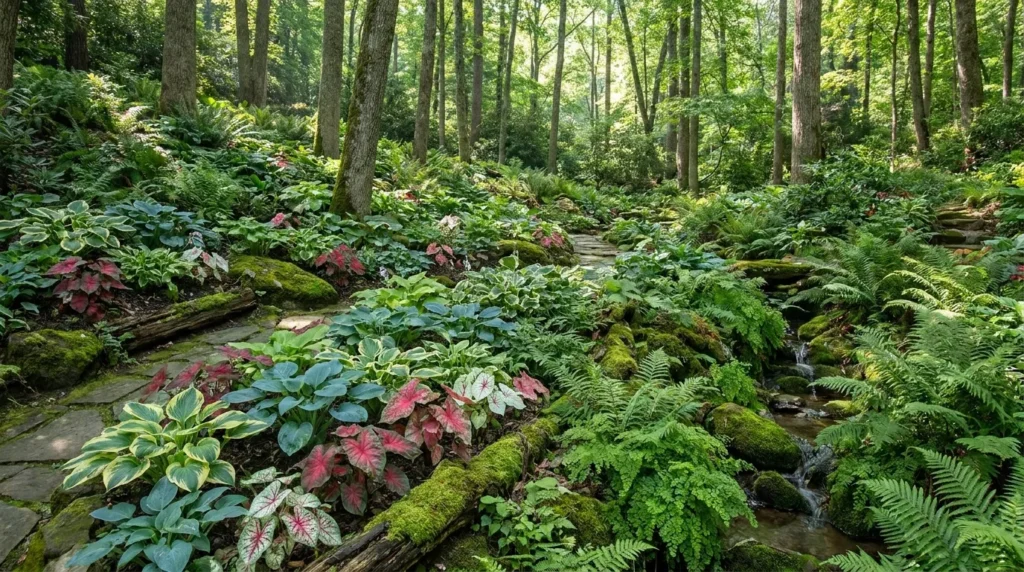
Shaded slopes, particularly those beneath existing trees, present special challenges but also opportunities to create cool, lush landscapes that remain attractive during hot seasons. Shade-tolerant plants like host as, palladium, ferns, and shade-loving ground-covers thrive in dappled light beneath trees. Shade planting layers work beautifully on slopes—shade trees in back, shade shrubs in middle, shade ground-covers in front—creating depth and dimension similar to sun designs. Shade is actually advantageous on hot slopes where sun exposure creates extreme stress. Shade plants often have interesting foliage rather than relying on flowers for interest, creating sophisticated designs. Shade slopes often become favourite landscape areas because they remain cool and comfortable.
Managing shade on slopes requires understanding specific shade types—dense evergreen tree shade differs from dappled deciduous shade. Some sun-loving plants tolerate partial shade, while others require deep shade. Research plants specific to your shade conditions rather than assuming all shade plants work everywhere. Many shade plants establish slowly, requiring patience before reaching full size and effectiveness. Once established, shade plantings typically require less water than sun plantings, as reduced evaporation decreases watering needs. Shade slopes benefit from regular mulching to improve moisture retention and soil conditions. Prune lower branches of shade trees to increase light penetration and improve air circulation. Well-designed shade slopes become distinctive landscape areas that visitors admire for their cool, lush appearances.
15. Slope Lighting Design:
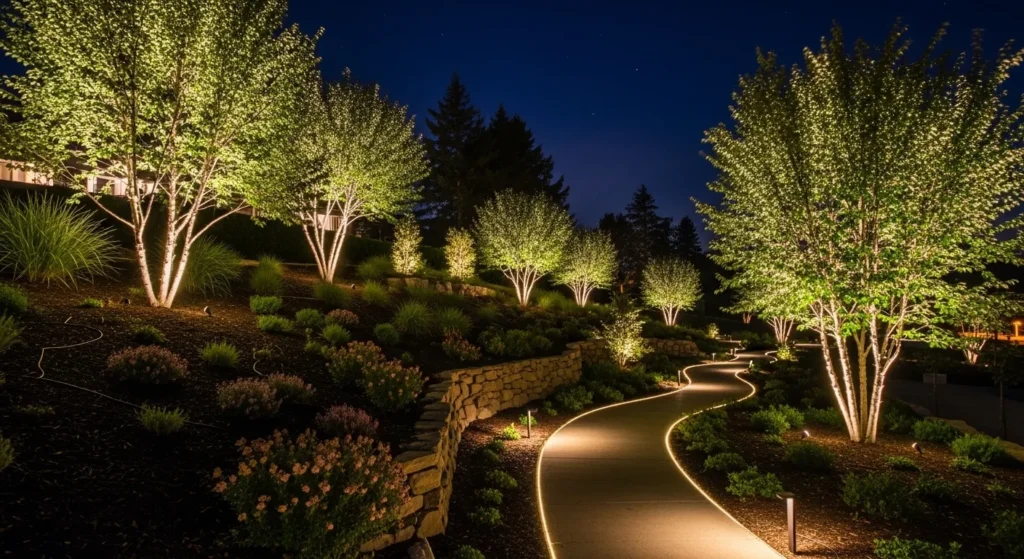
Strategic lighting transforms slopes into dramatic evening focal points that rival daytime beauty. Uplighting trees from below creates beautiful silhouettes highlighting branching structure, while down-lighting from above creates pools of light suggesting moonlight. Accent lighting highlights specimen plants or architectural features, directing viewers’ attention to key elements. Pathway lighting improves safety while creating elegant nighttime routes through landscapes. Lighting on slopes creates shadows and depth that make properties appear larger and more complex. Warm colour temperatures (2700K-3000K) feel welcoming rather than harsh or institutional. Solar lighting requires no electrical work while providing convenient operation, and LED options use minimal electricity while providing superior brightness and colour.
Designing slope lighting requires careful planning to create dramatic effects without excessive brightness. Position lights to highlight attractive features while avoiding glare or harsh shadows. Test different light positions and intensities before finalising installations. Install lighting on dimmers allowing intensity adjustment based on needs and moods. Maintenance includes occasional cleaning of light fixtures and replacement of burned-out bulbs. Consider motion sensors for security lighting in areas where constant illumination isn’t needed. Lighting becomes increasingly important on slopes where elevation changes create interesting shadows and focal points. Well-designed slope lighting extends landscape enjoyment into evenings while improving security and safety. The transformation is dramatic—daytime landscapes become entirely different nighttime experiences.
16. Slope Mulching:
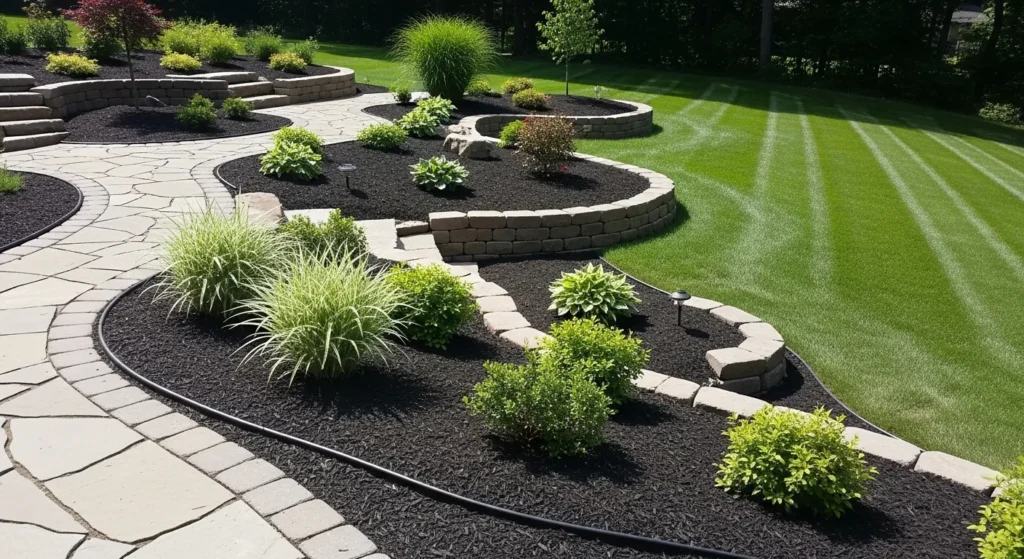
Proper mulching on slopes serves multiple purposes—preventing erosion, suppressing weeds, conserving moisture, moderating soil temperature, and defining planting zones visually. Mulch holds soil in place on slopes, reducing erosion from water runoff. It suppresses competing weeds that would otherwise establish throughout slope plantings. Mulch reduces evaporation, decreasing irrigation needs substantially. The visual appearance of neat mulch beds with clean edges dramatically improves landscape appearance instantly. Different mulch colours and materials create different aesthetic effects—natural bark mulch looks organic while coloured mulches create bolder statements. Mulch depth of 2-3 inches provides optimal benefits without excessive accumulation that can damage plant roots.
Applying mulch on slopes requires careful technique to prevent mulch migration down-slope during heavy rains. Avoid piling mulch against plant stems, leaving a few inches clearance to prevent rot. Use edging to define bed boundaries and contain mulch migration. Refresh mulch annually as it breaks down and composts into soil. Monitor mulch depth, adding material as needed to maintain 2-3 inch coverage. Choose mulch materials appropriate to your aesthetic preferences and budget—economical bark chips, decorative coloured mulches, pine needles, and Aquinas all work beautifully. Mulched slopes require less overall maintenance—fewer weeds, better moisture retention, less erosion damage. Proper mulching prevents many slope problems while creating visually polished landscapes.
17. Native Slope Trees:
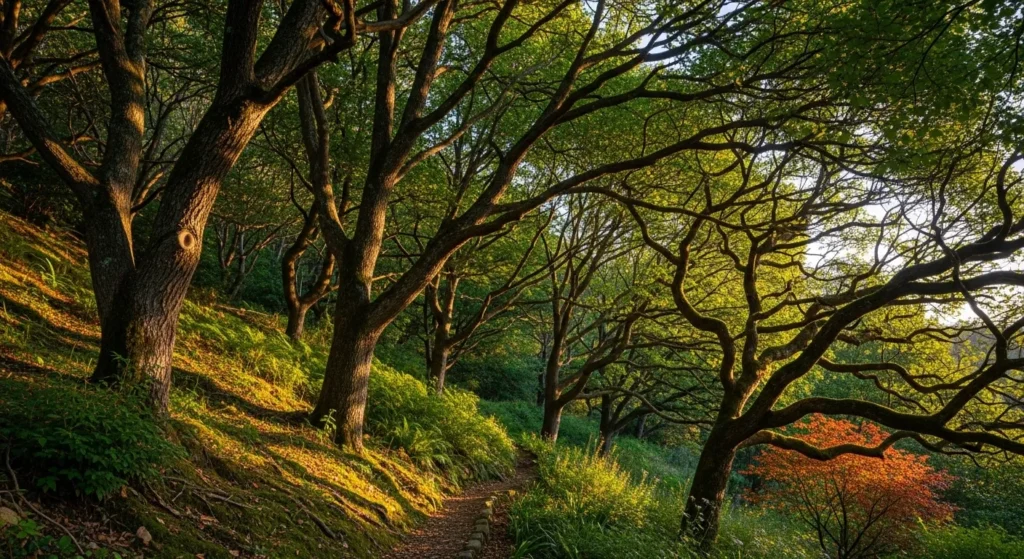
Native trees are foundational elements of slope landscapes, their deep root systems stabilising soil while mature canopies create structure visible from distant vantage points. Native species evolved in your region’s specific conditions, thriving where non-native trees struggle. Trees become increasingly valuable with age—their root systems expand, improving slope stability; their canopies expand, creating shade and visual impact; their branching becomes increasingly interesting. Native trees support local wildlife that depends on native species. Many native trees provide multiple seasonal interests—spring flowers, summer shade, fall colour, interesting winter branching. Trees become focal points that anchor landscapes and become neighbourhood landmarks.
Planting native trees on slopes requires selecting species appropriate for slope conditions and your region. Young trees need staking, mulching, and regular watering during establishment—typically one or more seasons. Space trees appropriately for mature size, avoiding overcrowding that creates competition and disease. Once established, most native trees become remarkably self-sufficient, needing water only during extended droughts. Prune lower branches to increase light penetration to under-story plantings. Trees become increasingly beautiful with age, and their property value increases substantially. Native slope trees often live for decades or centuries, becoming permanent landscape improvements. Investing in quality native trees is investing in your property’s future.
18. Rock Walls on Slopes:
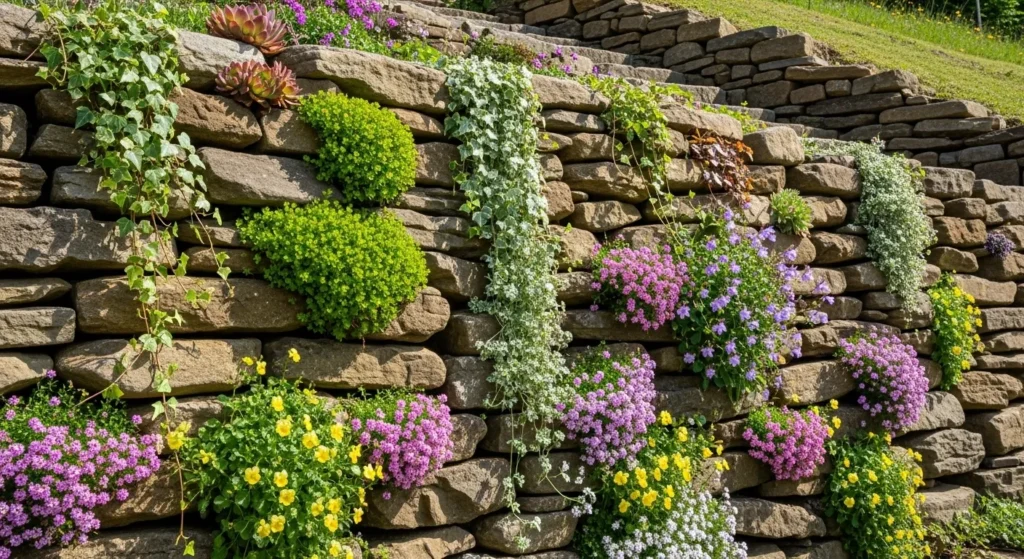
Rock walls on slopes become more than structural elements—they become vertical gardens where alpine plants, serums, trailing ground-covers, and cascading flowers grow between stones. Plants in rock wall pockets create habitat for beneficial insects while adding colour and interest. Walls allow unusual planting opportunities where conventional in-ground planting isn’t possible. Climbers and trailers spilling over wall tops create flowing, garden-like effects. Rock walls age beautifully as moss colonises stones and plants mature. The combination of permanent rock structure with living plants creates dynamic designs that interest visitors. Walls with well-established plantings appear like natural rock outcroppings rather than constructed elements.
Creating vertical gardens in rock walls requires selecting small alpine plants, serums, or trailing ground-covers suited to well-drained conditions. As walls are constructed, place plants in pockets, adding soil as work progresses. Ensure adequate drainage—walls shouldn’t hold excessive moisture that rots plants. Maintenance is minimal—occasional weeding and light watering until plants establish. Once established, rock wall plantings become nearly self-sufficient. Position plantings to maximise visual impact—trailing plants positioned at wall tops create cascading effects. Rock walls with established plantings become conversation pieces visitors admire. Creating living rock walls transforms structural elements into distinctive landscape features.
19. Sloped Shade Gardens:
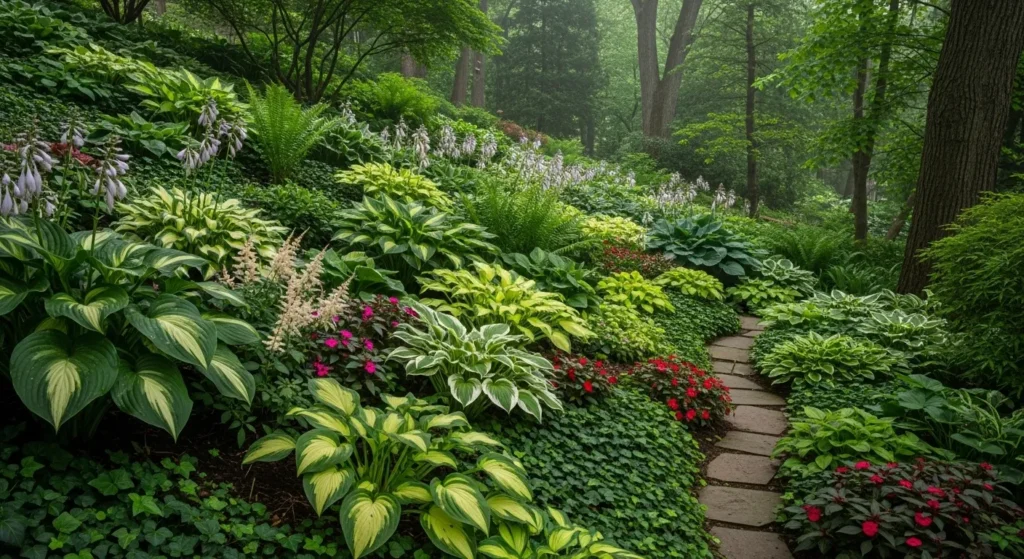
Sloped shade gardens create cool, lush micro-climates that remain comfortable during hot seasons while showcasing beautiful foliage plants that thrive where sun-lovers struggle. Shade on slopes often increases from upper to lower areas as tree canopies expand overhead, creating graduated shade conditions that support diverse plant palettes. Layered shade plantings—trees, shrubs, ground-covers—create forest-like effects that make properties feel larger and more established. Shade gardens often feature interesting foliage colours and textures, creating sophisticated designs without relying on flowers. Shade plantings typically require less water than sun plantings, reducing irrigation costs. Shade slopes often become favourite family areas because they remain cool and comfortable.
Designing sloped shade gardens requires understanding specific shade conditions in different areas. Dappled light beneath deciduous trees differs from dense evergreen shade. Plant shade specimens at appropriate spacing, recognising that shade plants often establish slowly. Apply deep mulch to improve moisture retention and soil conditions. Maintain adequate moisture—shade plants still need water, particularly during establishment. Prune lower tree branches to increase light penetration and reduce excessive shade. Shade gardens benefit from spring bulbs that bloom before trees leaf out. Once established, shade slope gardens require minimal intervention. Their cool, lush appearances make them sanctuary spaces that increase property enjoyment.
20. Sloped Edging and Borders:
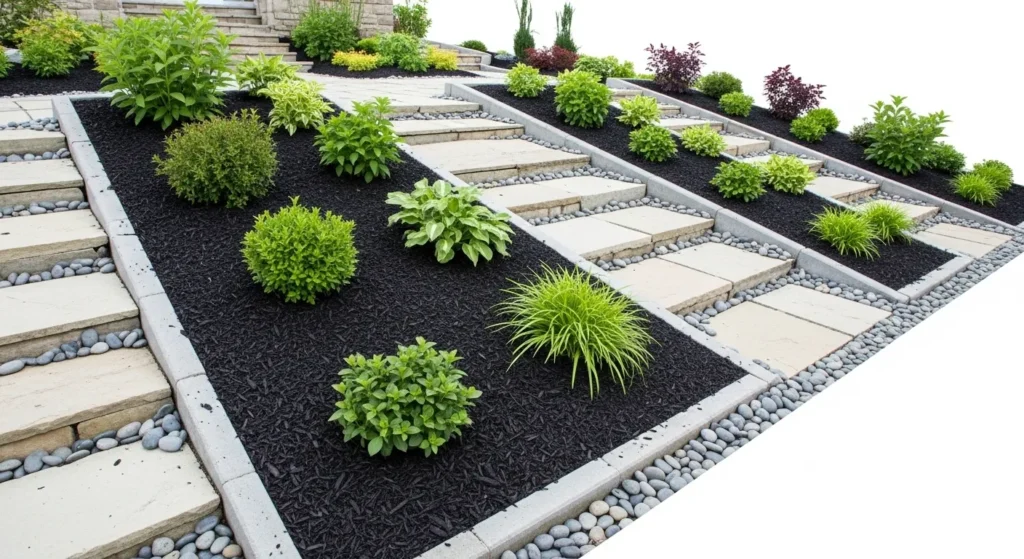
Edging on slopes creates clean visual boundaries between planting areas, pathways, and lawn, dramatically improving how organised and professionally designed landscapes appear. Edging prevents grass from creeping into planted areas and mulch from scattering down-slope. Metal edging looks clean and modern, plastic edging is economical, stone edging appears sophisticated and natural. Edging isn’t purely aesthetic—it reduces maintenance by preventing constant grass/mulch battles. On slopes, edging becomes increasingly important because mulch migration is greater than on flat areas. Neat, clean edging transforms even simple plantings into polished designs. The investment is modest but returns are substantial in terms of landscape appearance.
Installing edging on slopes requires careful positioning to create clean lines while accommodating slope contours. Edging should follow slope contours rather than creating rigid straight lines that appear unnatural. Secure edging appropriately to prevent movement during heavy rains or freeze-thaw cycles. Maintenance involves occasional adjustments if edging shifts and clearing debris that collects along edges. Quality edging materials last for years, providing permanent landscape improvements. Edging works beautifully with pathways and landscaping elements, tying designs together. Slopes with well-defined edging appear intentionally designed, improving overall property appearance substantially. Adding edging to existing sloped plantings is often the single most impact landscape improvement possible.
21. Slope Seasonal Color:
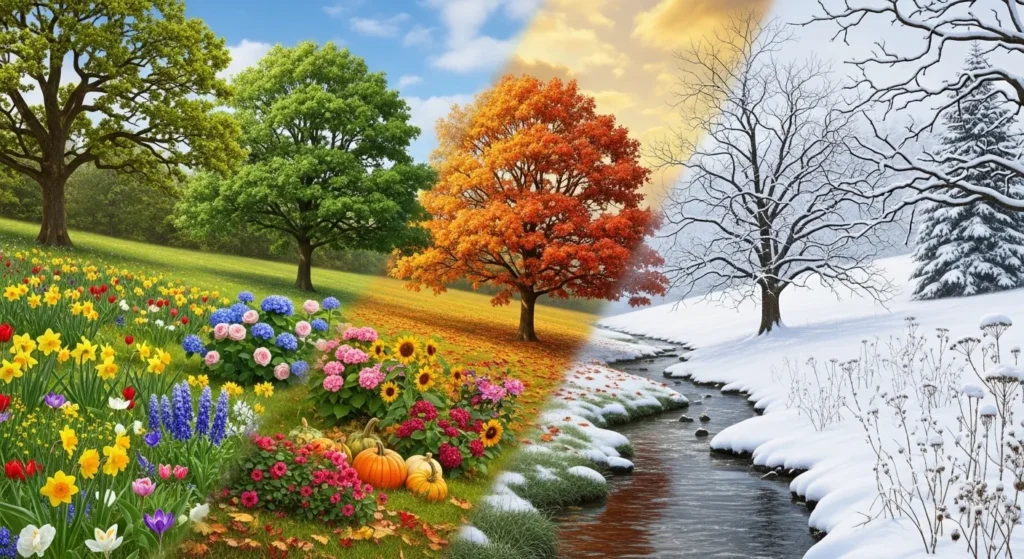
Strategic seasonal plantings keep sloped landscapes visually interesting year-round, with different plants providing colour and interest in succession as seasons change. Spring bulbs beneath deciduous trees bloom before trees leaf out, providing early colour. Summer annuals create colourful displays while perennials support pollinators. Fall brings aster blooms and foliage colour changes. Winter structure from ornamental grasses and evergreen plantings provides interest while deciduous plants are bare. Slopes naturally showcase seasonal changes more dramatically than flat areas because elevation provides varied viewing perspectives. Planning seasonal rotations ensures continuous visual interest without requiring constant work. Different seasons showcase different design elements, making familiar landscapes appear new as seasons change.
Creating seasonal interest on slopes requires planting diverse species with different bloom and foliage times. Native plants naturally provide seasonal interest—spring bloomers like red-bud and dogwood are followed by summer bloomers and fall colour. Ornamental grasses provide seasonal drama—spring emergence, summer growth, fall colour, winter structure. Plan plantings to ensure something is always interesting—a mix of spring, summer, and fall bloomers with evergreen structure. Slopes showcase seasonal changes beautifully—the elevation changes create different perspectives on seasonal development. Document seasonal changes with photography to plan future improvements. Well-designed seasonal slopes surprise and delight observers as they provide continuous interest and beauty throughout the year.
22. Slope Terracing with Railings:
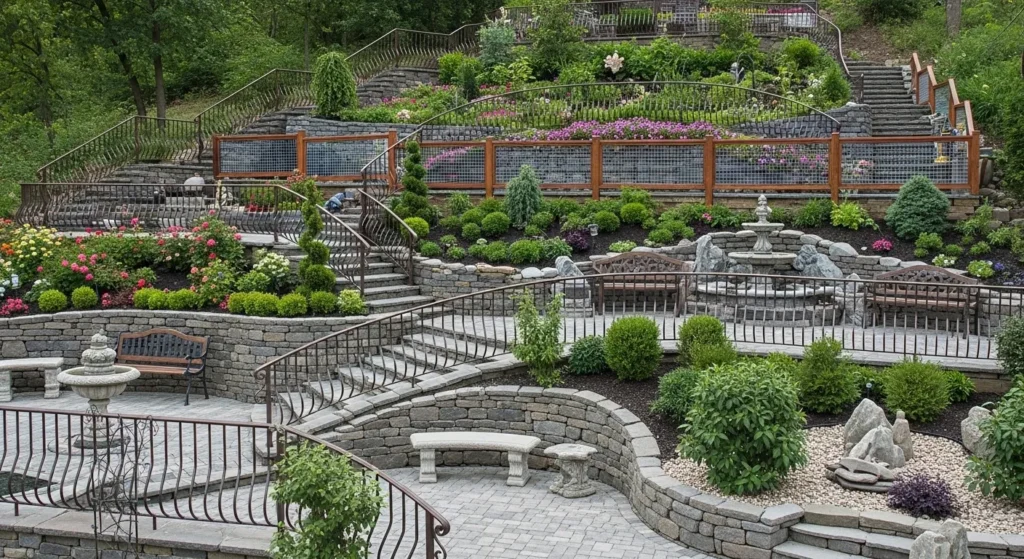
Terraced slopes with railings or fencing create safe, visually interesting landscapes that provide both functionality and beauty. Railings prevent falls while becoming design elements that tie landscapes together aesthetically. Decorative railings—wrought iron, wood, cable—suit different architectural styles. Terracing with railings naturally creates seating opportunities and gathering spaces at different elevations. The combination of multiple terraced levels with plantings creates complex, interesting landscapes. Railings guide foot traffic along intended pathways, preventing erosion from visitors cutting across planted areas. Well-designed terraced slopes with appropriate railings increase property values by creating distinctive, safe landscapes. Railings can be temporary or permanent, allowing flexibility for future changes.
Installing railings on terraced slopes requires careful positioning to guide traffic while maintaining landscape aesthetics. Railings should be appropriate height (typically 36-42 inches) and strength for safety while complementing overall design. Pressure-treated wood, metal, or composite materials offer different durability and maintenance levels. Position railings to highlight attractive views while screening undesirable ones. Combine railings with plantings to create integrated designs where railings enhance rather than dominate. Maintenance involves occasional inspections ensuring railings remain secure and attractive. Well-designed railings on terraced slopes become expected landscape features that increase property appeal. Creating safe, beautiful slope designs with appropriate railings protects visitors while creating impressive landscapes.
23. Slope Maintenance Strategies:
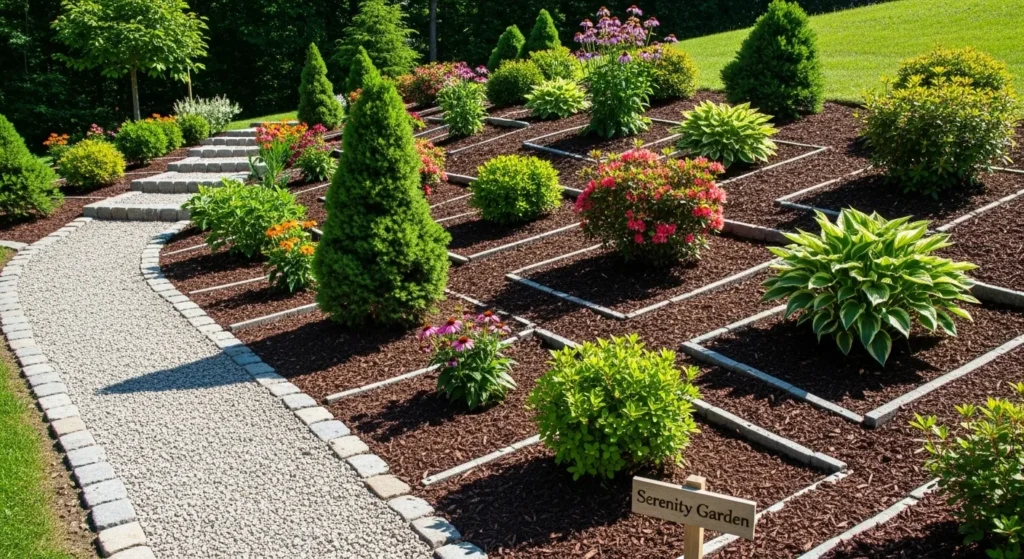
Proper maintenance ensures slope landscapes remain healthy and attractive for decades while preventing problems that become expensive to repair. Regular inspection identifies erosion, plant stress, drainage issues, or pest problems before they escalate. Seasonal maintenance—spring cleanup, summer weeding, fall mulching, winter inspections—keeps landscapes on track. Slope plantings typically require less maintenance than flat gardens once established, but specific attention to drainage and erosion prevention is important. Scheduled pruning maintains plant shapes and encourages vigour. Periodic renewal—replanting died plants, refreshing mulch, repairing damaged landscaping—maintains landscape quality. Creating maintenance schedules and documenting work helps identify patterns and plan future improvements.
Long-term slope maintenance requires understanding your specific landscape’s needs and creating realistic maintenance plans. Simple landscapes are easier to maintain than complex designs, so consider maintenance when planning. Establish relationships with reliable contractors for major maintenance—tree pruning, drainage repairs, retaining wall maintenance. DIY maintenance works for mowing, weeding, and mulch refreshing but professional help is valuable for specialised tasks. Invest in quality landscaping and materials that age beautifully rather than requiring replacement. Document landscape changes with photography to track growth and identify needed improvements. Regular maintenance prevents small problems from becoming expensive repairs. Well-maintained slopes remain beautiful and functional for years, rewarding your investment with continuous enjoyment.
FAQ’s
Q: Can I landscape a very steep slope or is it too challenging?
A: Very steep slopes are challenging but absolutely manageable with proper planning. Terracing, retaining walls, and deep-rooted groundcovers solve steep slope problems. Steeper slopes often require professional help for construction and drainage design. The resulting landscapes are often more impressive than flat yard designs because of their vertical dimension and visual drama.
Q: How do I prevent erosion on my sloped front yard?
A: Multiple strategies prevent erosion: deep-rooted native plants bind soil, groundcover plants stabilize slopes, retaining walls hold soil in place, proper drainage diverts water flow, mulch prevents surface erosion, and terracing creates level areas. Combining multiple approaches is most effective. Avoid bare soil exposure whenever possible.
Q: Should I landscape my slope or leave it as turf grass?
A: Landscaping slopes is generally better than turf. Mowing steep slopes is dangerous, grass often fails in slope conditions, and landscaped slopes are more attractive and require less maintenance long-term. Groundcovers, shrubs, and trees create more interesting designs than monotonous grass.
Q: What plants work best on slopes?
A: Plants with deep root systems, drought tolerance, and aggressive growth are ideal. Native plants evolved in slope conditions. Excellent slope plants include ornamental grasses, native groundcovers, drought-tolerant shrubs, native trees, and hardy perennials. Avoid water-hungry plants requiring constant irrigation.
Q: How much does slope landscaping cost?
A: Costs vary widely based on slope size, site conditions, and design complexity. Simple groundcover plantings cost less than terraced designs with retaining walls. Professional construction of retaining walls and drainage systems increases costs. Phasing projects spreads costs over time. Simple designs using affordable materials minimize expenses while still creating dramatic improvements.
Q: Do I need to hire professionals for slope landscaping?
A: Simple plantings and groundcover installation are DIY-friendly. Terracing, retaining wall construction, and drainage work often benefit from professional help. Consult professionals for slope angle assessment and drainage design. Many DIY projects are possible once you understand your slope’s specific conditions.
Q: What’s the biggest mistake people make with slope landscaping?
A: Ignoring drainage is the most common mistake. Poor drainage causes erosion, plant failure, and expensive damage. Proper drainage planning prevents problems. Another mistake is planting water-hungry plants on slopes. Choose drought-tolerant varieties. Attempting landscape changes too quickly or too cheaply often leads to failure.
Conclusion:
Sloped front yards present unique landscaping opportunities that flat properties cannot match. Rather than viewing slopes as problems to minimize, embrace them as advantages that allow creating dynamic, multi-dimensional landscapes with dramatic visual impact. These 23 sloped front yard landscaping ideas demonstrate that difficult terrain can become distinctive landscape assets that increase property values while creating visually stunning, highly functional outdoor spaces. The key is understanding your specific slope conditions—angle, drainage, soil type, light exposure—and selecting solutions appropriate to those conditions.
Start with one or two solutions appropriate to your slope’s needs and gradually expand as budget and time allow. Deep-rooted plantings and effective drainage prevent erosion while creating beautiful landscapes. Terraced beds, retaining walls, and strategic pathways transform steep slopes into organized, impressive designs. Lighting, water features, and strategic plantings create focal points that draw attention and admiration. The transformation from difficult slope to landscape asset is possible for any property. Embrace your slope, implement solutions suited to your conditions, and watch your landscape transform into something special that sets your property apart from surrounding homes.