 Muhammad Muaz
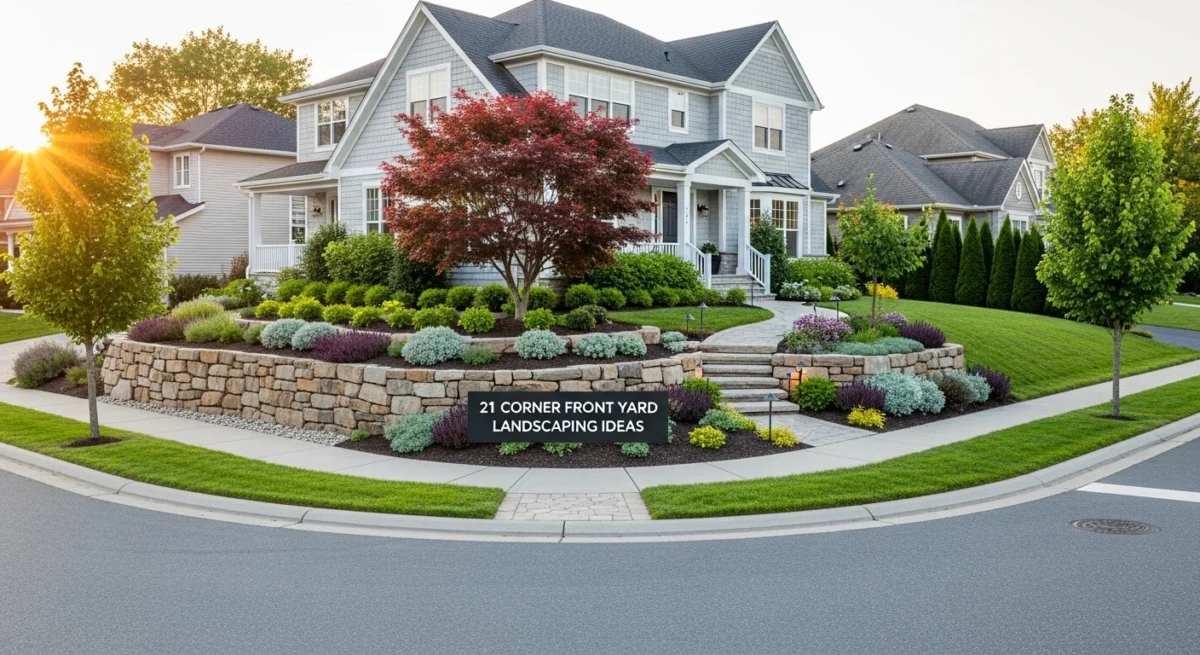
 Owning a corner lot offers a unique and expansive canvas for homeowner creativity, yet it presents distinct landscaping challenges that standard properties rarely encounter. Because a corner yard is highly exposed to two different intersecting streets, it requires a design that looks beautiful, intentional, and cohesive from multiple viewing angles. Striking the right balance between open curb appeal and comforting residential privacy is the secret to a successful installation. By utilizing smart layout structures, strategic plant placements, and architectural hardscaping, you can easily transform an exposed corner plot into a stunning focal point that anchors your entire neighborhood. When designing a landscape for an intersecting intersection lot, it is vital to think about scale, movement, and local guidelines. Many municipalities enforce strict height limitations near roadways to ensure clear sightlines for passing traffic, meaning ultra-tall fences or dense, massive hedges are often out of the question right at the property edge. Instead, the smartest designs use layered foliage, varying ground levels, and beautifully curated focal pieces to frame the house. Whether you want to establish a lush, cottage-style garden getaway or a sleek, low-maintenance modern layout, these twenty-one comprehensive design concepts will provide you with the ultimate inspiration to completely elevate your exterior.
1. Multi-Tiered Stone Retaining Walls:
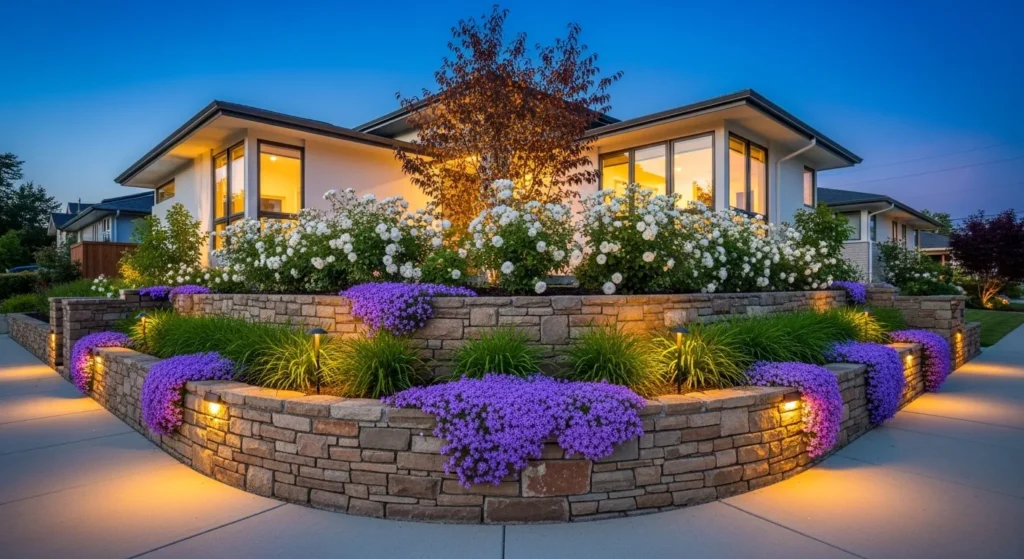
Implementing a series of multi-tiered stone retaining walls is one of the most effective structural strategies for managing a sloping corner lot while building instant architectural interest. By breaking up a harsh, exposed incline into two or three beautifully leveled terraces, you create distinct planting zones that naturally slow down eye movement and mask the busy nature of the intersecting streets. This approach adds massive visual depth to your home’s exterior, turning a plain grass hill into a premium structural feature. The heavy stone blocks provide a clean, permanent border that neatly separates your private lawn spaces from the public walkways below.
From a gardening perspective, tiered retaining walls offer excellent soil drainage and a perfect stage to showcase a dynamic mix of plant species. You can fill the upper tiers with compact evergreen shrubs or dwarf trees to maintain structural color all year long, while allowing trailing vines and vibrant flowering groundcovers to spill over the stone edges of the lower tiers. This layering technique effectively softens the hard edges of the masonry, creating a balance between built architecture and living nature. Additionally, installing hidden low-voltage accent lighting along the underside of the wall caps will make your entire corner lot glow beautifully at night.
2. Low-Maintenance Xeriscape with Decorative Boulders:
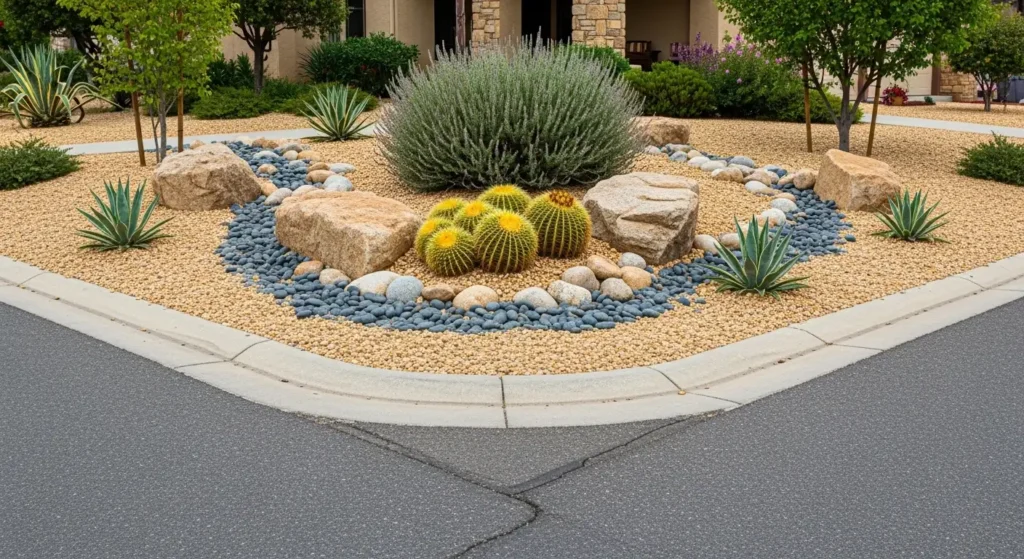
A low-maintenance xeriscape layout utilizing large decorative boulders is an ideal choice for homeowners looking to save water while maintaining a highly sophisticated, clean exterior design. Corner lots are notoriously difficult to water evenly with traditional sprinkler systems due to wind exposure and the awkward, elongated shapes of the property borders. By replacing thirsty turf grass with an intentional composition of premium crushed granite, river rocks, and native drought-tolerant plants, you completely eliminate the chore of weekend mowing. Large, deeply set boulders act as natural anchor pieces that break up the flat ground and give the space an authentic, rugged elegance.
To maximize visual interest in a xeriscaped corner space, design a winding dry riverbed made of darker river stones that cuts diagonally across the plot to mimic a natural waterway. Surround this feature with hardy, structurally striking flora such as architectural agaves, ornamental desert grasses, and colorful sages that thrive on minimal rainfall. This style of landscaping holds its crisp structure through every season without looking messy or overgrown. It sends a message of modern sustainability and thoughtful design to every passerby, while giving you a beautifully textured front yard that requires only a fraction of the maintenance of a standard lawn.
3. Casual Cottage Garden with Curved Flower Beds:
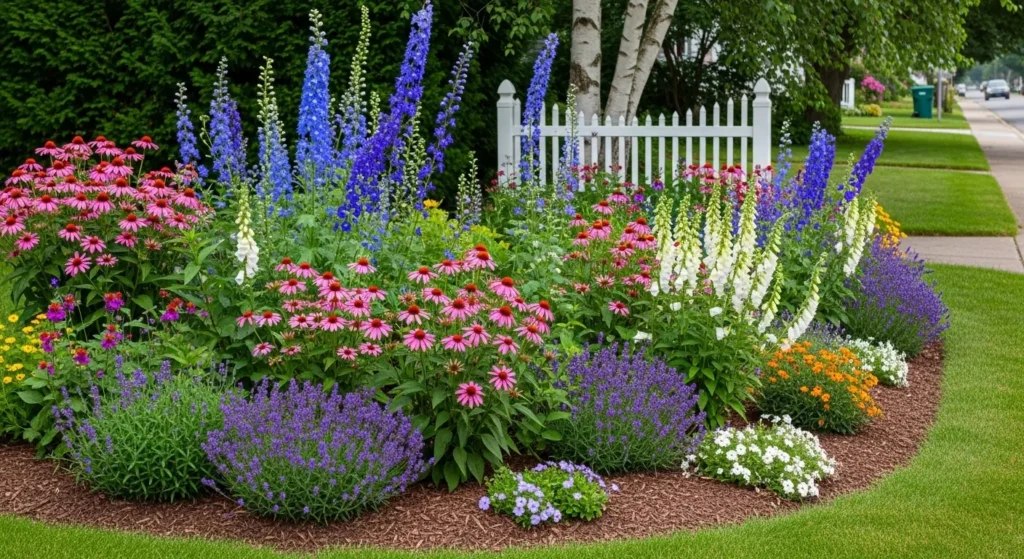
For homeowners who prefer a softer, romantic aesthetic, a casual cottage garden filled with deeply curved flower beds is a fantastic way to handle an exposed street corner. Unlike rigid straight lines that emphasize the boxy nature of a road intersection, long, sweeping curves naturally guide the eyes smoothly around the bend of your property. This organic layout creates an inviting, whimsical boundary that feels welcoming rather than restrictive. Filling these expansive beds with a dense, texturally rich assortment of classic perennials ensures your front yard becomes a constantly evolving tapestry of color from spring through late autumn.
The beauty of a cottage landscape lies in its intentional fullness, which naturally acts as a soft screen between your home and the public street. Grouping taller plants like delphiniums and foxgloves toward the center or back of the beds, and tapering down to shorter species like lavender and sweet alyssum along the sidewalk, creates a lush slope of foliage. This dense planting technique leaves very little room for weeds to take hold, reducing long-term maintenance. The resulting sea of blossoms not only boosts your home’s curb appeal but also provides a vital sanctuary for local pollinators like bees and butterflies.
4. Modern Minimalist Grid with Architectural Grasses:
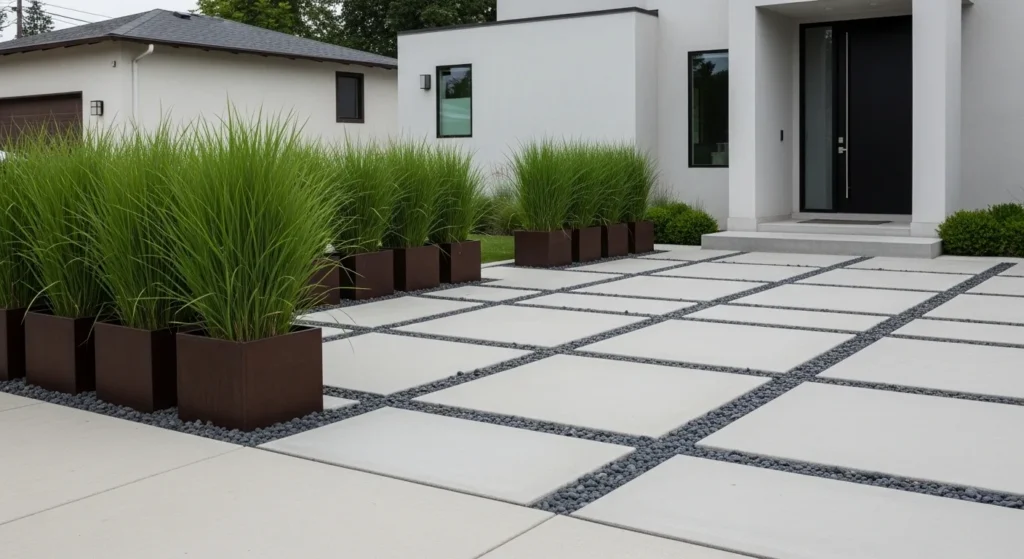
A modern minimalist grid layout featuring architectural grasses is the perfect match for contemporary homes situated on highly visible corner plots. This design style relies heavily on clean horizontal lines, stark geometric shapes, and a limited color palette to project an atmosphere of high-end, uncluttered sophistication. By organizing the terrain with large concrete slabs or poured-in-place stepping stones separated by dark basalt gravel, you create an instantly organized framework. The inherent simplicity of the hardscape elements offsets the busy visual distraction of passing vehicular traffic and nearby road signs.
To keep the minimalist aesthetic from feeling cold or uninviting, tall, linear ornamental grasses are utilized as the primary living elements. Varieties such as feather reed grass or switchgrass grow in tight, upright clumps that sway gently in the breeze, introducing necessary movement and soft sound to an otherwise rigid layout. Placing these grasses in repeating geometric patterns or long raw steel planters creates a striking visual screen that offers privacy without blocking sunlight. This combination of industrial hardscaping and graceful, low-maintenance greenery ensures your home stands out as a masterpiece of modern curb appeal.
5. The Inviting Circular Fire Pit Hub:
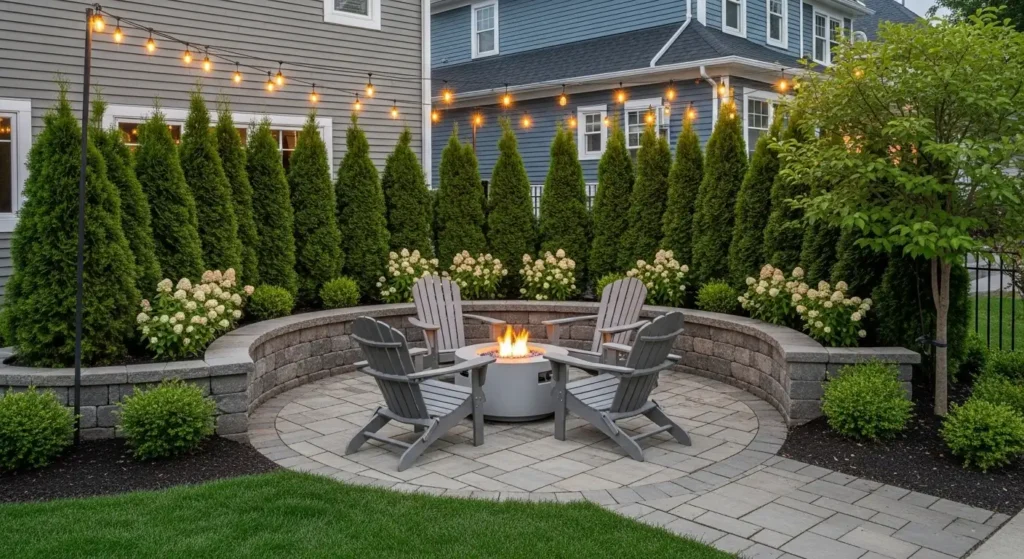
Transforming an underutilized street corner into an inviting circular fire pit hub is a clever way to reclaim your front yard and maximize your usable outdoor living space. Most corner lots feature a large expanse of grass that homeowners rarely use because it feels too exposed to the public. By installing a beautifully leveled flagstone or paver patio right in a section of the yard, you create a dedicated destination for evening relaxation and neighborly socializing. A central stone fire pit serves as a natural gathering point, instantly changing the perception of the space from an awkward boundary into an asset.
To preserve a sense of comfort and intimacy without completely closing off your home from the neighborhood, surround the circular patio with a carefully curated living wall. Using a combination of medium-height evergreen hedges, ornamental grasses, and blooming shrubs creates a textured enclosure that blocks headlight glare and dampens street noise. This layout allows you to enjoy an outdoor fire with family while still maintaining an open, friendly connection to the surrounding neighborhood. It successfully redefines the corner lot as a functional extension of your indoor living area.
6. Symmetrical Evergreen Foundation Framing:
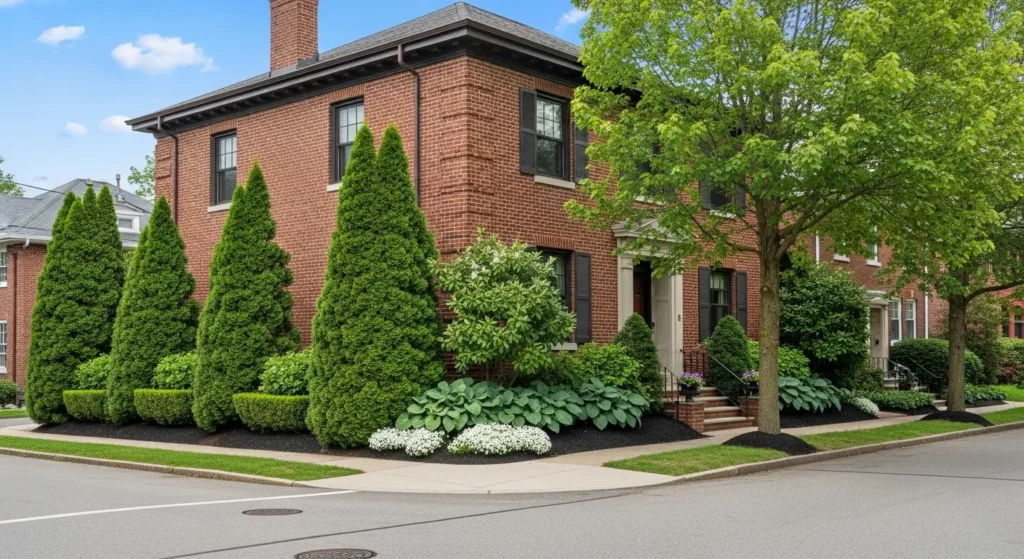
Symmetrical evergreen foundation framing is a timeless landscaping strategy that brings an immediate sense of order, permanent structure, and upscale elegance to a corner property. Because your home is viewed from multiple roads simultaneously, having a balanced, year-round green framework ensures the property never looks bare or neglected during the harsh winter months. Utilizing manicured boxwood hedges, holly bushes, and structured evergreens along the foundation walls creates a clean visual baseline. This baseline anchors the house firmly to the earth and smoothly unifies the two intersecting sides of the architecture.
To execute this classic look effectively on a corner lot, use repeating plant shapes and uniform spacing to draw the eye cleanly around the structure. Conical or pyramidal evergreens placed at the structural corners of the house add vertical height and emphasize the home’s strength, while lower, rounded shrubs keep the windows clear and unblocked. Filling the space directly in front of these evergreens with a rotating mix of seasonal flowers or variegated hostas adds a welcome pop of brightness against the deep green backdrop. This organized approach delivers high curb appeal that dramatically enhances the market value of your home.
7. Natural Stone Dry Creek Bed Drainage Solution:
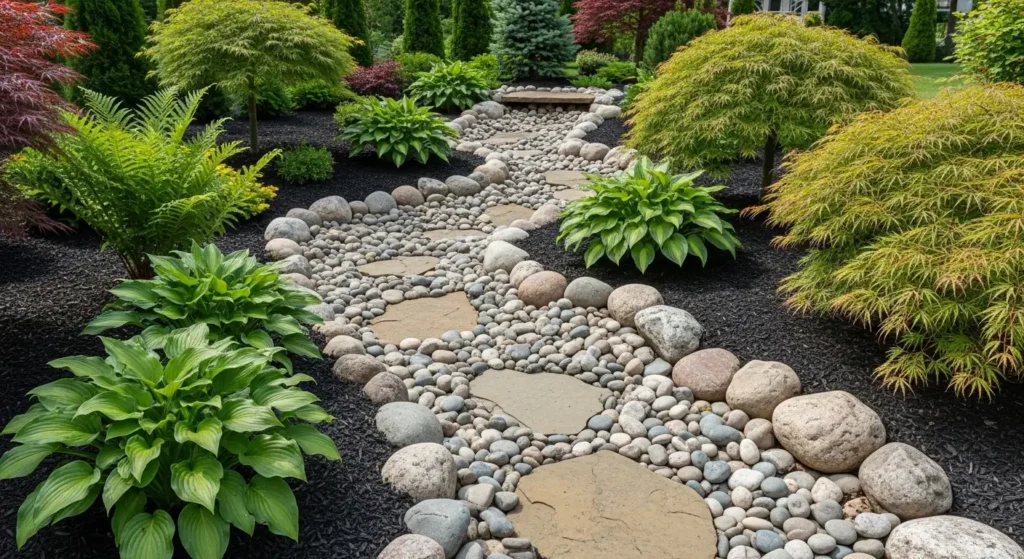
A natural stone dry creek bed is both a beautiful design choice and a highly functional solution for the unique drainage issues that plague corner properties. Corner lots often receive significant amounts of rainwater runoff from neighboring lawns and intersecting public streets, resulting in soggy turf grass or soil erosion along the sidewalk edges. Constructing a winding creek bed using a realistic mix of small river pebbles, medium cobbles, and large accent boulders provides a designated, stable path for excess water to flow safely away from your home’s foundation.
When the weather is dry, the creek bed functions as a stunning, low-maintenance hardscape feature that breaks up the monotony of a standard lawn. By planting moisture-loving perennials, soft ferns, and striking ornamental trees along its banks, you create an incredibly realistic woodland or alpine aesthetic. The varied shapes and neutral tones of the natural stones introduce a rich texture that complements almost any home architectural style. This smart design choice demonstrates how a troublesome landscape problem can be turned into a striking landscape feature.
8. Woodland Forest Corner with Shade-Loving Perennials:
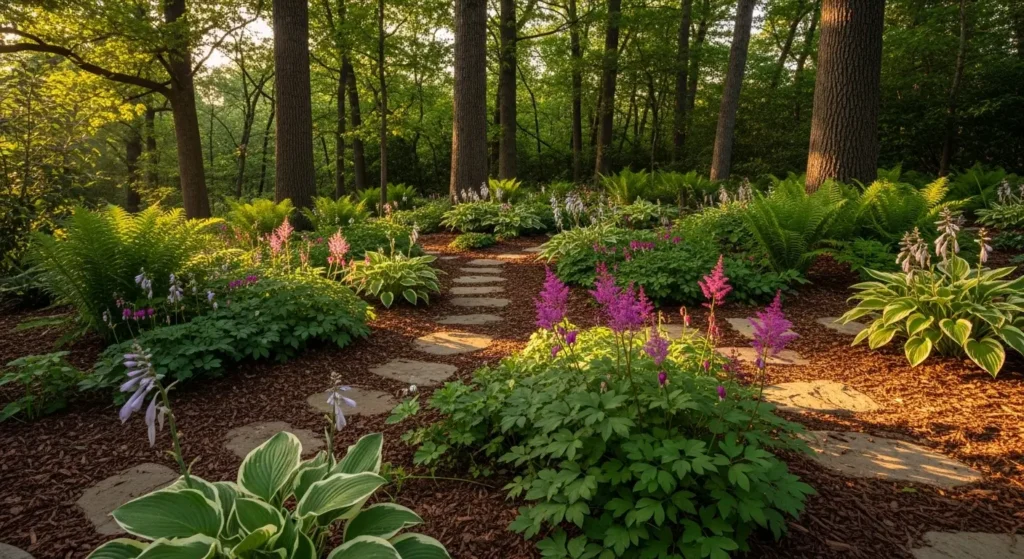
If your corner property is blessed with large, mature shade trees, leaning into a woodland forest theme with shade-loving perennials is an excellent way to design a low-stress garden. Trying to grow a pristine, thick lawn directly beneath a dense tree canopy is an uphill battle due to limited sunlight and fierce root competition for water. By replacing struggling grass with a rich layer of organic wood mulch and pathways made of natural flagstone, you instantly create a peaceful, forest-like sanctuary. This style feels tucked away from the busy world, dampening the noise of passing traffic with its cool, shaded environment.
The key to an engaging woodland garden is focusing on foliage texture, leaf shape, and subtle color variations rather than relying solely on bright sun-loving flowers. Grouping large-leafed hostas alongside fine-textured ferns and airy astilbes creates a contrast that captures the eye. Adding pops of color with shade-tolerant species like bleeding hearts, coral bells, and hellebores introduces subtle brightness throughout the spring and summer. This design turns a traditionally difficult, shaded corner lot into a deeply relaxing, low-maintenance landscape that feels like a private escape from the city.
9. Japanese Zen Garden with Accent Maples:
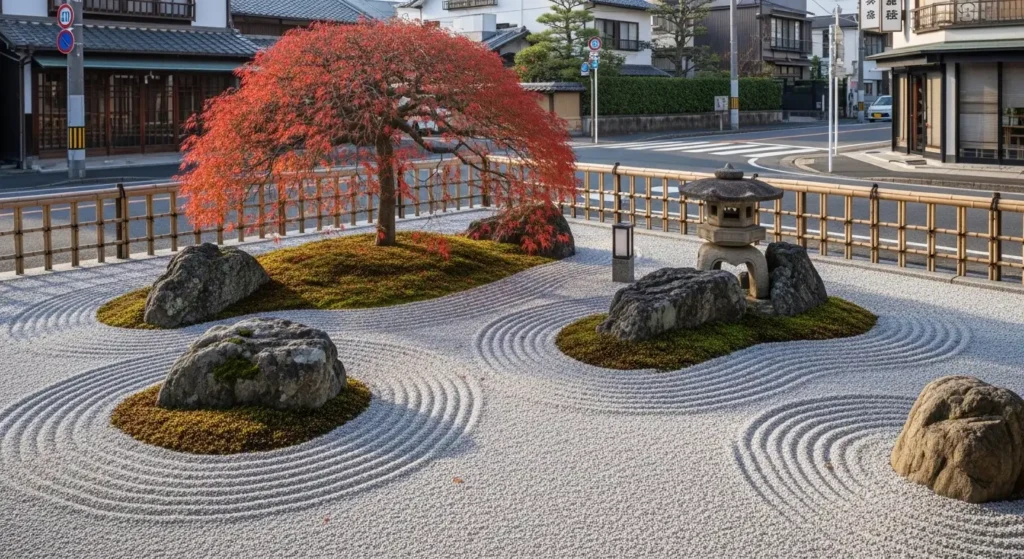
A Japanese Zen garden featuring a vibrant accent maple is a masterful way to introduce a sense of profound peace, balance, and artistic minimalism to a high-traffic corner lot. Zen landscaping principles rely heavily on symbolic representations of nature, using carefully raked fine gravel or sand to represent flowing water and strategically placed rocks to represent permanent mountains. This highly controlled, intentional layout stands out against typical suburban lawns, creating a sophisticated and memorable statement piece. The clean, open spaces inherent to this design ensure that visibility remains perfectly clear for passing vehicles.
The undisputed star of this landscape style is a beautifully pruned Japanese maple tree, chosen for its delicate leaf structure and dramatic seasonal color shifts. Whether you select a variety that boasts deep burgundy leaves all summer or one that explodes into fiery orange during autumn, the tree serves as a living sculpture at the corner apex. Surrounding the base of the maple with smooth moss-covered stones and a classic stone lantern creates a balanced composition that encourages viewers to slow down and appreciate the details. It is a highly effective way to transform an exposed patch of dirt into a work of art.
10. Classic White Picket Fence with Rose Borders:
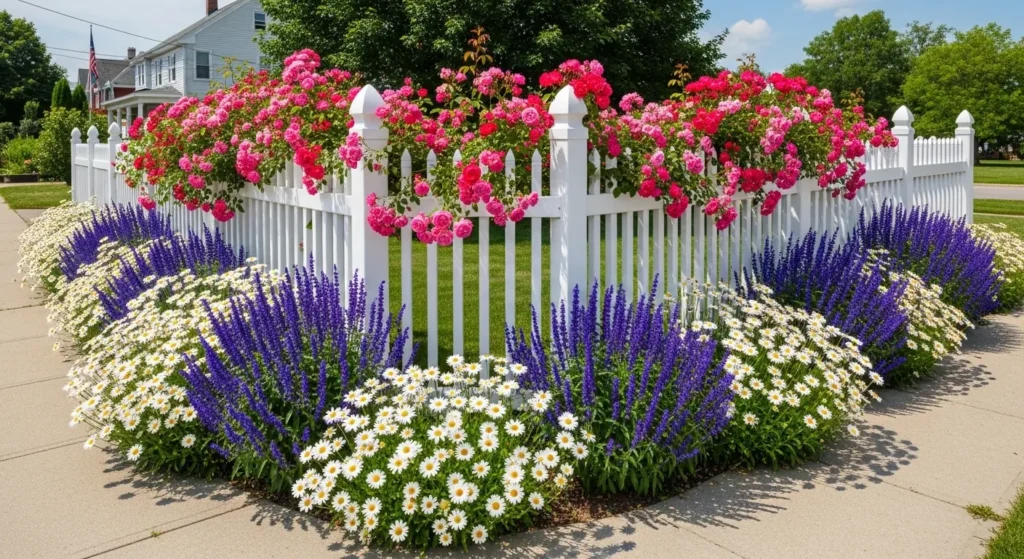
Nothing captures the charm of traditional Americana quite like a classic white picket fence lined with overflowing rose borders wrapping around a prominent street corner. A low picket fence is an excellent hardscape choice for corner properties because it establishes a clear, safe boundary for pets and children without blocking sightlines or appearing unneighborly. The clean vertical slats of a white fence offer a bright contrast against green grass, giving your home an instantly neat, well-maintained structure that looks fantastic from both intersecting streets.
To soften the straight lines of the fencing and add deep visual appeal, plant a rich mixture of climbing roses and tall perennial flowers along the exterior paneling. As the roses mature, they will weave through the pickets, creating a gorgeous display of blooms that softens the perimeter. Mixing in long-blooming companion plants like blue salvia, purple catmint, and classic white daisies ensures a long season of color and masks the base of the fence. This combination turns a standard boundary line into an active design element that elevates the character of the entire neighborhood.
11. Bold Geometric Hardscaping with Integrated Planters:
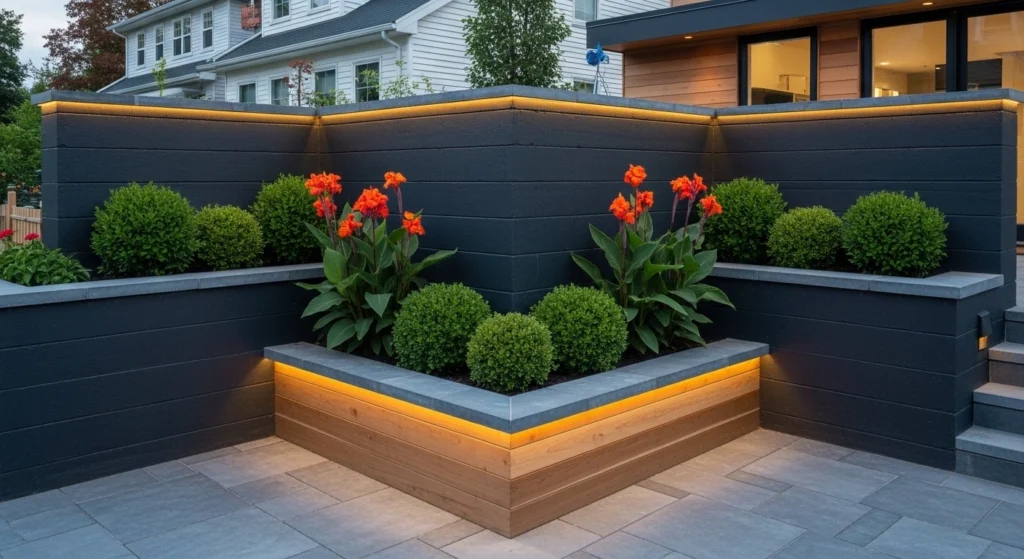
Embracing bold geometric hardscaping with integrated planters is an exceptional option for contemporary or industrial-style homes located on sharp corner lots. This approach uses clean 90-degree angles, crisp straight edges, and heavy building materials like poured concrete, architectural steel, or smooth stone block to mirror the intersection of the streets. By constructing strong, geometric tiers and built-in planters directly into the corner apex, you establish a powerful sense of structural design that immediately catches the eye and anchors the property.
Integrated planters allow you to bring living elements up to eye level, breaking up the mass of the hardscape walls with bursts of natural color and texture. You can plant tall, architectural flora such as canna lilies, ornamental grasses, or structured yucca plants to add height, while allowing trailing ivies to soften the faces of the concrete walls. Incorporating hidden LED strip lighting under the overhanging lips of the planters or retaining walls adds a layer of nighttime luxury. This design choice provides a permanent, high-impact landscape statement that requires zero seasonal replanting or intensive weeding.
12. Island Bed Oasis Centerpiece:
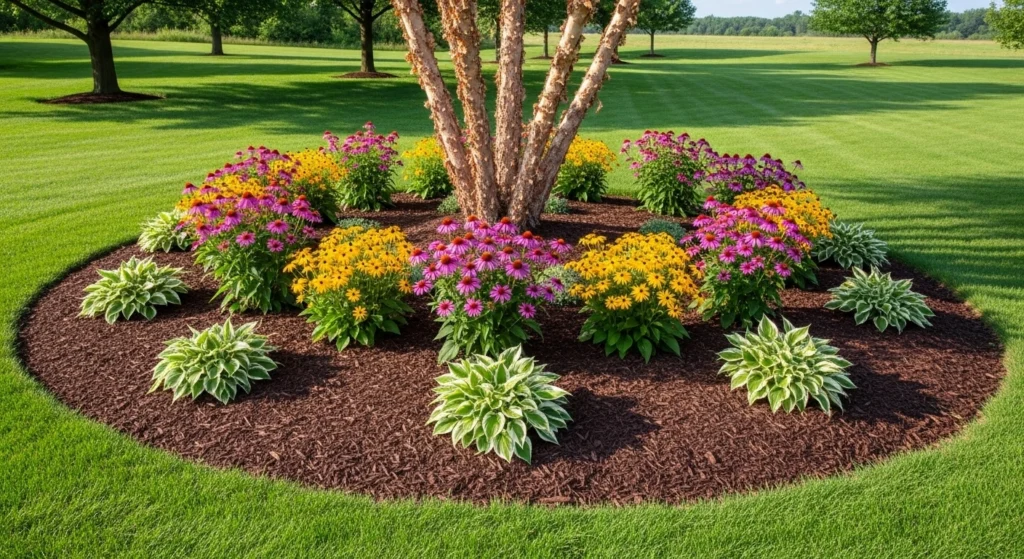
An island bed oasis is a fantastic design technique for breaking up an overwhelmingly large, flat expanse of grass on a spacious corner lot without closing off the entire yard. Instead of pushing all your flowers and shrubs back against the foundation walls of the house, a freestanding island bed is installed directly out in the lawn near the corner curve. This creates a striking three-dimensional centerpiece that can be admired by drivers and pedestrians from multiple vantage points as they move around your property, making the entire landscape feel dynamic.
To build an effective island bed, start with a strong vertical focal point in the absolute center, such as a multi-trunk river birch, a weeping cherry tree, or an elegant garden sculpture. From there, layer your plantings outward in concentric circles, placing medium-height shrubs and perennial flowers in the middle row, and finishing with short groundcovers or annuals along the deeply edged perimeter. This tiered structure ensures that no matter what angle someone is viewing the bed from, the plants never block each other out. It adds immediate depth and visual scale to an expansive corner lawn.
13. Low-Growing Pollinator Meadow:
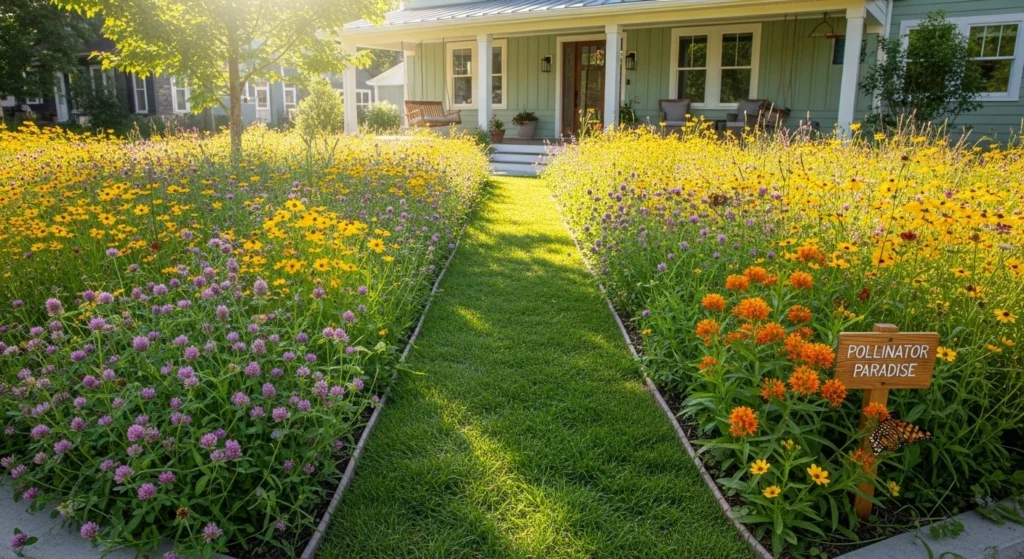
Replacing a traditional, high-maintenance grass lawn with a low-growing native pollinator meadow is an eco-friendly and visually stunning alternative for a sunny corner property. Traditional turf grass requires constant mowing, chemical fertilizing, and heavy watering to look decent, which can become an expensive chore on an oversized corner plot. By sowing a carefully selected mix of native wildflowers and short field grasses, you create a self-sustaining ecosystem that explodes into a sea of changing colors throughout the spring, summer, and autumn seasons.
To ensure the meadow looks intentional and appreciated by your neighbors rather than wild or untamed, keep the plant selections under two feet in height to preserve safe driving visibility at the street corner. Incorporate a clean, wide mowed-grass border or a neat gravel pathway along the sidewalks to frame the wildflowers with a sense of order. This approach provides an invaluable habitat for local honeybees, monarch butterflies, and songbirds. It demonstrates a commitment to local ecology while giving your home a unique, organic charm that stands out from standard green lawns.
14. Formal French Boxwood Parterre:
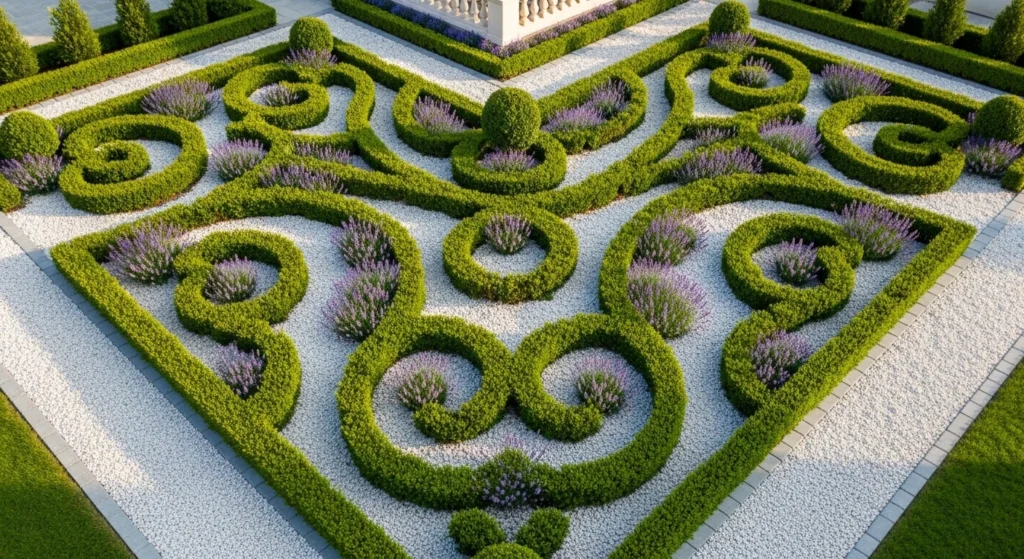
For luxury homes, historical properties, or traditional estates on corner lots, a formal French boxwood parterre layout brings an unparalleled level of symmetry, prestige, and classical elegance to the neighborhood. A parterre is a formal garden construction where planting beds are organized into intricate geometric patterns, separated and framed by low, meticulously sheared evergreen hedges. Because a corner lot provides two distinct street-facing viewpoints, the clean lines and geometric shapes of a parterre create an absolute visual masterpiece that looks stunning when viewed from a distance.
The true genius of a formal parterre design on an exposed corner lot is that it maintains its strict, luxurious shape through all twelve months of the year, even under a layer of winter snow. The low height of the clipped boxwood walls ensures that the view of your home’s architecture is never blocked from the road, preserving excellent curb appeal and open sightlines. Filling the open spaces inside the boxwood patterns with contrasting elements like white marble chips, red brick dust, or uniform rows of fragrant purple lavender adds a layer of texture that screams high-end landscape architecture.
15. Mediterranean Olive and Lavender Terrace:
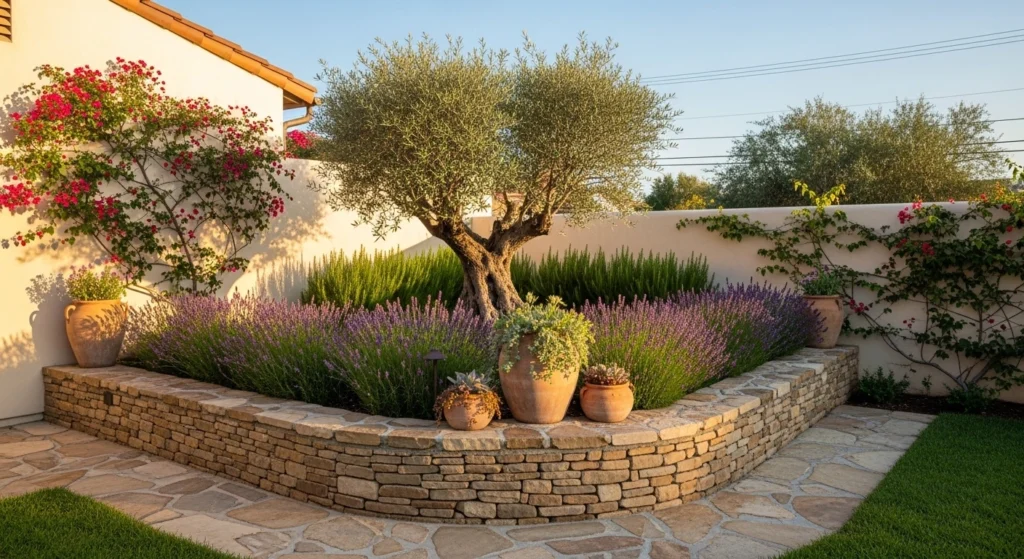
A Mediterranean-inspired landscape featuring olive trees and lavender lines is an exceptional choice for corner lots that receive intense, unfiltered sunlight all day long. Corner properties are often subject to harsh microclimates, as heat radiates heavily off the asphalt of two intersecting streets, drying out typical garden plants quickly. Embracing flora native to the dry, rocky Mediterranean basin allows you to work with nature instead of fighting it, resulting in a resilient, water-wise front yard that exudes a relaxed, coastal resort vibe.
An olive tree, with its characteristic gnarled trunk and shimmering silvery-green leaves, makes an outstanding, structural focal point right at the point of the corner plot. Surround the base of the tree with sweeping rows of fragrant English or French lavender, woody rosemary bushes, and delicate ornamental grasses. These plants release their calming essential oils when warmed by the sun, filling your entire street corner with an incredible aroma. Utilizing warm-toned flagstones, pea gravel, and terracotta accents completes this sun-loving design, turning a hot, exposed yard into a gorgeous retreat.
16. Sculptural Topiary and Rock Garden Display:
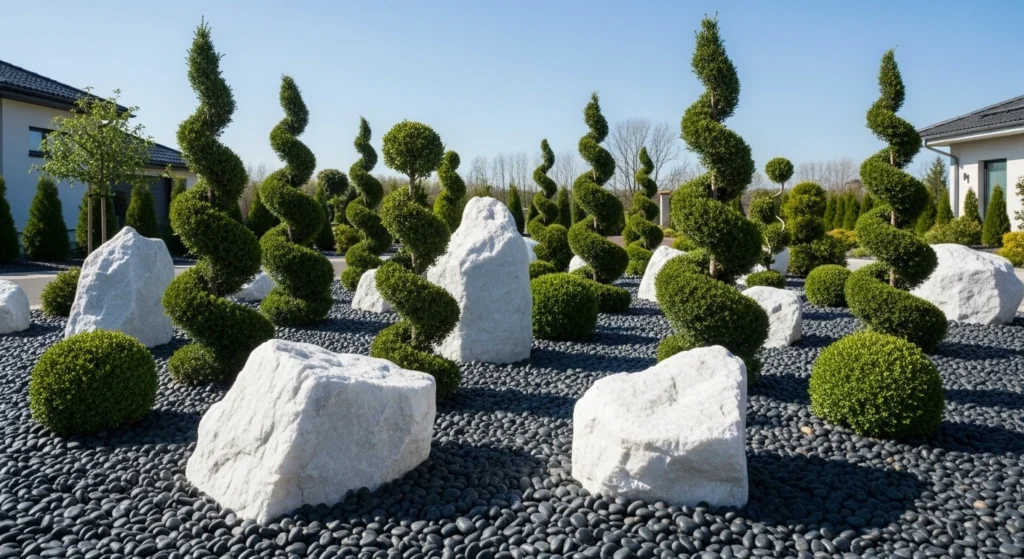
Transforming your corner front yard into a sculptural topiary and rock garden display is an incredible way to treat your landscape like an outdoor art gallery. This high-contrast design strategy relies on using a uniform groundcover, such as deep charcoal basalt or smooth black river rocks, to serve as a clean backdrop for manicured living sculptures. By spacing out evergreen trees that have been carefully trained and pruned into spirals, pom-poms, or perfect spheres, you create an instantly dramatic look that catches the eye of everyone passing through the intersection.
This style of landscaping is well-suited for corner lots because it relies on a small number of high-impact plants rather than crowded, messy flower beds, which preserves open driving sightlines. The simplicity of the rock groundcover means you will spend very little time pulling weeds or managing messy soil erosion along the sidewalks. The geometric precision of the topiaries brings a strong sense of pride and luxury to your property. This look remains completely unchanged across every season, ensuring your home maintains its premium curb appeal year-round.
17. Expanded Sidewalk Planter Ribbon:
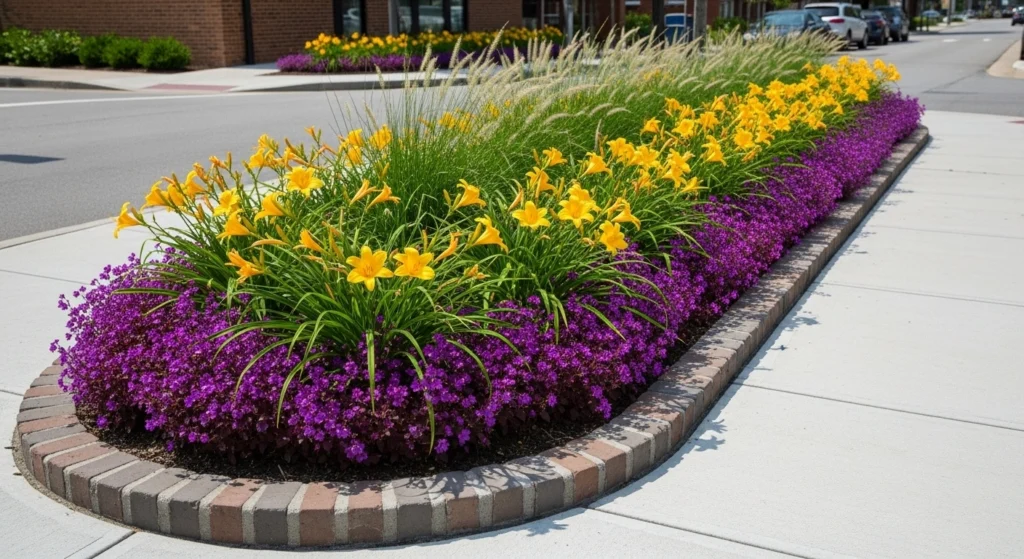
An expanded sidewalk planter ribbon is a highly effective way to soften the harsh concrete borders that define a standard corner lot. Typically, a corner property is ringed by long stretches of public sidewalk, leaving a narrow, awkward strip of grass between the walkway and the asphalt road that is difficult to mow and edge properly. By replacing that problematic turf strip with a continuous, beautifully curated ribbon of low-profile perennial plants and decorative mulch, you instantly elevate the walking experience for the entire neighborhood.
When choosing plants for a sidewalk ribbon feature, it is critical to select tough, resilient varieties that can easily handle foot traffic, occasional pet interactions, and heat radiating from the nearby street. Low-growing daylilies, hardy sedums, purple catmint, and compact ornamental grasses are perfect choices because they stay short enough to maintain driving visibility while providing an abundance of color. This framing technique creates a soft buffer zone that pushes the visual boundary of your landscape all the way to the street edge, making your entire front yard appear significantly larger and more cohesive.
18. Craftsman-Style Layered Shrub Border:
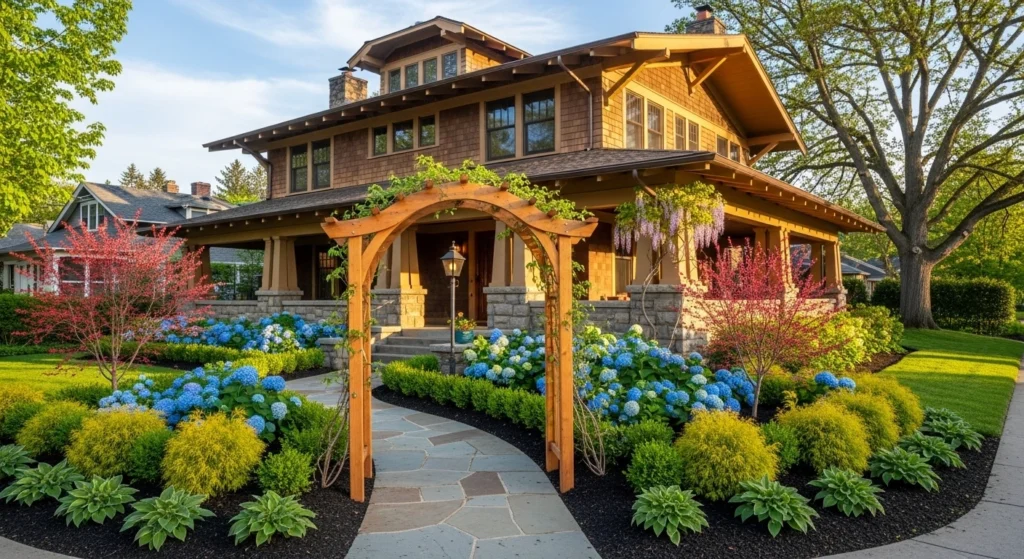
A layered shrub border designed in a traditional Craftsman style is an excellent option for homeowners who want to establish a substantial, textured boundary without using solid fencing. The Craftsman design philosophy emphasizes organic harmony, natural wood and stone materials, and a deep appreciation for structural foliage. By blending deciduous flowering shrubs with structural evergreens of varying heights, you can build a dense, living screen that dampens street noise and provides a soft sense of privacy for your front windows.
To pull off a layered look successfully along a corner lot, arrange your plants in three distinct rows based on their mature sizes. Place taller, structural varieties like oakleaf hydrangeas or viburnums at the back closest to the house to establish a solid background. In the middle row, use medium-sized shrubs with contrasting foliage colors, such as gold-thread cypress or red-twig dogwoods, to create year-round visual excitement. Finally, finish the front edge along the sidewalk with low-growing perennials like hostas, coral bells, or native ferns. This creates a rich framework that complements earthy architectural home styles beautifully.
19. Bold Ornamental Tree Focal Feature:
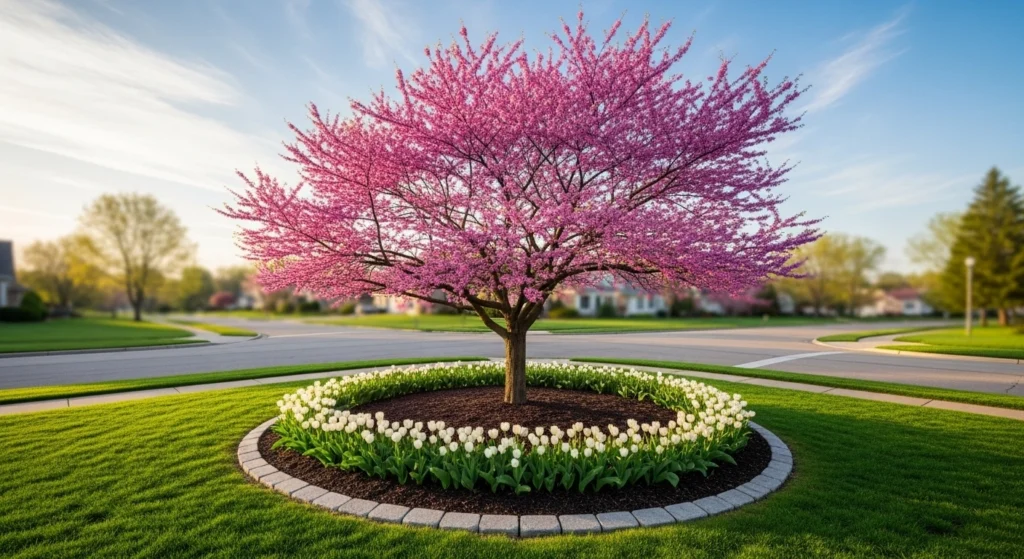
Sometimes, the most impactful design choice you can make for a prominent corner property is to keep the surrounding landscape simple and invest heavily in a single, jaw-dropping ornamental tree focal feature. Placing an exceptional specimen tree directly at the apex of the corner lot creates an undeniable landmark for your neighborhood. This approach works beautifully because it allows you to maintain a clean, open expanse of traditional green lawn on either side, which satisfies local visibility regulations while still making a dramatic visual statement.
The secret to success with this minimalist strategy is selecting a tree species that offers striking interest across multiple seasons of the year. Trees like the Eastern Redbud or Flowering Dogwood provide an explosion of pink or white blossoms in early spring, lush green leaves in the summer, and brilliant fiery foliage during autumn. Alternatively, a Coral Bark Japanese Maple offers bright coral-red twigs that look stunning against bare winter snow. Encircling the base of your chosen focal tree with a neat stone retaining ring, clean mulch, and a few seasonal bulbs creates a finished, professional look that requires minimal upkeep.
20. Contemporary Metal and Wood Privacy Screen Accent:
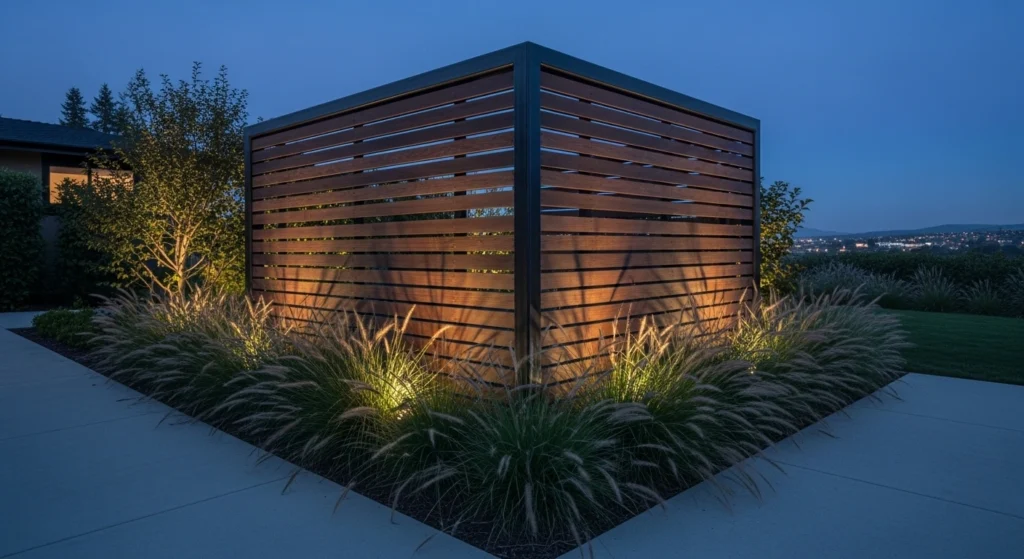
When your front windows or porch face a busy intersection, establishing a sense of personal privacy without violating local height codes can be a difficult challenge. Installing a contemporary metal and wood privacy screen accent offers a highly stylized, modern solution. Rather than building a solid, unneighborly fence along your entire property line, a freestanding decorative screen panel is placed at an angle near the corner bend. This serves as a functional visual shield that blocks direct lines of sight into your living spaces from passing cars.
Constructing the screen using alternating horizontal stained cedar wood slats and industrial steel frames allows light and air to pass through easily, keeping the structure from feeling heavy or restrictive. You can soften the base of the architectural panel by planting a mixture of airy ornamental grasses and low-flowing shrubs. This combination blends the hardscape seamlessly into the surrounding garden. Incorporating low-voltage uplighting behind the privacy screen casts a warm, dramatic glow across the wood grain at night, transforming a simple privacy shield into an upscale design feature.
21. Tiered Raised-Bed Kitchen Garden:
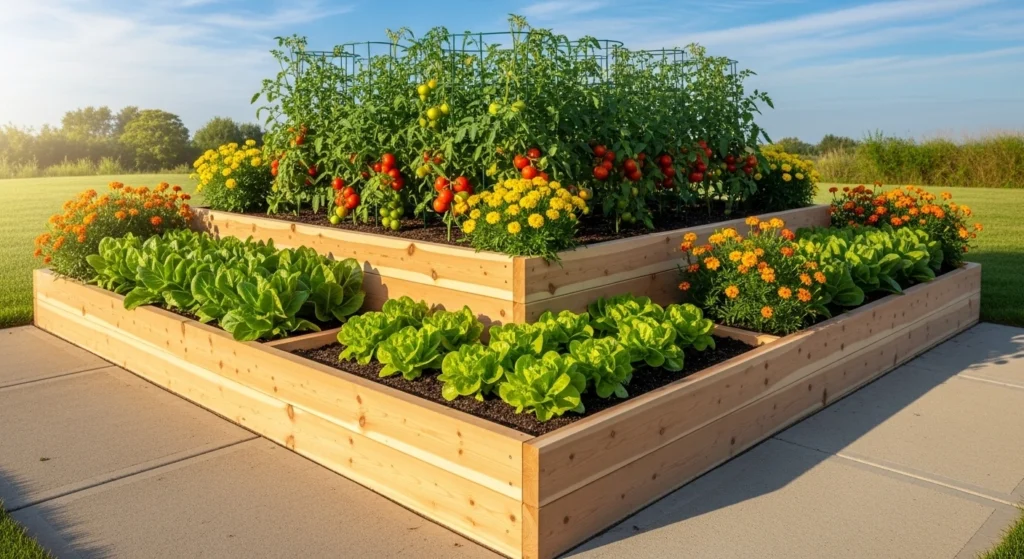
Converting an underutilized, sun-drenched corner front yard into a tiered raised-bed kitchen garden is a revolutionary design choice that perfectly combines beauty with edible functionality. Because corner properties enjoy massive exposure to natural sunlight throughout the day, they are often the absolute best spot on a piece of land for growing fresh vegetables, fruits, and culinary herbs. Building high-quality raised beds out of natural cedar wood, stacked stone, or corten steel allows you to control your soil quality perfectly while introducing a clean, structured organization to the front yard.
To maintain a beautiful look that enhances your home’s curb appeal, treat your kitchen garden with the same design respect as a formal flower bed. Arrange the raised structures in geometric paths that echo the lines of the street corner, leaving wide, comfortable walking paths made of clean pea gravel or wood chips between them. Intermix your edible crops with colorful companion flowers like bright French marigolds, blue salvias, and nasturtiums, which naturally repel pests while adding visual pop to the green foliage. This edible landscape turns a standard front yard into a highly productive space that sparks conversation with neighbors.
FAQ’s:
What are the most common landscaping rules for corner lots?
Most municipalities and homeowners associations enforce strict “sight triangle” regulations for corner properties to ensure that drivers have an unobstructed view of oncoming traffic and pedestrians at intersections. Generally, this means that any landscaping features, structures, or fences placed within a specified distance of the street corner cannot exceed a height of two to three feet. It is critical to contact your local city planning department or check your local guidelines before installing tall trees, high hedges, or privacy screens near the outer street borders.
How do I handle privacy on an exposed corner lot without a tall fence?
If local regulations prevent you from building a tall privacy fence along your street boundaries, you can easily create an effective privacy shield using layered landscaping techniques. Utilizing medium-height ornamental grasses, loose flowering shrubs, and deciduous trees with airy canopies allows you to block direct sightlines into your home while still permitting light to filter through. Freestanding architectural accent screens positioned at strategic angles can also shield your porch or front windows without violating perimeter fencing height restrictions.
What are the best low-maintenance options for a corner property?
The absolute best low-maintenance approach for an awkward corner yard is replacing traditional turf grass with a combination of hardscape features and drought-tolerant plantings. Implementing a natural stone dry creek bed, a gravel-based xeriscape layout with decorative boulders, or structured geometric stone planters drastically cuts down on mowing, edging, and watering chores. Choosing native perennial plants, hardy evergreens, and slow-growing ornamental grasses ensures your corner landscape maintains its clean shape across every season with minimal intervention.
Conclusion
Landscaping a corner front yard requires a thoughtful approach that balances public visibility with residential function. Because these unique properties are viewed from multiple angles simultaneously, relying on standard foundation plantings is rarely enough to create a cohesive look. By utilizing smart structural elements like curved retaining walls, natural stone pathways, or eye-catching ornamental trees, you can transform an awkward, exposed corner plot into an architectural asset that anchors your home and enhances the charm of the entire neighborhood.
Ultimately, the most successful corner lot landscapes are those that embrace the natural conditions of the space rather than fighting against them. Whether you choose to install a modern minimalist gravel grid, an eco-friendly native pollinator meadow, or a productive raised-bed edible kitchen garden, focusing on proper scale, clear sightlines, and rich plant textures will guarantee a stunning result. With a bit of creative planning and strategic hardscaping, your corner lot can easily become the standout feature of your neighborhood’s curb appeal.