 Muhammad Muaz
 Creating a beautiful front yard doesn’t have to be complicated, expensive, or time-consuming. Whether you’re a complete beginner or someone who simply wants quick wins without major effort, these 23 easy front yard landscaping ideas are designed specifically for you. Each idea has been selected because it delivers impressive results while remaining achievable for homeowners of any skill level. From simple container arrangements to budget-friendly ground covers, you’ll discover practical solutions that transform your outdoor space in a matter of days or weeks rather than months. The best part? Most of these ideas require minimal maintenance, don’t demand specialised tools or expertise, and can be implemented gradually as your budget and schedule allow. Your front yard is the first impression visitors and passersby have of your home, so let’s make it count with these straightforward, effective landscaping solutions that prove beautiful curb appeal doesn’t have to be complicated.
1. Container Gardening:
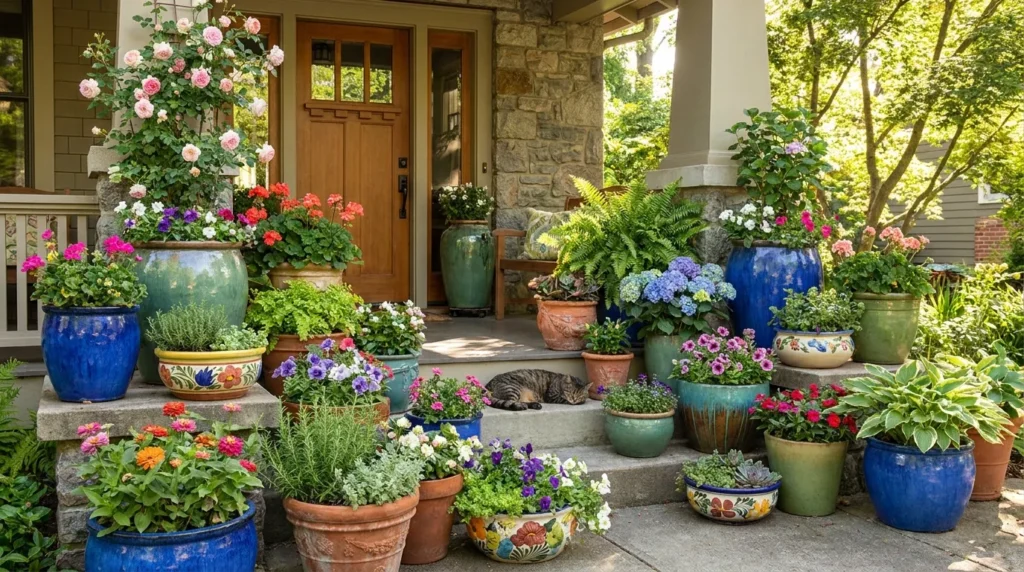
Container gardening is one of the easiest ways to add instant colour and personality to your front yard without any digging or permanent commitment. Simply purchase attractive containers in various sizes, fill them with quality potting soil, and plant your favourite flowers, shrubs, or herbs. You can position containers on your porch, along pathways, near your entryway, or anywhere you want to add a pop of colour. The beauty of container gardening is flexibility—if you don’t like the arrangement, simply move the containers to a different location. You can change out plants seasonally, mixing cool-season flowers like pansies and petunias in fall and winter with heat-loving zinnias and impatiens in summer. Containers also solve problems like poor soil conditions, as you control exactly what soil your plants grow in, eliminating the frustration of dealing with Florida’s challenging sandy soil.
To make container gardening even easier, choose low-maintenance plants like ornamental grasses, hardy succulents, or self-sufficient shrubs like boxwood or privet. Mix and match container colours and sizes to create visual interest—group odd numbers of containers together rather than arranging them in formal lines. Select containers with drainage holes to prevent water-logging, and use a watering schedule appropriate for your climate and plant choices. Container plants dry out faster than in-ground plantings, so check soil moisture regularly during dry periods. The investment is modest—containers range from budget-friendly plastic options to elegant ceramic or stone vessels depending on your aesthetic preferences. Many homeowners find that container gardening is so easy and rewarding that they expand their collections year after year, creating impressive displays that rival professionally landscaped yards.
2. Mulch Beds:
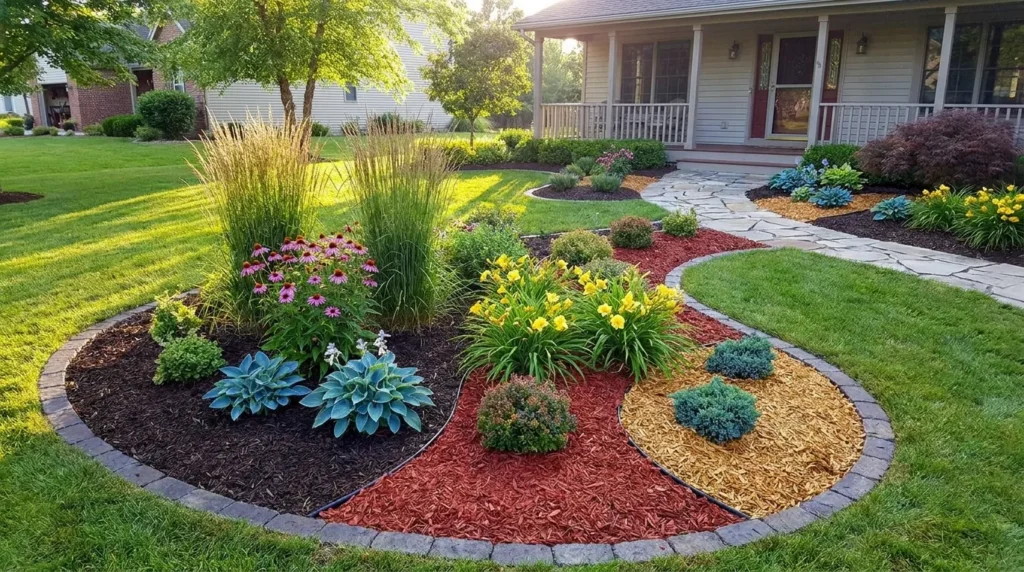
Creating defined mulch beds is one of the easiest ways to instantly improve your front yard’s appearance and establish organised planting zones. Mulch beds define spaces, suppress weeds, conserve soil moisture, and create visual structure that makes even simple plantings look polished and intentional. Begin by deciding where you want your beds—typically around trees, along foundation plantings, or in geometric shapes that complement your home’s architecture. Use landscape edging or simply create clean borders with a spade, then fill the area with attractive mulch. Mulch options range from economical wood chips to decorative coloured mulches, pine needles, or Aquinas—choose whatever fits your budget and aesthetic preferences. The transformation is immediate and dramatic, as even sparse plantings suddenly look much better when surrounded by neat mulch beds with clean edges.
Mulch beds require minimal maintenance once established. You may need to rake or fluff mulch occasionally to maintain appearance, and replenish mulch annually as it breaks down and composts. The easy part is that you can add plants to mulch beds gradually, buying one or two plants at a time as budget allows, rather than committing to an entire landscape at once. Start with basic mulch beds and simple plantings, then expand and refine over time. Mulch also serves practical purposes beyond aesthetics—it regulates soil temperature, retains moisture during dry periods, and provides protective barriers that reduce weed growth. Many homeowners are amazed at how much their curb appeal improves simply by adding clean, neat mulch beds, even without significant plantings. This makes mulch beds perfect for anyone seeking maximum impact with minimal effort.
3. Simple Pathway Installation:
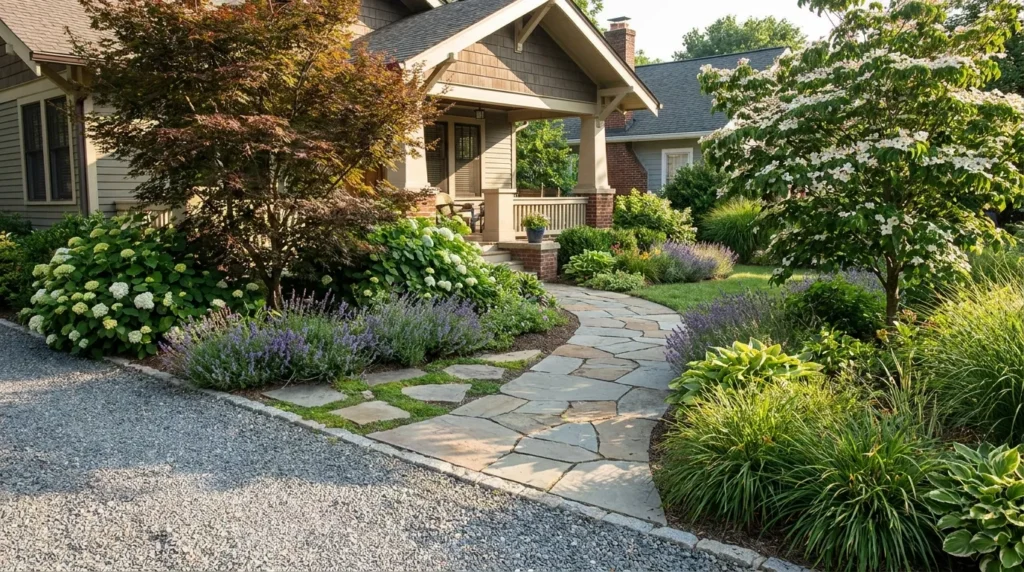
Adding a simple pathway from your street or driveway to your front entrance is one of the most impact yet easiest landscaping improvements you can make. A clear pathway guides visitors naturally toward your door, creates visual interest, and defines the flow of your landscape. You don’t need anything complicated—simple options include laying mulch in a pathway shape, arranging stepping stones in a line, or installing affordable pacers. Stepping stones are particularly easy because you simply push them into the soil or mulch without any special installation. The pathway should be wide enough for comfortable walking (typically 2-3 feet) and should gently curve if possible, as curved pathways feel more natural and create visual interest compared to rigid straight lines.
What makes pathways so easy is that you can create them gradually and adjust them as needed. Start with a basic design, then refine it as you observe how people naturally walk through your yard. You can flank pathways with simple plantings, low lighting, or decorative elements to enhance their appeal without adding complexity. Mulch pathways require occasional maintenance to refresh the mulch, while stone or pacer pathways are more permanent but require no ongoing maintenance. Many affordable pathway materials are available at garden centres, making this an accessible project for any budget. The visual impact is enormous—a clear pathway instantly makes your front yard look more organised, welcoming, and professionally designed.
4. Flowering Shrubs:
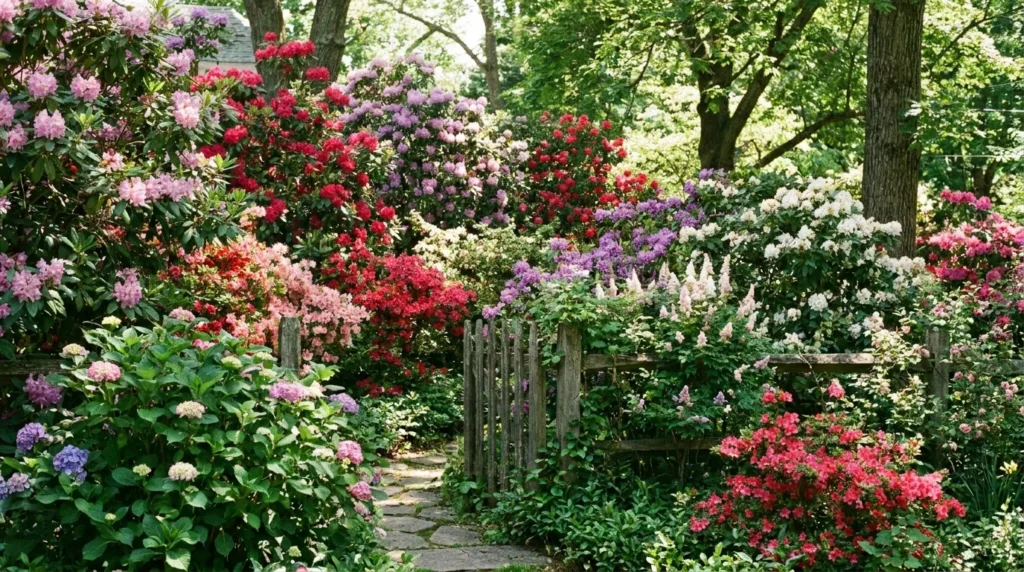
Flowering shrubs are some of the easiest plants to incorporate into your landscape because they’re hardy, require minimal care, and provide structure and seasonal blooms. Dwarf oxymora is incredibly easy and produces vibrant orange, red, or pink flowers with minimal attention. Weightily offers abundant pink or red flowers in spring, while spires produces delicate white or pink blooms with attractive foliage. Amelia combines fragrant white flowers with glossy foliage that often turns burgundy in fall, providing year-round interest. Flowering shrubs typically need little more than occasional watering during establishment, a simple prune after flowering, and maybe some light trimming to maintain shape. They’re naturally pest-resistant and disease-resistant compared to more fussy plants, making them ideal for low-maintenance landscaping.
The best approach is to start with one or two easy flowering shrubs and expand as you gain confidence. Position them where they’ll be visible from the street and your home, and allow adequate space for mature growth. Many flowering shrubs can be layered with ground-covers or mulch beds to create finished planting designs without overwhelming complexity. Once established, these shrubs often become self-sufficient, needing water only during extended droughts. The payoff is stunning—your landscape will have colour and structure throughout the seasons with minimal ongoing effort. Flowering shrubs also work well with container gardens, pathways, and other easy landscaping elements, creating cohesive designs that look professionally done.
5. Easy Perennials:
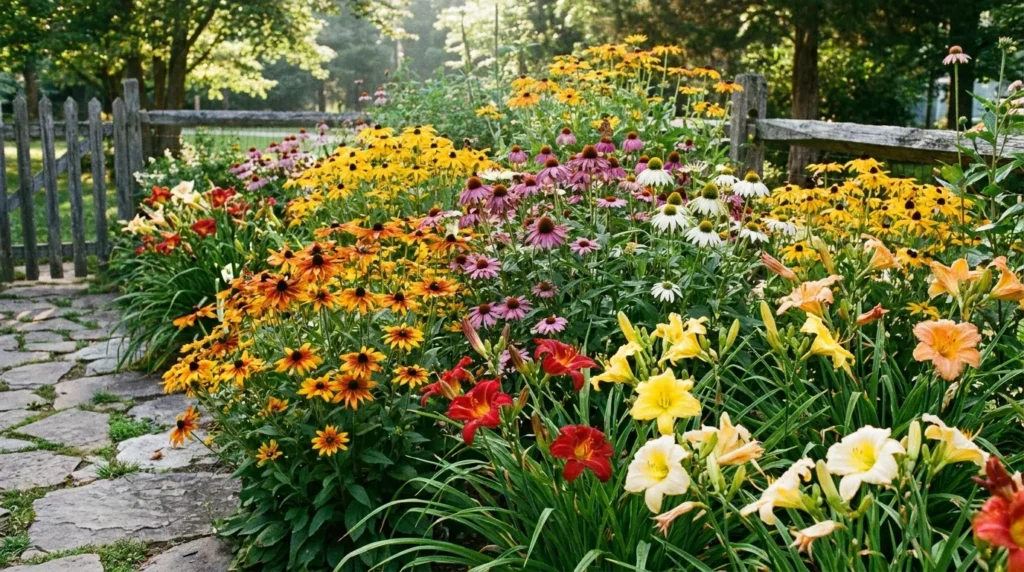
Easy perennials are flowers that return year after year, providing consistent colour without replanting annually. Black-eyed Susana produce bright yellow flowers that bloom for months with virtually no care required. Cone-flowers offer pink, red, or white blooms and attract butterflies while being incredibly drought-tolerant. Day-lilies come in countless colours, bloom prolifically, and are nearly impossible to kill. Atalanta produces clusters of small flowers in warm colours and loves heat and sun. These perennials require minimal watering once established, don’t need fertilising, and don’t attract common pests. Most even tolerate poor soil conditions, making them perfect for Florida’s sandy soils. The beauty of perennials is that each year they typically get larger and produce more blooms, so your investment keeps paying dividends.
Planting easy perennials is straightforward—purchase plants from a nursery in spring or fall, dig a hole roughly the size of the root ball, plant at the same depth it was growing in the container, water well, and mulch around the plant. Space them according to their mature width, and they’ll fill in over the season. Deadheading (removing spent flowers) encourages more blooms, but it’s optional if you’re gardening for minimal effort. Many easy perennials are very affordable, sometimes less than $5 per plant, making it possible to create colourful borders without breaking your budget. Plant them in groupings of three to five of the same variety for maximum visual impact. Your perennial beds will improve every year as plants mature, making this one of the easiest ways to create gardens that keep getting better.
6. Gravel and Rock Beds:
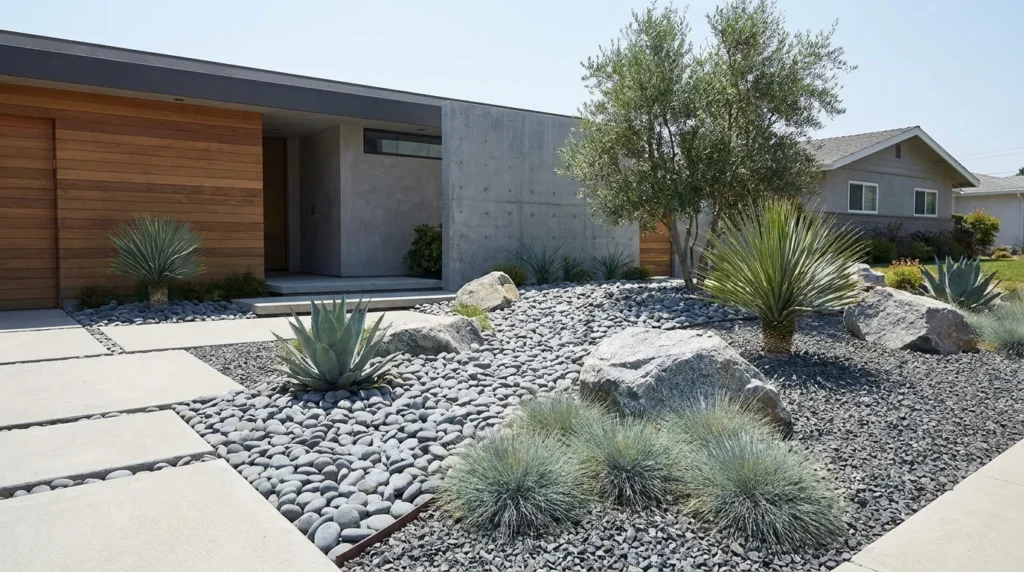
Gravel and rock beds are the ultimate easy solution for creating visually appealing landscaping with virtually no maintenance required. Define your bed area, lay down landscape fabric if desired (to suppress weeds), and spread decorative gravel, river rocks, or small boulders. The result is instant visual appeal and a clean, modern appearance. Gravel beds work particularly well in Mediterranean, Japanese, or contemporary landscapes and require no watering, fertilising, or pruning. You can add architectural plants like ornamental grasses or strategic shrubs to break up the space without creating a high-maintenance garden. Rock and gravel beds are perfect for areas where traditional plants struggle—hot, sunny spots or areas with poor soil drainage.
The only real maintenance requirement for gravel beds is occasionally raking to maintain appearance and removing any weeds that manage to germinate. You may need to replenish gravel periodically as it scatters or compacts, but this is minimal effort compared to traditional plantings. Gravel is very affordable—a truck load typically costs under $50 and covers a substantial area. Coloured mulches offer similar benefits with more colour options than traditional gravel. These beds work beautifully as transitions between planted areas or as independent features that add interest without demanding attention. Many homeowners find gravel and rock beds so easy and attractive that they expand these areas while reducing traditional plantings.
7. Easy Ground-covers:
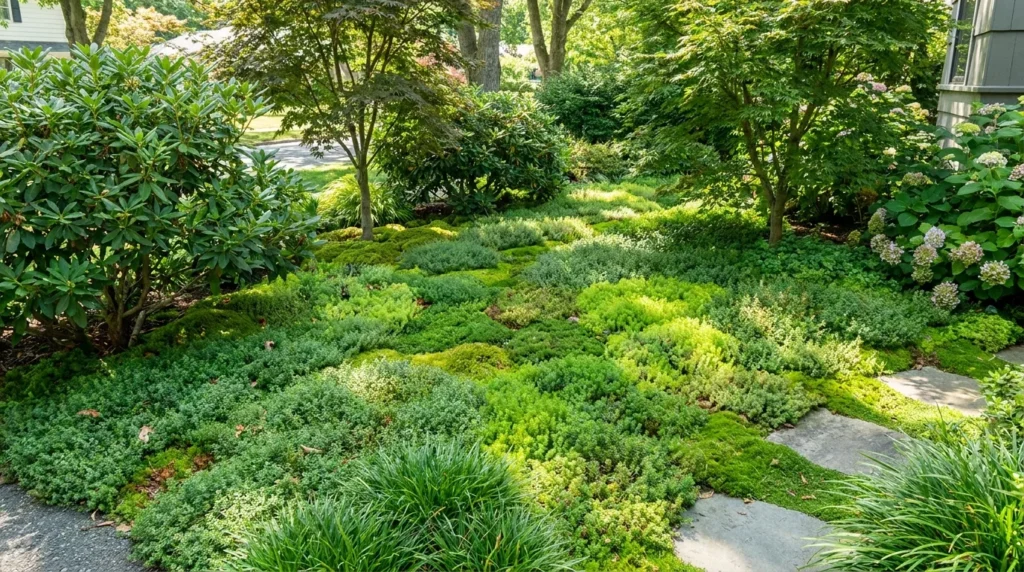
Easy ground-covers fill empty spaces, suppress weeds, and create polished, finished landscapes without requiring trees or shrubs. Asiatic jasmine is incredibly easy, stays evergreen year-round, and eventually needs no supplemental water. Calliope creates interesting texture with purple flower spikes and tolerates both sun and shade. Vince (periwinkle) spreads easily and produces delicate pink or white flowers. Creeping fig creates an elegant green appearance on slopes or under trees. These ground-covers require planting at appropriate spacing, initial watering until established, and occasional trimming or renewal pruning, but very little else. They’re perfect for large areas where you want coverage without high maintenance.
Planting ground-covers is straightforward—space plants according to their mature spread (typically 12-18 inches apart), water regularly until established (usually several months), then allow them to fill in naturally. Applying mulch between plants speeds establishment and reduces weeds during the filling-in period. Most easy ground-covers are very affordable when purchasing smaller plants, making it possible to cover large areas on tight budgets. Once established, these plants essentially care for themselves, needing water only during droughts and occasional trimming if they spread beyond desired boundaries. Ground-covers create visual continuity that makes landscapes look more cohesive and established. They’re particularly useful for preventing weeds in areas where other plants struggle.
8. Simple Hedge Borders:
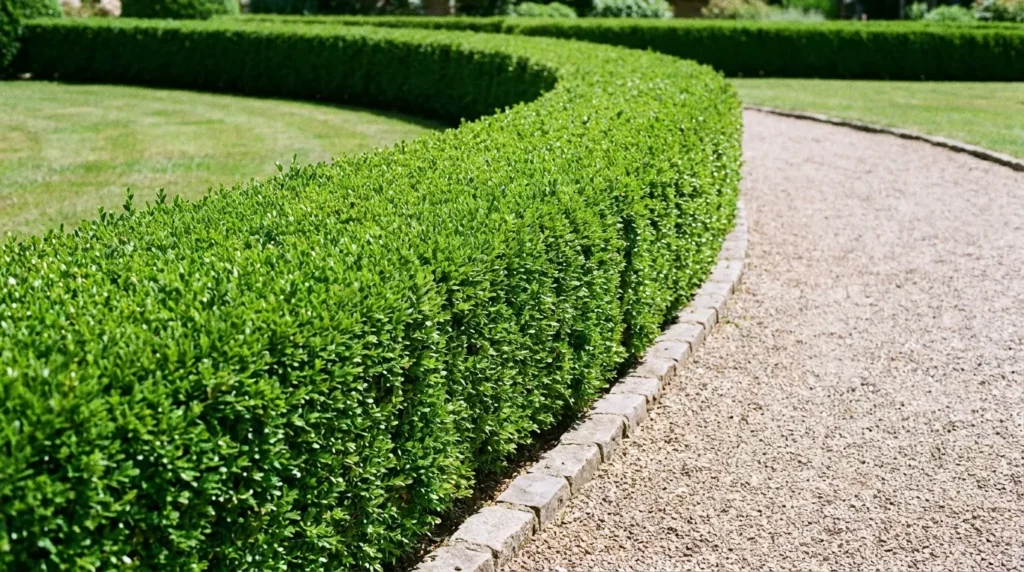
Creating simple hedge borders is one of the easiest ways to define spaces and create structure in your landscape. Dwarf privet, boxwood, or other easy hedge plants create clean lines and visual organisation. You don’t need to create formal, precisely shaped hedges—simple, slightly informal hedges are easier to maintain and actually look more natural. Plant hedge materials at appropriate spacing (typically 12-18 inches apart), water until established, then trim with hedge shears annually to maintain size and shape. Basic hedges provide screening, privacy, and visual boundaries without requiring extensive maintenance. They’re perfect for defining property lines, separating different landscape areas, or creating backdrop for flower beds.
The easiest hedge approach is to plant individual shrubs at spacing distances rather than attempting formal hedging from the start. As plants mature and fill in, they naturally create hedge effects. A simple annual trim in late winter or early spring keeps hedges looking neat without demanding extensive effort. Easy hedge plants are very affordable and establish relatively quickly. Hedges soften landscaping, provide privacy, reduce wind and noise from streets, and create visual continuity that makes landscapes feel more finished. They work with virtually any landscaping style and require much less work than many people assume.
9. Container Trees:
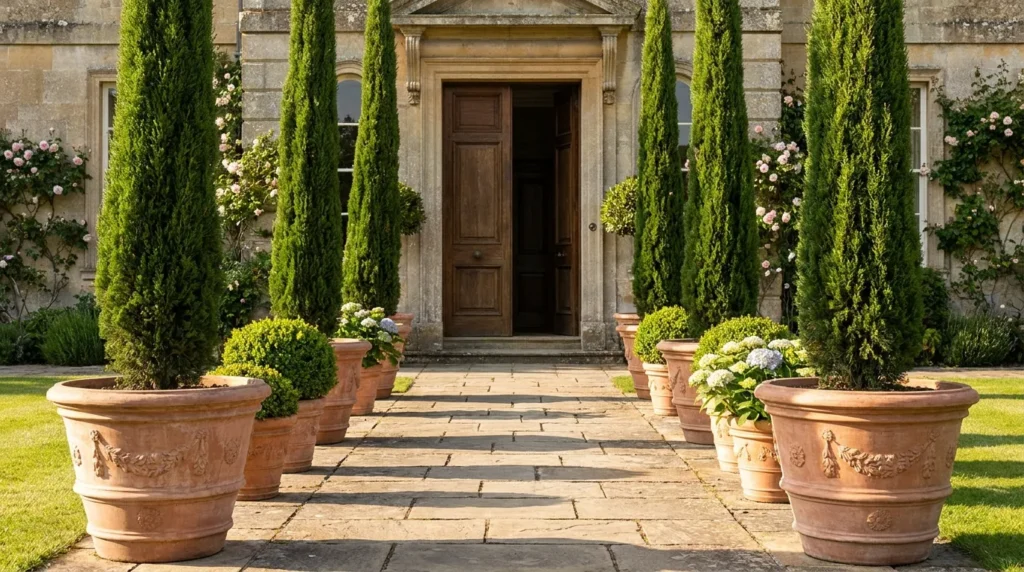
Container trees combine the flexibility of container gardening with the visual impact of trees, creating instant height and structure without permanent in-ground planting. Dwarf fruit trees, ornamental trees, or standard-form shrubs can be grown in large containers on your porch, near your entryway, or flanking your front door. The beauty of container trees is flexibility—if you decide you don’t like the placement or the tree, you can relocate it or swap it for something different. Trees in containers provide focal points, create shade, block unwanted views, and add sophistication to landscapes. You can even move container trees indoors if extreme weather threatens, protecting your investment.
Growing trees in containers requires selecting appropriately sized containers (typically 18-24 inches for most trees), using quality potting soil, and maintaining consistent watering. Container trees dry out faster than in-ground plantings, so regular monitoring is important. Position container trees in locations that match their light requirements—some trees prefer sun while others tolerate shade. Container trees often grow more slowly than in-ground specimens but this slow growth is actually advantageous for container culture. Many trees thrive in containers for years, providing reliable beauty with minimal effort beyond regular watering. The investment in attractive large containers is worthwhile, as they become permanent design elements that anchor landscapes and create visual impact immediately.
10. Easy Shrub Arrangements:
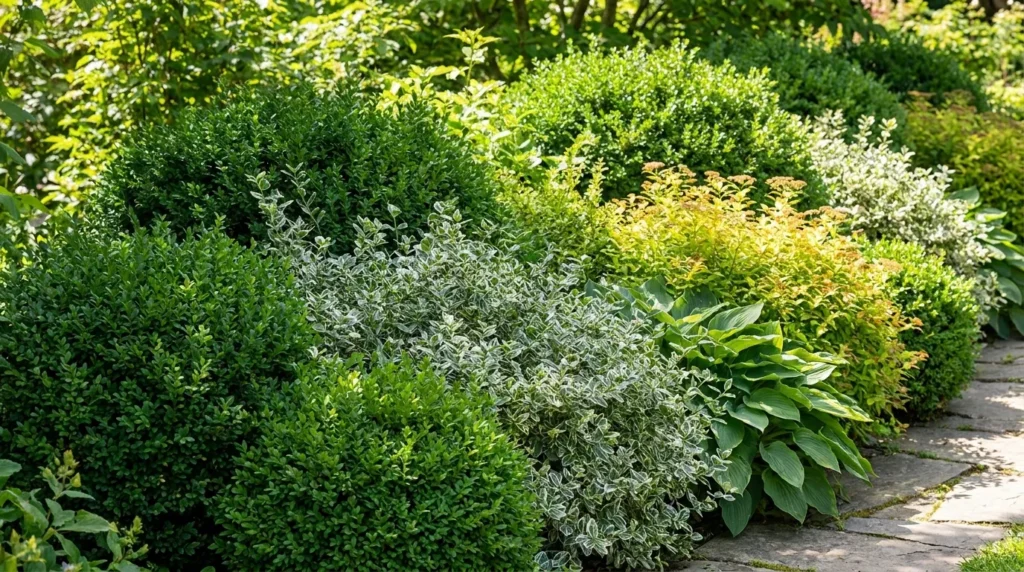
Creating shrub arrangements is easy because you can plant one or two shrubs at a time, gradually building structure and visual interest without overwhelming yourself or your budget. Start with easy shrubs like boxwood, privet, or Ferdinand that are tough, adaptable, and forgiving. Layer shrubs by height—place taller varieties in back and shorter varieties in front—to create depth and visual dimension. Vary foliage colours and textures by mixing solid green with variegated or purple-leaved varieties. Even simple arrangements of just three shrubs, well-spaced and mulched, create polished, finished landscapes that look professionally designed. You can expand arrangements gradually, adding shrubs over seasons as budget allows.
Easy shrubs are typically very affordable and establish relatively quickly. Plant them at appropriate spacing for their mature size, water regularly until established, and then allow them to grow naturally with minimal intervention. A light annual trim maintains shape, but most easy shrubs don’t require heavy pruning. The beauty of gradual shrub arrangements is that you learn as you go—you observe how plants grow, how they look together, and what arrangements you prefer before making large commitments. This approach reduces the risk of expensive landscaping mistakes while allowing you to develop a landscape that truly reflects your vision and preferences.
11. Simple Seasonal Color:
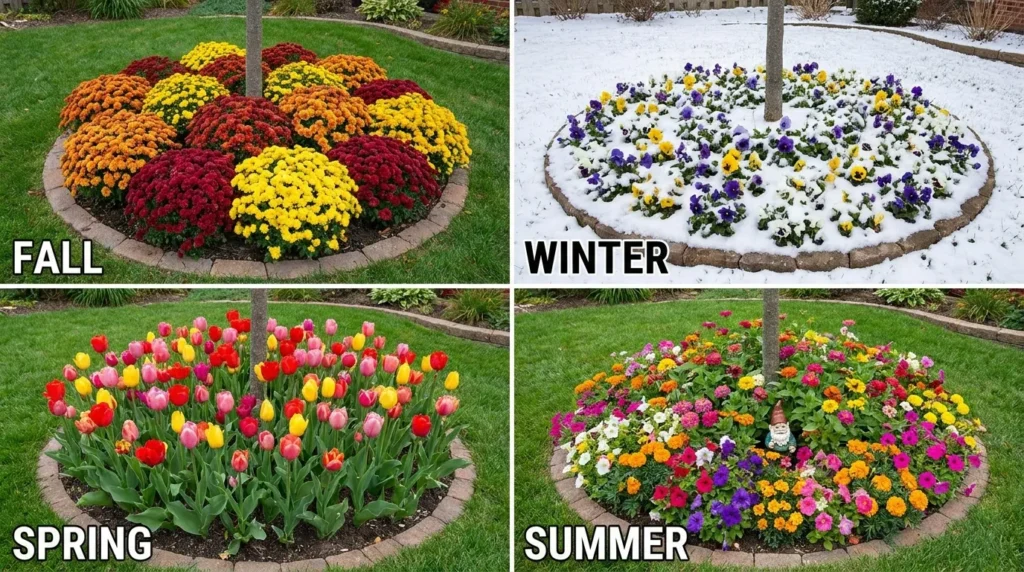
Adding seasonal colour is one of the easiest ways to keep your front yard looking fresh and interesting year-round. In fall, plant mums, asters, or ornamental cabbage for vibrant colours. Winter brings pansies, snapdragons, and sweet Alyssa that bloom even in cold temperatures. Spring features tulips, daffodils, and primrose. Summer showcases zinnias, impatiens, begonias, and marigolds. You simply plant seasonal flowers in prepared beds, enjoy them for their season, then remove them and replant with next season’s selection. This approach gives you constant colour changes without maintaining long-term perennial beds or shrub arrangements. It’s perfect for creating impact areas—perhaps near your entrance or along pathways—while maintaining flexibility elsewhere.
Seasonal planting is very budget-friendly because you buy only what you need for each season, and most seasonal flowers are inexpensive. This approach works beautifully with container plantings and dedicated flower beds. Plan your seasonal rotations in advance so you know what you’ll plant each season, making shopping and planting straightforward. Many nurseries sell seasonal plantings specifically curated for Florida’s climate, taking the guesswork out of what works when. The constant change keeps your landscape exciting and interesting while seasonal flowers typically bloom prolifically without demanding much care. Seasonal colour gives you the freedom to experiment with different colour combinations and plant varieties without long-term commitment.
12. Easy Shade Plants:
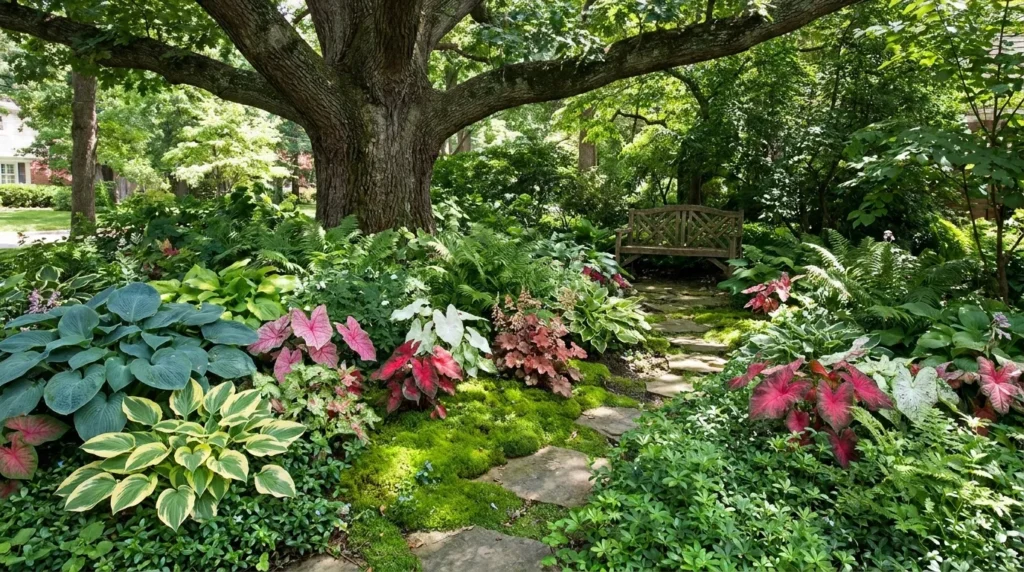
Shaded areas don’t have to be problem zones—easy shade plants transform difficult locations into beautiful focal points. Palladium offer incredible foliage colours and patterns, thriving in shade while being nearly impossible to kill. Host as provide bold foliage and eventually spread to fill spaces. Aspidistra is nearly indestructible and creates elegant green texture. McMahon offers attractive foliage and berries. Coral honeysuckle produces colourful flowers even in partial shade. These shade plants are perfect for areas beneath trees, on the north side of homes, or anywhere direct sun is limited. They open landscaping possibilities in areas you might have thought unmarketable, allowing you to maximise your entire front yard.
Easy shade plants require similar care to sun-loving plants—dig a hole, plant at the same depth as the container, water well, mulch, and maintain appropriate moisture until established. Most shade plants are quite tough and tolerate neglect better than sun-loving plants. Once established, many shade plants essentially care for themselves. The advantage is that shade plants often have interesting foliage colours and patterns, so they’re attractive even without flowers. Using shade plants allows you to landscape difficult areas without constantly fighting conditions or replacing failed plants. Shade gardens often become favourite landscape areas because they remain cooler and require less frequent watering than sun-exposed areas.
13. Simple Bed Edging:
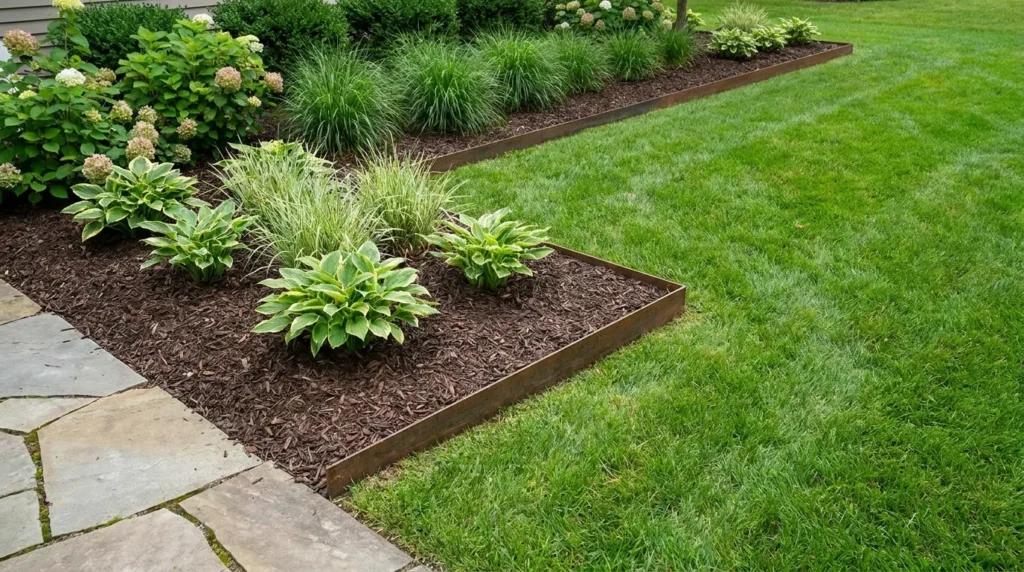
Adding clean edging to planting beds is one of the easiest landscaping improvements that dramatically changes how finished your yard appears. Edging creates visual boundaries between lawn and planted areas, prevents grass from encroaching into beds, and gives your landscape a professional appearance. Options include metal edging (affordable and clean-looking), plastic edging (inexpensive but less permanent), stone edging (more elegant), or simply maintaining a neat edge by cutting with a spade. The installation is straightforward—lay edging along bed boundaries and secure according to manufacturer instructions. Immediate results are stunning—suddenly your landscaping looks intentional, organised, and professionally designed.
Edging is very affordable, typically costing just a few dollars per linear foot. Even edging a modest front yard rarely costs more than $50-$100 for materials. The return on investment is enormous in terms of visual impact. Edging also saves maintenance—you won’t have grass creeping into beds or need to spend time precisely trimming edges. It defines spaces clearly, making small yards appear more organised and larger. Edging works with any landscaping style and complements any planting scheme. If you’re starting a front yard landscaping project, adding edging to existing beds is often the single best first step, creating immediate professional appearance before adding plants.
14. Easy Ornamental Grasses:
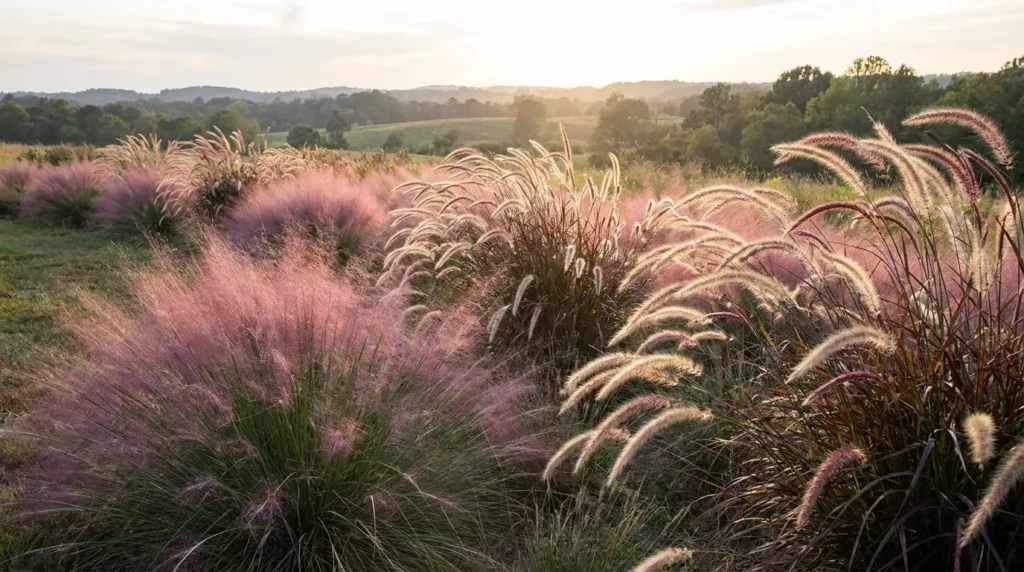
Easy ornamental grasses add movement, texture, and visual interest with virtually no work required once established. Fountain grass produces delicate arching blades and feathery seed heads. Mulishly grass creates dramatic pink or purple plumes in fall. Gulf mulishly offers fine texture and pink flowers. These grasses are incredibly tough, drought-tolerant, and require virtually no fertilisation or pest management. They thrive in poor soil, handle intense heat beautifully, and establish relatively quickly. Grasses work well as accents in mixed plantings or grouped in drifts to create dramatic displays. They’re perfect for adding architectural interest to modern landscapes or softening traditional designs.
Growing ornamental grasses is simple—plant in full sun, ensure adequate drainage, water until established, then allow them to flourish with minimal intervention. Most ornamental grasses need cutting back once annually in late winter before new growth emerges. The result is dramatic seasonal interest—spring brings fresh growth, summer offers dancing movement in breezes, fall displays gorgeous colour, and winter shows attractive tan seed heads. Many people discover that ornamental grasses are among their easiest, most rewarding plants. They’re also relatively affordable and become more impressive each year as they mature and spread. Grasses work beautifully with flowering plants, shrubs, and landscaping, fitting into virtually any landscape design.
15. Container Arrangements:
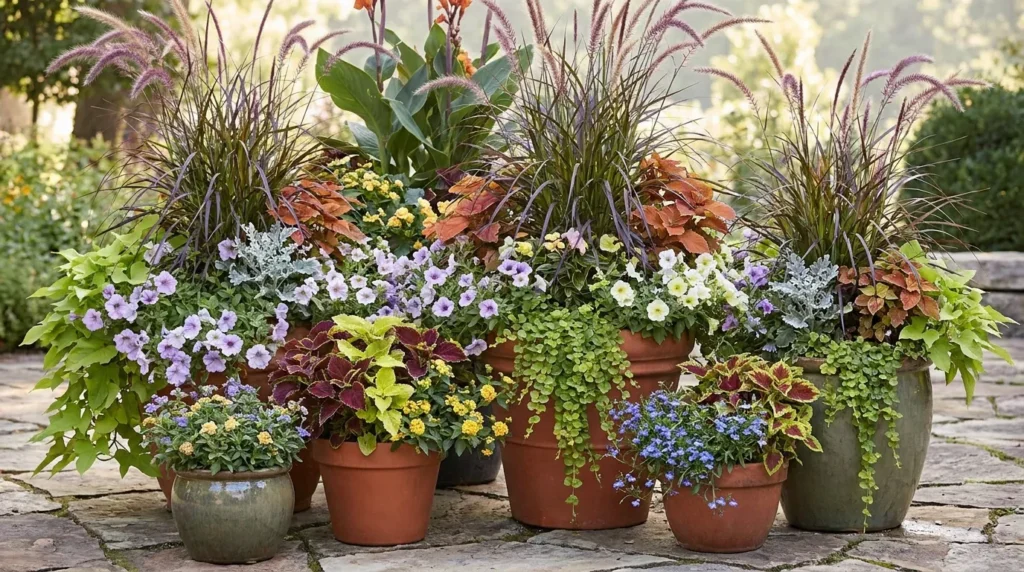
Container arrangements combine multiple plants in single containers to create professional-looking displays that grab attention immediately. The basic formula is simple: a tall centrepiece plant surrounded by mounding or trailing companions, all planted together in attractive containers. For example, combine tall ornamental grass or tropical plant with trailing purple heart and bright flowers like begonias or impatiens. This creates instant visual interest and colour without requiring landscape beds or in-ground planting. Container arrangements are perfect near entryways, on porches, or as focal points in large empty spaces. You can create different combinations seasonally, changing your landscape’s appearance throughout the year.
Creating container arrangements is straightforward—fill a container with quality potting soil, arrange plants before planting them permanently, then plant at appropriate depths and water well. The key is selecting plants with complementary growth habits and compatible water needs. Group odd numbers of plants (three or five) rather than even numbers for more visually appealing arrangements. Container arrangements require regular watering during growing season and occasional deadheading to encourage blooms. The beauty is complete flexibility—if you dislike an arrangement, change it. Container arrangements work in small yards, rental properties, or temporary situations where permanent landscape changes aren’t possible. They’re also perfect for renters or anyone wanting landscape changes without commitment.
16. Simple Arbour and Trellis Installation:
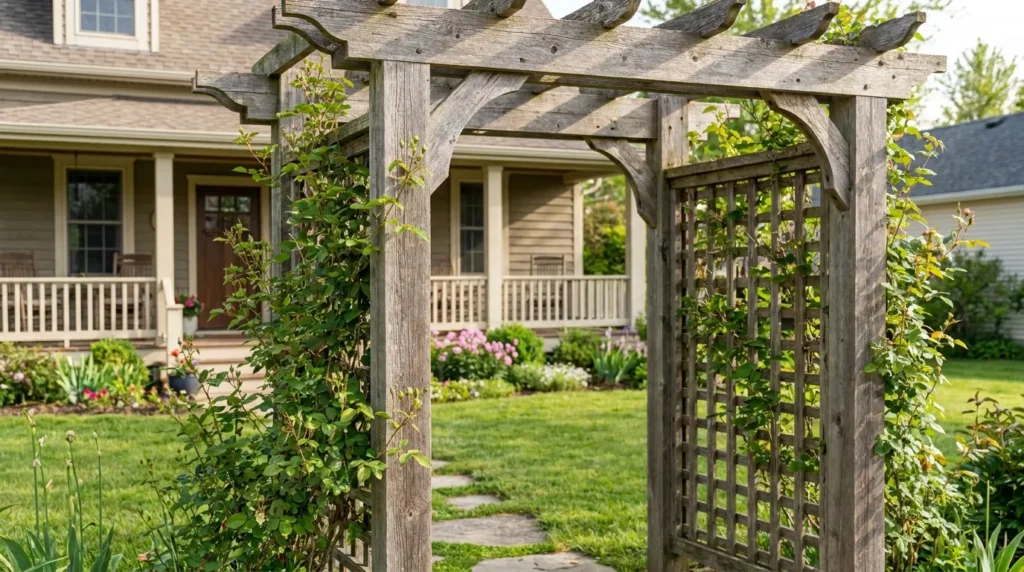
Adding simple arbours or trellises instantly adds height and vertical interest to landscapes while creating opportunities for climbing plants. Arbours positioned near entryways create welcoming focal points and frame doorways beautifully. Trellises work well against walls or fences, adding structure and allowing vines to grow upward without spreading horizontally. Installation is simple—most arbours and trellises come per-made and require only positioning and securing. Pre-made arbours cost $50-$200 depending on materials and quality. Even inexpensive options look attractive and create impressive impact. Once installed, you simply plant easy climbing plants like Carolina jasmine or trumpet vine at the base, water until established, and allow vines to climb naturally.
Arbours and trellises transform empty spaces and create focal points without requiring extensive planting or complex installation. They provide shade when covered with vines, create privacy screening, and add architectural interest that makes landscapes look more intentional and sophisticated. Many climbing plants are very easy once established, needing only annual pruning and occasional direction training. The combination of structural elements and climbing plants creates a complete, polished look. Arbours work with any landscaping style—from traditional to contemporary—and complement various plant selections. They’re particularly useful for small yards where vertical space can be maximised.
17. Easy Flowering Ground-covers:
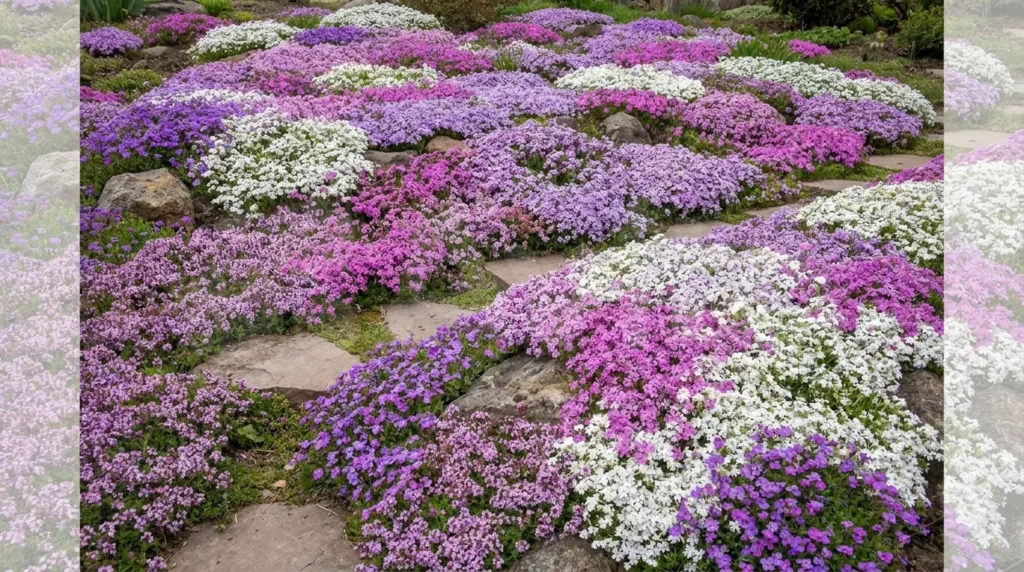
Easy flowering ground-covers provide colour while filling spaces and suppressing weeds—they’re perfect for low-maintenance landscapes. Calliope produces delicate purple flower spikes while creating interesting texture. Creeping phlox offers clouds of colourful flowers in spring. Vince produces dainty pink or white flowers continuously. Beach strawberry creates low spreads of white flowers followed by colourful berries. These ground-covers remain low, spreading naturally to fill spaces without creating overwhelming height. They’re perfect for edging beds, filling areas under trees, or creating continuous colour without shrub-like structure. Flowering ground-covers work beautifully with spring bulbs, creating layers of colour and interest.
Planting flowering ground-covers follows the same process as non-flowering varieties—space appropriately, water until established, then allow them to spread and fill. Many flowering ground-covers are very affordable when purchasing smaller plants. Once established, they require minimal maintenance beyond occasional trimming or renewal. The added benefit is that they flower, providing continuous colour rather than just green foliage. Flowering ground-covers work well as transitions between planted areas and lawn, softening hard edges while providing visual continuity. They’re particularly useful for slopes or areas where traditional plantings struggle. The combination of easy culture with continuous colour makes flowering ground-covers excellent choices for any front yard.
18. Simple Rock Gardens:
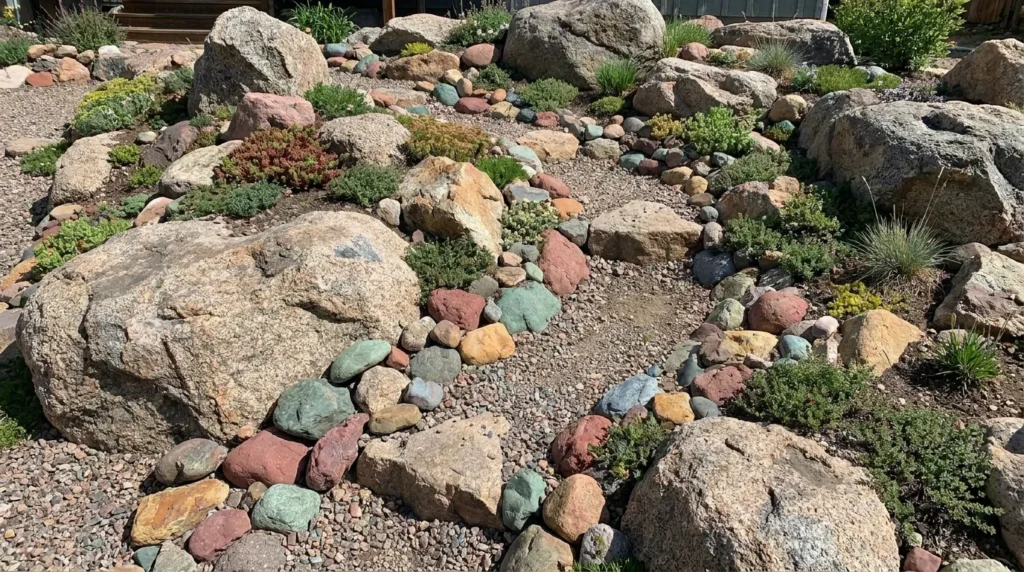
Rock gardens are incredibly easy to create and maintain while offering natural beauty and distinctive character. You simply arrange rocks or boulders in aesthetically pleasing ways, perhaps adding minimal plantings of easy perennials or succulents between rocks. The result is visually striking without demanding ongoing maintenance. Rock gardens work well in modern, contemporary, or Mediterranean-style landscaping. They’re perfect for difficult areas—hot, sunny slopes or poor drainage areas—where traditional plants struggle. Rocks require no watering, fertilisation, or pruning. They add textural interest and create focal points that make landscapes appear professionally designed.
Creating simple rock gardens starts with selecting rocks or boulders—landscape supply companies offer various sizes and colours to suit different aesthetics. Arrange rocks according to your vision, adding gravel or mulch around them if desired. You can add a few easy plants like ornamental grasses or serums among rocks, or keep arrangements purely cardsharper. Rock gardens work on any slope, creating interesting visual movement that flat, planted areas can’t achieve. They’re very affordable compared to extensive plantings and require virtually no maintenance beyond occasional raking to keep appearance neat. Rock gardens work beautifully as borders, focal points, or transitions between different landscape areas.
19. Easy Herb Garden:
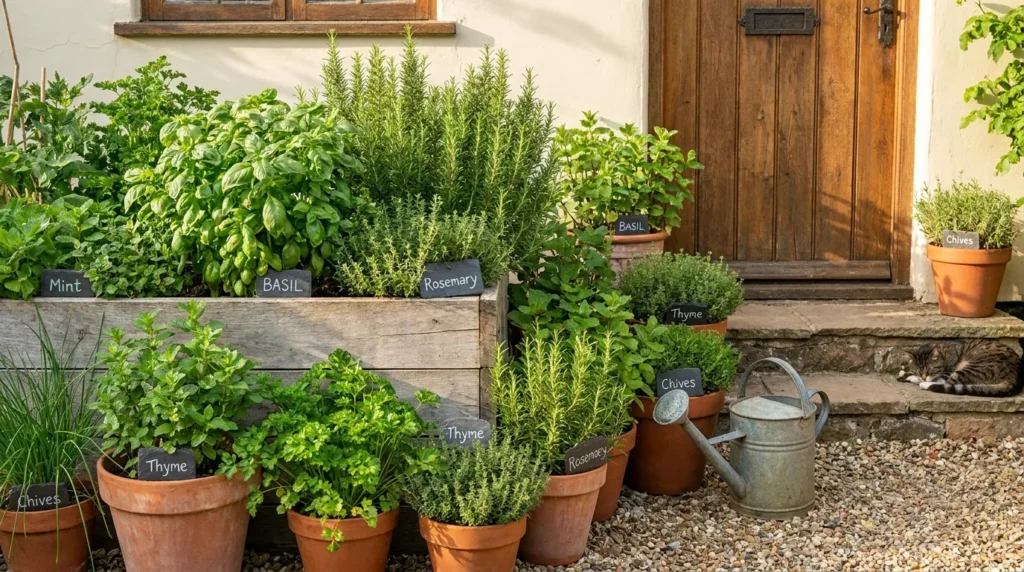
Herb gardens are easy, practical, and provide fresh ingredients for cooking while adding beauty and fragrance to front yards. Rosemary thrives in Florida, offering fragrant foliage and delicate flowers. Basil produces abundant leaves and attractive flowers in various colours. Oregano and thyme spread nicely and provide colourful foliage. Parsley and chives offer useful ingredients with attractive forms. Herbs are incredibly easy—most require minimal watering once established, no fertilising, and virtually no pest management. You can plant them in dedicated beds, containers, or even raised beds that become attractive landscape features. Herb gardens work beautifully near kitchen entrances where you can easily grab fresh herbs for cooking.
Growing herbs is simple—plant in full sun with well-draining soil, water until established, then allow them to grow. Many herbs are very affordable, sometimes just a few dollars per plant. You can plant herb gardens gradually, adding herbs as you discover favourites and uses for them. Harvesting herbs regularly actually encourages bushier, more productive growth. Most herbs are beautiful enough for landscape display, with attractive foliage and often delicate flowers. Herb gardens appeal to food gardeners but also to decorative gardeners who appreciate fragrant, interesting foliage. They work in containers, raised beds, or traditional garden beds, offering flexibility in placement and arrangement.
20. Simple Fence Improvements:
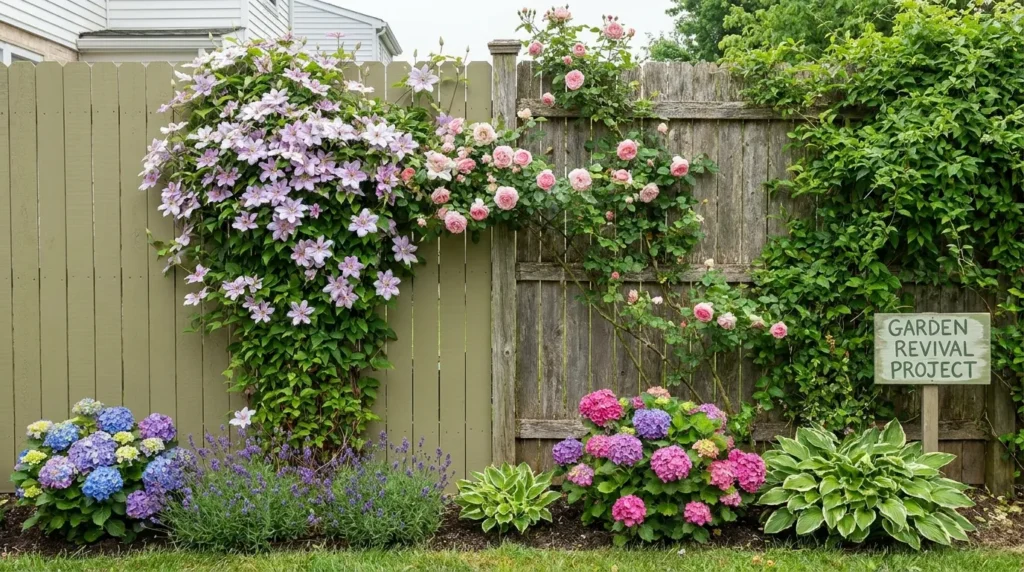
Improving existing fences is one of the easiest ways to enhance your landscape without major construction or expense. Plant easy climbing vines like Carolina jasmine or trumpet vine at fence bases to create living coverage that softens hard architectural lines. Add flower beds along the fence line with shrubs and perennials that create layered planting designs. Paint or stain fences to refresh appearance and complement your home’s colour scheme. Power-wash weathered fences to restore their appearance. Position containers with colourful plantings in front of fences to draw attention away from fence structures and toward beautiful plants. These simple improvements dramatically enhance how fences appear in your landscape.
Fence improvements are budget-friendly compared to fence replacement and can be accomplished gradually. Paint and vines are inexpensive, and flower beds cost only what you choose to invest in plants. Simple fence improvements work with any landscaping style and complement any home aesthetic. Power-washing is often free—many people can borrow equipment or hire someone for reasonable costs. Climbing vines establish relatively quickly once planted, transforming bare fences into green walls within a season or two. Fence improvements soften the hard appearance of structures while creating more inviting landscapes. The transformation is dramatic—what was previously a utilitarian element becomes a beautiful landscape feature.
21. Easy Seasonal Planters:
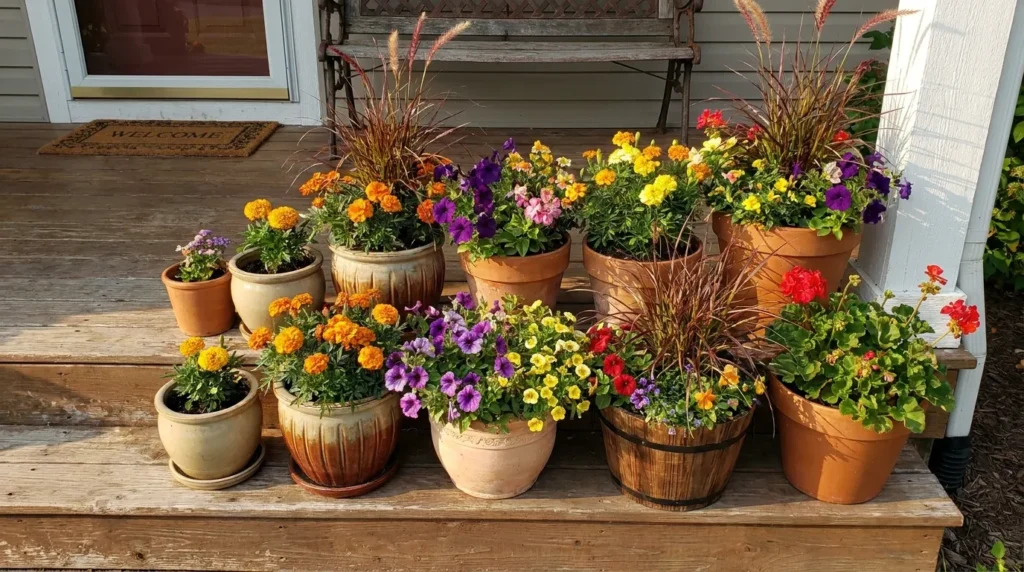
Easy seasonal planters provide concentrated colour exactly where you want it, without requiring in-ground planting or permanent commitment. Group several planters of varying heights on entry steps, porches, or prominent locations to create visual impact. Fill planters with seasonal flowers that provide consistent colour throughout each season. This approach works perfectly for renters, temporary situations, or anyone wanting landscape changes without permanent modifications. Planters allow you to control plant combinations completely, creating sophisticated displays that would be difficult to achieve with in-ground plantings. You can experiment with different colour combinations and plant varieties without significant investment.
Creating beautiful seasonal planters is straightforward—choose attractive containers, fill with quality potting soil, select complementary plants, and arrange them artfully. Group odd numbers of planters at different heights for maximum visual impact. Seasonal planters require regular watering during growing seasons and occasional deadheading to encourage blooms. The beauty is that you can change entire displays when seasons change, keeping your landscape fresh and exciting. Planters work in any space—small yards, container gardens, or as supplements to in-ground plantings. The concentrated colour from grouped planters creates focal points that draw eyes naturally to your entryway and most attractive landscape areas.
22. Simple Landscape Lighting:
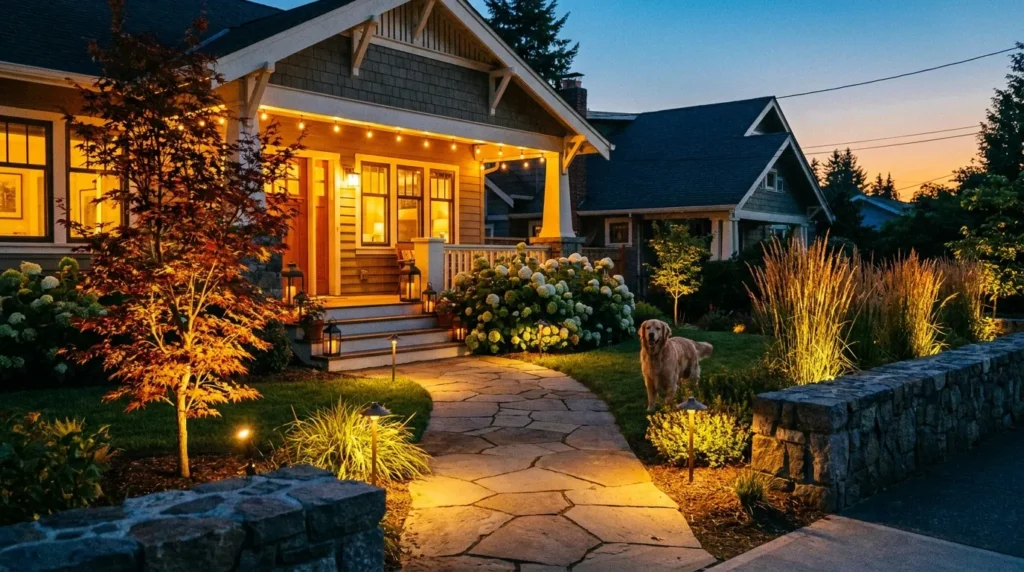
Adding simple landscape lighting dramatically extends your landscape enjoyment while improving safety and security. Solar pathway lights require no wiring—simply stake them in soil and they charge during day, illuminating pathways at night. Spotlight lights highlight attractive plants or architectural features. String lights create ambient lighting for entertaining. LED lights use minimal electricity and generate no heat, making them ideal for landscape use. Modern lighting options are affordable, easy to install, and transform how landscapes appear after dark. Proper lighting creates drama and sophistication that rivals daytime beauty. It also improves security by illuminating entryways and creating the appearance that someone’s home and alert.
Installing simple landscape lighting requires no electrical expertise for solar options—simply position lights where desired and allow them to charge. Low-voltage systems require running electrical wire, but this is manageable for most homeowners. LED lights provide superior brightness and colour compared to older technologies. Position lights to highlight key features—uplifting trees from below creates beautiful silhouettes, while path lighting improves safety. Lighting transforms previously invisible nighttime landscapes into beautiful focal points. Solar lights require no wiring or electricity, making them perfect for renters and temporary situations. Battery-operated lighting offers additional options without permanent installation. Even simple lighting additions dramatically improve how your property appears to nighttime visitors and passersby.
23. Easy Lawn Alternatives:
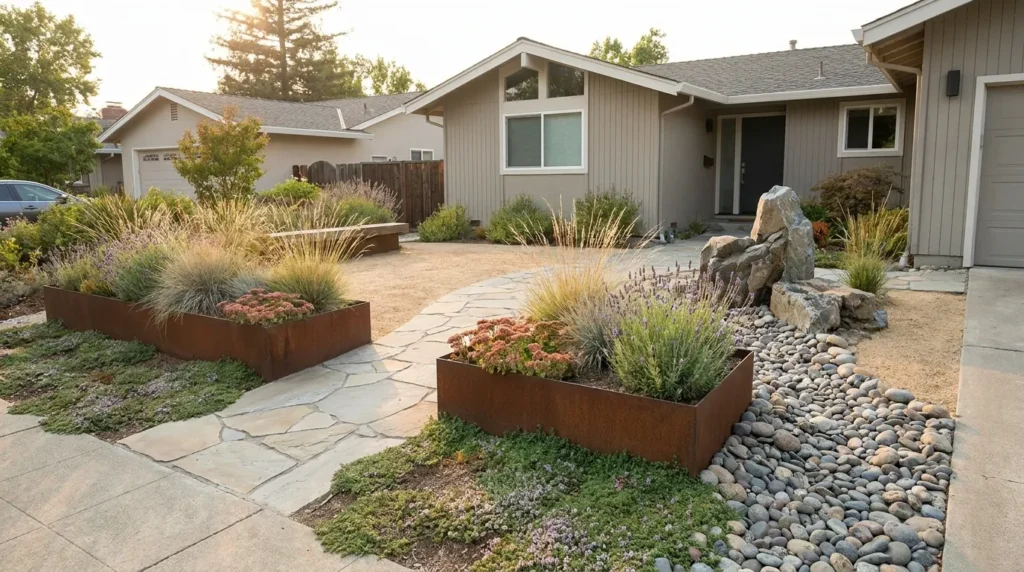
Replacing traditional lawn with easier alternatives is one of the best decisions you can make for reducing maintenance while improving landscape appearance. Clover lawns tolerate poor conditions, require less frequent mowing, and improve soil health naturally. Ground-cover replaces grass in shaded areas where turf struggles. Landscaping such as permeable pacers eliminates lawn maintenance entirely. Native wildflower meadows attract pollinators while providing stunning seasonal blooms. Even reducing lawn areas while expanding planted beds and landscaping areas dramatically reduces maintenance. Lawn alternatives often look more interesting and distinctive than traditional turf mono-culture.
Transitioning from traditional lawn to alternatives can be gradual—you don’t need to eliminate lawn all at once. Start by reducing lawn areas in problematic spots, replacing them with ground-covers or landscaping. As you see how much easier these areas are to maintain, you can expand. Clover lawns are particularly easy because you can plant clover directly into existing lawn without complete renovation. The beauty is that reduced lawns mean less mowing, watering, fertilising, and chemical treatments. Lawn alternatives often support beneficial insects and create more interesting visual landscapes than uniform grass. Even small reductions in lawn area provide noticeable maintenance savings while typically improving landscape appearance.
FAQ’s:
Q: What’s the easiest landscaping project to start with?
A: Container gardening is the easiest starting point. Simply buy containers, quality potting soil, and your favorite plants, arrange them, and you have instant landscape impact. No digging, no mess, and complete flexibility to change things around. It requires minimal investment and teaches landscaping principles without overwhelming complexity.
Q: How often do I need to water easy front yard plants?
A: Established easy plants typically need water only during dry periods or droughts. During establishment (first few months), water regularly. Once established, most native and drought-tolerant plants thrive with natural rainfall. Container plants dry faster and need checking more frequently. Use mulch to conserve moisture and reduce watering needs.
Q: Can I create an easy landscape on a very tight budget?
A: Absolutely! Start with free or low-cost materials like mulch beds and edging. Purchase one or two inexpensive plants at a time. Plant from seed (very cheap). Use containers you already own. Gradual expansion over time spreads costs. Simple hardscaping like pathways is affordable. Focus on maximum impact with minimal investment.
Q: What’s the hardest part about easy landscaping?
A: The hardest part is usually just getting started. Many people overthink landscaping and feel intimidated. The secret is accepting that you’ll learn as you go and mistakes aren’t permanent. Start small, add gradually, and you’ll develop confidence quickly. Most easy plants forgive neglect and poor technique.
Q: How do I know which plants are easy?
A: Ask local nursery staff about plants well-suited to Florida conditions that don’t require fussy care. Native plants are typically easier. Look for plants described as drought-tolerant, hardy, or low-maintenance. Avoid plants that require special conditions or frequent pruning. Start with proven performers rather than experimental varieties.
Conclusion:
Creating a beautiful front yard doesn’t require professional expertise, massive budgets, or complex projects. These 23 easy landscaping ideas prove that stunning curb appeal is achievable for anyone willing to invest modest time and effort. Whether you’re starting from scratch or improving an existing landscape, you now have practical solutions that deliver impressive results without overwhelming complexity. Start with ideas that appeal to you most, implement them gradually, and watch your front yard transform into something you’re proud to show off. The secret to easy landscaping success is giving yourself permission to learn as you go, accepting that perfection isn’t the goal, and celebrating small improvements. Every container planted, every mulch bed created, every groundcover established moves you closer to your landscaping vision. The beauty of easy landscaping is that your yard will keep improving and developing as plants mature and you refine your design. You’ll find that as you complete these projects, landscaping becomes less intimidating and more enjoyable. Most importantly, you’ll create a front yard that brings you joy every day and makes your home the standout on your street. Start today—your easy front yard transformation awaits!