 Muhammad Muaz
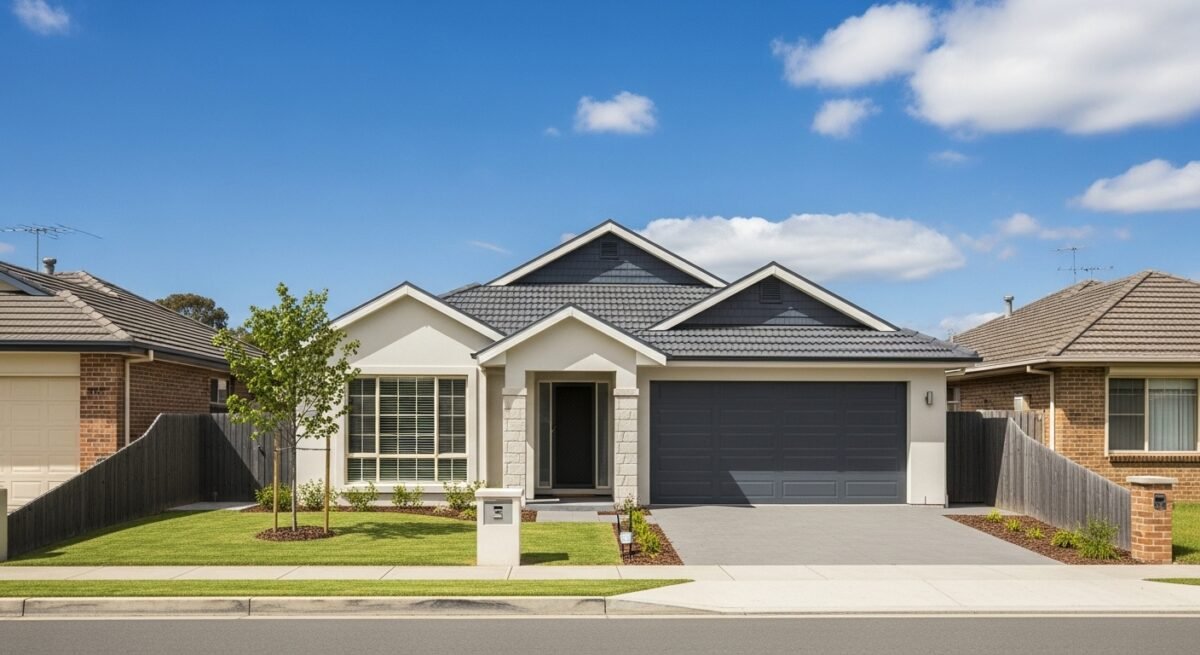
 Australian front yards are known for their balance of beauty, practicality, and climate-friendly design. Whether you live in a coastal region, a suburban neighborhood, or a rural property, the right landscaping choices can dramatically improve your home’s appearance while reducing maintenance and water usage. From native gardens filled with vibrant plants to modern pathways, decorative gravel, and drought-tolerant landscaping, Australian front yard designs embrace both style and functionality. A well-designed front yard does more than make a home look attractive. It creates a welcoming entrance, increases property value, and provides a space that reflects your personal style. The ideas below showcase some of the most popular and inspiring Australian landscaping trends that can help transform an ordinary yard into a stunning outdoor feature.
1. Native Australian Garden Design:
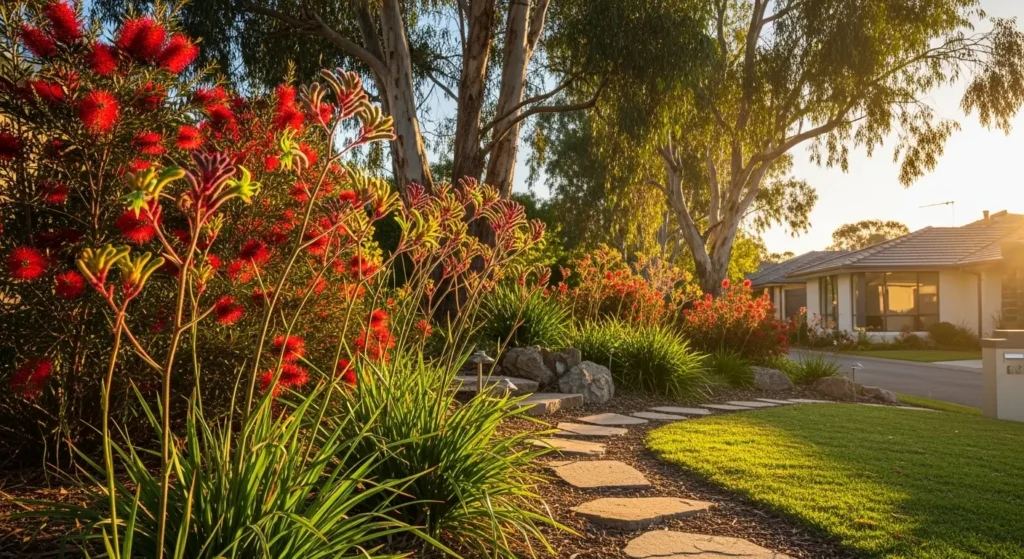
Native Australian plants are among the best choices for front yard landscaping because they are naturally adapted to local climates and require less water than exotic species. Plants such as kangaroo paw, grevillea, bottlebrush, and banksia provide colorful blooms while attracting birds and pollinators. These plants create a vibrant landscape filled with texture, movement, and seasonal interest. A carefully planned native garden can remain attractive year-round while requiring significantly less maintenance than traditional lawns and flower beds.
Beyond their practical advantages, native gardens create a strong connection to Australia’s natural environment. Combining flowering shrubs with decorative grasses and small trees can create layered landscaping that feels organic and balanced. Stone pathways, natural mulch, and rustic edging enhance the appearance while helping retain soil moisture. This approach is ideal for homeowners seeking an environmentally friendly front yard that looks beautiful in every season.
2. Modern Gravel Front Yard:
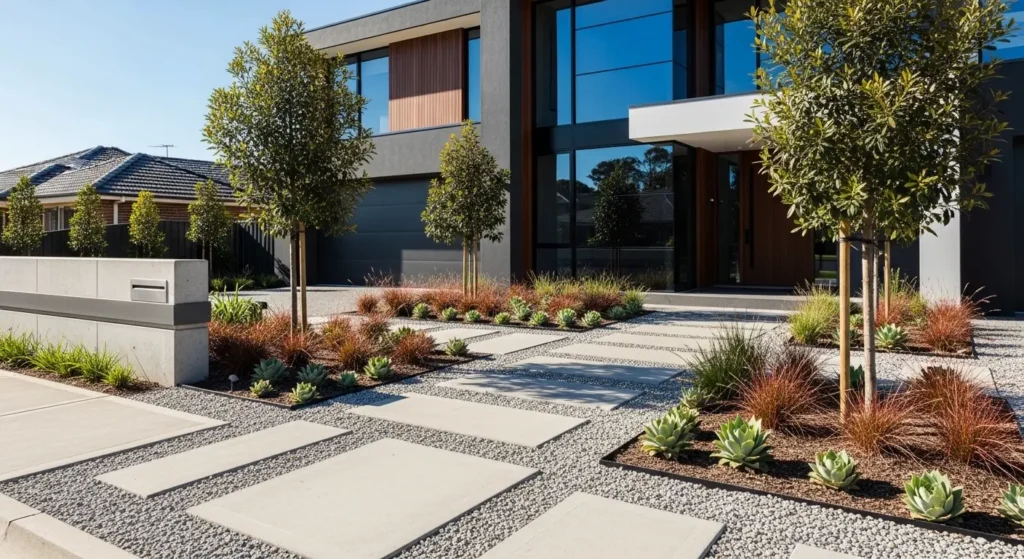
A gravel front yard offers a sleek and modern appearance while reducing maintenance requirements. Decorative gravel comes in various colors and sizes, allowing homeowners to customize the overall look. Large concrete stepping stones placed across gravel create attractive pathways that guide visitors toward the entrance. This design minimizes mowing and watering while maintaining a polished appearance throughout the year.
Many Australian homeowners favor gravel landscapes because they handle dry conditions exceptionally well. Combining gravel with drought-resistant plants such as agaves, succulents, and ornamental grasses creates a contemporary aesthetic that complements modern architecture. Strategic placement of feature rocks and landscape lighting can further elevate the design. The result is a sophisticated front yard that remains attractive while conserving water and reducing upkeep costs.
3. Coastal-Inspired Front Yard:
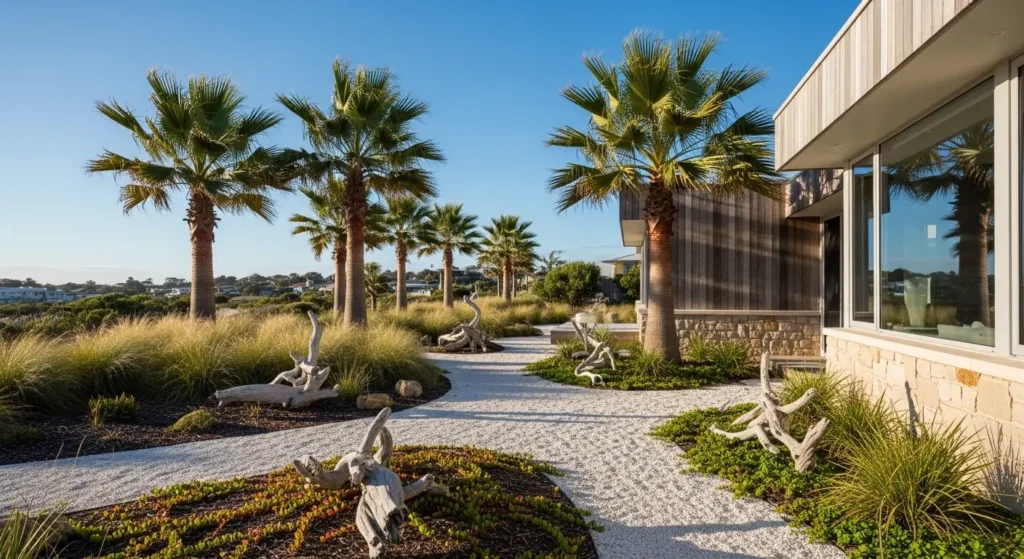
Coastal landscaping captures the relaxed beauty of Australia’s beachside regions. Soft ornamental grasses, palms, white gravel, and weathered timber accents create a welcoming atmosphere that feels connected to the ocean. Even homes located far from the coast can benefit from this breezy and refreshing style. The combination of light-colored materials and flowing plant forms creates an open and inviting appearance.
The success of coastal landscaping often comes from keeping the design simple and uncluttered. Native coastal plants are particularly effective because they tolerate heat, wind, and occasional dry periods. Incorporating natural textures through driftwood-inspired elements, stone borders, and sandy-colored pathways helps complete the look. This style works exceptionally well with modern homes, Hamptons-inspired architecture, and classic Australian beach houses.
4. Front Yard With Decorative Stone Pathways:
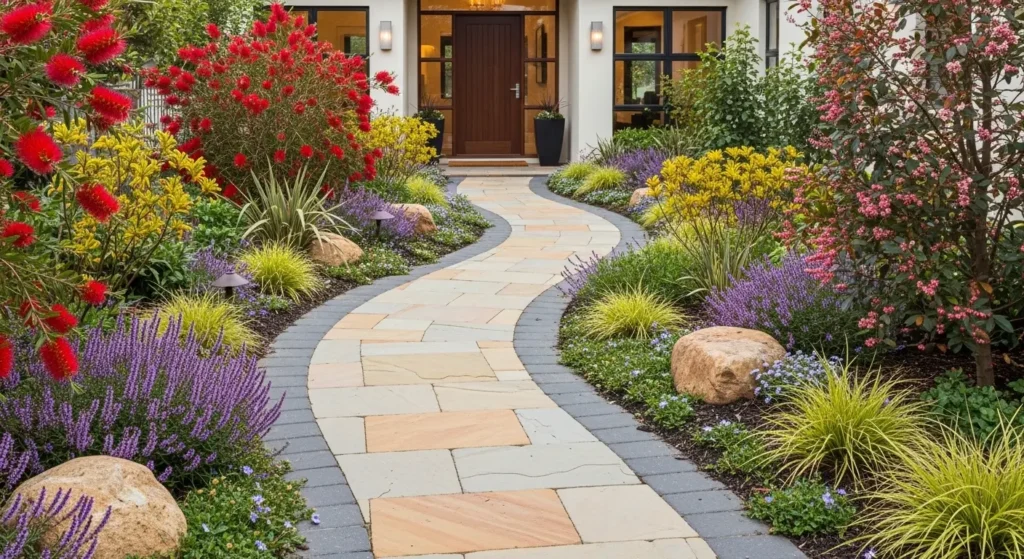
A beautifully designed pathway can become the focal point of an entire front yard. Natural stone pathways create visual interest while guiding guests toward the home’s entrance. Curved designs often feel more inviting than straight paths because they introduce movement and softness into the landscape. Stones in varying shapes and colors can add character while complementing surrounding plants and architectural elements.
Pairing stone pathways with carefully selected plantings enhances their impact. Low-growing shrubs, flowering perennials, and ornamental grasses can soften pathway edges and create a layered appearance. Solar lighting installed along the path improves safety while highlighting landscape features after dark. This landscaping approach combines practicality and elegance, making it suitable for both traditional and contemporary Australian homes.
5. Drought-Tolerant Front Yard Landscaping:
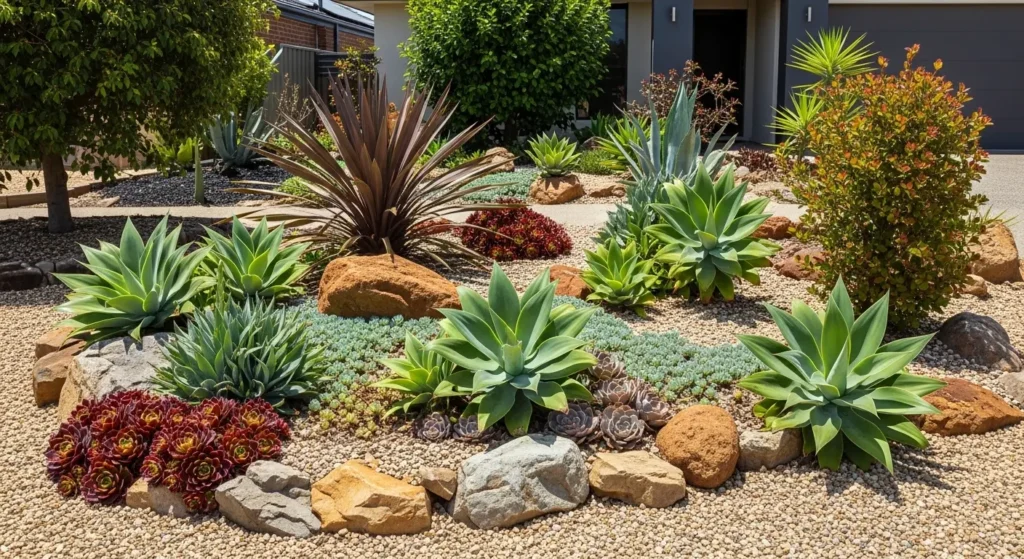
Water-efficient landscaping has become increasingly important across Australia due to changing weather conditions and water conservation efforts. Drought-tolerant front yards use plants that thrive with minimal irrigation while maintaining attractive colors and textures. Succulents, agaves, yucca plants, and native shrubs provide visual appeal without requiring constant watering. Decorative gravel and mulch help reduce evaporation while enhancing the overall design.
This style proves that sustainability does not require sacrificing beauty. By incorporating different plant heights, leaf shapes, and colors, homeowners can create visually dynamic landscapes that remain attractive throughout the year. Feature rocks and architectural plants add sculptural interest, while thoughtful spacing allows each element to stand out. A drought-tolerant front yard reduces maintenance, conserves resources, and provides lasting curb appeal.
6. Australian Cottage-Style Front Yard:
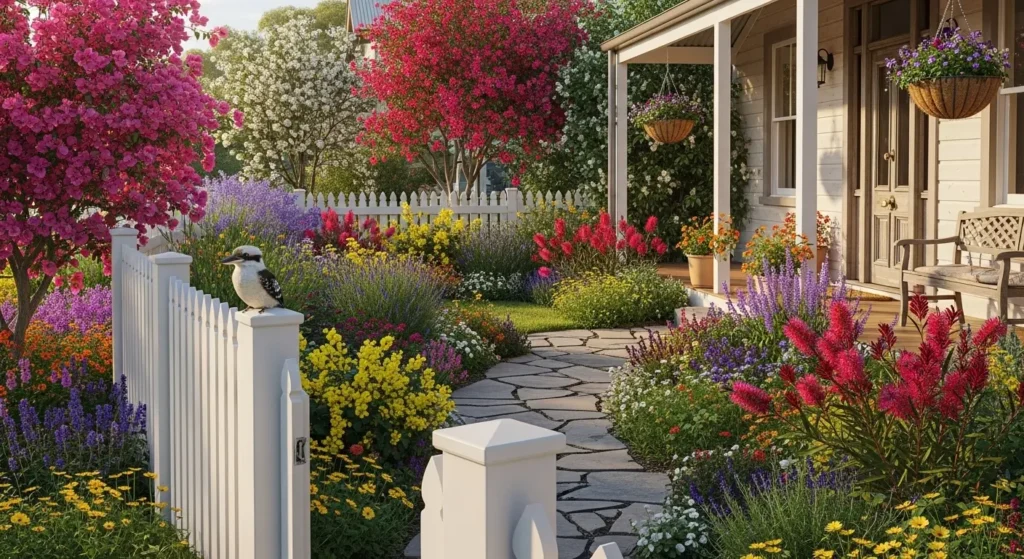
A cottage-style front yard brings warmth, charm, and character to a home. This landscaping approach focuses on abundant flowers, layered planting beds, and a relaxed design that feels inviting rather than overly structured. Popular choices include lavender, daisies, salvias, and native flowering shrubs mixed together to create a colorful display. Curved garden beds and winding pathways add a sense of discovery while enhancing the visual appeal of the property.
The beauty of cottage gardens lies in their ability to look naturally established over time. White picket fences, decorative gates, and rustic garden accessories complement the soft planting design. Although the style appears informal, careful planning ensures plants bloom at different times throughout the year. The result is a front yard that feels vibrant, welcoming, and full of life while providing excellent curb appeal.
7. Front Yard With Raised Garden Beds:
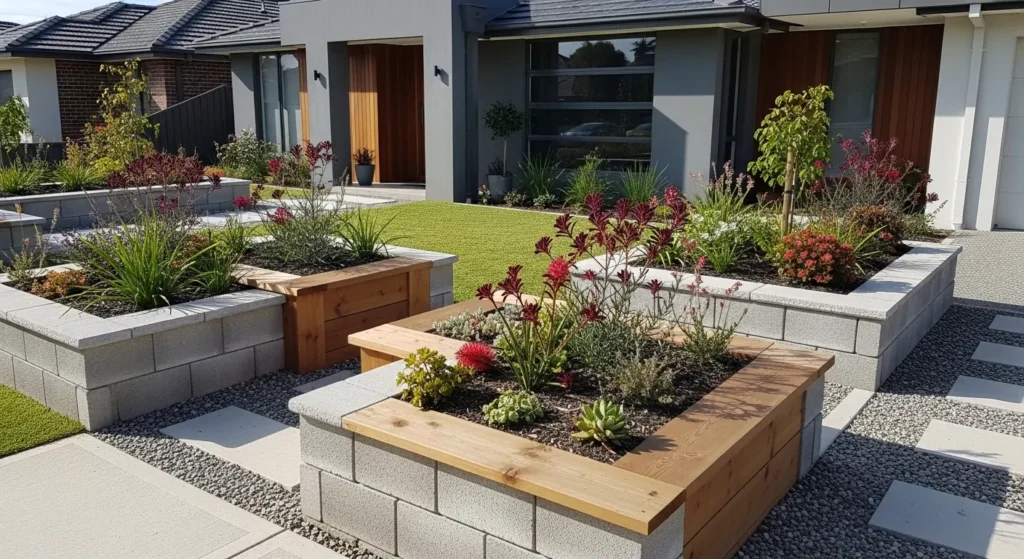
Raised garden beds create structure and definition within a front yard landscape. They allow homeowners to control soil quality, improve drainage, and showcase plants at different heights. Timber, stone, or concrete planters can be customized to suit both modern and traditional homes. These beds make landscaping appear organized and intentional while adding depth to the overall design.
In addition to their aesthetic benefits, raised beds simplify maintenance by reducing weed growth and improving accessibility. Native shrubs, ornamental grasses, and colorful flowers thrive in these elevated spaces. By arranging beds strategically around pathways and entrances, homeowners can create focal points that draw attention toward the house. This approach combines practicality with elegant landscaping design.
8. Low-Maintenance Rock Garden:
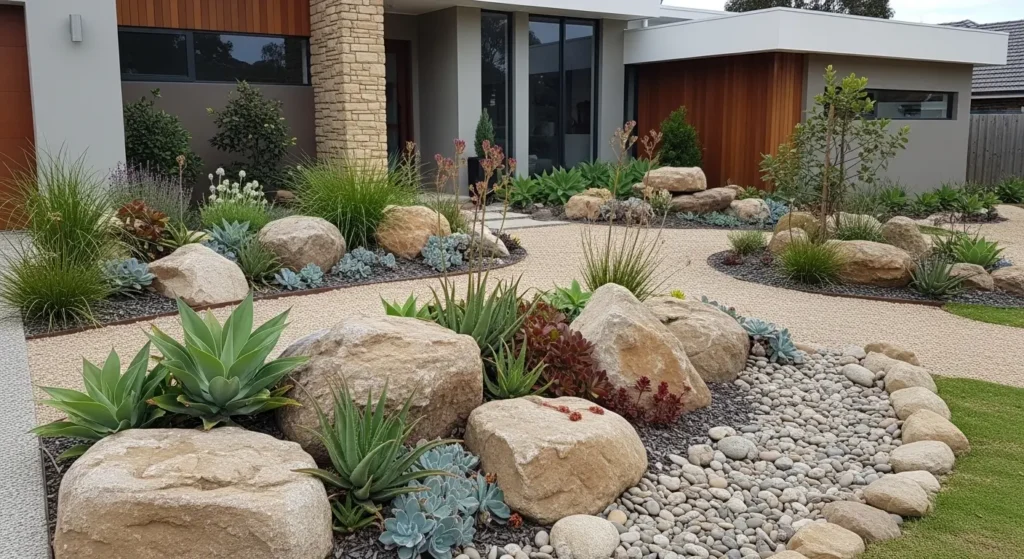
Rock gardens are perfect for Australian climates because they require minimal water and maintenance. Large decorative boulders provide structure while smaller stones create texture and contrast. Plants such as succulents, native grasses, and low-growing shrubs thrive among the rocks, producing a natural and visually appealing landscape. The combination of stone and greenery creates year-round interest without demanding constant upkeep.
A successful rock garden incorporates varying sizes and shapes of stones to mimic natural landscapes. Strategic placement of plants softens hard surfaces and introduces color throughout the design. This landscaping style is particularly effective for sloped front yards or areas where grass struggles to grow. The result is a sophisticated and sustainable outdoor space that remains attractive throughout the seasons.
9. Front Yard With Feature Tree:
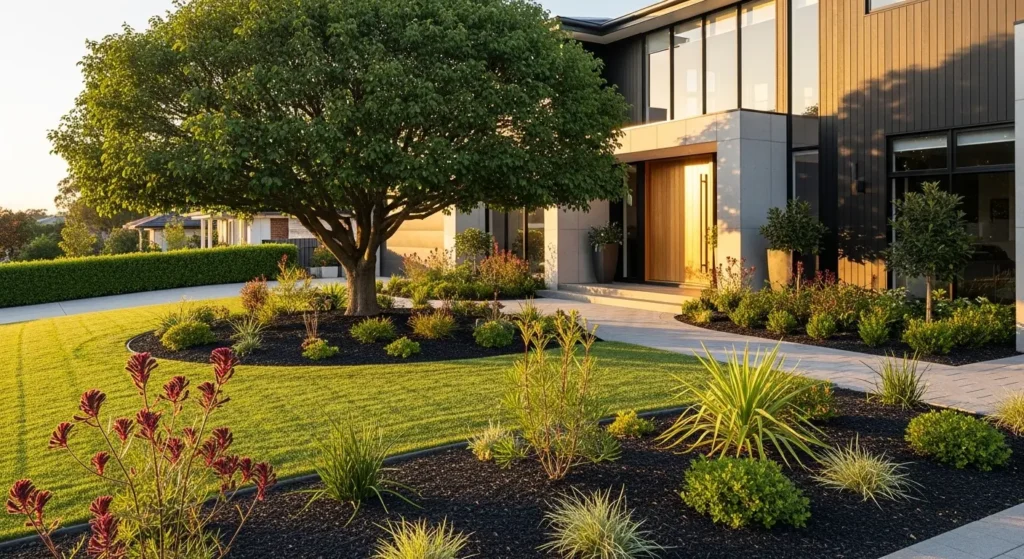
A carefully selected feature tree can instantly transform a front yard by providing height, shade, and visual impact. Trees such as ornamental eucalyptus, crepe myrtle, or native flowering species serve as natural focal points that anchor the entire landscape design. Positioned strategically near pathways or entrances, they create a welcoming and balanced appearance.
As the tree matures, it adds character and long-term value to the property. Surrounding the base with mulch, decorative rocks, or flowering plants enhances its presence while creating a finished look. A feature tree also attracts birds and beneficial wildlife, contributing to a healthier garden ecosystem. This simple yet powerful landscaping element can elevate even the most modest front yard.
10. Contemporary Front Yard With Concrete Elements;
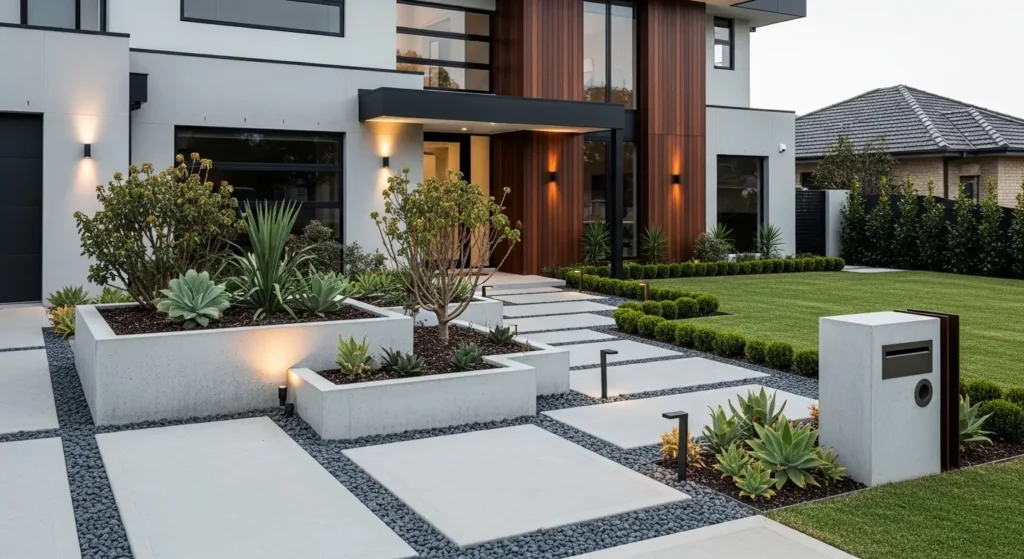
Contemporary landscaping often incorporates concrete features to create clean lines and modern sophistication. Concrete pathways, retaining walls, and planters provide structure while complementing modern architecture. Their neutral tones pair beautifully with greenery, allowing plants to become the focal point without overwhelming the design.
The combination of concrete and drought-tolerant plants creates a striking contrast between hard and soft elements. Ornamental grasses, agaves, and sculptural shrubs work particularly well in contemporary settings. By maintaining a simple color palette and uncluttered layout, homeowners can achieve a front yard that feels elegant, spacious, and highly functional.
11. Native Grass Landscaping:
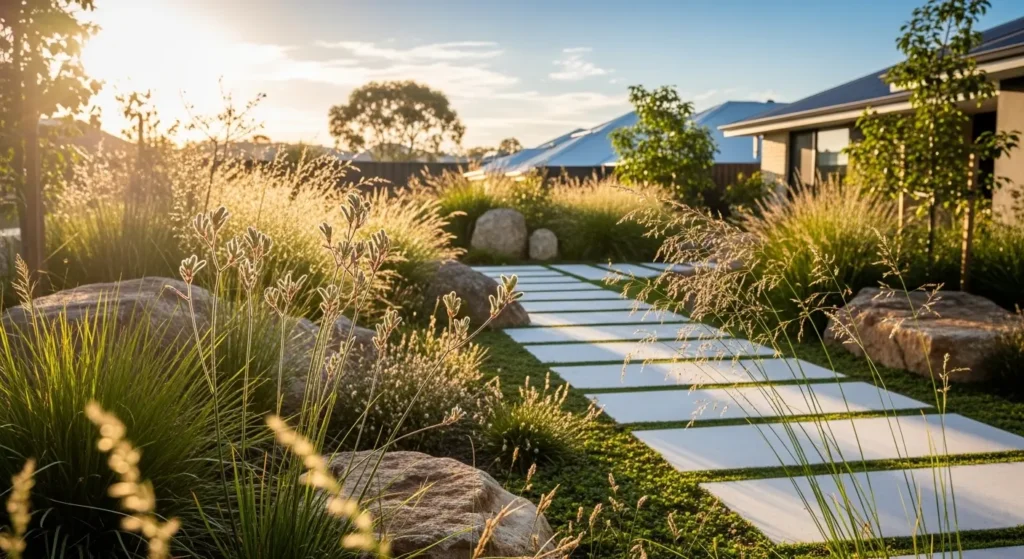
Native grasses bring movement and texture to front yard landscapes. Their soft forms sway gently in the breeze, creating a dynamic appearance that changes throughout the day. Species adapted to Australian conditions require little water and maintenance while remaining attractive across multiple seasons.
Combining grasses with feature rocks, native shrubs, and winding pathways creates a naturalistic design that feels connected to the surrounding environment. Their varying heights add depth and visual interest without creating clutter. This landscaping style is particularly suitable for homeowners seeking a relaxed and environmentally friendly front yard.
12. Front Yard With Decorative Mulch:
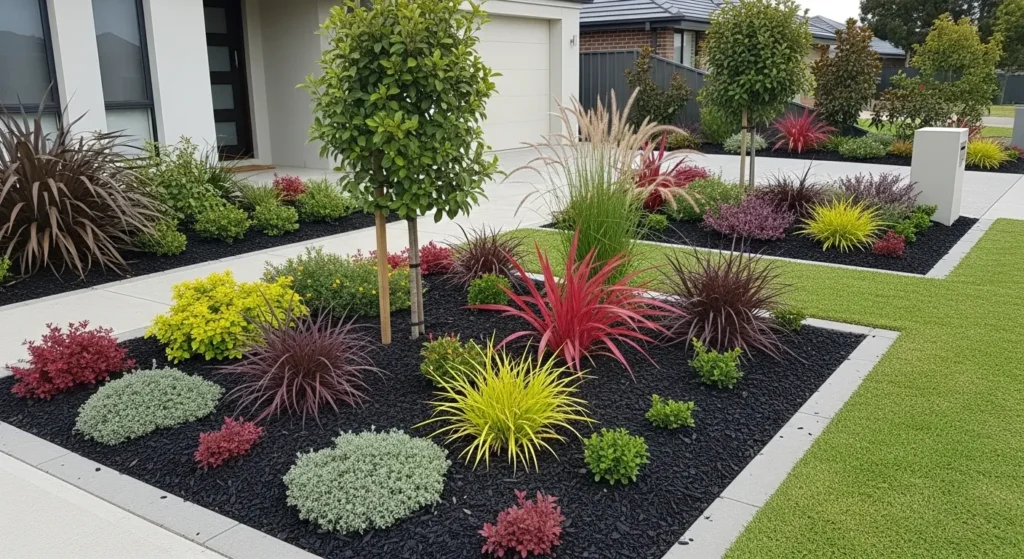
Decorative mulch is an affordable way to enhance the appearance of garden beds while improving plant health. Organic mulch helps retain soil moisture, suppress weeds, and regulate soil temperature. Available in various colors and textures, it provides a polished backdrop that makes plants stand out.
Mulched garden beds create visual consistency throughout the landscape. Pairing mulch with native plants and carefully defined edging results in a neat and professional appearance. Beyond aesthetics, mulch contributes to healthier soil over time, making it a practical and attractive landscaping solution.
13. Front Yard With Natural Stone Retaining Walls:
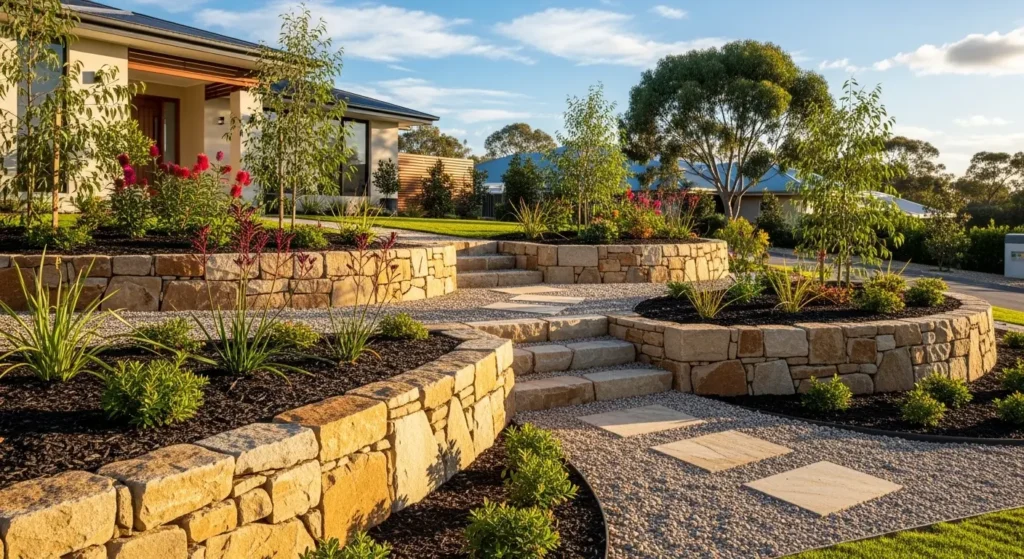
Retaining walls are both functional and decorative, especially on sloped properties. Natural stone walls create a timeless appearance while preventing soil erosion and improving drainage. Their texture and earthy tones blend seamlessly with surrounding plants and outdoor features.
Terraced garden beds created by retaining walls provide opportunities for layered planting. Different levels can showcase a variety of shrubs, flowers, and ornamental grasses, adding depth to the landscape. This design not only solves practical challenges but also creates a visually striking front yard.
14. Succulent Showcase Garden:
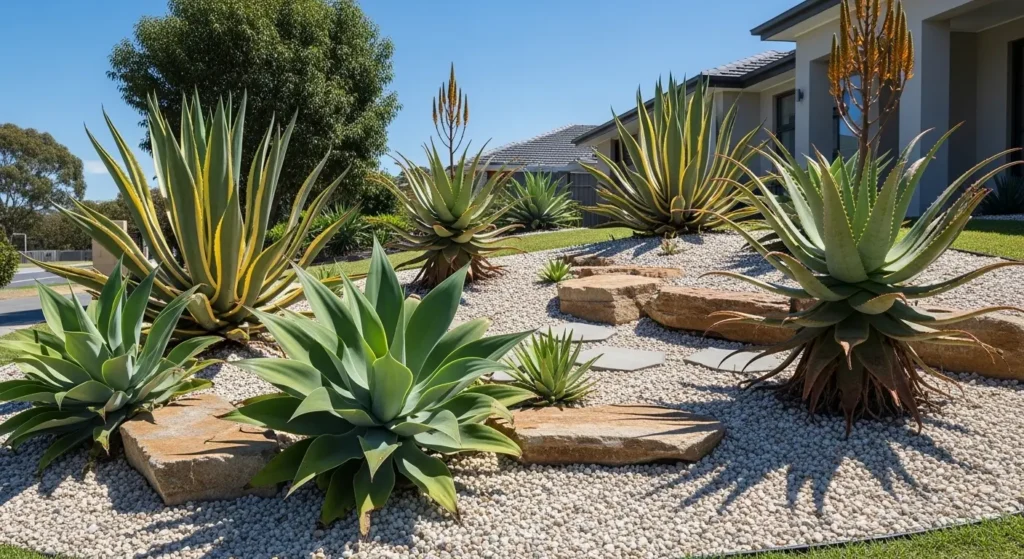
Succulents have become increasingly popular due to their unique shapes and exceptional drought tolerance. A front yard dedicated to succulents can appear both modern and artistic, featuring a variety of colors, forms, and textures. Gravel and stone accents complement these plants while reinforcing a low-maintenance design.
Large agaves, aloes, and echeverias serve as focal points, while smaller varieties fill spaces between them. The result is a landscape that remains attractive throughout the year with minimal water requirements. Succulent gardens are ideal for homeowners seeking bold visual impact and easy care.
15. Front Yard With Water-Wise Lawn Alternatives:
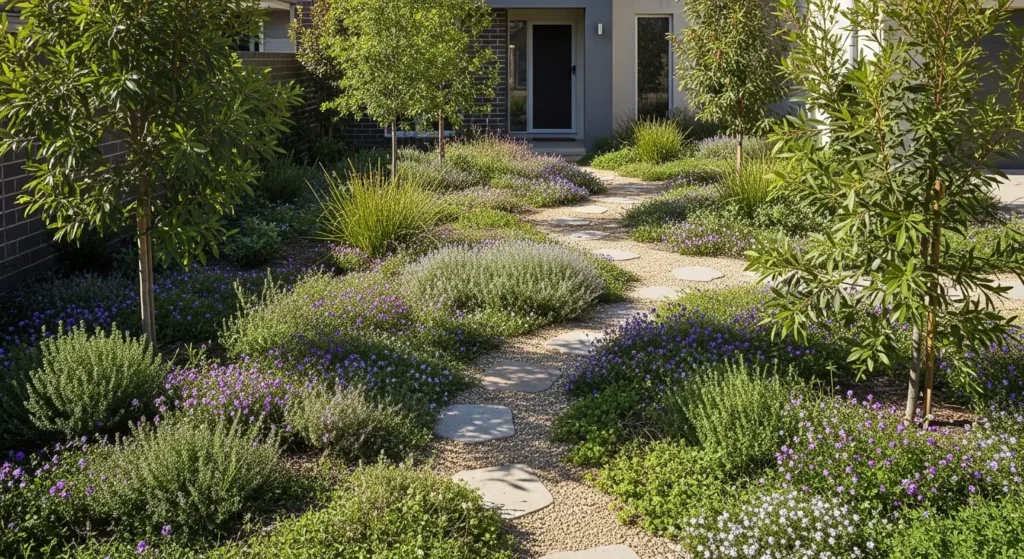
Traditional lawns often require significant water and maintenance. Replacing sections of grass with drought-tolerant ground covers offers a more sustainable alternative. Plants such as native creeping species provide greenery while reducing irrigation needs.
These alternatives create soft, attractive surfaces that complement garden beds and pathways. Combined with native shrubs and decorative stones, they form a cohesive landscape that looks lush without demanding constant attention. This approach is increasingly popular in Australian residential design.
16. Tropical Australian Front Yard:
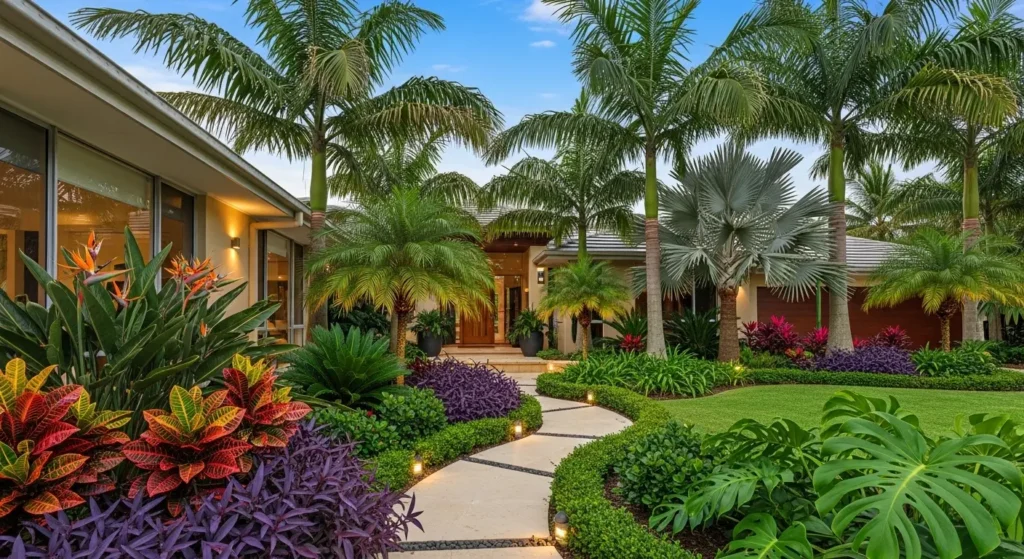
Tropical landscaping creates a resort-inspired atmosphere filled with lush greenery and dramatic foliage. Large-leaf plants, palms, and layered vegetation provide a sense of abundance and privacy. This style works particularly well in warmer Australian regions.
By combining dense planting with natural stone and timber features, homeowners can create a relaxing environment that feels like a private retreat. Strategic lighting enhances the dramatic foliage after sunset, adding another dimension to the landscape.
17. Front Yard With Garden Lighting:
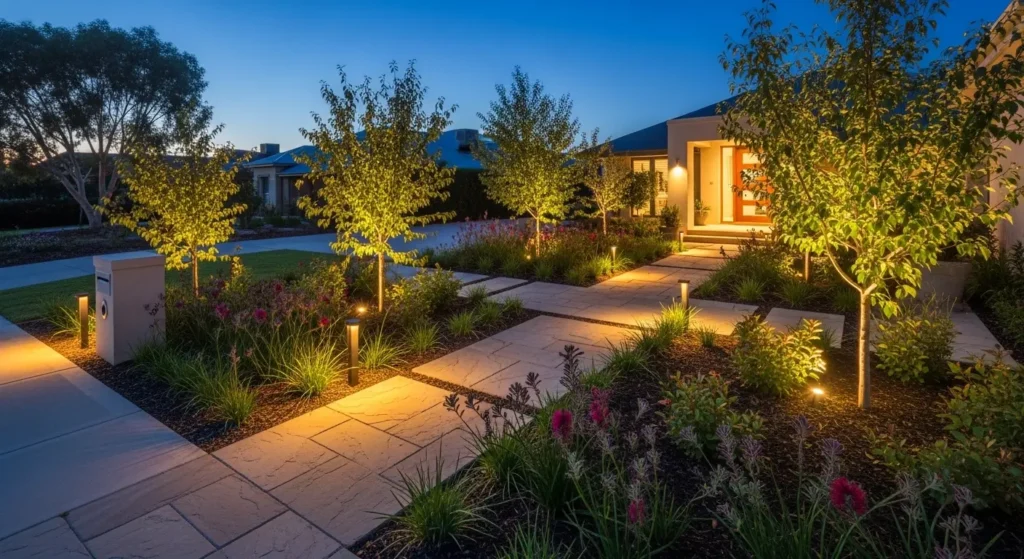
Outdoor lighting dramatically enhances front yard appearance and functionality. Path lights, uplights, and feature lighting highlight architectural details and landscape elements after dark. Well-planned lighting improves safety while creating a welcoming atmosphere.
Lighting can transform ordinary landscaping into a visually stunning nighttime display. Trees, pathways, and garden beds become focal points, extending the enjoyment of outdoor spaces beyond daylight hours. This investment significantly boosts curb appeal and property value.
18. Front Yard With Mixed Textures:
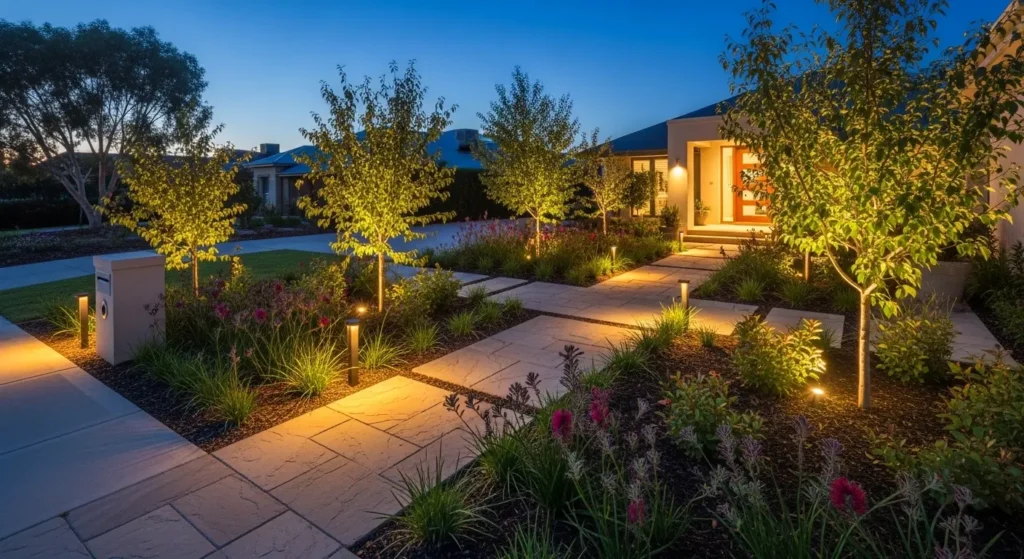
Combining multiple materials adds richness and visual interest to a front yard. Timber, stone, gravel, and greenery each contribute unique textures that make the landscape feel layered and sophisticated. The contrast between natural materials creates a balanced and inviting design.
Careful repetition of materials throughout the landscape ensures cohesion while preventing the design from appearing cluttered. This approach works well for homeowners seeking a custom, designer-inspired appearance that stands out from neighboring properties.
19. Front Yard With Circular Entry Garden:
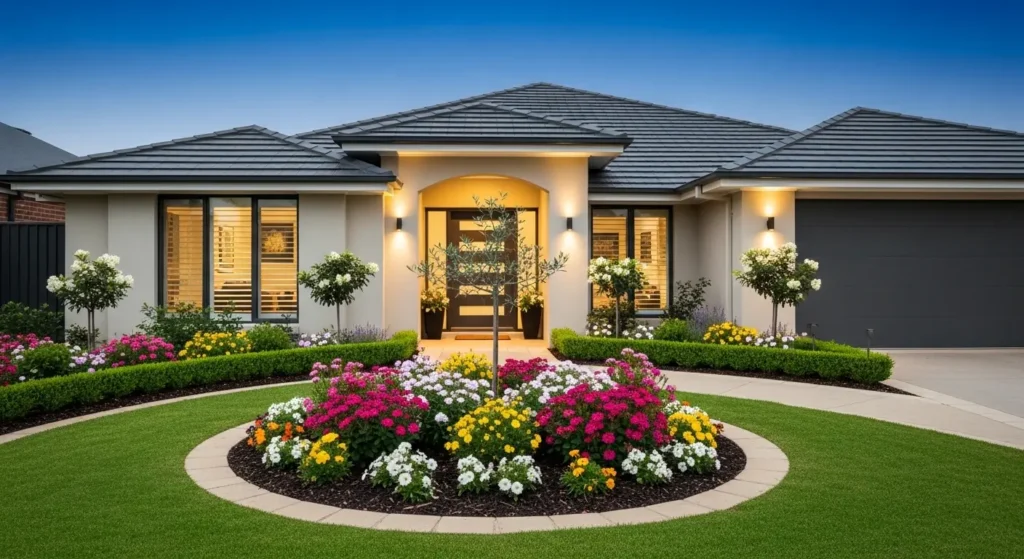
Circular garden beds introduce a sense of symmetry and elegance to front yard landscapes. Positioned near entrances or driveways, they create a focal point that immediately attracts attention. Flowering shrubs, ornamental grasses, and feature plants work beautifully within these designs.
The curved shape softens architectural lines and adds visual flow to the property. Whether formal or informal, circular gardens provide structure while showcasing seasonal color and texture. They are especially effective in larger front yards where space allows for bold landscaping features.
20. Luxury Australian Front Yard Design:
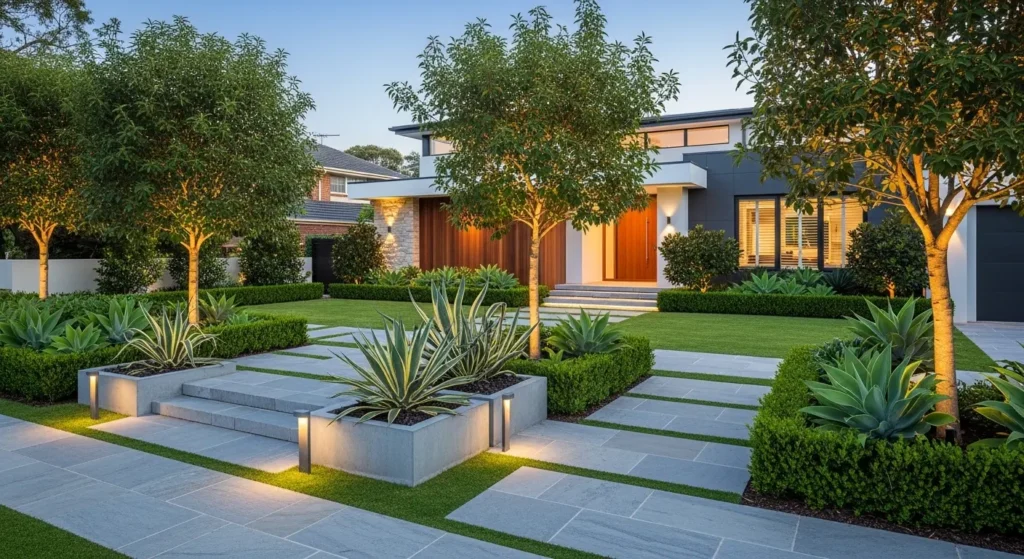
Luxury front yard landscaping focuses on creating a memorable first impression through high-quality materials and thoughtful design. Premium stone, mature plants, architectural features, and professional lighting combine to create a sophisticated appearance. Every element is selected to contribute to a cohesive and polished look.
While luxury landscapes often feature larger budgets, the key is attention to detail rather than excessive decoration. Clean lines, balanced planting, and carefully chosen focal points ensure timeless appeal. The result is a front yard that elevates the entire property and showcases exceptional curb appeal.
FAQ’s:
What are the best plants for Australian front yards?
Native plants such as kangaroo paw, grevillea, bottlebrush, banksia, and native grasses are excellent choices because they are adapted to local climates and require less maintenance.
How can I create a low-maintenance front yard?
Use drought-tolerant plants, decorative gravel, mulch, and native species that require minimal watering and pruning.
What is the most budget-friendly landscaping idea?
Decorative mulch, gravel pathways, and native plant gardens are affordable options that provide excellent visual impact.
Are native gardens better for Australian climates?
Yes. Native plants generally require less water, attract local wildlife, and thrive in Australian conditions.
How do I increase front yard curb appeal?
Focus on attractive pathways, healthy plants, feature lighting, defined garden beds, and a clean, well-maintained design.
Conclusion
Australian front yard landscaping combines beauty, practicality, and sustainability. Whether you prefer a native garden, modern gravel design, tropical retreat, or luxurious entryway, there are countless ways to enhance your home’s curb appeal. By selecting climate-appropriate plants, incorporating attractive landscaping, and creating a balanced design, you can transform your front yard into a welcoming outdoor space that remains beautiful throughout the year.These 20 Australian front yard ideas provide inspiration for every style, budget, and property size, helping you create an entrance that truly stands out.