 Muhammad Muaz
 In a world of constant visual noise and overwhelming design trends, minimalist landscaping offers a refreshing alternative that proves less truly is more. Minimalist front yards strip away unnecessary elements to create spaces of pure elegance, clarity, and purpose. This philosophy isn’t about having an empty or boring yard – it’s about being intentional with every plant, material, and design element, ensuring that nothing exists without reason or beauty. A well-designed minimalist front yard becomes a serene retreat that welcomes you home while impressing visitors with its sophisticated simplicity.
The beauty of minimalist landscaping lies in its versatility and timelessness. Unlike trend-driven designs that look dated within years, minimalist yards remain eternally elegant and relevant. Whether you prefer contemporary aesthetics, Scandinavian simplicity, Japanese-inspired tranquillity, or modern minimalism, this design philosophy adapts to your vision while maintaining core principles: clean lines, limited colour palettes, strategic plant placement, and purposeful hardscaping. Throughout this guide, you’ll discover 23 proven minimalist front yard ideas that create stunning curb appeal while requiring less maintenance than traditional gardens. These approaches range from completely plant-free modern hardscape designs to thoughtfully curated plantings that demonstrate restraint and intention. Get ready to discover how minimalism can transform your front yard into a peaceful, beautiful space that reflects your values and style.
1. Clean Linear Hardscape Design:
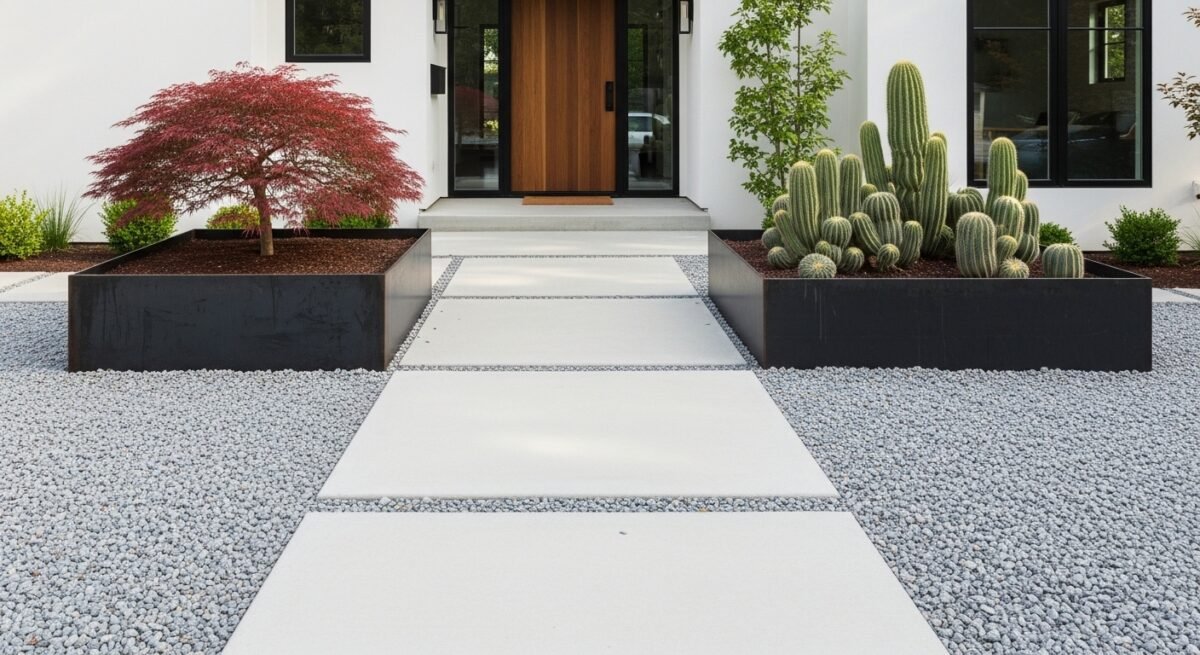
A minimalist hardscape foundation creates the perfect canvas for a simplified front yard. Clean lines, geometric shapes, and strategic material selection form the backbone of minimalist design, where every paving stone, border edge, and pathway serves both aesthetic and functional purposes. The key to successful linear landscaping is restraint – choosing one or two high-quality materials rather than mixing multiple textures, keeping colour palettes neutral, and allowing space to breathe. Straight lines create visual calm and organise space efficiently, making yards feel larger and more intentional. The beauty of hardscape-focused minimalism is that it requires minimal maintenance while maintaining maximum visual impact, creating landscapes that look equally stunning in any season.
Implementing clean hardscape design begins with careful planning and strategic material selection. Consider natural stone in neutral tones, composite materials in grays or blacks, or high-quality concrete with a smooth finish. Plan pathways with clear direction and purpose, positioning them to guide visitors naturally through your space. Create raised geometric beds with sharp edges that contrast beautifully with surrounding surfaces. Allow substantial open areas of hardscape between plantings – negative space is crucial to minimalist design. Position benches or focal points strategically to create gathering areas without clutter. The result is a sophisticated landscape where every element serves multiple purposes and contributes to overall elegance and functionality.
2. Monochromatic Plant Palette:
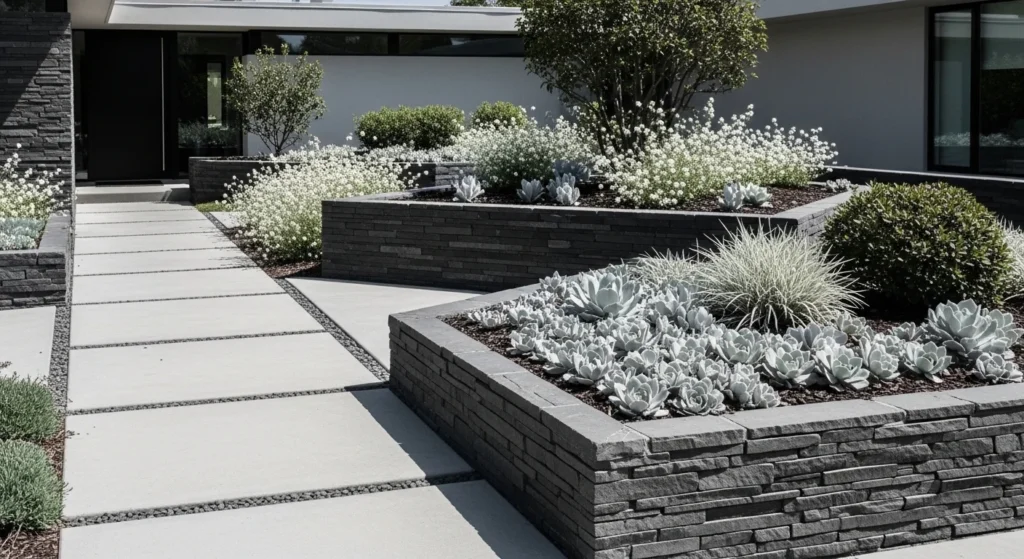
A monochromatic plant palette represents the ultimate minimalist approach to gardening – selecting plants in a single color or very limited color range creates extraordinary visual coherence and sophistication. White gardens are particularly popular in minimalism, featuring white-blooming plants combined with silvery or gray foliage for visual interest without color variation. The advantage of monochromatic planting is that it creates a unified, peaceful aesthetic that feels intentional and designed rather than random. Viewers’ eyes rest comfortably on a single color palette rather than being drawn in multiple directions, creating a calming effect that reflects minimalist principles. The challenge – and the beauty – of monochromatic design is selecting plants with varying heights, textures, and bloom times to create visual interest within a severely limited color scheme.
Creating monochromatic gardens requires careful plant research and selection. For white gardens, combine white-blooming plants like hydrangeas, roses, gardenias, or Japanese anemones with silvery-foliage varieties such as dusty miller, Artemis, or silvery serums. Vary heights and textures while maintaining colour discipline – structural evergreens in Gray-green tones contrast beautifully with delicate white flowers. Consider bloom times to ensure colour throughout the season; if spring blooms finish, reliable white bloomers sustain interest into summer and fall. Green foliage naturally grounds the palette without adding colour, creating unexpected depth. The result is a landscape so serene and sophisticated that the single-colour discipline becomes its greatest asset, proving that restraint creates power in design.
3. Negative Space as Design Element:
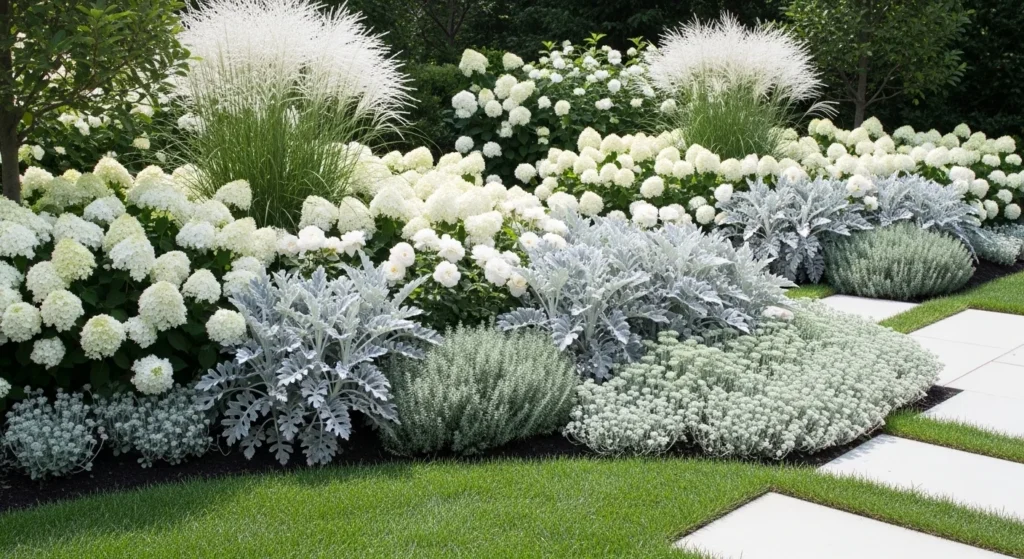
In minimalist design, what you don’t plant is as important as what you do. Negative space – empty areas of hardscape, gravel, or mulch – creates visual rest and allows individual plants to be appreciated fully rather than competing for attention. Many gardeners struggle with leaving space empty, feeling they must fill every area with plants or materials. Minimalism celebrates emptiness as essential to the design. Large expanses of neutral-colored hardscape or gravel focus attention on strategically placed plantings, making each plant a meaningful element rather than one among many. This approach reduces visual clutter, increases maintenance simplicity, and creates peaceful, contemplative spaces that feel larger and more sophisticated than crowded landscapes.
Implementing negative space requires confidence in restraint. Plan your landscape with intention, identifying focal points and pathways, then intentionally leaving the remaining areas open. A single sculptural plant positioned against a backdrop of empty gravel becomes a statement piece. Multiple empty quadrants with a single specimen in each creates rhythm and order. Allow hardscape to be visible rather than covering every surface with plants. The psychological effect is profound – empty space reads as luxury and intersectionality rather than neglect or emptiness. This approach dramatically reduces planting and maintenance requirements while creating landscapes that feel uniquely peaceful and sophisticated. Embrace the emptiness as your design’s strongest feature.
4. Japanese Zen Garden Influence:
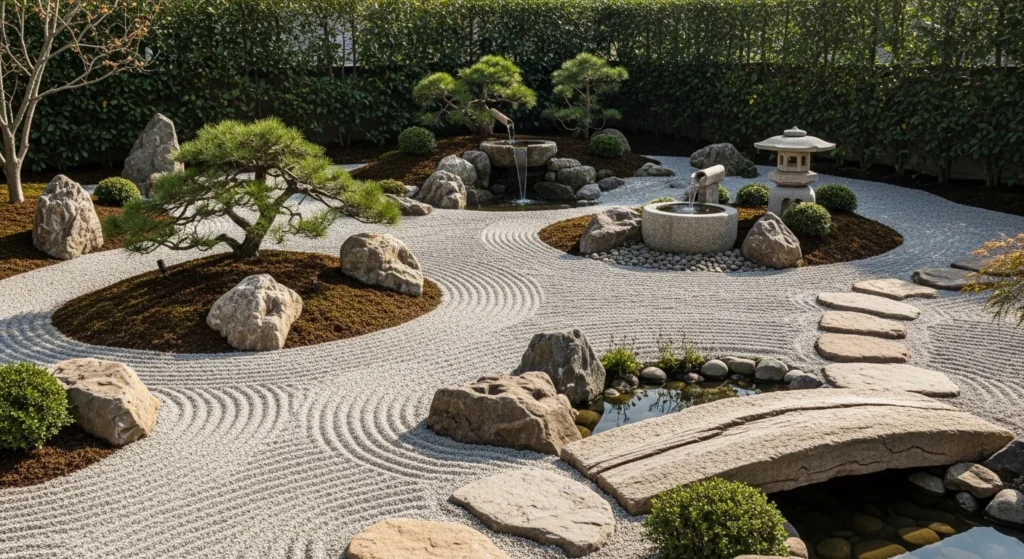
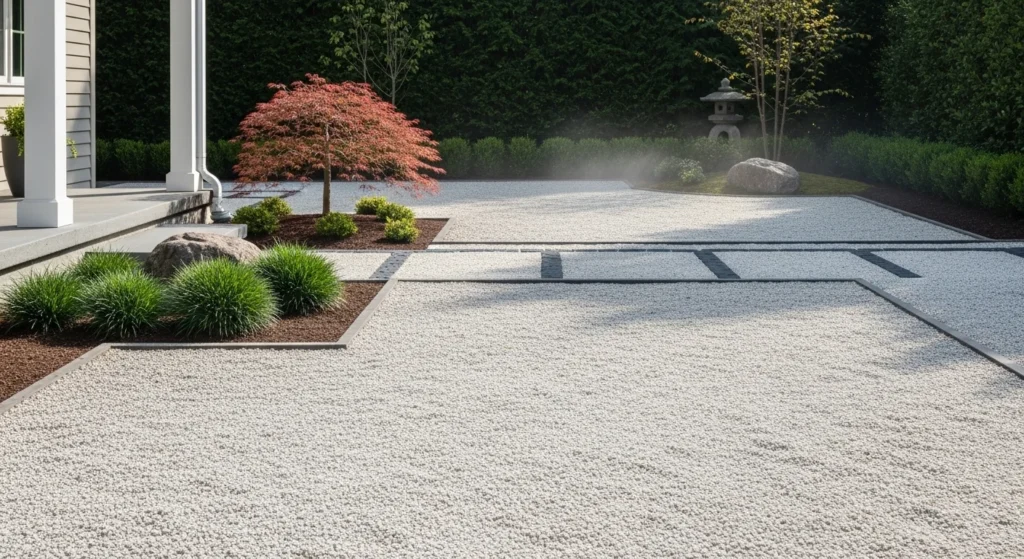
Japanese Zen gardens represent centuries of refined minimalist philosophy, creating peaceful, contemplative spaces using extremely limited materials. Gravel or sand carefully raked into patterns represents water and movement; rocks symbolise permanence and islands; plants are carefully selected specimens rather than dense plantings. The principles of wabi-sabi (finding beauty in impermanence) and ma (the importance of empty space) are fundamental to Zen design. Bringing these principles into contemporary front yards creates landscapes that feel profoundly peaceful while requiring minimal maintenance. A Zen-inspired front yard becomes a daily meditation, where careful observation reveals beauty in simplicity and restraint.
Creating Zen-inspired minimalist landscapes begins with understanding Japanese design principles. Select one specimen plant – perhaps a carefully pruned Japanese maple or sculptural conifer – rather than multiple plantings. Incorporate natural stone in considered placement; rocks should appear as if positioned by nature over centuries. Rake gravel or sand in thoughtful patterns that guide the eye and suggest water’s movement. Include a water element if possible – a simple stone basin or small recirculating fountain – representing the importance of water in life. Position stepping stones thoughtfully, creating subtle pathways and focal points. Every element should have purpose and meaning. The result is a landscape that becomes more beautiful the longer you observe it, revealing layers of intentional design and philosophical depth.
5. Sculptural Specimen Plants:
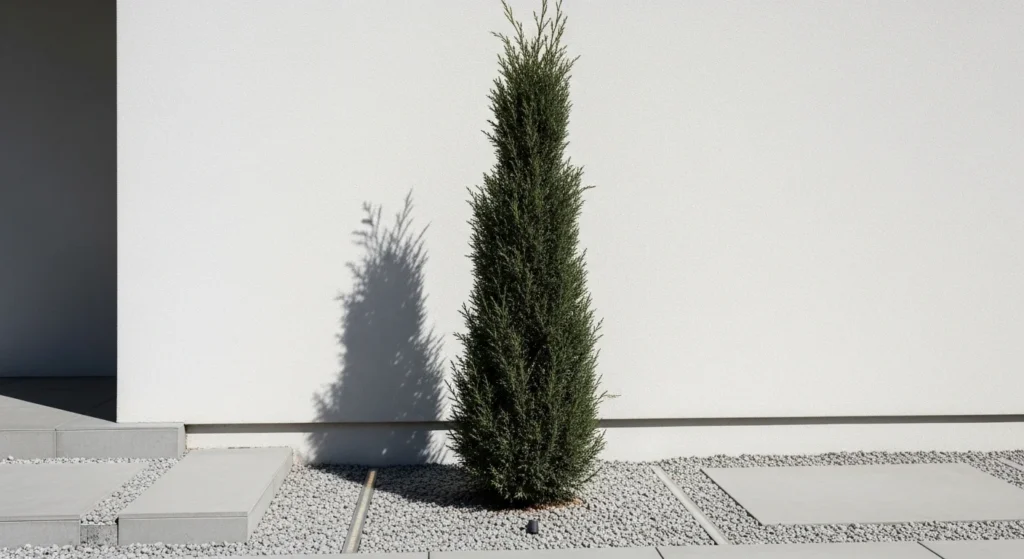
In minimalist design, individual plants transition from background elements to featured artwork. A sculptural specimen plant – selected for distinctive form rather than blooms or abundance – becomes the focal point of an entire landscape. Columnar conifers with striking vertical lines, weeping forms with graceful draping branches, or trees with unique branching patterns create drama and interest without floral colour or density. Positioning a single sculptural plant against a backdrop of neutral hardscape emphasis its form and creates genuine artistic composition. This approach transforms plant selection from abundance-focused to quality-focused, where a single exceptional specimen is valued more highly than dozens of ordinary plants.
Selecting and positioning sculptural specimens requires careful consideration. Choose plants with distinctive forms that create visual interest year-round – not just during bloom season. Columnar plants like Italian cypress or pencil juniper create strong vertical lines; weeping forms like weeping cherry or weeping blue spruce create soft, graceful shapes; multi-trucked forms create sculptural branching patterns. Position specimens where they’re highlighted – against a plain background, positioned as a focal point visible from your home’s entrance, or back-lit with landscape lighting for dramatic effect. Ensure adequate space around your specimen so nothing competes for attention. Minimal under-planting keeps focus on the featured form. The result is a landscape that functions as living art, where a single plant commands admiration and creates the entire design’s focal point.
6. Minimalist Color Palette:
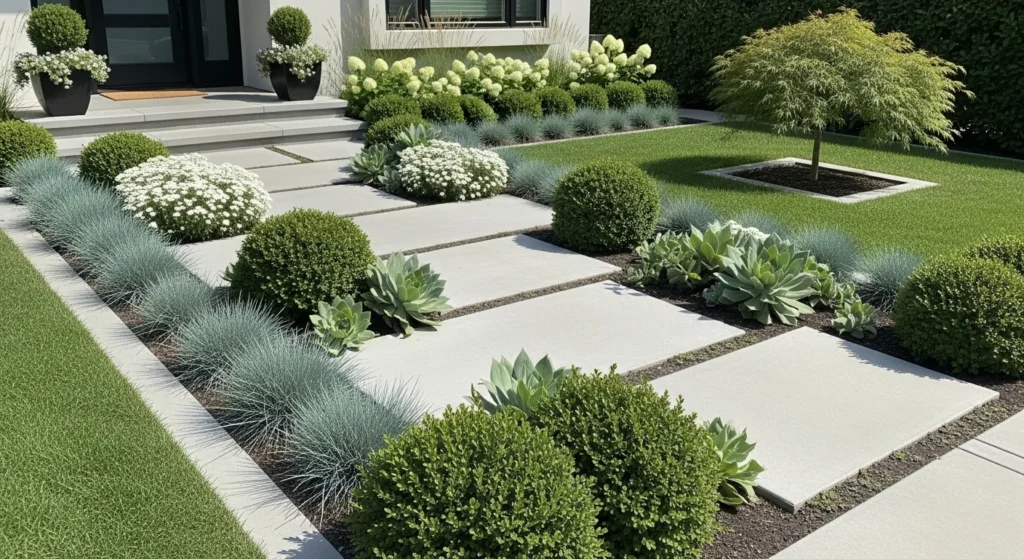
Minimalist landscaping restricts colour palettes to two or three carefully selected hues, creating sophisticated harmony and visual coherence. Rather than displaying the full spectrum of nature’s colours, minimalist design selects complementary shades and limits selections strictly to them. A green-and-white palette features white-blooming plants and silver-Gray foliage combined with true greens and deep evergreen tones. Gray-and-black designs incorporate charcoal landscaping, dark-foliage plants, and silvery accents. Adding a single accent colour – perhaps muted blue-Gray or soft sage – provides subtle variety without breaking the minimalist aesthetic. This severe colour discipline creates extraordinary visual sophistication and calm, proving that colour restriction increases rather than decreases design impact.
Implementing a minimalist colour palette requires commitment and discipline. Begin by selecting your primary colours and committing to them throughout the landscape. Research plant varieties available in your selected palette, discovering options you might otherwise have missed. Consider seasonal changes – will fall foliage disrupt your scheme? How will winter dormancy affect the palette? Select landscaping materials that harmonise with your colour scheme; choosing neutrals (grays, blacks, whites, natural stone) ensures hardscape supports rather than competes with plant colours. Restrict accent plantings and flowers to your selected palette; resist the temptation to add “just one” plant in a different colon. The discipline required to maintain colour restriction results in landscapes that appear deliberate and designed, elevating them from pretty to sophisticated.
7. Extensive Hardscaping With Minimal Plant Material:
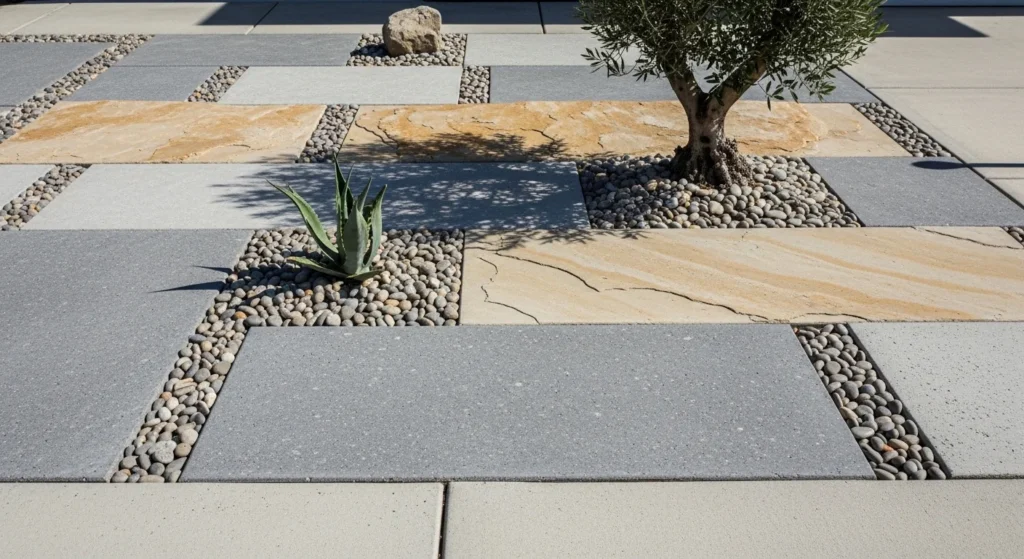
Some of the most striking minimalist landscapes feature extensive hardscaping and minimal plant material, allowing materials themselves to become the primary design element. Quality hardscaping materials – natural stone with varied textures, polished concrete, decorative aggregates in complementary neutral colours – provide visual interest without botanical complexity. This approach is ideal for dry climates, allergic households, or anyone preferring reduced maintenance. Hardscaping-focused design doesn’t feel empty or barren when materials are selected with care and laid with intention. Textural variation in stone, colour gradation in aggregate, and geometric patterns in paving create visual richness while maintaining minimalist principles of clarity and restraint.
Creating visually interesting hardscape-dominant landscapes requires material selection expertise and design vision. Choose natural stone with varied surface textures and subtle colour variation rather than uniform finished materials. Incorporate multiple neutral materials in complementary tones – perhaps light gray paving with charcoal gravel and warm tan-toned stone accents. Lay materials in intentional patterns; geometric arrangements feel designed while random placement appears accidental. Consider material scale – mixing fine aggregates with larger stone elements creates visual depth. Incorporate subtle textural variation through material selection; combining smooth, brushed, and naturally textured surfaces prevents monotony. Add a single specimen plant or architectural element to punctuate the hardscape and provide organic form contrast. The result is sophisticated, beautiful landscapes that challenge the notion that gardens require abundant plant material.
8. Clipped Hedges and Formal Structure:
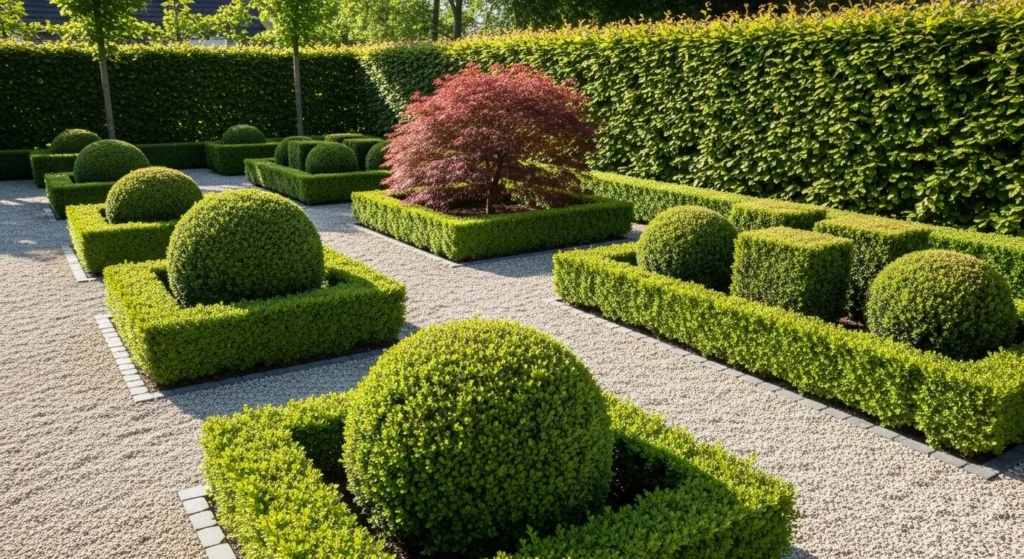
Formal pruning transforms plants into architectural elements, using carefully maintained hedges to create geometric forms and clean lines. Box hedges clipped into spheres, cubes, or rectangles become living sculpture. Low hedging along pathways creates clear definition and structure. Clipped evergreen forms provide year-round interest and require no blooms or seasonal colour. This approach demands commitment to maintenance – regular pruning creates the sculptural forms – but the result is sophisticated, architectural landscapes that feel intentionally designed. Clipped hedges represent minimalism taken to its logical extreme: plants become pure form, stripped of decorative flowers or varying textures, valued for their contribution to overall structure and line./
Implementing formal hedge pruning requires either professional maintenance or committed personal effort. Select plants naturally suited to formal shearing – box, privet, yew, or holly maintain clean edges and dense growth when properly pruned. Establish clear pruning objectives before beginning – will hedges be 1-foot spheres, 3-foot rectangles, or 2-foot pyramids? Maintain consistent pruning schedules; most formal hedges need pruning 2-3 times yearly to maintain definition. Start with simple geometric forms before advancing to complex topiary. Consider the commitment required – formal hedges demand regular attention. However, the payoff is extraordinary: landscapes where plant material becomes pure architectural statement, where form supersedes foliage, where minimalist discipline creates maximum sophistication. Clipped hedges prove that restraint and structure create beauty.
9. Gravel Gardens With Strategic Stone Placement:
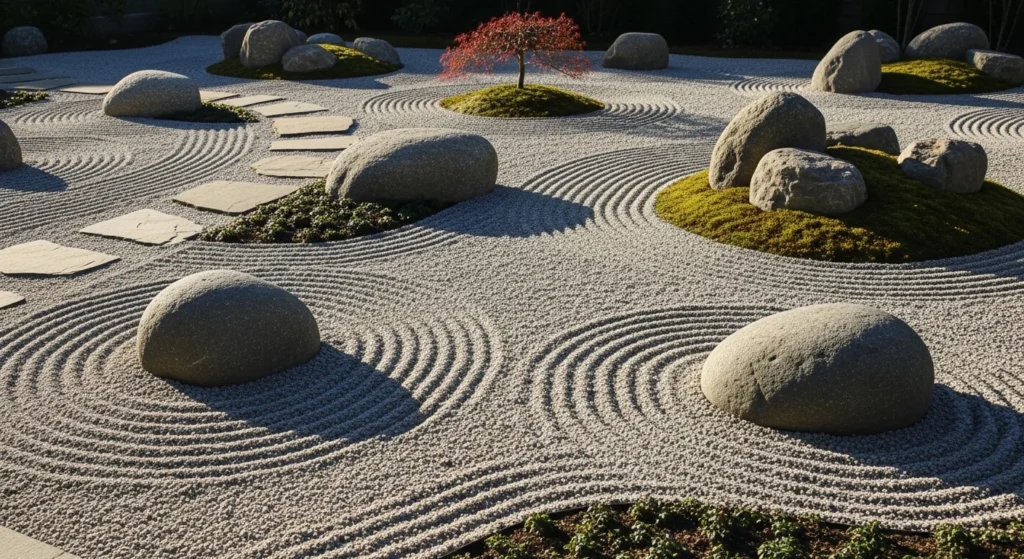
Gravel gardens represent the ultimate low-maintenance minimalist approach, replacing traditional lawns and dense plantings with carefully curated gravel and stone. Fine, uniform gravel in neutral tones creates a peaceful visual base; strategic rock placement adds visual interest and guides movement. This approach works beautifully in dry climates where traditional gardens struggle, but can create elegant spaces anywhere. Gravel gardens feel intentionally designed rather than empty or neglected when stones are positioned purposefully and the gravel is maintained neatly. The visual simplicity creates psychological calm, while the open space invites appreciation of individual elements and atmospheric changes throughout the day.
Creating successful gravel gardens begins with quality materials and careful planning. Select fine gravel in neutral tones – light gray, warm tan, cool gray-white – ensuring uniform, appropriate size. Lay landscape fabric beneath gravel to prevent weed growth while allowing water drainage. Position boulders and stepping stones deliberately, using odd numbers (3, 5, 7) for natural-looking compositions. Rake gravel regularly to maintain neat appearance and display stone positioning clearly. Incorporate one or two carefully selected specimens – perhaps a sculptural shrub or architectural perennial – positioned to function as focal points. The simplicity requires discipline; resist cluttering with additional plantings or materials. When properly maintained, gravel gardens feel meditative and intentional, proving that simplicity creates beauty and peace.
10. Minimalist Water Features:
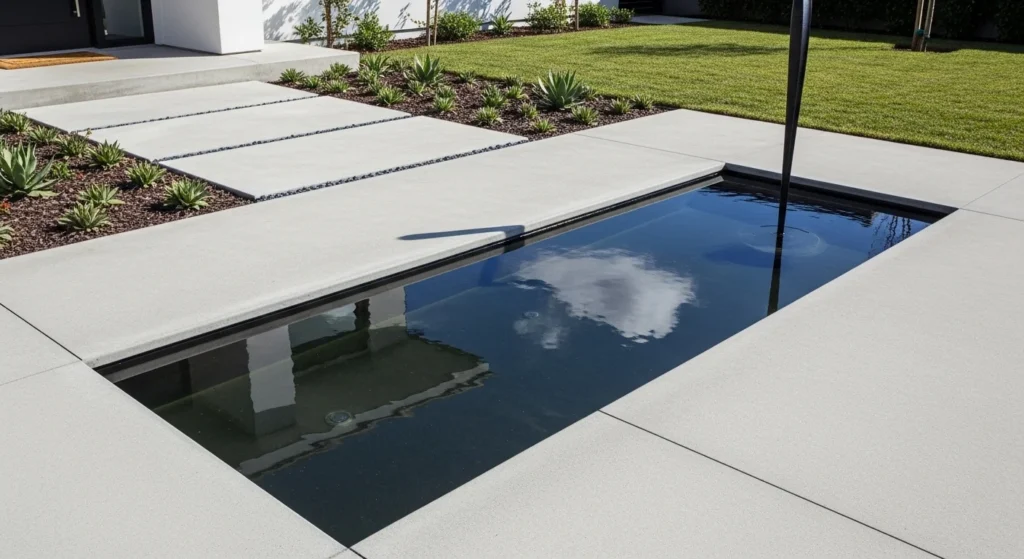
Water features in minimalist design emphasise clean geometry and simplicity rather than elaborate cascades or ornate structures. A simple stone basin with slowly circulating water, a geometric concrete water installation, or a rectangular reflecting pool creates both visual and auditory interest while maintaining minimalist aesthetics. Minimalist water features often feature still water that reflects sky and surrounding elements, creating a sense of depth and movement without active motion. The sound of water – quiet, gentle re-circulation – provides calming auditory input. A well-designed minimalist water feature becomes a meditative focal point, drawing attention and creating a sense of place and intention.
Installing minimalist water features requires careful design and quality execution. Choose materials that coordinate with your overall hardscape palette – perhaps the same stone as your paving, matching concrete, or complementary neutral materials. Ensure adequate electrical connection for pump systems while keeping electrical elements hidden. Position water features where they’re visible from your home and primary outdoor viewing areas. Keep dimensions intentional – a 2-foot square reflecting pool is more minimalist than a sprawling water garden. Maintain water clarity and edges; water features that become grimy or overgrown lose minimalist appeal. Ensure water features function properly, recirculating smoothly rather than stalling or creating algae. A well-maintained minimalist water feature becomes a meditative focal point that justifies its space and effort.
11. Limited Perennial Palette:
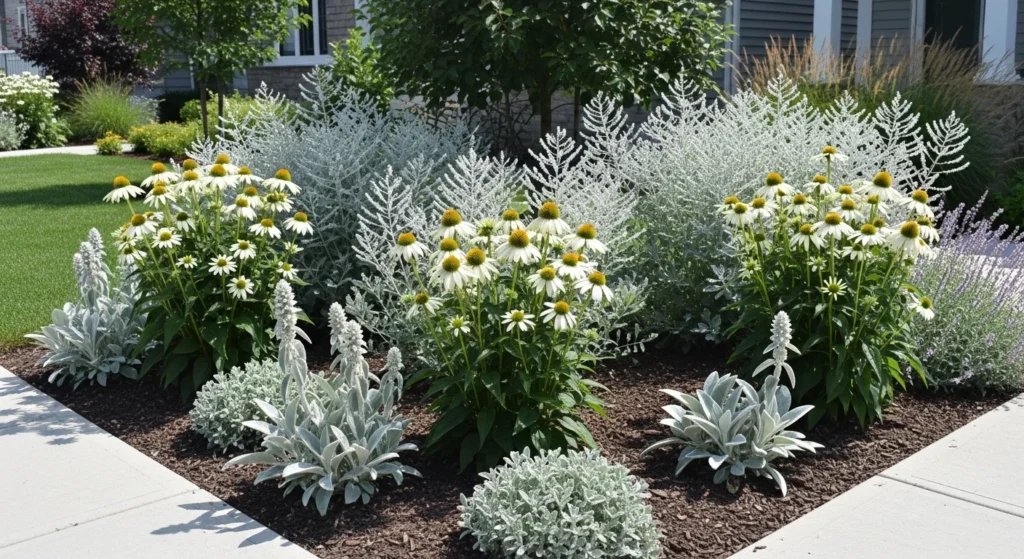
Minimalist perennial gardens feature only two or three carefully selected varieties, rather than traditional gardens showcasing dozens of plant types. This restrictive approach creates unusual coordination and visual cohesion while dramatically simplifying maintenance. Imagine a landscape featuring only white hydrangeas, silver-foliage Artemis, and architectural grasses – the colour coordination is extraordinary and the effect is surprisingly sophisticated despite the severe plant limitation. Limited perennial palettes force intentional selection; chosen plants must excel in your specific conditions and contribute meaningfully to design. The result is gardens that showcase selected plants individually rather than massing them for abundant colour, elevating individual specimens and creating contemplative appreciation rather than spectacular display.
Creating minimalist perennial gardens begins with honest assessment of conditions and thoughtful plant research. Select plants that thrive in your specific light, soil, and moisture conditions – struggling plants undermine minimalist discipline. Choose plants with complementary bloom times and colours; if selections all bloom simultaneously, the burst of colour is dramatic but brief. Consider form and structure – selections should offer varied heights and shapes despite colour coordination. Space plants generously, allowing individual specimens to be appreciated. Resist the urge to add “just one more variety”; the discipline of limitation creates the design’s sophistication. Accept that minimalist gardens may be less colourful than traditional abundant gardens; this reflects the philosophy of quality over quantity, intersectionality over abundance. The result is gardens where every plant is meaningful and appreciated, where simplicity creates strength.
12. Minimalist Entry Sequences:
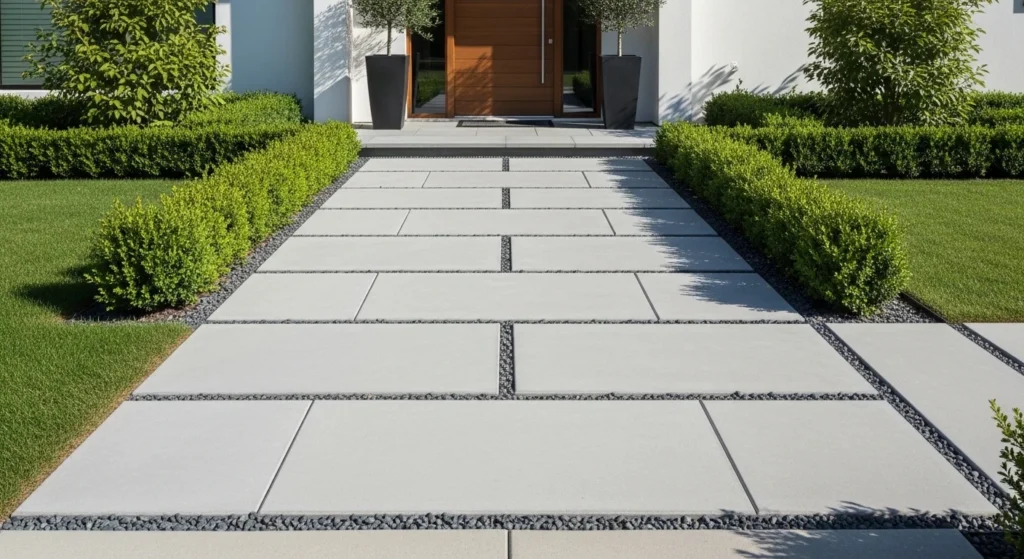
Minimalist front yards use clear pathways and focused entry sequences to create a sense of order and purpose. Rather than unclear routes or multiple potential directions, minimalist design establishes clear, deliberate movement from street to entrance. Pathways are often straight or gently curved but never wandering; borders are clean and defined; visual distractions along routes are eliminated. The entrance becomes a clear focal point, emphasised through architectural planting, specimen placement, or hardscape positioning. This approach creates a welcoming, organised impression while guiding visitors’ attention exactly where you intend. Clear, focused entry sequences communicate intersectionality and design discipline, leaving powerful first impressions.
Designing minimalist entry sequences requires understanding space composition and focal point positioning. Establish a clear path from street or drive to entrance – avoid multiple potential routes that suggest uncertainty. Use materials, plantings, or subtle level changes to define pathway edges clearly. Position specimen plants or architectural elements at sequence endpoints to draw eyes toward focal points. Eliminate visual clutter along the pathway; views should be unobstructed and movement uninterrupted. Use material changes or elevation shifts to subtly mark important transition points. Ensure the entrance itself is the clear visual conclusion – through colour, size, material, or planting emphasis. The psychological effect is powerful: clear pathways and focused sequences communicate control, intersectionality, and welcome. Visitors feel guided and appreciated, making purposeful, organised landscapes more inviting despite their simplicity.
13. Metal Sculptural Elements:
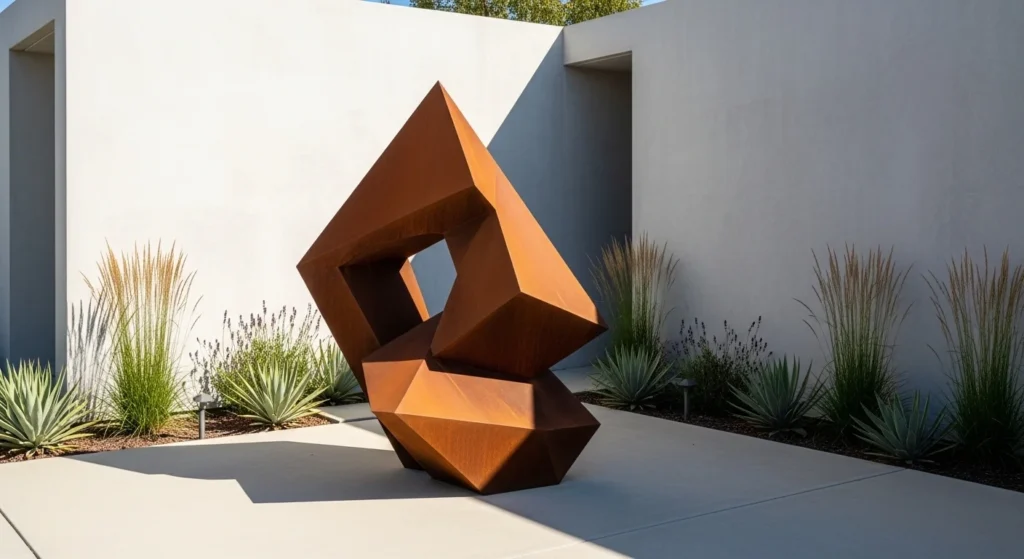
Minimalist landscapes often feature metal sculptural elements that function as contemporary art installations. Rusted cornet steel sculptures provide warm tones that complement neutral palettes while adding artistic interest. Abstract geometric forms in blackened steel create dramatic statements. Sculptures positioned as focal points against simple hardscape or plant backgrounds function as gallery-quality installations. This approach elevates minimalist design from landscape into art, creating spaces that feel intentionally curated and culturally sophisticated. Metal sculptures complement minimalist principles perfectly – they’re permanent, require no maintenance, provide year-round interest, and add meaning and artistic depth to simplified landscapes.
Incorporating metal sculptures requires careful selection and positioning. Choose sculptures that resonate with your aesthetic – perhaps you prefer warm rusted corten steel tones, cold blackened finishes, or polished stainless steel. Ensure sculptures are scaled appropriately for your space; overwhelming scale reads as pretentious while undersized sculptures get lost. Position sculptures as primary focal points, allowing them to be viewed from multiple angles and distances. Provide adequate space around sculptures – they need breathing room to be properly appreciated, matching minimalist philosophy of negative space. Consider how sculptures will weather and age; part of their beauty may be developing patina or weathered finishes. Ensure sculptures are installed securely and safely. The result is landscape-cum-gallery spaces that feel contemporary, artistic, and intentionally designed, where plant material becomes supporting player to artistic vision.
14. Monolithic Stone Features:
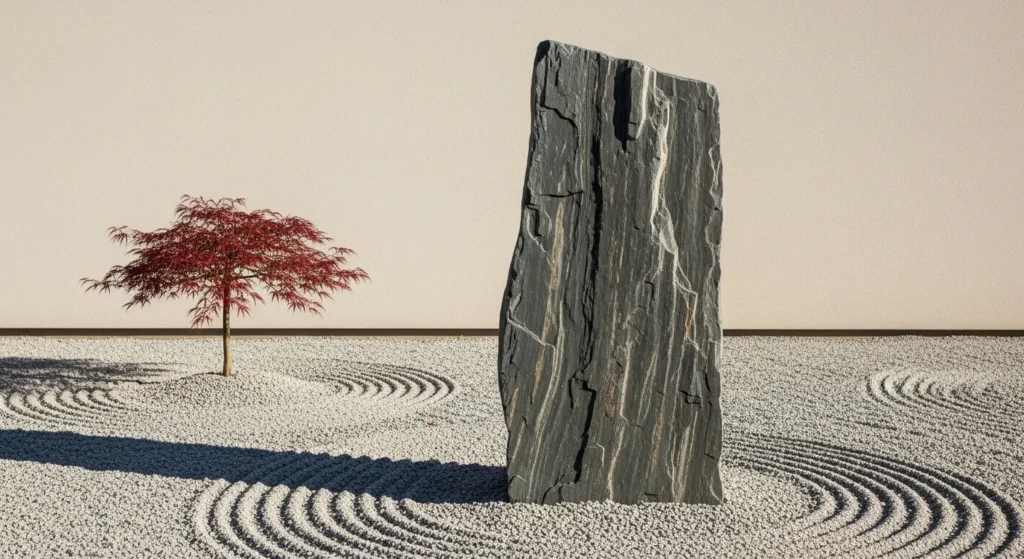
Monolithic stones – single large boulders or specially positioned stone installations – create extraordinary focal points with minimal additional design elements. A vertical slate monolith rising from gravel creates dramatic architectural presence. A massive rounded granite boulder becomes living sculpture. Japanese gardens often feature carefully positioned monoliths as spiritual and design focal points. This approach brings geological scale and permanence into human-scaled spaces, creating contemplative interest and connecting us to natural forces and time. A single exceptional stone becomes the entire landscape’s design driver, proving that sometimes less isn’t just more – it’s everything.
Sourcing and installing monolithic features requires expertise and planning. Work with stone specialists to identify appropriate stones – size, colour, shape, and geological character all matter. Consider scale carefully; stones that overwhelm space feel awkward while undersized stones lose impact. Plan positioning strategically, ensuring stones are viewable from important vantage points and positioned as clear focal points. Professional installation ensures stability and proper orientation. Surround monoliths with simple materials – gravel, minimal plantings, or clear hardscape – allowing stones to command attention. Consider lighting that emphasises stone form, especially for vertical monoliths. The time and expense required to source and position exceptional monoliths pays dividends in unique, permanent focal points that create genuine character and distinction. Monolithic features prove that sometimes single, exceptional elements create more impact than abundant plantings.
15. Minimalist Planting Beds With Mulch or Stone Surround:
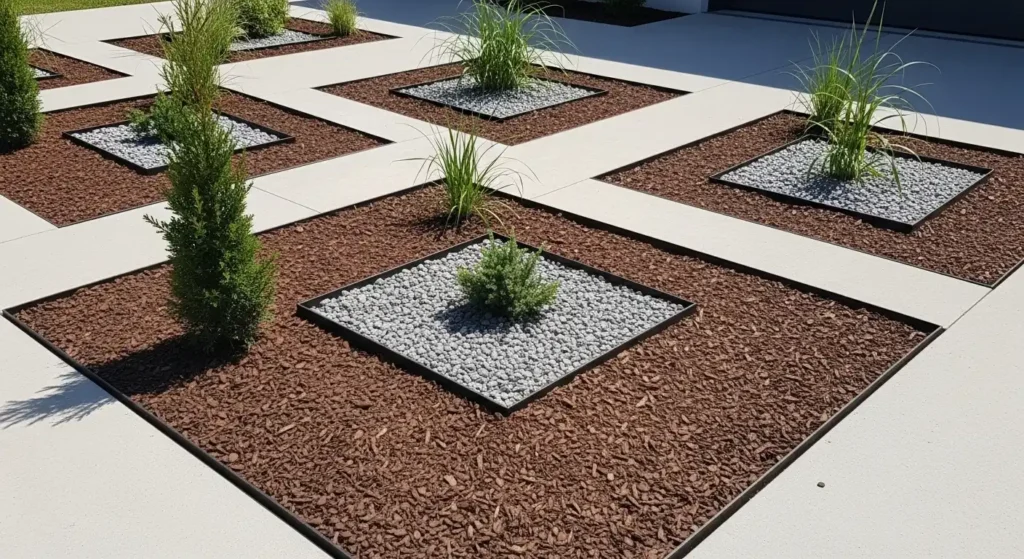
Minimalist planting beds emphasise geometric form, clear definition, and intentional spacing over plant abundance. Rectangular raised beds with clean steel edging contain specified plantings within clearly defined boundaries. Circular beds with precise metal surrounds feature single specimen plants. Ground-level beds outlined with crisp borders maintain visual order even with ground-level plantings. The emphasis on bed definition rather than planting abundance creates organised, designed appearance. Clean geometric beds with minimal plantings read as intentionally sparse rather than underfunded. This approach works beautifully in contemporary spaces, creating order and clarity that feel purposeful and sophisticated.
Creating minimalist planting beds requires attention to edging and definition. Select quality edging materials – stainless steel, cornet steel, or polished aluminium – that coordinate with overall design. Ensure beds have geometric precision; curves should be perfect arcs, lines should be straight, corners should be sharp. Select mulch or stone that coordinates with your colour palette – everything from deep charcoal to warm tan works depending on overall design. Position plantings with intentional; rather than filling beds with abundant plants, select one or two exceptional specimens positioned to emphasise negative space. Maintain clear mulch or stone visible between plantings; resist overcrowding. The psychological effect is powerful: clear edges and defined beds create impression of order, intentional, and controlled design. Minimalist bed definition elevates even simple plantings into intentional compositions.
16. Single-Specimen Foundation Planting:
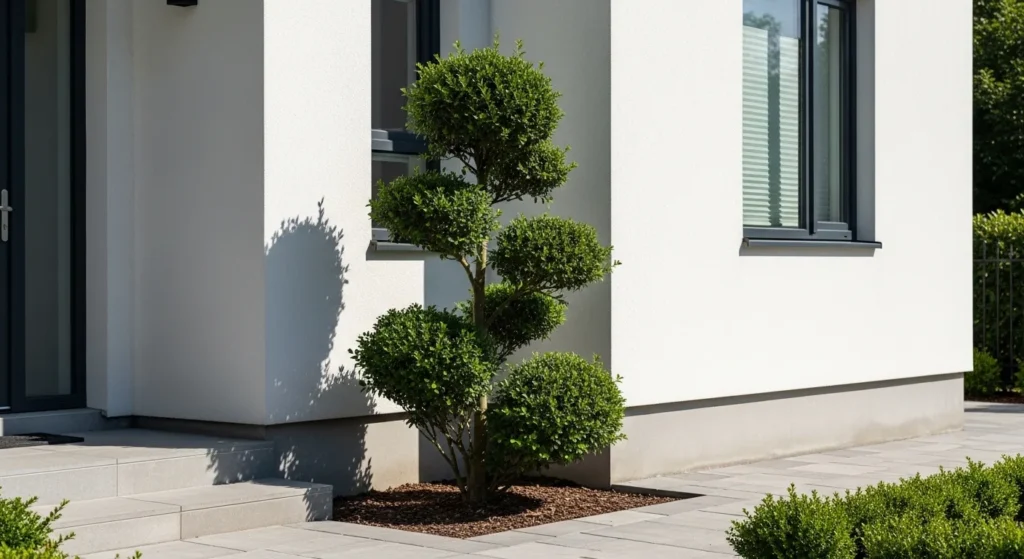
Traditional foundation plantings surround houses with dense plantings intended to soften building edges. Minimalist approach replaces this abundance with single, carefully selected specimens positioned asymmetrically. A single sculptural shrub positioned near the entrance creates focus and welcome. A tall conifer positioned to frame the door draws attention upward and inward. This approach reduces maintenance, increases architectural appreciation, and eliminates visual clutter while paradoxically creating stronger design impact than abundant traditional plantings. Single specimen foundation elements function as living sculpture, adding interest through form rather than abundant colour or texture.
Implementing minimalist foundation plantings requires confidence in restraint and careful specimen selection. Choose plants with distinctive form that functions year-round – not those dependent on seasonal bloom or colour. Position specimens asymmetrically to feel intentional rather than balanced or formal. Allow significant space around specimens; they need visual breathing room to be properly appreciated. Consider how specimens relate to architectural elements – perhaps framing doors, emphasising entryways, or drawing eyes upward along facades. Ensure specimens thrive in available conditions and mature appropriately for long-term success. Accept that this approach leaves building edges more visible than traditional foundations; this often enhances rather than diminishes architecture. The result is landscapes where architectural and botanical elements work together, where minimal planting reveals rather than conceals, where single specimens create greater impact than abundance.
17. Minimalist Container Planting:
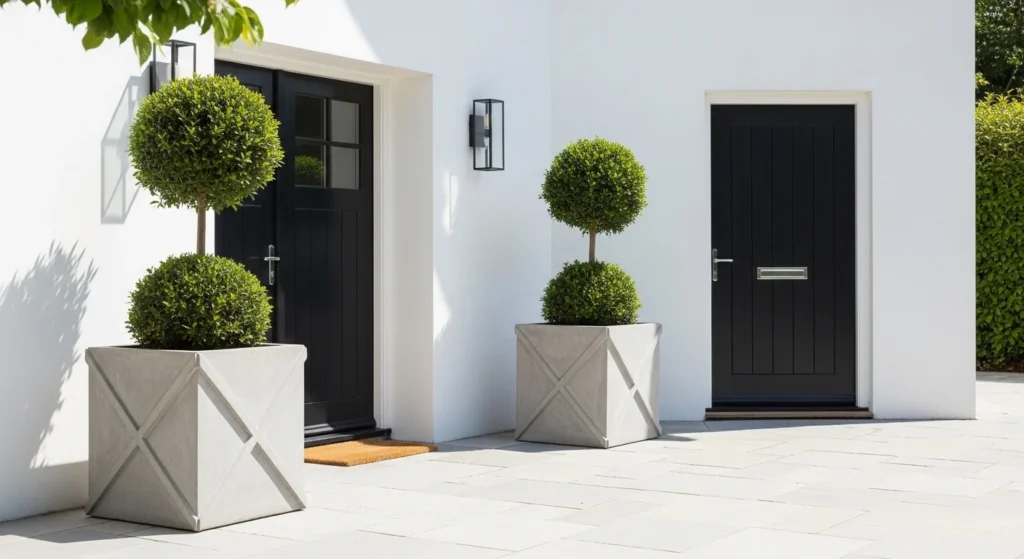
Minimalist approach to containers replaces abundant potted plant displays with one or two large, high-impact vessels. Large planters positioned symmetrically flanking entrances create welcoming focus. Oversized contemporary containers become design elements themselves, adding architectural interest independent of plantings. Few high-quality containers create more sophisticated impression than numerous small pots competing for attention. This approach aligns with minimalist philosophy: selecting exceptional pieces over abundant quantities, using negative space purposefully, and allowing individual elements to command attention.
Creating minimalist container displays begins with container selection. Choose one or two exceptional containers in high-quality materials – perhaps concrete, stone, or weather-resistant composite. Ensure containers are appropriately scaled for your space; oversized is generally better than undersized. Select coordinating finishes and colours that complement overall hardscape and architecture. Position containers strategically – perhaps flanking an entrance, marking a pathway transition, or creating a focal point in your landscape. Fill containers with minimal plantings in coordinating colours and forms – perhaps a single specimen plant or two complementary varieties. Maintain container plantings carefully; neglected containers undermine minimalist intention. The result is polished, sophisticated entrances where high-quality containers and carefully chosen plantings create impact through quality rather than quantity, proving that restraint and intention create sophistication.
18. Japanese Maples as Specimen Features:
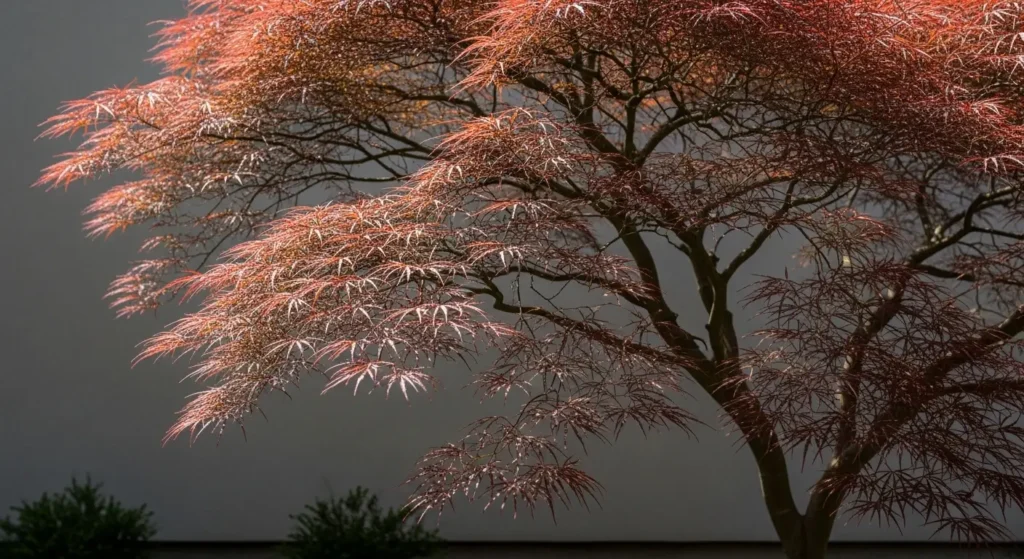
Japanese maples represent ideal minimalist specimens – their delicate forms, fine textures, and distinctive shapes function as living sculpture. Unlike dense shrubs or trees, Japanese maples provide textural interest, movement, and visual interest through form rather than abundant foliage. Weeping varieties create graceful, flowing shapes. Upright types develop open branching structure that reveals form. Red-foliage varieties add subtle colour. Positioned as singular specimens against neutral hardscape, Japanese maples become contemplative focal points inviting close observation and appreciation. Their delicate nature encourages viewers to slow down, observe carefully, and appreciate subtle beauty – core minimalist values.
Selecting and positioning Japanese maples requires understanding their specific needs and aesthetic qualities. Choose varieties appropriate for your climate – cold hardiness varies significantly among types. Position maples where they’re clearly visible and can be viewed from multiple angles and distances. Ensure adequate growing space; these trees develop more attractive forms with unobstructed growth. Plant against neutral backgrounds that allow forms to be clearly appreciated. Consider morning or dappled afternoon light that creates beautiful shadow patterns through delicate foliage. Minimal under-planting keeps focus on maple form. Accept that Japanese maples are slow-growing and require patience; their refined forms develop over years. The eventual result justifies the wait: mature Japanese maples become increasingly beautiful with age, their branches becoming more sculptural, their presence becoming more powerful. Minimalist landscapes featuring Japanese maples age gracefully, becoming more beautiful over time.
19. White Hardscape Materials:
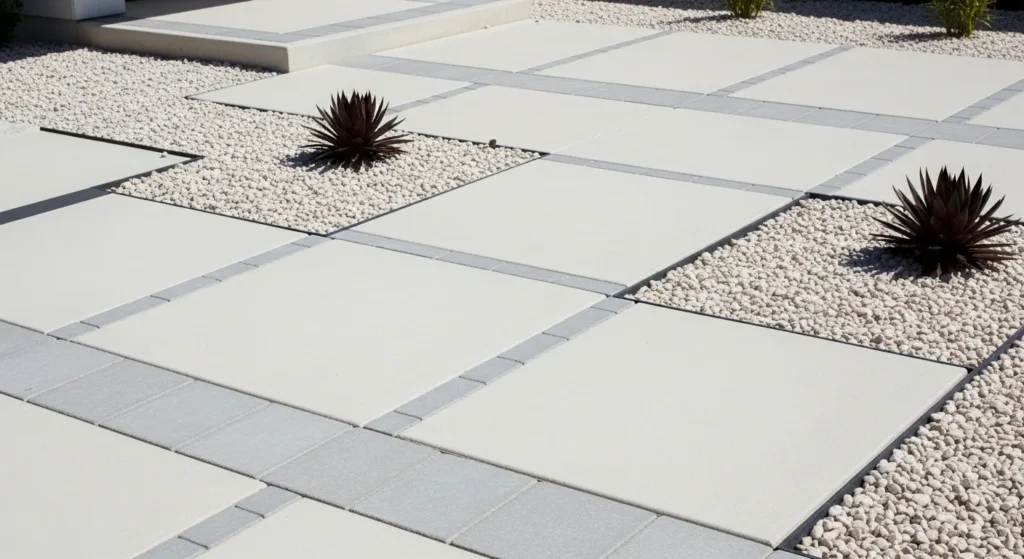
White or pale neutral hardscape materials create serene, peaceful minimalist spaces that feel open and luminous. Light gray concrete, cream-coloured pacers, pale gravel, or light stone create brightness and airiness. This palette works particularly well in contemporary minimalist design, creating spaces that feel clean, organised, and deliberately designed. Light materials reflect rather than absorb sunlight and heat (practical in warm climates), create sense of expansion in space, and feel intentional and carefully chosen. White palettes also require more discipline; maintaining cleanliness and preventing staining is important. When well-maintained, light minimalist landscapes feel refined and sophisticated, suggesting luxury through restraint and carefully curated clarity.
Implementing light hardscape palettes requires commitment to material selection and maintenance. Choose high-quality materials that resist staining and maintain colour integrity – not all white or pale materials age equally. Seal porous materials appropriately to prevent discoloration. Plan lighting carefully; well-lit spaces enhance pale materials’ beauty while poorly lit spaces can feel harsh or institutional. Select light materials throughout for cohesion; mixing light and dark materials visually fragments space. Pair light hardscape with complementary plantings – perhaps plants with gray-silver foliage or white blooms. Ensure adequate contrast so pale hardscapes aren’t boring; this might come from strategic dark accents, shadows, or architectural elements. Maintain regularly – pale materials show footprints, water spots, and debris more readily than darker tones. The discipline required maintains design’s refined quality, proving that light-palette minimalism rewards careful attention with sophisticated, luminous spaces.
20. Architectural Perennials:
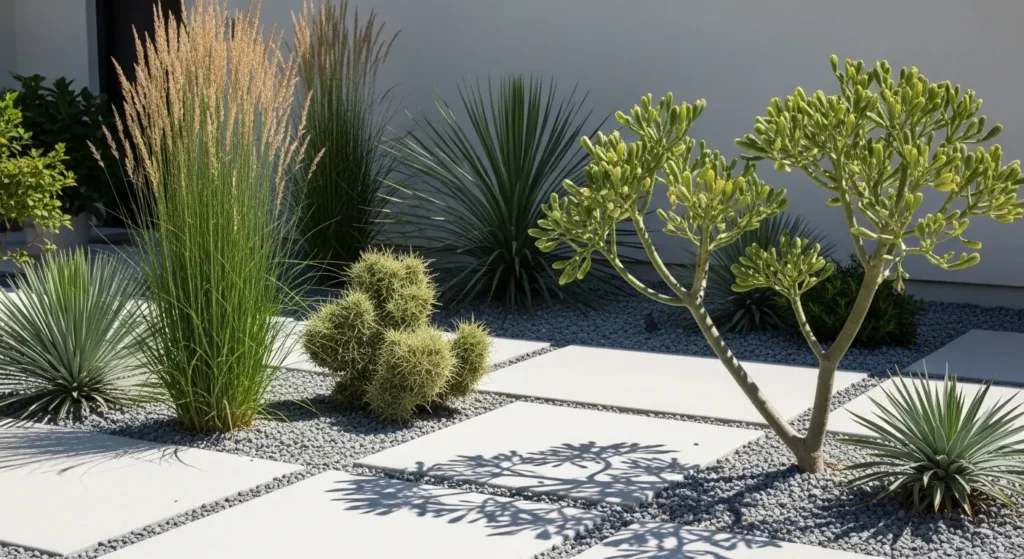
Minimalist perennial selection emphasises architectural form and year-round structure over temporary floral displays. Ornamental grasses with distinctive shapes – feathery fountains, stiff verticals, or weeping forms – provide structural interest without flowers. Spiky plants like agave or yuccas create dramatic vertical elements. Plants with interesting branching patterns or foliage forms become focal points. This approach priorities plants that remain beautiful after flowering, ensuring year-round interest and reducing reliance on seasonal blooms. Architectural perennials function as permanent sculptural elements, appreciated for their essential forms rather than ephemeral flowers. This philosophy aligns perfectly with minimalist values of permanent, meaningful elements over temporary decoration.
Creating architectural perennial gardens requires different selection criteria than traditional approaches. Research plants for mature forms and structures, not just flower colour. Select plants that maintain beauty year-round – winter forms should be as interesting as summer growth. Choose plants with distinctive silhouettes – strong verticals, graceful fountains, architectural branching. Position plants individually or in minimal groupings where forms can be clearly appreciated. Space plants generously, allowing individual forms to be seen distinctly. Resist selecting plants primarily for flowers; minimalist design values structure over spectacular bloom. Deadhead spent flowers to maintain focus on form rather than seed heads (unless seed heads add architectural interest). The result is gardens where plants function as permanent sculptural elements, where beauty emerges from form rather than temporary floral displays, where simplified selection creates sophisticated perennial spaces.
21. Minimalist Lighting Design:
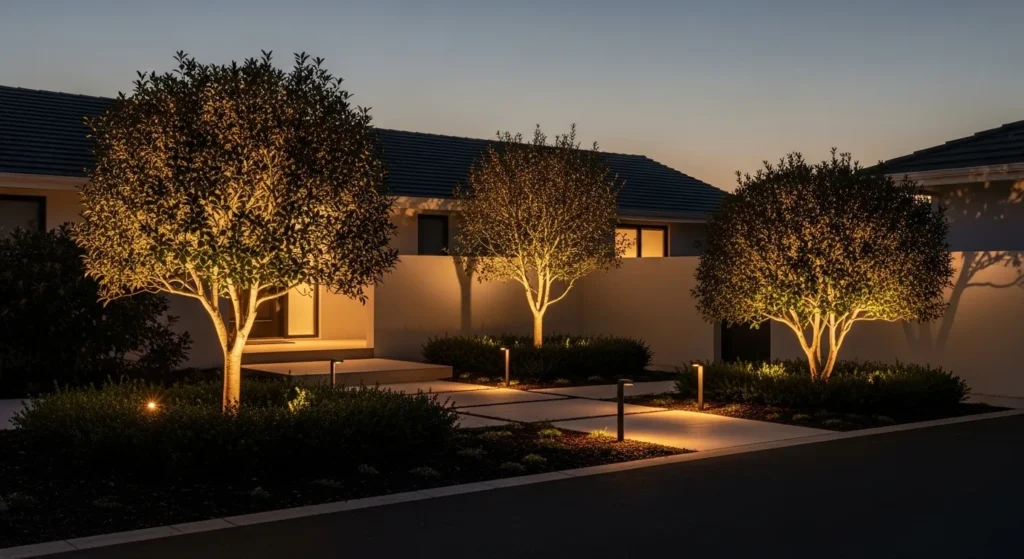
Minimalist lighting design emphasises subtle, purposeful illumination over bright functional approaches. Uplifting on specimen plants creates drama and beauty while remaining barely visible during the day. Integrated pathway lighting guides movement without harsh spotlighting. Warm colour temperatures (2700K or lower) create inviting ambience rather than cool institutional light. Fixtures are selected for minimal visual impact; the light itself should be noticed, not the sources. This approach extends enjoyment of minimalist landscapes into evening while maintaining design’s sophisticated restraint. Evening light transforms minimalist spaces, revealing details and creating magical qualities that reward careful design consideration.
Implementing minimalist lighting requires expertise and careful planning. Work with lighting specialists if budget allows; proper positioning and fixture selection significantly impact results. Choose fixtures designed for subtlety – small, low-profile uplifts rather than dramatic spotlights. Position lights to highlight specimen plants, architectural elements, or focal points; avoid general illumination. Use warm colour temperatures throughout. Create lighting zones with separate controls allowing flexibility for different moods and occasions. Ensure all electrical elements are hidden; visible fixtures undermine minimalist intention. Include subtle pathway lighting for safety and guidance. Consider solar options for sustainability and simplified installation. Test lighting at night from different vantage points; what looks good from one angle may be uncomfortable from another. The result is landscapes that transform beautifully after dark, where evening illumination adds depth and magic while remaining visually minimal and intentional.
22. Low-Maintenance Evergreen Borders:
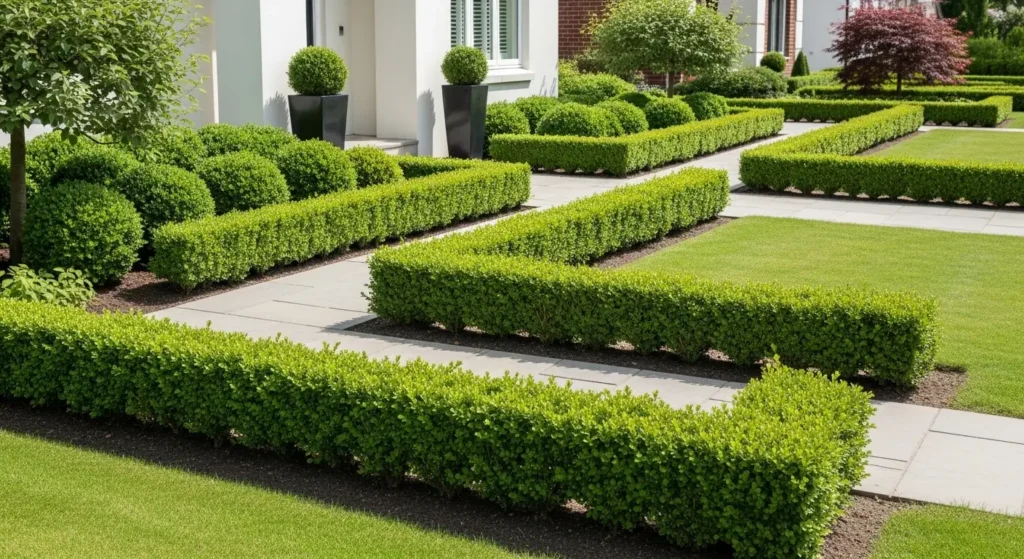
Minimalist borders use low evergreen hedges to define space and create order without abundant plantings. Box hedges maintained at consistent height and width create clean property lines or bed edges. Privet or similar dense plants form living walls that define areas subtly. This approach creates architectural clarity and order while requiring less commitment than formal topiary. Low hedges provide definition and structure; they’re not design statements but rather supportive elements creating the framework within which minimalist design operates. Well-maintained hedges communicate care and intentional while serving practical functions of property definition and view control.
Implementing minimalist hedging requires selecting appropriate plants and committing to consistent maintenance. Choose plants suited to formal hedging – box, privet, yew, or holly provide dense growth and tolerate shearing. Determine desired height and width; consistency is crucial to minimalist effect. Establish regular pruning schedule – most hedges need attention 2-3 times yearly. Use quality tools and techniques; rough, uneven hedging looks neglected rather than designed. Consider hiring professionals if hedge maintenance exceeds your skill or available time. Hedge maintenance is ongoing; you’re committing to regular care when you install formal hedging. However, well-maintained hedges create extraordinary design impact, providing structure, definition, and architectural quality that justifies maintenance requirements. Minimalist borders prove that supporting elements can be as important as featured specimens; hedges create the framework within which minimalist design achieves sophistication.
23. Complete Minimalist Landscape Integration:
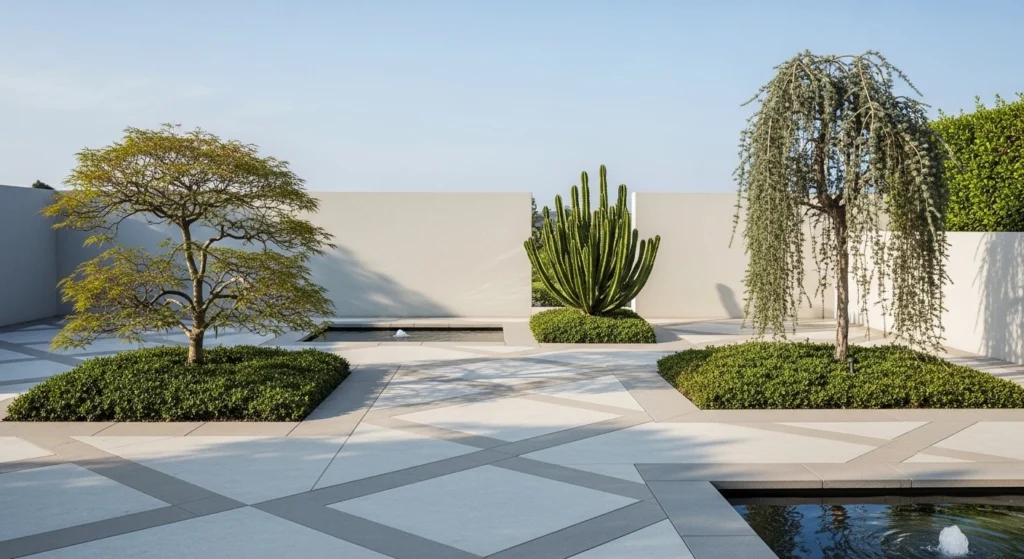
The final concept celebrates integration – bringing all minimalist elements together into comprehensive, cohesive landscapes. Successful minimalist design doesn’t employ a single technique but weaves together multiple approaches into unified compositions. Clean hardscaping provides foundation. Carefully selected specimens function as focal points. Color discipline maintains coherence. Negative space creates psychological calm. Every element serves purpose and contributes to overall tranquility. The result is landscapes where simplicity creates beauty, where less truly is more, where reduction and restraint yield sophistication and peace. Complete minimalist integration proves that restraint isn’t limitation – it’s liberation, freeing viewers from visual clutter and allowing genuine appreciation of elements that remain.
Creating complete minimalist landscapes requires vision and discipline. Begin by committing to minimalist philosophy – understanding that you’re creating spaces of intention and meaning, not maximum abundance. Plan comprehensively, identifying focal points, establishing sight lines, and determining appropriate scale for each element. Establish your color palette and commit to it throughout. Create hardscape foundation using quality materials in coordinated tones. Select specimen plants with care, ensuring each survives appropriate conditions and contributes meaningfully to design. Leave generous negative space – resist temptation to fill every area. Integrate water features, lighting, and sculptural elements thoughtfully. Throughout the process, maintain focus on creating peaceful, contemplative spaces where every element justifies its presence. The result is landscapes that age beautifully, requiring less maintenance over time as plantings mature and settle. Complete minimalist landscapes become increasingly valuable and beautiful with time, proving that restraint and intention create lasting beauty.
FAQ’s:
Q1: Isn’t a minimalist front yard going to look boring or empty?
A: Well-designed minimalist landscapes are anything but boring. By removing visual clutter, attention focuses on individual elements that become genuinely beautiful through appreciation. Negative space creates psychological calm and feels luxurious rather than empty. Colors, textures, forms, and materials create visual interest without abundance. Many people find minimalist landscapes far more beautiful and interesting than crowded gardens, appreciating their peace and sophistication.
Q2: Isn’t minimalism expensive? Wouldn’t I need premium plants and materials?
A: Minimalist design can be executed at any budget level. Premium materials and plants can enhance minimalism, but disciplined selection of quality elements is more important than expensive specimens. Focus on one or two exceptional focal points rather than abundant expensive plantings. Beautiful minimalist landscapes emerge from thoughtful design, not excessive spending. Budget-conscious minimalism emphasizes simplicity and restraint rather than abundance.
Q3: How do I transition from a traditional garden to minimalism?
A: Begin by removing elements that don’t serve a clear purpose – plants you don’t particularly love, ornaments that don’t resonate, cluttered plantings. Evaluate remaining elements; keep only those that contribute meaningfully to your vision. Gradually introduce minimalist elements – clean edges, focal point specimens, simplified planting palettes. You don’t need to change everything immediately; transition can happen over time as existing plants mature or need replacement.
Q4: Will minimalist landscaping feel impersonal or cold?
A: Quality minimalist design creates deeply personal spaces reflecting owner values and preferences. Each element is chosen because it resonates, not included by default. This intentionality creates more personal connection than abundant generics. The peace and calm minimalist spaces provide feel profoundly welcoming and human-scaled, creating spaces people love rather than merely admire.
Q5: How do I maintain a minimalist landscape?
A: Minimalist landscapes generally require less maintenance than traditional gardens. Reduced plantings mean less watering, weeding, and pruning. Focus maintenance efforts on specimen plants and hardscape care rather than abundant garden beds. Regular maintenance is important – minimalist landscapes require attention to detail but typically less total time than complex gardens. Neglected minimalist spaces look obviously uncared-for, so commitment to some regular maintenance is important.
Conclusion:
Minimalist front yard design represents a revolutionary shift in how we approach landscape creation – from accumulation and abundance toward intention and restraint. Throughout this guide, you’ve discovered 23 proven approaches to creating minimalist landscapes that prove simplicity creates beauty, clarity creates peace, and limitation creates sophistication. Whether you’re drawn to hardscape-focused design, specimen-plant artistry, Zen-inspired contemplation, or color-disciplined gardens, minimalist philosophy offers a pathway toward landscapes that genuinely resonate with who you are and how you want to feel in your home.
The beauty of minimalism lies in its accessibility and scalability. You don’t need significant budget or extensive property to create stunning minimalist design. You don’t need horticultural expertise or design degrees. You need commitment to intention and discipline to resist visual clutter. You need willingness to appreciate subtle beauty and psychological calm over spectacular abundance. You need courage to leave empty spaces, to say no to “just one more plant,” to trust that less truly is more. These qualities are available to anyone willing to embrace them. Begin where you are – perhaps removing cluttered plantings, introducing a sculptural specimen, establishing clean hardscape edges. Let your landscape evolve gradually toward the peaceful, intentional space you’re imagining.