 Muhammad Muaz
 Dreaming of tropical vacations but wishing you could experience that lush, exotic paradise every single day? The good news is that you don’t need to live in Hawaii or the Caribbean to create a stunning tropical front yard that transports you to paradise every time you step outside. Whether you live in a warm climate or a cooler region, creating tropical landscaping is absolutely achievable with the right plants, landscaping features, and design choices.
Tropical front yards are more than just beautiful – they create an ambience that encourages relaxation, entertaining, and connection with nature. The lush foliage, vibrant flowers, flowing water features, and carefully chosen materials work together to transform your outdoor space into an exotic retreat. This comprehensive guide will walk you through 21 stunning tropical front yard ideas that you can adapt to your specific climate, budget, and personal style. From bold statement plants to serene water features, from tropical landscaping to exotic flower combinations, you’ll discover practical solutions for creating your own private tropical haven.
Ready to turn your front yard into the ultimate vacation destination? Let’s dive into these inspiring tropical ideas!
1. Lush Tropical Foliage Combinations:
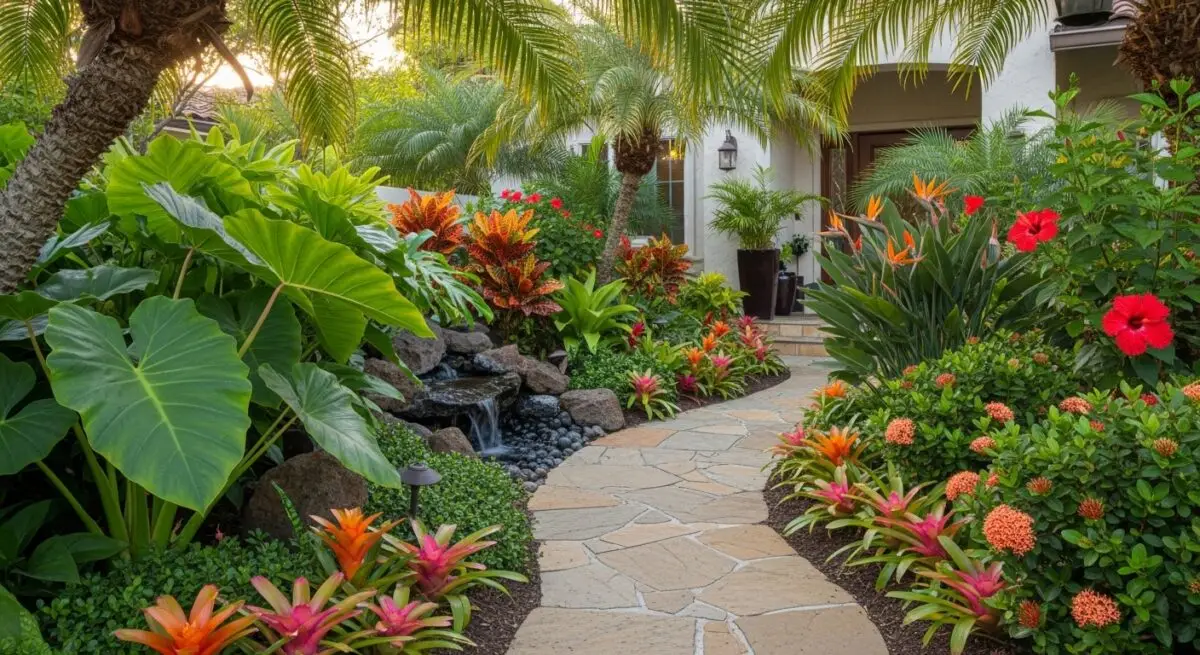
Creating a tropical front yard starts with building layers of lush foliage that create depth, movement, and that unmistakable jungle aesthetic. Large-leafed plants like elephant ears, colocasias, and caladiums form the backbone of tropical plantings, their dramatic foliage creating visual impact that reads as instantly exotic. These plants thrive in warm, humid conditions and prefer rich, moist soil, rewarding careful gardeners with stunning growth. Layer these large-leaved specimens with mid-sized plants like gingers, crotons with their colorful foliage, and various tropical shrubs, then finish with smaller foliage plants at ground level to create a complete, magazine-worthy landscape that feels lush and abundant.
The key to successful tropical foliage combinations is understanding that tropical gardens thrive on abundance – more plants, more texture, more color creates the impression of natural jungle growth. Group plants with similar light and water requirements together, creating microclimates within your yard. Tropical plants generally appreciate afternoon shade in hot climates, rich organic soil amended with compost, and consistent moisture without waterlogging. The beauty of foliage-focused designs is that they don’t rely on constant blooming – your garden remains visually stunning even when nothing is in flower. This approach creates a cohesive, professional aesthetic that looks like it should be featured in a luxury resort.
2. Palm Trees as Statement Specimens:
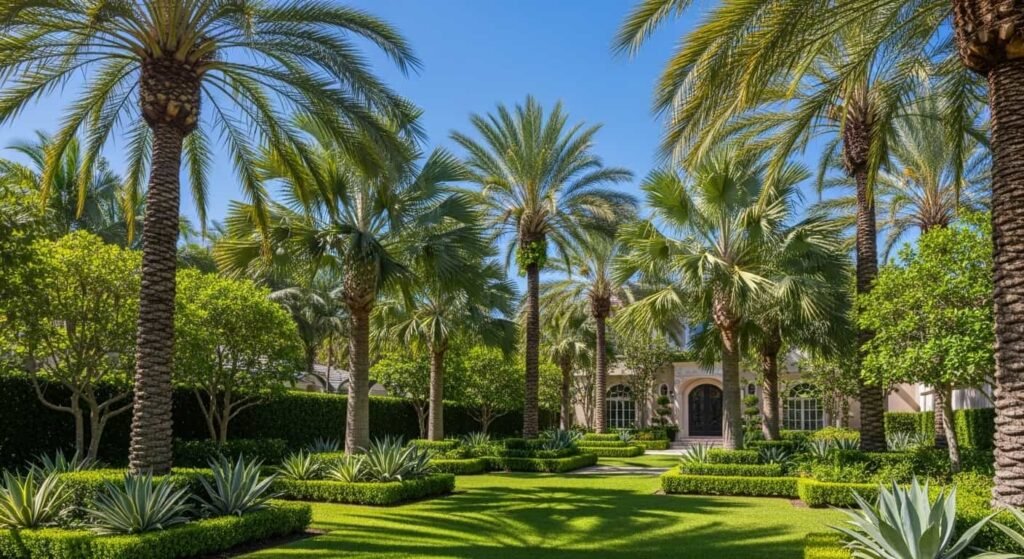
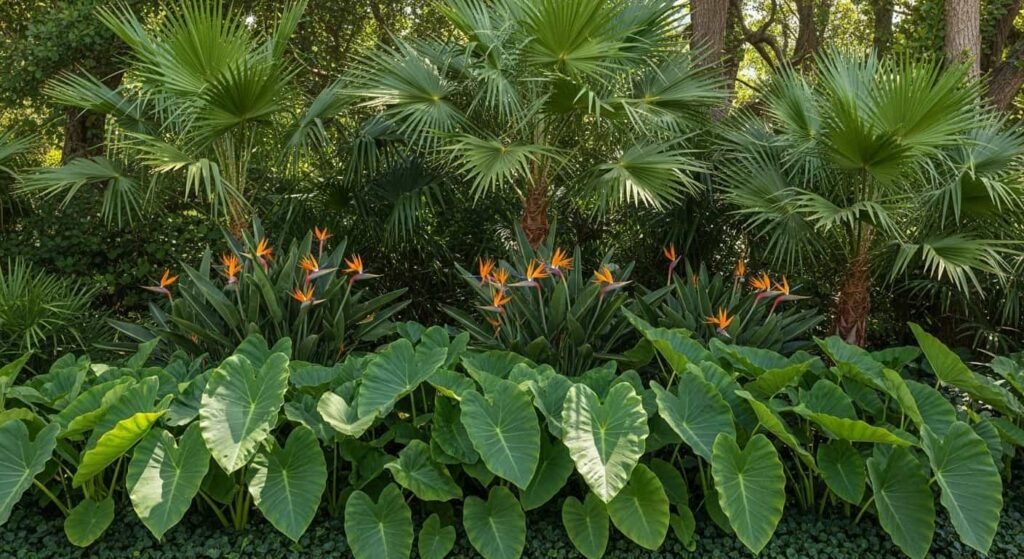
Few plants create tropical atmosphere as immediately as palm trees. Whether you’re drawn to tall, elegant coconut palms that sway in the breeze, sturdy date palms with architectural form, or delicate fan palms with their lacy fronds, palm trees instantly transform your landscape into an exotic destination. These dramatic specimens work beautifully as focal points in front yards, and their distinctive silhouettes remain visually interesting even from a distance. Palms come in various sizes, from dwarf varieties perfect for smaller yards to towering specimens that create canopy, allowing you to create tropical impact regardless of your space constraints.
Selecting the right palms for your climate is crucial for success. Tropical regions can grow a wide variety of palms, while cooler climates require cold-hardy varieties like windmill palms or sabal palms that tolerate freezing temperatures. Once established, most palms are remarkably low-maintenance, requiring minimal pruning, watering, or feeding. They’re not particularly bothered by pests or diseases and improve the look of your landscape year-round. Plant palms in groups of varying heights to create more dynamic compositions than single specimens, and combine them with complementary tropical plants to enhance the jungle feeling. Their dramatic forms and tropical association make them perfect anchors for tropical landscape designs.
3. Tropical Water Features:
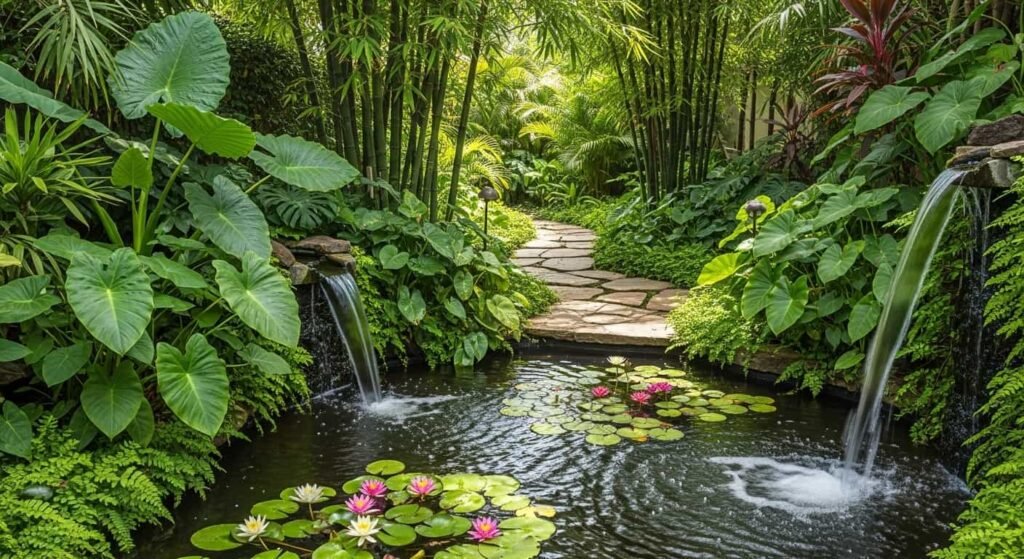
Water features are essential components of tropical landscaping, bringing movement, sound, and a sense of serene luxury to your front yard. Tropical fountains featuring stone or modern materials create focal points while the sound of flowing water adds ambiance and masks street noise. Small ponds or water gardens surrounded by lush plantings create peaceful retreats within your yard, and water features encourage tropical birds and wildlife that enhance your garden’s dynamic quality. Whether you choose an elaborate waterfall, a simple bamboo water fountain, or a small reflecting pool, water features elevate tropical designs from simply planted to genuinely resort-like.
Incorporating water features requires thoughtful planning regarding water source, drainage, and maintenance. Solar-powered fountains offer eco-friendly options that operate without electrical connections, while traditional pump-powered features provide continuous flowing water. Keep water features in proportion to your yard – an elaborate waterfall in a tiny space feels awkward, while a small fountain in a large yard may get lost. Position water features where you can enjoy them from indoors as well as from your front yard, multiplying their visual and auditory benefits. The sound of water combined with rustling tropical foliage creates a multisensory paradise experience that makes your front yard feel truly exceptional.
4. Bold Tropical Flowers:
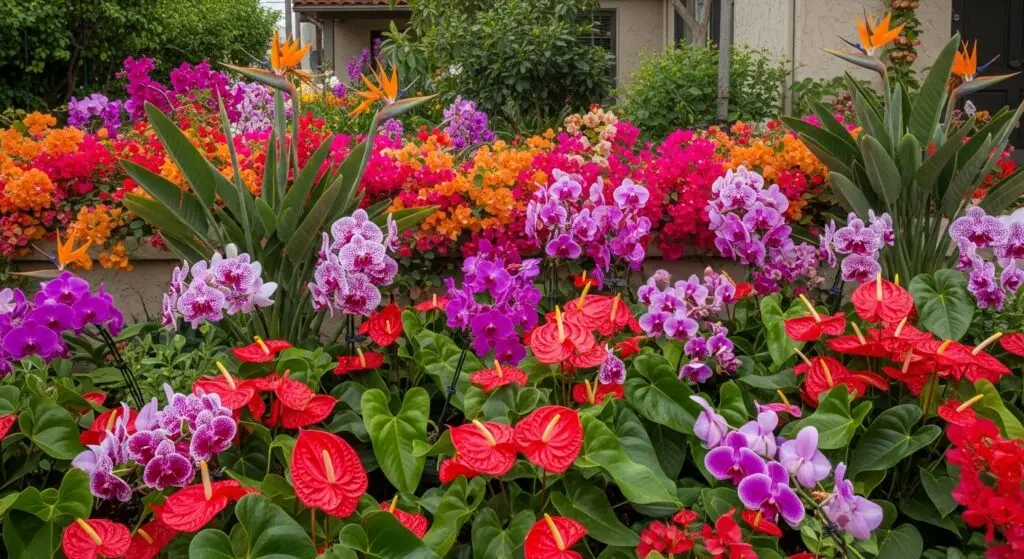
Tropical flowers are where you get to express bold color and dramatic forms that would seem excessive in temperate gardens but feel absolutely right in tropical settings. Anthuriums with their waxy, sculptural flowers come in reds, pinks, whites, and unique bi-colors that last for weeks. Orchids, available in nearly every color imaginable, add exotic elegance. Bird of paradise flowers provide stunning orange and blue combinations that look almost unreal. Bougainvillea creates cascades of vibrant color, and heliconia brings tropical drama with their unusual, pendulous flowers. These plants thrive in warm climates with bright light and good air circulation, rewarding gardeners with continuous to seasonal blooms.
Building a tropical flower garden means embracing color saturation and unusual combinations that might feel bold elsewhere but feel absolutely right in tropical settings. Mix bold reds with purples, pinks with oranges, and let contrasting foliage colors add depth. Many tropical flowers are seasonal bloomers, so selecting varieties that bloom at different times ensures color throughout the year. Consider tropical flowers both as in-ground plantings and as container specimens near your entrance, allowing you to create dramatic seasonal displays while protecting tender varieties if you live in a climate with cold snaps. The abundance of tropical flowers creates that resort aesthetic where color and abundance signal luxury and careful cultivation.
5. Bamboo Screening and Privacy:
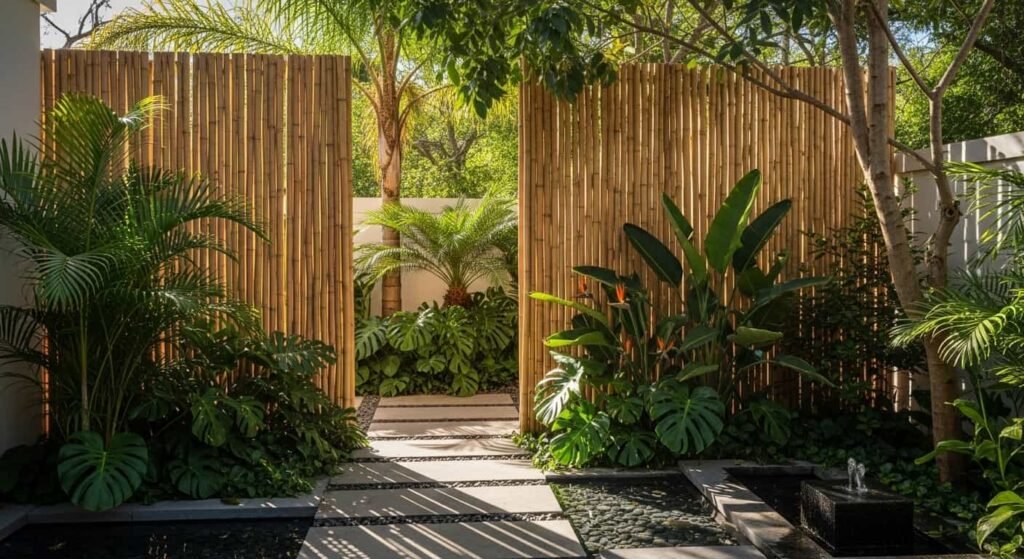
Bamboo is perhaps the most iconic tropical plant, offering both functional privacy screening and authentic tropical aesthetics. Properly designed bamboo screening defines spaces, creates intimate garden rooms within your front yard, and filters views while maintaining that essential tropical feeling. Running bamboo varieties contained within root barriers, or clumping varieties that naturally remain contained, can be installed as living screens that grow more lush and impressive over time. Bamboo screens also provide the signature rustling sound that adds to tropical ambiance, and their elegant forms create beautiful shadow patterns as light filters through.
Installing bamboo screening requires careful planning to prevent unwanted spreading – always use root barriers with running varieties or select naturally clumping varieties. Bamboo thrives in warm climates and adapts to various light conditions, from full sun to partial shade. Once established, bamboo requires minimal maintenance beyond occasional pruning to maintain desired height and density. Combine bamboo screening with complementary tropical plants, creating layered privacy that feels organic rather than utilitarian. You can also construct bamboo structures like pergolas or gates that add architectural interest while maintaining tropical authenticity. Bamboo screening transforms open front yards into intimate tropical retreats.
6. Tropical Landscaping:
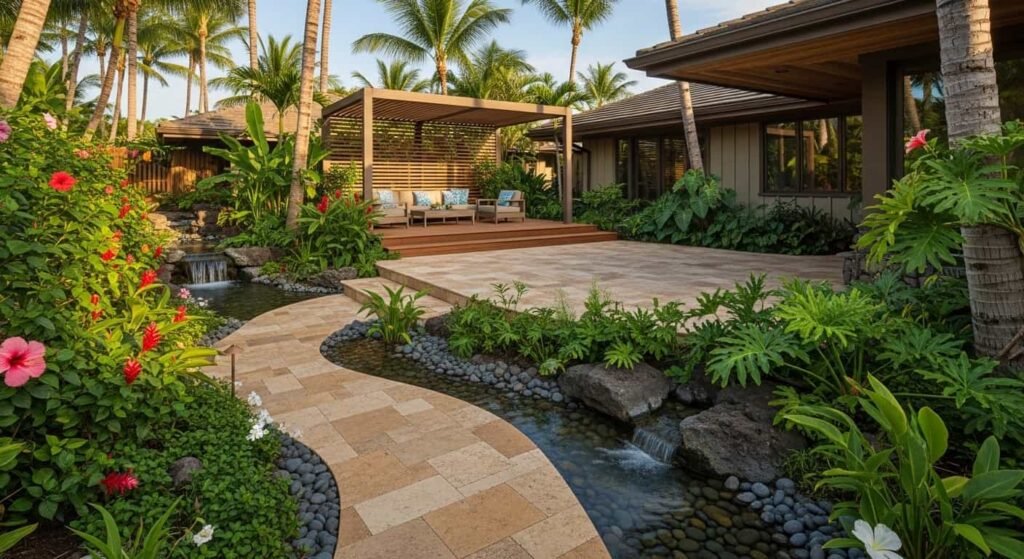
Hardscaping forms the bones of tropical landscape design, creating functional spaces while establishing the sophisticated aesthetic that distinguishes resort-quality gardens from simple plantings. Natural stone in warm tones – think cream, tan, and rust – feels authentically tropical and ages beautifully. Wood decking, whether pressure-treated for durability or sustainable tropical hardwoods, creates warm, organic surfaces that complement tropical plantings. Curved pathways and flowing edges feel more tropical than rigid geometric designs, and incorporating water channels or permeable paving that allows water drainage reflects tropical regions’ high rainfall and sophisticated stormwater management.
Creating tropical hardscape requires thoughtful material selection and design that feels organic rather than engineered. Use curved lines and flowing edges rather than rigid geometry, incorporate natural materials like stone and wood, and create multiple levels and spaces that encourage exploration and relaxation. Position hardscaping to complement your best views and plantings, creating vignettes that draw visitors through your landscape. Materials should weather gracefully – tropical climates are often humid and rainy, so selecting materials that age beautifully is crucial. Stone pathways lined with tropical plantings create the impression of wandering through an exotic garden, while wooden decks positioned among lush foliage feel like private retreats within your own yard.
7. Exotic Fruit Trees:
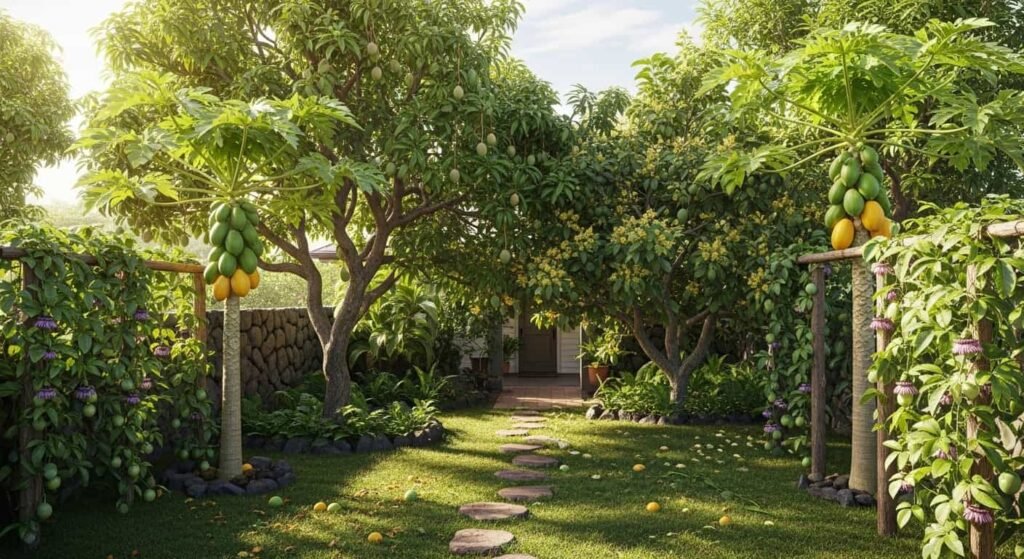
Growing exotic fruit trees in your front yard serves dual purposes – creating beautiful, productive landscapes while providing delicious tropical fruits for your table. Mango trees with their lush foliage and fragrant spring blooms grow massive with maturity, providing years of fruit production and landscape impact. Papaya trees with their architectural form and delicious fruit create tropical statement plantings. Passion fruit vines create living trellises with beautiful flowers and nutritious fruit, while coconut palms provide the ultimate tropical statement while producing coconuts. Avocado, guava, and various citrus varieties also thrive in tropical climates while providing functional beauty.
Incorporating fruit trees into your landscape design creates multi-layered functionality – they provide food, create visual interest, attract birds and pollinators, and signal abundance and paradise. Position fruit trees where their canopies provide shade and structure, creating natural gathering spots beneath their spreading branches. Many tropical fruit trees bloom beautifully with fragrant flowers that attract birds and butterflies, extending the sensory experience beyond visual. As fruit ripens, trees create changing displays of color that keep your landscape visually interesting. Even ornamental positioning of fruit trees – perhaps highlighted with landscape lighting or positioned as focal points in garden rooms – creates sophistication. Your front yard becomes a productive, beautiful tropical forest rather than purely ornamental space.
8. Vibrant Croton Plantings:
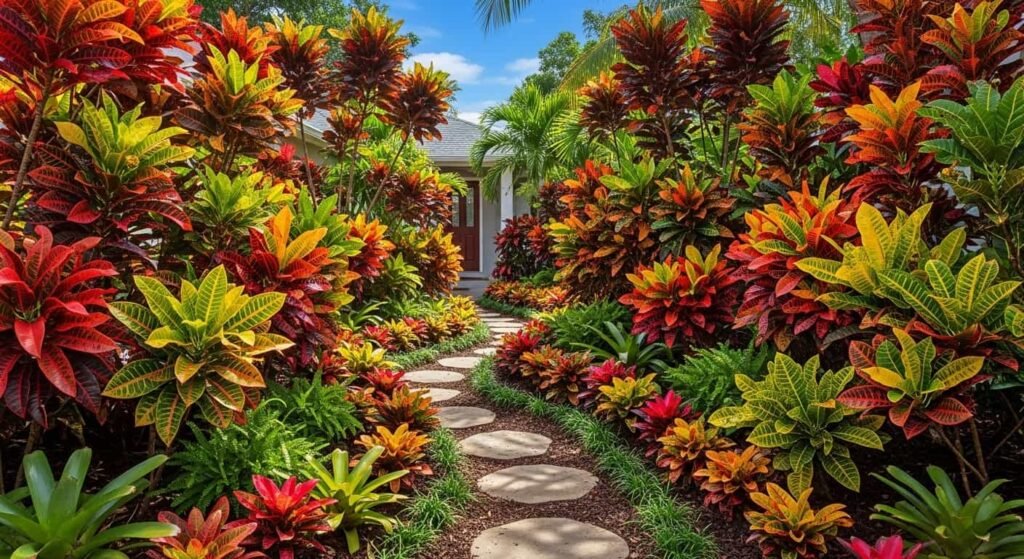
Crotons are tropical foliage superstars, offering year-round color intensity that rivals flowering plants. These remarkable plants display foliage in brilliant reds, oranges, yellows, and combinations thereof, with different varieties offering varied leaf shapes from deeply lobed to lance-like. Color intensity actually increases with sunlight exposure and cooler temperatures, meaning your crotons become more vibrant as seasons change. Whether you use a single spectacular specimen as a focal point or create groupings of complementary varieties, crotons provide non-stop color without depending on blooming cycles. Their dramatic appearance signals tropical luxury and abundance, making them essential components of tropical landscaping.
Crotons thrive in warm climates with bright light and well-draining soil rich in organic matter. They prefer consistent moisture without waterlogging and appreciate humidity, making them perfect for tropical climates with summer rains. In cooler regions with frost, container growing allows you to protect crotons during cold snaps while still enjoying their color during warm months. Positioning crotons where they’re backlit by morning or afternoon sun intensifies their colors dramatically. Combine various croton varieties with complementary foliage plants, or use crotons as focal points with simple green foliage companions that let their color take center stage. The variety of available cultivars means you can create entirely different looks with different color combinations.
9. Ginger and Heliconia Plantings:
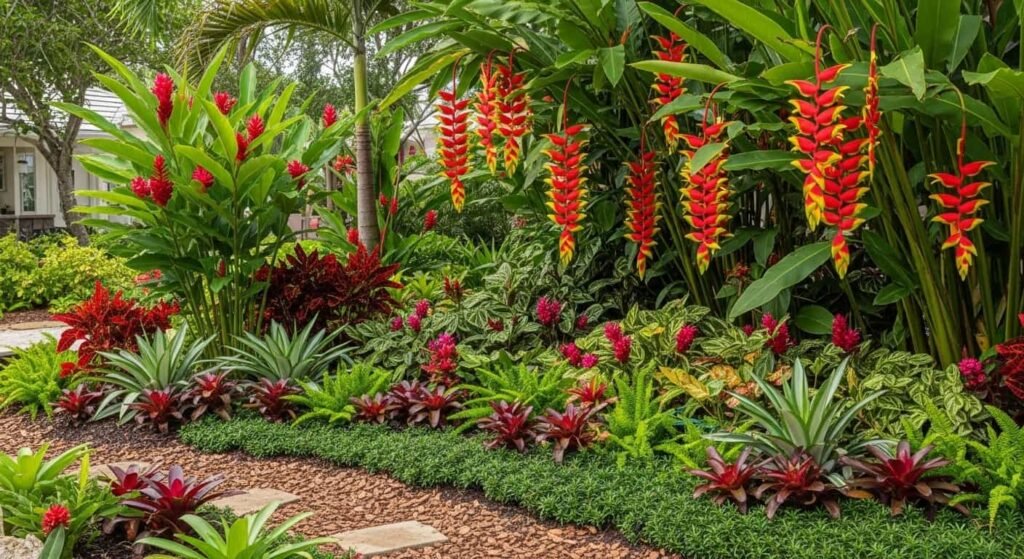
Gingers and heliconias are architectural superstars of tropical landscaping, offering unusual forms and exotic flowers that immediately signal tropical sophistication. Gingers, available in dozens of varieties, offer fragrant flowers, interesting foliage, and forms ranging from delicate to bold. Heliconias, also called lobster claws for their claw-shaped flowers, provide dramatic vertical or pendulous flower displays in reds, oranges, and yellows that create architectural interest and draw the eye. These plants thrive in warm, humid tropical climates with rich, moist soil and can create entire gardens based on their diverse forms and colors. Their architectural qualities make them perfect focal points in tropical landscape designs.
Building a ginger and heliconia garden creates botanical garden atmosphere while celebrating tropical plant diversity. Select varieties with complementary forms and colors – perhaps pairing upright heliconias with sprawling gingers, or combining red heliconias with golden gingers for warm color harmony. These plants typically reach significant sizes when mature, so plan accordingly and position them where their architectural forms can be appreciated. They work beautifully as focal points in tropical garden rooms, creating visual interest and drawing visitors to specific areas of your yard. The combination of architectural form and exotic flowers creates landscapes that feel both designed and naturally abundant, the hallmark of truly successful tropical gardens.
10. Tropical Vine Trellises:
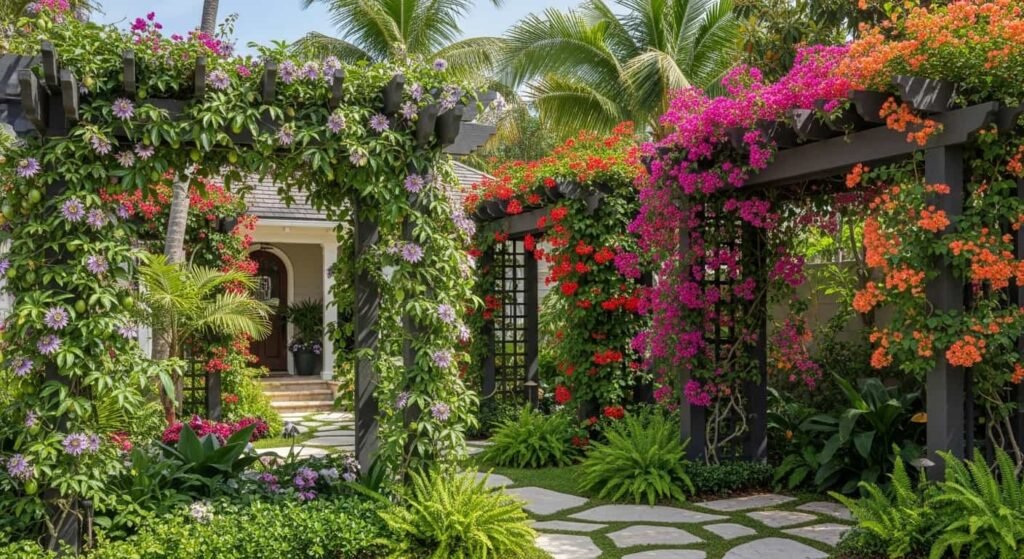
Tropical vines bring dimension and movement to front yards while creating living walls of color and texture that define spaces beautifully. Flowering vines like trumpet vine, bougainvillea trained as climbers, passion fruit vines with their exotic flowers and fruit, and various jasmine varieties create explosive color while adding vertical dimension to landscapes. Vines on trellises, pergolas, or freestanding structures draw eyes upward, making yards feel larger and more dramatic. These vigorous growers create privacy, shade, and intimate garden spaces while remaining visually stunning. The movement of vines in breezes adds dynamic quality to your landscape, making it feel alive and engaged.
Incorporating tropical vines requires sturdy structures capable of supporting vigorous growth – weak trellises become disappointments as vines grow heavy. Select vines appropriate to your light conditions and climate, positioning sun-loving varieties like bougainvillea in bright areas and more delicate vines like some jasmine varieties in dappled shade. Most tropical vines prefer well-draining soil rich in organic matter and appreciate consistent moisture and humidity. Prune vines regularly to maintain desired shape and encourage bushier growth with more flowers. Position trellises where you can enjoy the flowers both from your front yard and from inside your home, multiplying their visual impact. Vine-covered structures create the impression of wandering through exotic gardens, transforming ordinary front yards into tropical paradises.
11. Tropical Pools and Spas:
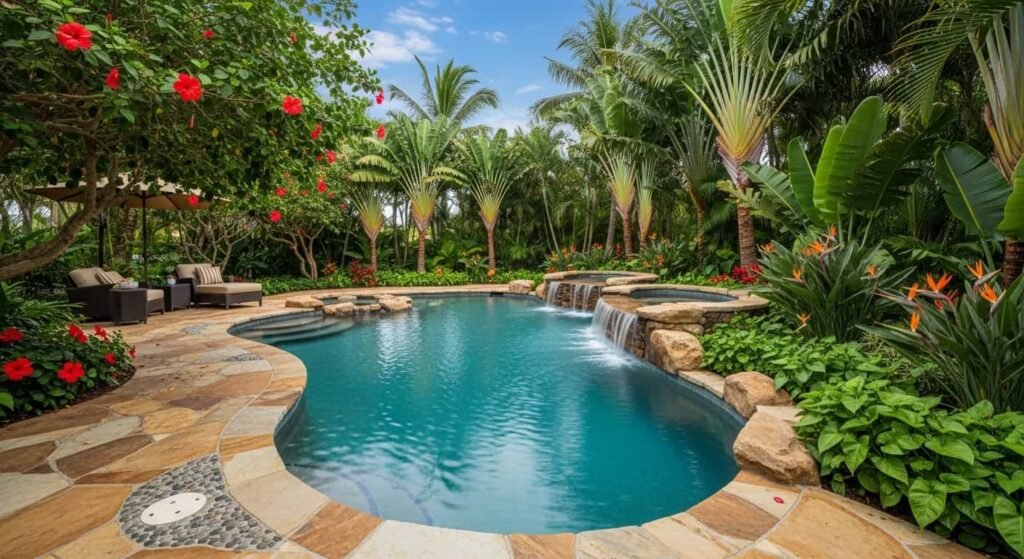
A tropical pool or spa transforms your front yard from simply beautiful to genuinely luxurious, creating the ultimate tropical resort experience right in your own home. Even compact front yards can incorporate small plunge pools or soaking tubs that provide functionality and visual impact. Pools surrounded by lush tropical plantings, natural stone decking, and perhaps integrated water features become focal points that draw the eye and create gathering spaces. The combination of water, lush vegetation, and carefully designed hardscaping creates sensory-rich environments that feel genuinely like vacation destinations.
Designing tropical pool areas requires thoughtful planning regarding circulation, maintenance, drainage, and surrounding landscaping. Pools should be positioned to maximize views from inside your home and from primary outdoor spaces. Surrounding landscaping should feel organic rather than manicured – lush plantings spilling toward the water’s edge create the impression of a tropical oasis. Consider integrated features like water slides, rock formations, or water fountains that add functionality and visual interest. Landscaping lighting showcases your pool area in the evening, extending your enjoyment and creating dramatic nighttime ambiance. A well-designed tropical pool becomes a genuine focal point that justifies its investment through years of enjoyment and the dramatic impact it creates.
12. Tropical Underplantings:
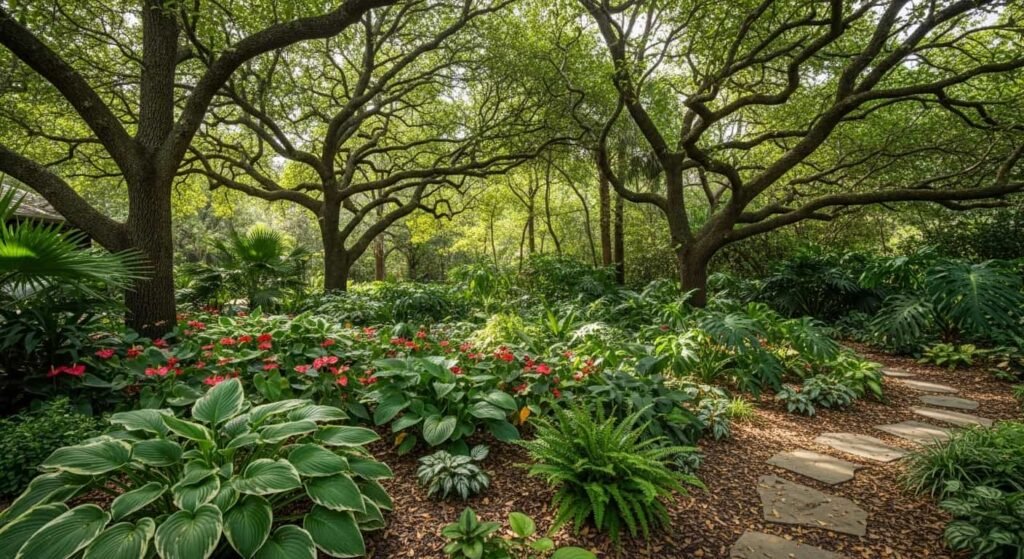
Creating lush underplantings beneath canopy trees – whether mature natives or established tropical plantings – creates the impression of wandering through tropical forests. Shade-tolerant tropical plants like anthuriums, various ferns, foliage aroids like Alocasias and Colocasias, and low-growing tropical shrubs create layered vegetation that reads as naturally abundant. This approach works beautifully even in yards with significant shade, transforming what many gardeners consider a limitation into an asset. The resulting landscapes feel genuinely like tropical rainforest interiors – cool, verdant, and peaceful.
Developing tropical underplantings begins with understanding your light conditions and selecting plants appropriate to shade levels. Many tropical shade plants prefer rich, consistently moist soil with high organic matter content. Group plants by water and light requirements, creating microclimates that support diverse plantings. Use varied foliage colors and textures to create visual interest – perhaps pairing deep-green Alocasias with chartreuse heucheras and delicate ferns. The resulting layered gardens require careful initial planting but ultimately become self-sustaining as established plants grow together. Underplantings create that signature tropical aesthetic of abundance and lushness that makes yards feel like genuine natural spaces rather than planted gardens.
13. Tiki Torches and Tropical Lighting:
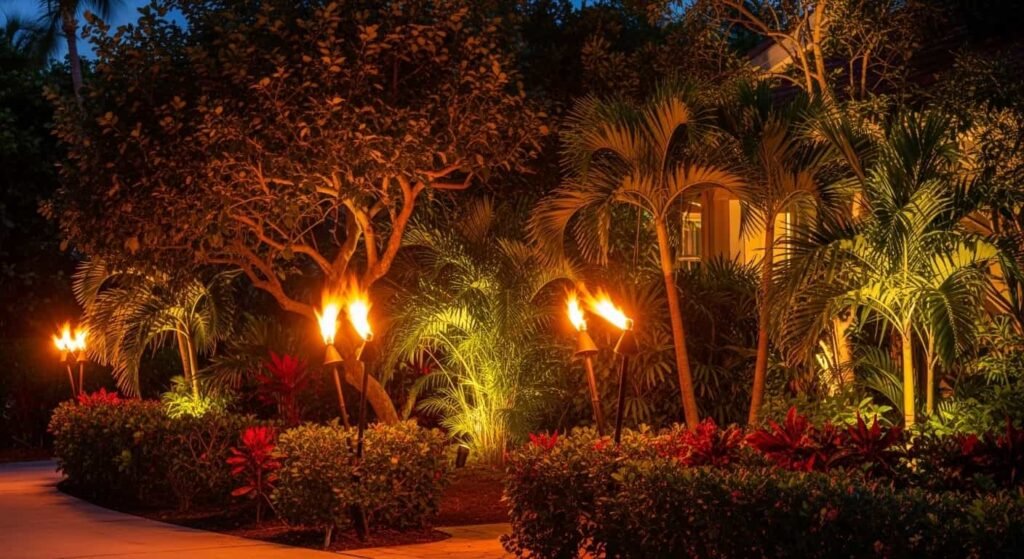
Tropical lighting transforms your front yard from daytime paradise to evening oasis, extending your enjoyment of tropical spaces into the night. Tiki torches with their signature flame-lit glow create authentic tropical ambiance while providing functional lighting. Lanterns, string lights, and pathway lighting guide movement while creating intimate, resort-like atmosphere. Uplighting specimen plants and trees creates drama, highlighting foliage colors and forms in ways that reveal details invisible during daylight. The combination of ambient lighting and accent lighting creates depth and visual interest, making your tropical yard feel genuinely luxurious.
Selecting lighting fixtures and placement requires thoughtful planning to create ambiance without harshness. Warm color temperatures (2700K or lower) feel more inviting and tropical than cool white light. Position uplights strategically to highlight beautiful plants or architectural features, creating natural focal points. String lights overhead create intimate canopy effects, perfect for dining areas or gathering spaces. Pathway lighting guides movement while keeping lighting low and subtle. Consider using solar-powered options for sustainability, or LED systems for energy efficiency. Tiki torches add authentic tropical flair while providing both light and insect deterrence with citronella options. Well-designed tropical lighting extends your enjoyment of your front yard into evening hours, multiplying the value of your design investment.
14. Tropical Plant Containers:
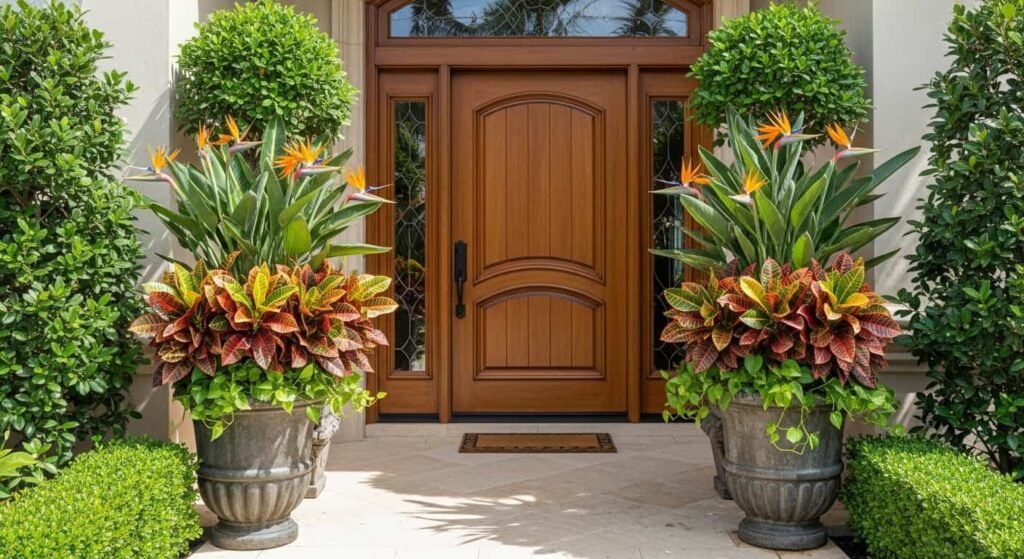
Tropical containers serve dual purposes – adding mobility and flexibility to tropical landscapes while creating dramatic focal points near entryways and gathering spaces. Large containers featuring specimen tropical plants like birds of paradise, crotons, or tropical shrubs make powerful statements while allowing you to rotate plantings or protect tender specimens during cold snaps. Container combinations featuring multiple complementary plants create instant tropical scenes, and the variety of container styles allows expression of personal aesthetic. Container plantings near entryways welcome visitors and set the tone for your tropical paradise.
Creating spectacular tropical containers begins with selecting appropriately sized vessels – larger containers retain moisture better and allow more robust plant growth. Use quality potting soil formulated for containers, ensuring excellent drainage while retaining adequate moisture. Position containers where they enhance views from both inside and outside your home, creating visual consistency. Group containers in odd numbers for more dynamic compositions than pairs, and vary heights and textures for visual interest. Container plantings allow you to feature plants that might not survive in your garden beds – perhaps tender varieties that need protection during cold snaps, or specimen plants that prefer container conditions. Container arrangements also allow seasonal flexibility, rotating plantings to feature seasonal bloomers or adjusting displays as needs change.
15. Elephant Ears and Dramatic Foliage:
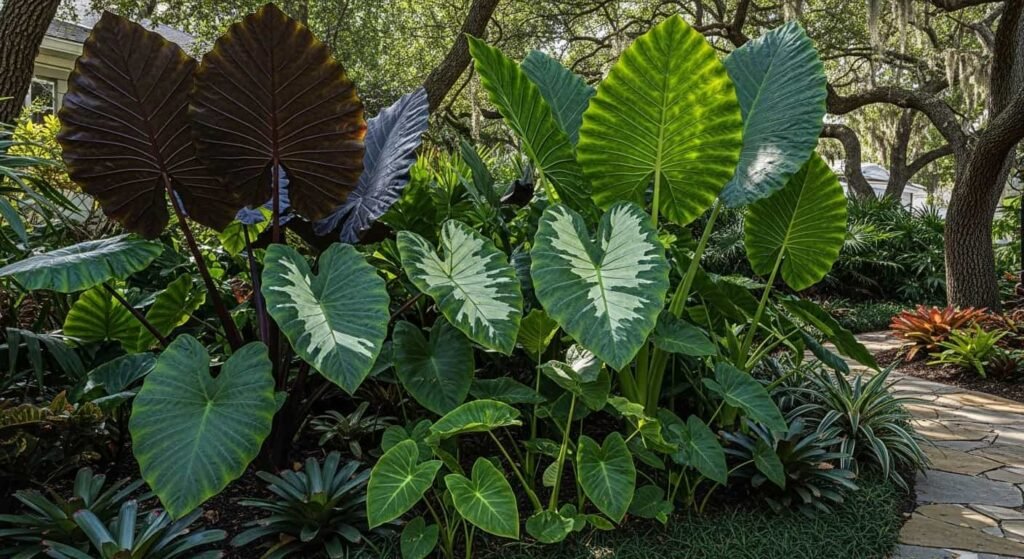
Elephant ears and similar large-leafed plants create dramatic visual statements that immediately signal tropical sophistication. These remarkable plants produce enormous leaves – sometimes reaching two feet or more in length – that create bold geometric forms dominating visual compositions. Available in colors ranging from solid greens to deep purples, variegated patterns, and even metallic sheens, elephant ears offer tremendous variety while maintaining that unmistakable tropical aesthetic. Their rapid growth creates the impression of rapid jungle transformation, rewarding patient gardeners with visible progress. A single mature elephant ear specimen creates landscape impact equivalent to flowering shrubs or entire mixed borders.
Growing elephant ears successfully requires understanding their preferences for rich, consistently moist soil with high organic matter, warm temperatures, and humidity. Many varieties appreciate afternoon shade in hot climates, though some tolerate more sun. Position elephant ears where their dramatic foliage can be appreciated as focal points, perhaps highlighted with landscape lighting or positioned as specimens within garden rooms. Group multiple varieties with complementary colors and forms to create entirely foliage-based gardens that remain stunning even without flowering plants. The theatrical quality of elephant ears – their rapid growth and dramatic forms – makes them perfect focal points for tropical landscapes looking for immediate visual impact and undeniable tropical aesthetic.
16. Tropical Entryways:
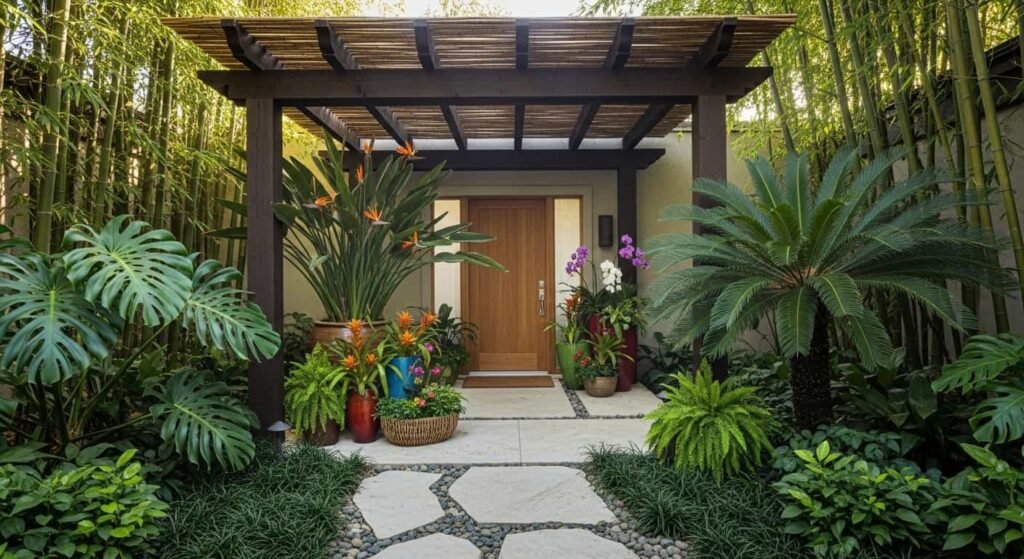
Your entryway is the gateway to your tropical paradise, and designing it thoughtfully sets the tone for your entire property. Creating dedicated tropical garden rooms at your entrance – framed with pergolas or natural canopies, enhanced with specimen plantings, and welcoming with fragrant plants and colorful flowers – creates powerful first impressions. Strategic use of container plantings near entryways allows flexibility, seasonal changes, and the ability to feature specimen plants that might not survive in your garden beds. Overhead structures create filtered light and defined spaces, transforming simple entries into destination moments.
Designing tropical entryways requires considering how visitors move through the space, views from different vantage points, and the sensory experience you want to create. Fragrant tropical plants near entries engage visitors’ senses, making the space feel more immersive. Use welcoming colors – perhaps warm-toned flowers or crotons – to draw visitors forward. Position focal-point plants where they’re framed by entryway architecture, creating natural focal points that guide attention. Lighting can highlight special plantings and architectural features, creating drama even at night. Well-designed tropical entryways transition visitors from the everyday world into your private paradise, setting expectations for the tropical experience that follows.
17. Tropical Groundcovers:
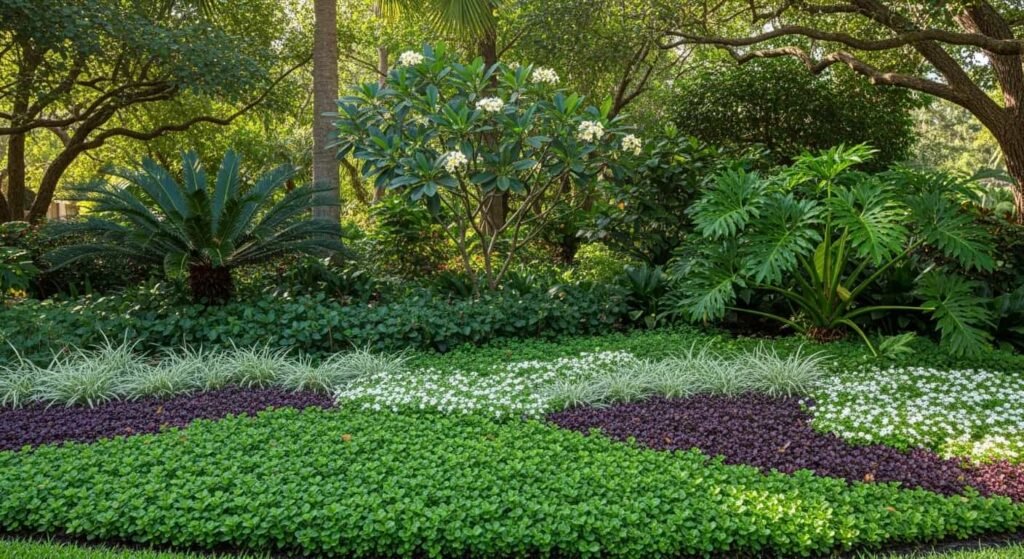
Tropical groundcovers create the foundation of lush tropical landscapes, providing living carpets that suppress weeds while maintaining that essential jungle aesthetic. Low-growing tropical plants like various Acanthus varieties, Tradescantia, Soleirolia, and other tropical groundcovers create textured bases for taller specimens. These plants typically thrive in warm, humid conditions and prefer rich, consistently moist soil. Tropical groundcovers rarely need much maintenance once established, contributing to the low-maintenance quality that makes tropical gardening accessible to busy homeowners. Combining groundcovers of different colors and textures creates sophisticated layering that distinguishes professional tropical designs from simple plantings.
Creating tropical groundcover gardens begins with selecting plants appropriate to your specific light and moisture conditions. Many tropical shade plants work beautifully as groundcovers, allowing creation of lush shade gardens beneath canopy trees. Group groundcovers by color and texture, creating flowing patterns that guide eyes through the landscape. Tropical groundcovers, while vigorous growers, can be contained with definition edging or careful annual trimming. The resulting gardens feel naturally abundant while maintaining intentional design. Groundcovers also add moisture and organic matter to the soil as they grow and eventually decompose, creating conditions that support increasingly vigorous growth. Using groundcovers transforms scattered individual plants into cohesive, unified tropical gardens.
18. Water-Wise Tropical Gardening:
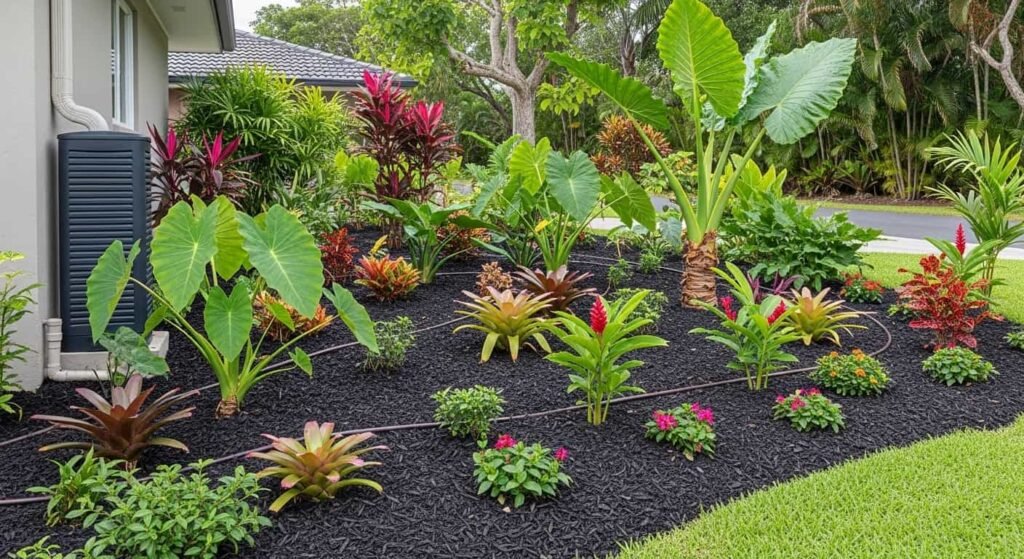
Creating tropical gardens that use water wisely isn’t about creating sparse, drought-tolerant landscapes – it’s about smart design that maximizes moisture retention and minimizes waste while maintaining lush abundance. Tropical plants generally prefer consistently moist conditions, but proper mulching, soil improvement with organic matter, strategic grouping of plants with similar water needs, and efficient irrigation systems allow you to create lush tropical landscapes while conserving water. Drip irrigation delivers water directly to plant roots with minimal evaporative loss, and soaker hoses placed in mulch achieve similar efficiency. Rain gardens and water collection systems allow you to capture and utilize rainfall efficiently.
Implementing water-wise tropical gardening starts with soil improvement – adding substantial organic matter increases water-retention capacity dramatically. Apply generous mulch layers to reduce evaporation and moderate soil temperatures. Group plants by water needs, creating irrigation zones that receive appropriate water levels. Install drip irrigation systems that deliver water where needed without waste. Choose mulches that break down and enrich soil – composted bark adds organic matter while performing mulching functions. Many tropical plants actually perform better with thoughtful watering than constant overhead irrigation, as consistent moisture without waterlogging encourages deep root development. Smart water management doesn’t diminish tropical aesthetics – it actually creates stronger, healthier plants that grow more vigorously.
19. Bird of Paradise Specimens:
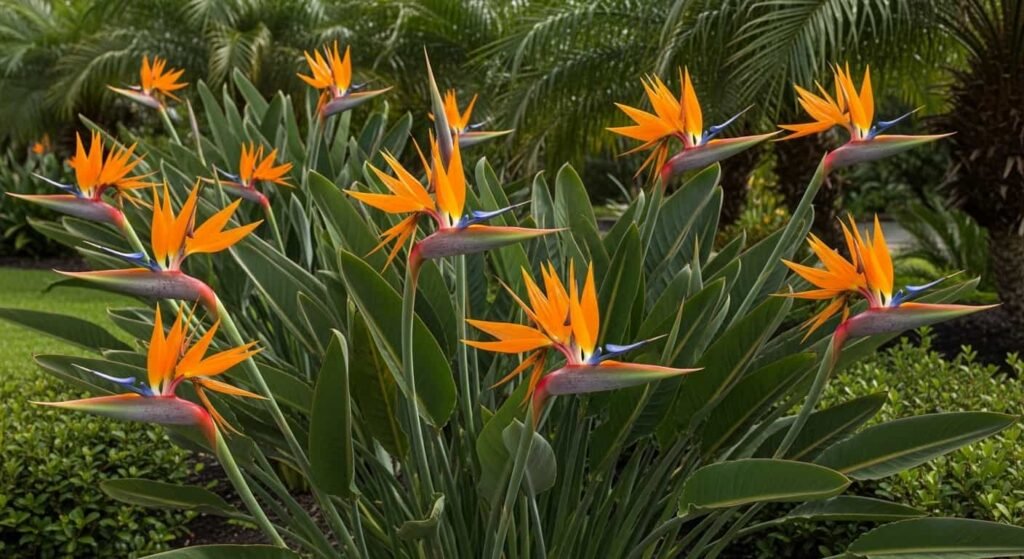
Bird of paradise plants create some of the most dramatic and recognizable tropical flowers, offering sculptural blooms in brilliant oranges and blues that seem almost too exotic to be real. These architectural plants produce flowers that resemble tropical birds in flight – hence the name – creating immediate visual drama and conversation-starting focal points. Bird of paradise thrives in warm climates with bright light, well-draining soil, and excellent air circulation. While they can take a few years to reach flowering maturity, the wait is rewarded with years of spectacular blooms that bring resort-quality drama to any tropical garden.
Positioning bird of paradise as specimen plantings – perhaps grouped in threes, or positioned as focal points in garden rooms – allows their spectacular flowers to command attention. Multiple varieties offer different colours and forms, allowing creative combinations. Pair bird of paradise with complementary foliage plants that enhance rather than compete with dramatic flowers. The sculptural quality of bird of paradise flowers works beautifully with architectural landscaping, creating sophisticated compositions. Once established and flowering, bird of paradise requires minimal care beyond removing dead flowers and maintaining shape. The payoff – years of dramatic, exotic flowers that create resort-quality beauty – justifies the initial care investment.
20. Tropical Stone and Rock Features:
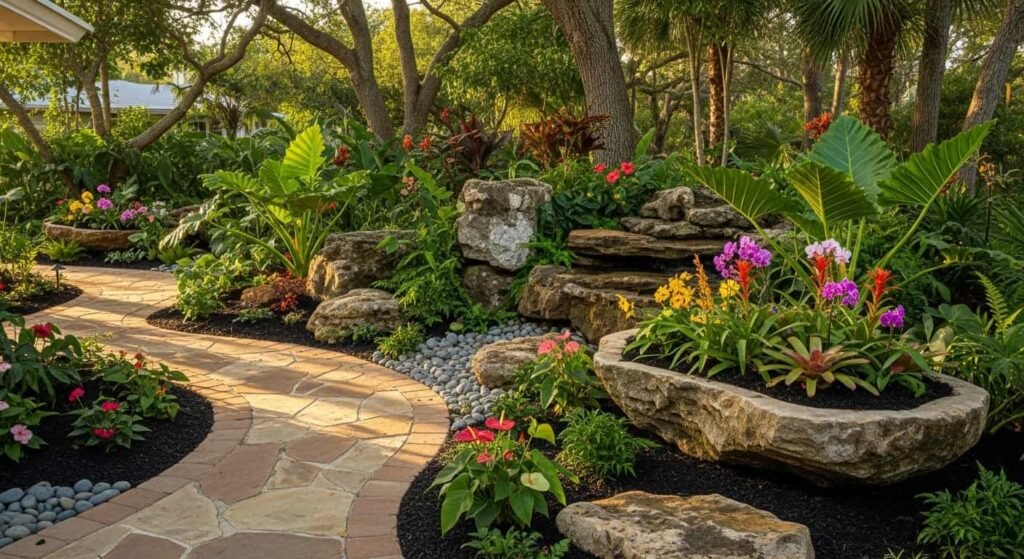
Natural stone features ground tropical landscapes in authentic materialism, creating the impression of tropical gardens that have evolved naturally over time. Stone pathways guide visitors through lush plantings while remaining permeable and organic-feeling. Rock formations and decorative boulders create visual interest while providing perching spots for wildlife. Stone features weather beautifully in tropical climates, developing patinas that enhance rather than diminish their appearance. The combination of warm-toned stone and lush tropical vegetation creates sophisticated, resort-like ambience that feels both designed and organic.
Incorporating stone features into tropical landscapes requires thoughtful placement that feels organic rather than imposed. Choose stone colors that complement your plantings and regional aesthetic – warm tones often read as more tropical than cool grays. Position large stones as focal points within garden areas, creating visual anchors that draw the eye. Stone pathways should flow naturally through landscapes rather than following rigid geometry. Rock gardens incorporating boulders with complementary plantings create dimensional interest. Stone features also provide practical functions – they define spaces, improve drainage, and prevent soil compaction on heavily traveled routes. Combine stone features with water elements for maximum sensory impact, creating the impression of tropical streams and water features.
21. Orchid Gardens:
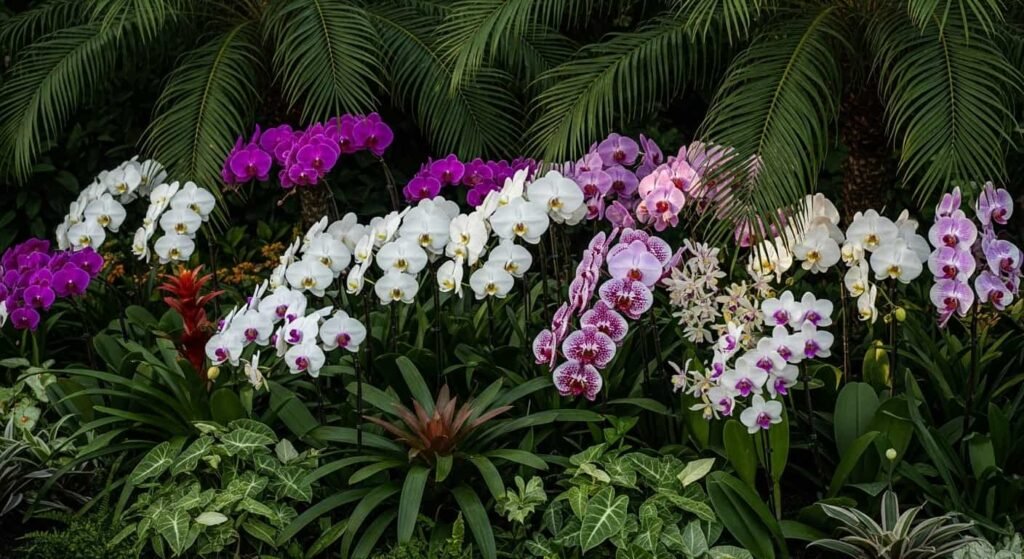
Orchids represent the pinnacle of tropical botanical sophistication – elegant, diverse, and seemingly exotic yet surprisingly rewarding to grow in appropriate conditions. Orchids thrive in warm, humid tropical climates with bright filtered light, offering flowers in nearly every colour imaginable. Different orchid varieties bloom at different times, allowing year-round flower displays through strategic selection. From delicate sprays of tiny flowers to bold, sculptural blooms, orchids create sophistication that signals investment and knowledge. While orchids have gained a reputation for being difficult, many varieties thrive in tropical conditions with minimal care once proper growing conditions are established.
Creating orchid gardens requires understanding different orchid types and their specific light, humidity, and temperature needs. Position orchids in locations that receive bright filtered light – typically beneath trees that provide dappled shade. Most tropical orchids prefer warm nighttime temperatures and consistent humidity – conditions naturally present in tropical climates. Orchid bark or similar specialised substrates provide excellent drainage while retaining appropriate moisture. Group orchids together to increase ambient humidity and create impressive displays. The elegance of orchids – their rarity, diversity, and sophisticated appearance – creates landscapes that feel refined and intentional, distinguishing your tropical garden as curated rather than randomly planted.
FAQ’s:
Q1: Can I create a tropical landscape if I don’t live in a warm climate?
A: Absolutely! Container gardening allows you to grow tropical plants and bring them indoors during winter, or you can create tropical-themed landscapes using cold-hardy plants that evoke tropical aesthetics through form and texture. Ornamental grasses, architectural plants, and carefully selected foliage plants create tropical feeling even in cooler climates. Overwintering tender plants indoors extends your tropical season, and design elements like water features and shade structures contribute to tropical atmosphere regardless of climate.
Q2: How much maintenance does a tropical landscape actually require?
A: Tropical landscapes vary in maintenance requirements depending on plant selections and design complexity. Native tropical plants often require less maintenance than ornamental exotics, while water features and pools require more attention. Generally, once established, most tropical plantings require regular watering, occasional pruning, and fertilizing during growing seasons. The investment in initial design and proper installation pays dividends in reduced future maintenance.
Q3: What’s the best time to start a tropical landscape project?
A: The start of the warm growing season is ideal – typically spring in subtropical climates, or year-round in truly tropical regions. Starting during the growing season allows new plantings to establish before cooler months. However, soil preparation and hardscaping installation can occur anytime, with planting following at optimal times.
Q4: How do I choose plants that will thrive in my specific conditions?
A: Research native and adapted tropical plants for your region, visit local nurseries to see what thrives locally, and consult with local gardeners about their experiences. Understanding your specific light, soil, and moisture conditions helps narrow selections. Starting with plants known to thrive locally increases success rates dramatically.
Q5: Are tropical plants expensive to establish?
A: Initial investment varies depending on design scope and plant selections. Container specimens and slow-growing plants may seem expensive initially, but they’re often better values than mature specimens that are more expensive to purchase and install. Starting with smaller specimens and allowing them to grow typically costs less than purchasing large established plants while creating satisfaction from watching growth.
Conclusion:
Your front yard doesn’t need to be in Hawaii or the Caribbean to feel like a genuine tropical retreat. With thoughtful design integrating the 23 ideas presented in this guide – from lush foliage combinations to exotic flowers, from water features to strategic hardscaping, from shade structures to sophisticated lighting – you can create a personal paradise that feels genuinely exotic while remaining functional and maintainable. The key is starting with clear vision, investing in proper initial design and installation, and selecting plants and features appropriate to your climate and maintenance tolerance.
Tropical landscapes celebrate abundance, sensory richness, and connection with nature. They invite relaxation, entertaining, and daily enjoyment of outdoor spaces. Whether you incorporate every element presented here or select ideas most resonant with your vision, you have the tools to transform your front yard into something genuinely special. The result – a space that feels like a vacation destination, inviting you to slow down, engage your senses, and experience the restorative power of natural beauty – is worth every effort.